
Breaking Airline News: Severe Travel Chaos Paralyzes the Middle East as Tehran Airport Halts All Flights Following Missile Strikes
Breaking airline news: Amidst a terrifying era of sudden geopolitical escalation, Iran completely shuts down its primary international gateway, igniting massive flight cancellations and severe global travel chaos.

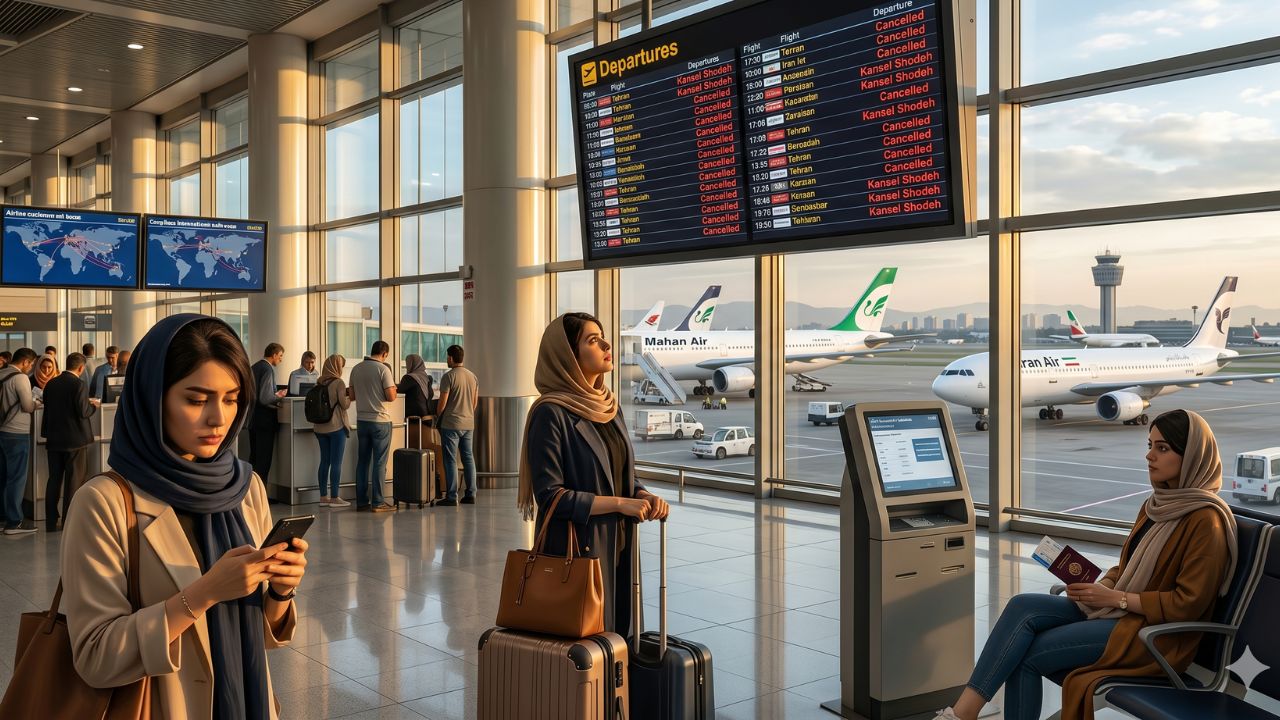
Image representing the intense strategic battle as global aviation leaders desperately attempt to contain severe flight cancellations and massive travel chaos across the highly volatile Middle Eastern airspace.
Breaking Airline News: Severe Travel Chaos Paralyzes the Middle East as Tehran Airport Halts All Flights Following Missile Strikes
As paralyzing airport disruptions, heavily restricted airspace corridors, and terrifying military escalations violently sweep through the Middle East, the absolute primary international gateway to Iran has completely shut down. In a devastating blow to regional and global connectivity, civil aviation authorities officially halted all incoming flights to Tehran’s Khomeini International Airport on June 8, 2026, following highly aggressive Iranian missile strikes on Israel. This catastrophic closure has immediately severed critical transit routes, violently plunging thousands of transcontinental travelers into an inescapable web of severe travel chaos and triggering an absolutely staggering 5,000 flight cancellations within the first two days of the escalation.
In a harrowing display of modern aviation fragility, a heavily monitored, highly sensitive geopolitical region rapidly devolved into a high-stress survival scenario for the entire global travel network. Operating within the highly volatile Tehran Flight Information Region (OIIX), civil aviation was abruptly grounded as heightened air defense alert levels effectively closed the corridor to commercial airliners. This sudden, massive structural contraction forced premier network operators across Europe, the Middle East, and North America to execute immediate mid-flight diversions, completely dismantling traditional cross-continental stopover networks. The sheer scale of these sudden flight cancellations and massive delays has completely paralyzed vital short-haul connections and massive wide-body commercial arrivals, effectively trapping thousands of frantic tourists and business commuters.
Expanded Overview: The Massive Scale of the Contagion
The terrifying crisis currently gripping the global transit network brutally exposes the severe economic and operational vulnerability of the Middle Eastern corridor. Because airlines must now completely bypass the highly restricted OIIX airspace, historically efficient flight paths are structurally dead. Airliners are desperately opting to fly massive, fuel-burning detours over Egypt, Saudi Arabia, the Caucasus, and Central Asia. This extreme geographic friction has severely compromised operational throughput, triggering massive schedule delays and forcing displaced passengers to compete frantically for a rapidly diminishing pool of available seats. The economic toll is absolutely staggering. The World Travel & Tourism Council (WTTC) has confirmed that the travel and tourism sector is currently bleeding a massive $600 million every single day due to blocked international travelers, completely destroying the region's 2026 recovery trajectory.
Section-Wise Breakdown: The Operational Collapse
The Tehran Epicenter
The incident aggressively centered around the sudden, total collapse of operations at Khomeini International Airport. Authorities advised that all inbound flights were halted “until further notice.” This vital terminal suffered a massive structural schedule loss, shutting down operations entirely just as the airport was attempting to stabilize. The complete closure traps Iranian citizens and international business travelers, severing the nation from the global flight grid and igniting massive, immediate logistical friction.
The Gulf Hub Gridlock (Dubai, Doha, Abu Dhabi)
The terrifying contagion violently spread outward, actively paralyzing the massive transit mega-hubs that dominate the region. Because these hubs rely on seamless airspace access, major global transit points including Dubai, Doha, and Abu Dhabi experienced significant, crippling delays and the complete closure of normal operations. For passengers relying on these vital corridors to connect Europe with Asia or Africa, the sudden loss of the Iranian overflight zone meant their entire transcontinental itinerary was effectively choked off.
The European and North American Severance
In a desperate bid to safeguard passengers, Western operators aggressively severed their ties to the region. Due to extreme safety concerns and the complete closure of adjacent airspace, massive European airliners, including Lufthansa and KLM, immediately suspended their regional Middle Eastern services. Concurrently, several U.S. and Canadian airliners circumvented the war-impacted airspace by suspending or entirely canceling massive tranches of flights, violently disrupting the global tournament accommodations footprint.
Flight Details & Aviation Defense Matrix
To fully comprehend the massive logistical and strategic fallout of this hub collapse, corporate travel managers must review the exact disruption protocols currently paralyzing the Middle Eastern network. The following matrix provides a granular breakdown of how major carriers are actively responding to the crisis.
| Airline | Type of Disruption | Impact Notes |
|---|---|---|
| Emirates | Canceled flights | No flights to Iran and rerouting to avoid risk zones. |
| Qatar Airways | Service cuts | Less flights through Doha due to airspace risk. |
| Turkish Airlines | Delays & canceled flights | Major rerouting impacting Europe-Asia connections. |
| Lufthansa | Canceled flights | No flights to airports in the Middle East. |
Note: Fly Dubai, Pegasus, KLM, and multiple North American carriers have also executed massive suspensions correlating with this matrix.
Passenger Impact: Surviving the Terminal Nightmare
For the thousands of passengers physically trapped inside heavily congested terminals in the UAE, Qatar, Saudi Arabia, and Europe, the human cost of this operational emergency is absolutely terrifying. The brutal reality of enduring a sudden, conflict-driven flight cancellation inflicts intense psychological stress. The disruption caused immediate friction, resulting in missed luxury hotel bookings, abandoned ground transportation arrangements, and entirely ruined, high-stakes conventions.
Survival Guide for Stranded Travelers
Travelers desperately navigating this chaos must immediately execute the following survival protocols:
- Track Flight Information: Aggressively monitor official airline communications and reputable flight status apps before heading to any international airport.
- Demand Rebooking: Inquire with your airline or travel agent immediately regarding options for refunds or rerouting to avoid the Middle Eastern airspace closures entirely.
- Assess Travel Advisories: Do not commit to new purchases without actively reviewing regional and international government travel advisories.
- Verify Insurance: Contact your provider to confirm that your travel insurance specifically covers conflict-driven air travel disruptions.
Industry Analysis: A Multi-Billion Dollar Catastrophe
From a strategic aviation perspective, the travel turmoil currently decimating the network represents a catastrophic financial disaster. The Airports Council has already recorded 27 million fewer travelers passing through major airports in the Middle East during the early stages of regional conflicts. If the Tehran closure and adjacent airspace restrictions persist, Oxford Economics aggressively predicts that inbound arrivals to the Middle East may violently fall by 11–27%. This equates to 23–38 million fewer visitors and a staggering financial hemorrhage of $34–$56 billion. The massive increase in fuel costs required to fly longer detour routes is simultaneously destroying airline profitability, threatening the survival of multiple international carriers.
Conclusion: A Strategic Retreat to Ensure Aviation Survival
As the military and geopolitical situation remains highly fluid and extremely volatile, the sudden collapse of Tehran's Khomeini Airport represents a massive, terrifying warning to global travelers. The 5,000 immediate cancellations prove that international flight schedules remain terrifyingly fragile when confronted with active conflict. Corporate travel buyers and everyday passengers attempting to navigate this highly unstable era of airport disruptions must maintain extreme flexibility. To survive this travel chaos, flyers must heavily prioritize alternative routes bypassing the Middle East entirely, acting aggressively to secure alternative travel arrangements before available global inventory vanishes entirely.
Key Takeaways
- Massive Hub Shutdown: Tehran’s Khomeini International Airport halted all incoming flights indefinitely following Iranian missile strikes on Israel on June 8, 2026.
- Catastrophic Global Cancellations: Over 5,000 commercial flights were canceled within the first two days of the escalation, triggering severe global travel chaos.
- Major Carrier Pullout: Emirates, Qatar Airways, Turkish Airlines, and Lufthansa have executed massive flight cancellations, service cuts, and massive reroutes.
- Economic Hemorrhage: The WTTC warns the sector is losing $600 million daily, with Oxford Economics projecting a catastrophic $34–$56 billion loss in regional tourism.
- Traveler Advisory: Passengers must aggressively monitor real-time updates and proactively demand alternative flight paths through Egypt or the Caucasus to completely avoid the Middle Eastern airspace.
Related Travel Guides
- Massive Travel Chaos as Delta joins British Airways and Emirates to Suspend Middle East Flights Amidst Escalating Regional Tensions Today
- Breaking Airline News: Severe European Border Chaos Triggers Historic Six-Hour Airport Delays and Devastating Flight Cancellations Across Major Schengen Hubs
- Kenya Airways Grounds Five Aircraft as Global Spare Parts Crisis Triggers Massive Flight Cancellations, Severe Airport Disruptions, and Travel Chaos Across East Africa: Latest Airline News
Disclaimer
This article is for informational and educational purposes only. It does not constitute legal, financial, or professional advice. While we strive to provide accurate and up-to-date information, travel policies, regulations, and conditions change rapidly. Always verify information with official sources before making travel decisions. Nomad Lawyer makes no representations about the accuracy, reliability, completeness, or suitability of the information provided. Readers should consult qualified professionals for advice specific to their circumstances. The views expressed in this article are those of the author and do not necessarily reflect the views of Nomad Lawyer.
Kunal K Choudhary
Co-Founder & Contributor
A passionate traveller and tech enthusiast. Kunal contributes to the vision and growth of Nomad Lawyer, bringing fresh perspectives and driving the community forward.
Learn more about our team →