
TCU Analysis: American Airlines' North Texas Economic Impact Hits $71 Billion in 2026
A new Texas Christian University study reveals American Airlines' economic footprint in North Texas exceeds $70 billion annually, driving massive job growth and infrastructure investment around the DFW hub.

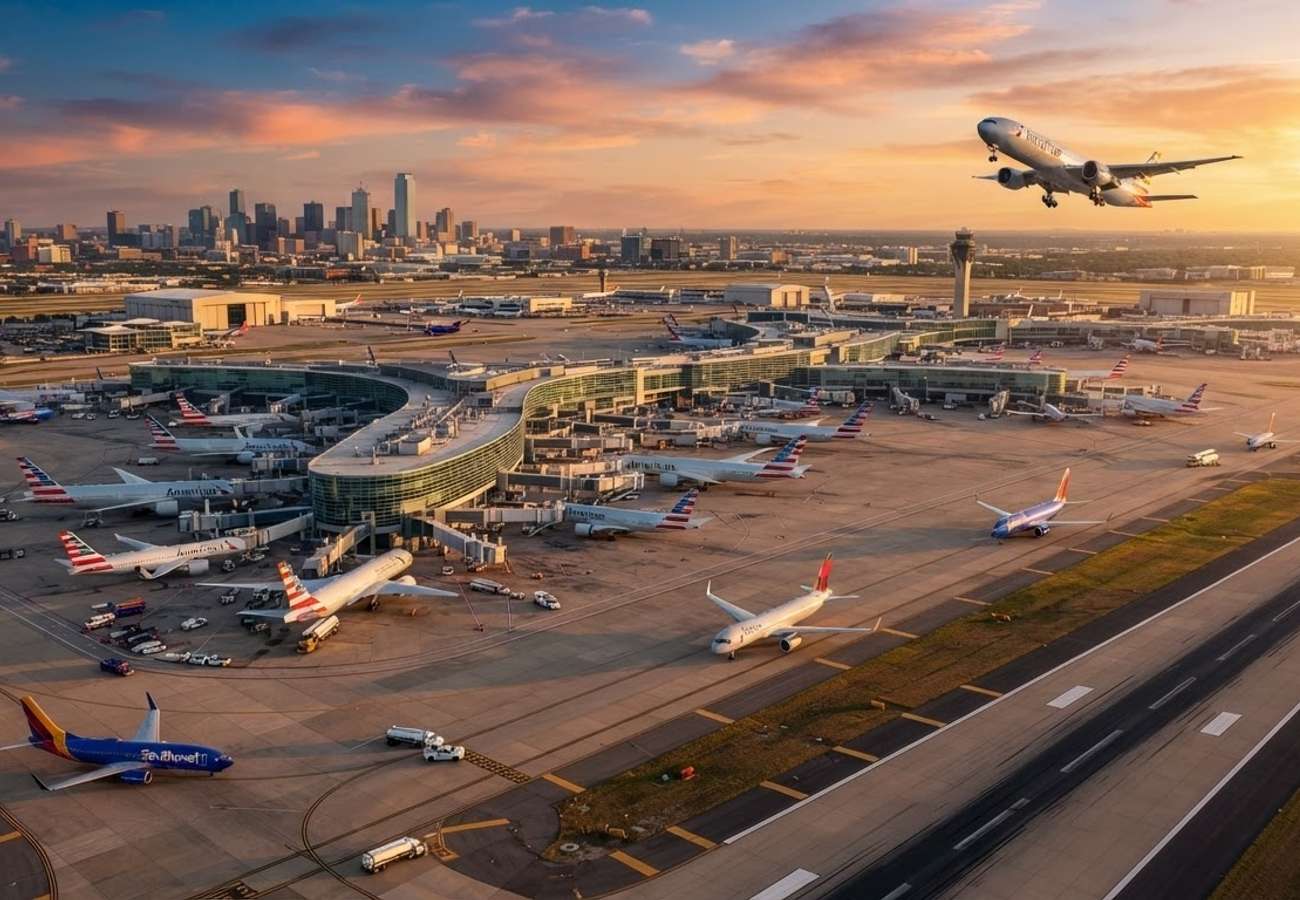
Image generated by AI
A new analysis from Texas Christian University (TCU) indicates that American Airlines’ economic footprint in North Texas could exceed $70 billion annually, cementing the carrier's role as a primary driver of regional growth.
The study highlights an economic network that extends far beyond ticket sales, encompassing direct employment, supplier spending, and massive infrastructure projects centered around the Dallas Fort Worth International Airport (DFW) and the airline's Fort Worth corporate headquarters.
The DFW Mega-Hub Engine
Our analysis of the TCU report shows that American Airlines operates one of the most influential aviation hubs globally. The economic ripple effect is categorized by several high-impact streams:
- Direct Operations: Employment at the Fort Worth headquarters, training facilities, and maintenance bases.
- Indirect Employment: Jobs created via catering firms, fuel providers, technology vendors, and construction contractors.
- Induced Spending: Hospitality and retail revenue generated by millions of connecting passengers.
- Infrastructure Growth: Multibillion-dollar investments in terminal expansions and new gates.
Employment and Payroll Dynamics
The TCU findings suggest that when direct and indirect positions are aggregated, American Airlines supports hundreds of thousands of jobs across the region. While the airline's internal Texas employment is measured in the tens of thousands, the "multiplier effect" of a major transportation hub significantly amplifies this number.
Market trends indicate that for every direct aviation job created at a hub like DFW, multiple supporting roles are generated in the surrounding economy. This is particularly evident in Dallas and Tarrant counties, where utility improvements and road upgrades often follow airport expansions.
Regional Economic Drivers
The $71 billion impact is not merely a result of payroll, but a combination of strategic corporate influences:
- Corporate Attraction: The availability of global connectivity via American’s DFW schedule is a primary selling point for economic development agencies attracting new corporate headquarters to North Texas.
- Visitor Expenditure: High volumes of international and domestic transit passengers drive consistent demand for the regional hotel and restaurant sectors.
- Capital Investment: Ongoing agreements for airfield infrastructure and additional gates act as immediate catalysts for construction employment.
Economic Concentration and Risk
From a logistical perspective, this level of dominance creates a "concentration risk." With one carrier serving as the anchor for a significant portion of the region's economic activity, North Texas is uniquely vulnerable to the operational health and strategic shifts of a single corporation.
Industry observers note that while the scale of American's presence provides stability and growth, it also heavily influences regional infrastructure priorities and route competition.
North Texas Economic Impact Summary
| Impact Category | Primary Driver | Economic Result |
|---|---|---|
| Annual Footprint | Hub Operations & HQ | Up to $71 Billion |
| Employment | Direct & Indirect Roles | Hundreds of thousands of jobs |
| Infrastructure | Terminal & Gate Expansion | Multibillion-dollar investments |
| Regional Growth | Global Connectivity | Increased corporate relocations |
Why This Matters
For travelers and businesses operating in the Southwest, this data confirms that DFW is more than an airport—it is a critical piece of economic infrastructure. The real impact is the symbiotic relationship between the airline and the city; as American expands its route map, the regional capacity for business travel and tourism increases proportionally.
From an industry standpoint, this underscores the shift toward "mega-hubs" where the airline becomes a de facto urban developer. The $71 billion figure proves that the financial health of the carrier is directly tied to the GDP of the surrounding metroplex.
Industry Outlook
Expect continued aggressive expansion of terminal facilities at DFW. As American Airlines seeks to optimize its global network, the pressure on local governments to upgrade surrounding transport links will intensify. We anticipate further diversification efforts by regional planners to mitigate the risk of over-reliance on a single carrier, even as the economic benefits of that partnership continue to climb.
The integration of aviation hubs into regional economic planning has moved from a benefit to a necessity.
Related Travel Guides
Disclaimer
This article is for informational and educational purposes only. It does not constitute legal, financial, or professional advice. While we strive to provide accurate and up-to-date information, travel policies, regulations, and conditions change rapidly. Always verify information with official sources before making travel decisions. Nomad Lawyer makes no representations about the accuracy, reliability, completeness, or suitability of the information provided. Readers should consult qualified professionals for advice specific to their circumstances. The views expressed in this article are those of the author and do not necessarily reflect the views of Nomad Lawyer.
Preeti Gunjan
Contributor & Community Manager
A passionate traveller and community builder. Preeti helps grow the Nomad Lawyer community, fostering engagement and bringing the reader experience to life.
Learn more about our team →