
Tara Air, Nepal Airlines and Summit Air Struggle as Karnali Flight Cancellations Strand Patients and Travelers, Risking Healthcare Crisis and Adventure Tourism Collapse in Nepal in 2026
Nepal's Karnali region is facing a critical aviation shutdown as Tara Air, Nepal Airlines, Summit Air, and Sita Air cancel over 40 flights in 72 hours, leaving patients stranded and disrupting itineraries for travelers from the US, India, and China.

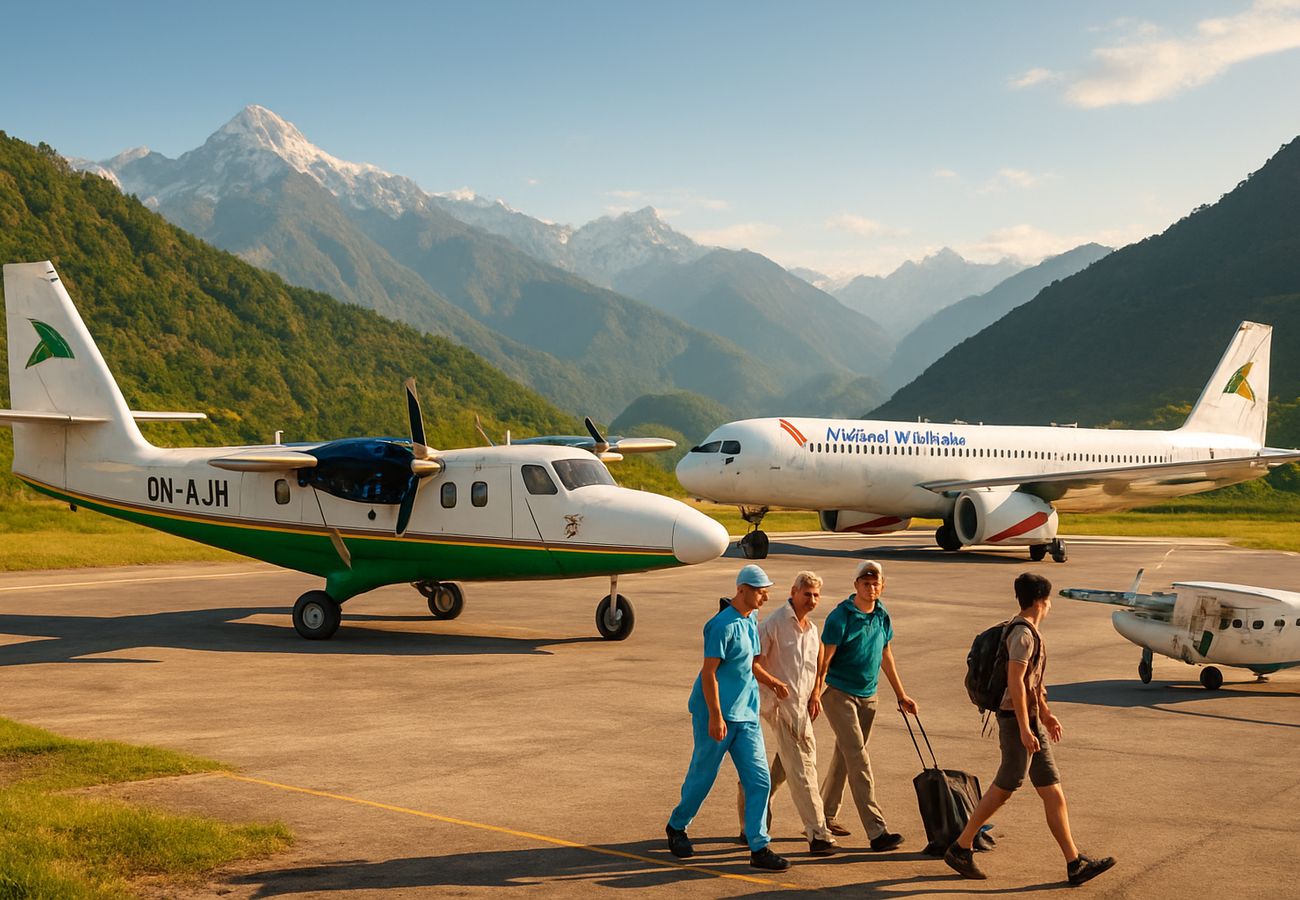
Image generated by AI
Nepal's Karnali region — a geographically isolated and mountainous province that relies on air transport as its primary lifeline — is facing a severe operational breakdown as Tara Air, Nepal Airlines, Summit Air, Sita Air, and Yeti Airlines grapple with a wave of flight cancellations and delays that have grounded over 40 domestic flights in just 72 hours, leaving critically ill patients stranded and upending the travel plans of international visitors from the United States, India, and China.
The Operational Breakdown: Weather, Aging Fleets, and Technical Failures
The disruption is not the result of a single event but a "perfect storm" of systemic challenges that have converged on Nepal’s remote aviation hubs, including Jumla, Dolpa, Humla, and Mugu.
Inclement weather in the high-altitude terrain surrounding Karnali remains the primary catalyst for cancellations. High winds, particularly in the afternoons, frequently force the suspension of STOL (Short Take-Off and Landing) operations. However, weather is now being exacerbated by aging fleets and chronic technical failures. Nepal Airlines, the national flag carrier, has seen its regional service decimated by recurring mechanical issues in its aging Twin Otter aircraft, while private carriers like Tara Air and Summit Air are struggling with aircraft availability and a shortage of qualified crew for high-altitude operations.
Congested air traffic control (ATC) systems at Kathmandu's Tribhuvan International Airport (TIA) have also contributed to the delay cascade. As regional hubs struggle to handle even minor increases in demand, the lack of modern radar and landing aids at remote strips means that once a delay occurs, it rarely recovers within the same operational day.
Healthcare on the Edge: The Stranded Patient Crisis
In the Karnali region, where road infrastructure is either non-existent or notoriously hazardous, a flight cancellation is often a life-or-death event. The healthcare sector in provinces like Humla and Dolpa depends almost entirely on air evacuations for patients requiring advanced surgery or specialist care in Nepalgunj or Kathmandu.
The current wave of cancellations has had tragic consequences. Patients requiring urgent transfers for life-saving procedures are being turned back from airport gates after waiting hours for flights that never materialize. In one high-profile incident, a patient awaiting transfer for prostate surgery was forced onto a hazardous road route after multiple flight cancellations; his son tragically died during the ambulance journey.
Local clinics are reporting unprecedented strain as they are forced to hold patients who should have been evacuated days ago. With limited oxygen supplies and specialized equipment, the aviation shutdown is effectively imposing a healthcare blockade on some of the country’s most vulnerable citizens.
Tourism Impact: Adventure Travel for US, India, and China Visitors at Risk
The aviation crisis is striking at the heart of Nepal’s tourism recovery. The Karnali region is home to Rara Lake, the Annapurna Circuit (via regional connections), and some of the world's most remote trekking routes. International travelers — particularly those from India, the US, and China — often have rigid itineraries that do not allow for the multi-day delays currently being seen.
| Tourist Origin | Primary Interest in Karnali | Impact of Delays |
|---|---|---|
| India | Pilgrimage (Mount Kailash/Manasarovar), Rara Lake | Cancellation of spiritual tours, stranded groups |
| United States | Adventure Trekking, High-Altitude Photography | Missed international connections, abandoned itineraries |
| China | Cultural Tourism, Dolpo Treks | Financial losses from prepaid permits and guide services |
Hospitality providers in Pokhara, Chitwan, and Kathmandu are reporting a drop in bookings as travelers become wary of being stranded in remote regions. Private travel agencies are overwhelmed with rebooking requests, and accommodation prices in regional hubs like Surkhet and Jumla have spiked as hundreds of passengers find themselves grounded with no clear departure window.
Industry and Regulatory Response
The Civil Aviation Authority of Nepal (CAAN) has acknowledged the operational strain but emphasizes that safety remains the paramount priority in the high-risk Himalayan environment. However, critics argue that the lack of investment in STOL infrastructure and the reliance on a shrinking fleet of small aircraft have made the current crisis inevitable.
Airlines have responded with limited rebooking options. While some private carriers have attempted to add charter flights to alleviate the backlog, the costs are often prohibitive for local residents and budget-conscious trekkers. Nepal Airlines has publicly cited technical failures as the cause of its reduced frequency, though it has yet to provide a timeline for fleet modernization or improved maintenance cycles.
According to data from IATA, regional aviation in developing mountainous nations requires specialized investment in "resilience infrastructure" — such as better meteorological forecasting and satellite-based navigation — to decouple flight reliability from the immediate vagaries of mountain weather.
What Travelers Should Do: Actionable Advice
For international and domestic travelers planning to visit Nepal’s remote regions this season, the following steps are essential to manage the current volatility:
- Check flight status every 2 hours — schedules in Nepal can change minute-to-minute based on weather reports from the mountains
- Purchase comprehensive travel insurance that specifically covers "flight cancellation in remote regions" and "medical evacuation by air"
- Build at least 2 buffer days into any itinerary involving regional flights to Jumla, Dolpa, or Humla
- Consider road alternatives where available, though be aware that road travel in Karnali can be slower and riskier during the monsoon or pre-monsoon seasons
- Keep hard copies of all permits and bookings — regional airports often have unreliable internet access during peak disruption periods
- Ask about rebooking vs. refund policies immediately upon cancellation; some private airlines may offer seats on alternative routes or even helicopter charters (at additional cost)
FAQ: Karnali Aviation Crisis and Flight Cancellations 2026
Q: Why are so many flights being canceled in Nepal's Karnali region? The cancellations are driven by a combination of high-altitude weather conditions, technical failures in aging aircraft fleets (particularly Nepal Airlines), staffing shortages among specialized crew, and congested air traffic control systems at regional hubs.
Q: Which airlines are most affected? Tara Air, Nepal Airlines, Summit Air, Sita Air, and Yeti Airlines have all reported significant cancellations, with over 40 domestic flights grounded in a recent 72-hour window.
Q: What should I do if I am a tourist with a canceled flight to Rara Lake or Dolpa? Contact your trekking agency or airline immediately for rebooking. Be prepared for multi-day delays and check if your travel insurance covers "trip interruption." If your schedule is tight, consider re-routing to more accessible regions like Pokhara or the Everest region, though these also experience weather delays.
The Bigger Picture: Sustainability of Nepal's Regional Aviation
The ongoing crisis in Karnali exposes the deep fragility of Nepal’s air transport model. For a nation that defines itself through its mountains, the inability to reliably connect its most remote provinces is both a developmental and economic failure.
The aviation sector is at a crossroads: without a massive infusion of capital to modernize the STOL fleet and improve regional airport infrastructure, the Karnali region risks falling further into economic isolation. For the tourism industry, the reputational damage of travelers being stranded for days at a time could deter the high-value adventure tourists that the nation's economy depends on. The solution will require more than just better weather — it will require a fundamental rethink of how Nepal manages its skies.
Key Takeaways
- Tara Air, Nepal Airlines, and Summit Air are at the centre of an aviation crisis in Nepal's Karnali region, with 40+ flights canceled in 72 hours
- Weather, aging aircraft, and technical failures are the primary causes of the disruption
- Critically ill patients are stranded, leading to life-threatening delays in medical evacuations to Nepalgunj and Kathmandu
- Adventure tourism for US, India, and China visitors is severely disrupted, with many travelers abandoning their Himalayan itineraries
- Regional airports in Jumla, Dolpa, and Humla are experiencing unprecedented congestion
- CAAN and Nepal Airlines are facing calls for urgent infrastructure investment and fleet modernization
- Travelers are advised to build buffer days and ensure they have specialized travel insurance before flying into remote Nepal
Related Travel Guides
Qantas Ranked World's 2nd Most Punctual Airline in April 2026 — What Australia Travelers Should Know
Dublin Airport Abolishes 100ml Liquid Rule: A Guide for US and UK Travelers in 2026
Disclaimer
This article is for informational and educational purposes only. It does not constitute legal, financial, or professional advice. While we strive to provide accurate and up-to-date information, travel policies, regulations, and conditions change rapidly. Always verify information with official sources before making travel decisions. Nomad Lawyer makes no representations about the accuracy, reliability, completeness, or suitability of the information provided. Readers should consult qualified professionals for advice specific to their circumstances. The views expressed in this article are those of the author and do not necessarily reflect the views of Nomad Lawyer.
Kunal K Choudhary
Co-Founder & Contributor
A passionate traveller and tech enthusiast. Kunal contributes to the vision and growth of Nomad Lawyer, bringing fresh perspectives and driving the community forward.
Learn more about our team →