Tanzania Expands Twice-Weekly Shared Wildlife Safaris for 2027: UK, Italy, and Netherlands Markets Connect Northern Circuit with Zanzibar

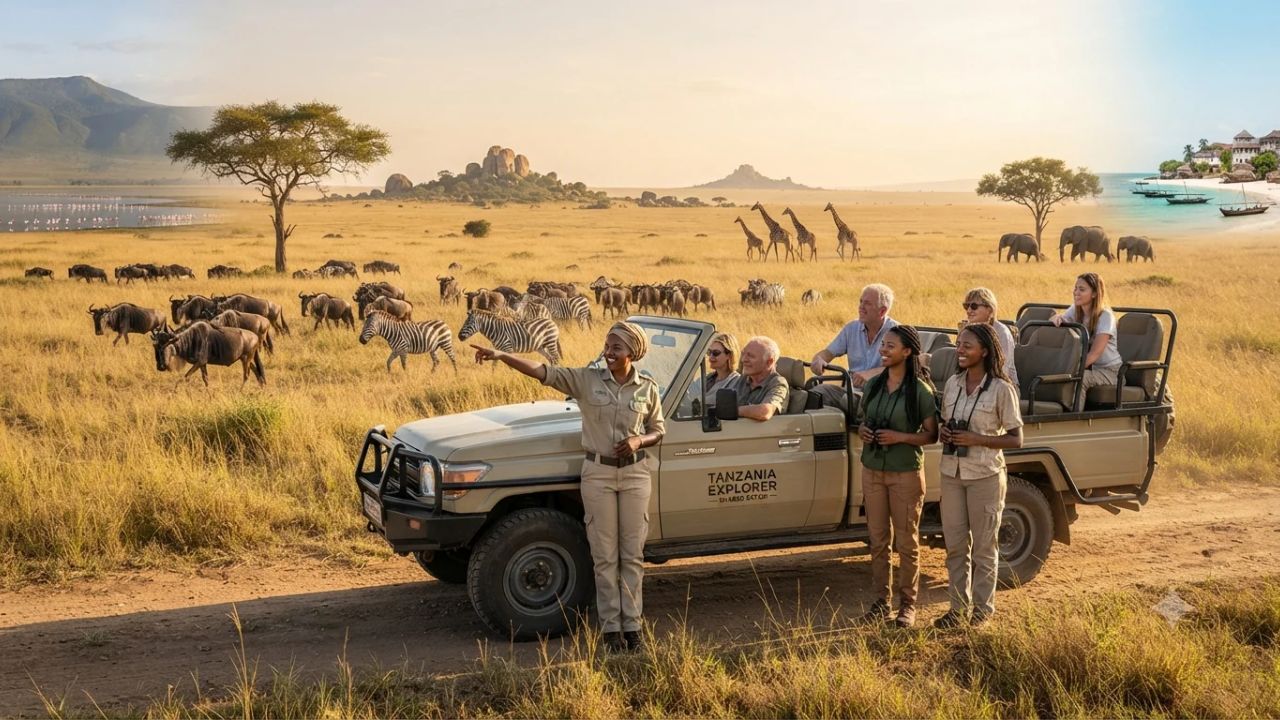
In a major strategic expansion of its wildlife and adventure travel offerings, Tanzania will introduce a new twice-weekly scheduled shared safari programme commencing on 13 January 2027, designed to broaden access for international tourists from the United Kingdom, Italy, the Netherlands, and wider global markets. Spearheaded by specialist tour operator Beach & Safari Holidays, the initiative operates every Wednesday and Sunday, deploying custom four-wheel-drive safari vehicles capped at six passengers with guaranteed window seating and pop-up photographic hatches. Offering four distinct itineraries spanning four to thirteen days across the iconic Northern Wildlife Circuit—including Serengeti National Park, Ngorongoro Crater, Tarangire National Park, Lake Manyara, Lake Natron, and the private Pololeti Game Reserve—the programme effortlessly bridges mainland wildlife observation with Indian Ocean beach retreats in Zanzibar. Backed by solid national economic data showing international visitor arrivals climbing past 2.29 million and annual tourism earnings reaching $4.41 billion, this shared-seat departure model transforms traditionally cost-prohibitive private safaris into accessible, structured adventures for solo travelers, couples, and small groups.
The introduction of scheduled shared departures marks a pivotal evolution in East Africa’s safari landscape. Historically, planning a high-end wildlife safari in Tanzania required international travelers to either hire an entire private four-wheel-drive vehicle and driver-guide at substantial daily expense or join large overland group tours with constrained itineraries and compromised game-viewing visibility. By introducing fixed, guaranteed weekly departures on Wednesdays and Sundays while capping vehicle capacity at six guests, the new format removes significant cost barriers for independent travelers without sacrificing personal space, photographic comfort, or guiding excellence. Additionally, by coordinating departures with domestic flight links between Arusha, Kilimanjaro, and Zanzibar, the programme responds directly to shifting European travel patterns, where international visitors increasingly demand combined "bush-and-beach" holidays that blend savannah game drives with coastal relaxation and Swahili cultural discovery.
========================================================================================
TANZANIA 2027 SCHEDULED SHARED SAFARI PROGRAMME SCORECARD
========================================================================================
Operational Dimension         Verified Service Specification & Programme Detail
----------------------------------------------------------------------------------------
Operating Tour Operator       Beach & Safari Holidays (Specialist African Safari Outfitter)
Official Launch Date          Wednesday, 13 January 2027
Departure Cadence             Twice Weekly: Fixed Guaranteed Departures Every Wednesday & Sunday
Itinerary Durations           Four Modular Packages: 4-Day, 7-Day, 10-Day, and 13-Day Itineraries
Maximum Vehicle Capacity      Strictly Capped at 6 Passengers per 4x4 Safari Land Cruiser
Seating Configuration         Guaranteed Window Seats for Every Passenger (3 Rows of 2 Seats)
Photographic Equipment        Extended Wheelbase, Pop-Up Observation Hatch, In-Seat USB Ports
Guiding Staff                 Professional English-Speaking Certified Tanzanian Driver-Guides
Mainland Circuit Focus        Northern Wildlife Circuit (Serengeti, Ngorongoro, Tarangire, Manyara)
Specialist Conservation Areas Lake Natron Alkaline Reserve & Private Pololeti Game Reserve
Coastal Extension Option      Direct Flight Connection to Zanzibar Beach Resorts & Stone Town
Target European Markets       United Kingdom (6.0% Share), Italy (11.8% Share), Netherlands (3.8% Share)
========================================================================================
Source: Beach & Safari Holidays Operational Briefing & Tanzania Ministry of Natural Resources (Nov 2026).
========================================================================================
The Scheduled Shared Safari Revolution: Dismantling the Private Charter Cost Barrier
For decades, the luxury safari model across sub-Saharan Africa has been built around private charters. While private vehicle hire offers absolute itinerary flexibility, it imposes an immense financial burden on solo travelers, couples, or small parties, who must absorb the full daily vehicle operating costs, fuel surcharges, park concession fees, and professional guide rates alone.
========================================================================================
COST STRUCTURE COMPARISON: PRIVATE BESPOKE SAFARI VS. SCHEDULED SHARED SAFARI
========================================================================================
Operational Cost Factor       Private Bespoke 4x4 Safari   Scheduled Shared Safari (2027)
----------------------------------------------------------------------------------------
Daily Vehicle & Driver Hire   $450 – $750 / day (fixed)    Divided equally among up to 6 guests
Vehicle Park Entry Fees       $100 – $250 / day per vehicleDivided across shared vehicle capacity
Minimum Passenger Threshold   1 Passenger (pays 100% cost) Guaranteed departure with shared seats
Window Seat Guarantee         100% Guaranteed              100% Guaranteed (capped at 6 guests)
Photographic Roof Hatch AccessFull Access                  Full Access via extended pop-up hatch
Guiding Quality & Language    Dedicated Professional Guide Dedicated Professional English Guide
Itinerary Flexibility         Completely customizable      Fixed, optimized multi-park route
Average Cost per Solo Traveler$6,000 – $11,000 (10 Days)   $2,400 – $4,200 (10 Days)
Suitability for Solo / CouplesHigh Cost Penalty            Optimized Cost & Social Experience
========================================================================================
1. Eliminating the Solo and Couple Cost Penalty
Under traditional pricing structures, a solo traveler booking a ten-day northern circuit safari could easily face land costs exceeding $8,000 to $10,000, driven largely by the fixed overhead of the private vehicle. The scheduled shared departure format dismantles this financial barrier. By distributing vehicle hire, national park vehicle fees, fuel, and guide allowances across six ticketed passengers, individual land costs decrease by 40% to 55%, unlocking access to premier wilderness reserves without forcing travelers into budget overland buses carrying twenty or thirty passengers.
2. Vehicle Architecture and Photographic Ergonomics
A central concern among wildlife photographers and safari enthusiasts when considering shared vehicles is spatial restriction and obstructed sightlines. To resolve this, Beach & Safari Holidays has engineered custom-modified safari-converted Toyota Land Cruisers:
- Strict Six-Passenger Limit: Standard nine-seat safari vehicles have been reconfigured with only six high-backed passenger seats arranged in three forward-facing pairs, ensuring that every single guest is guaranteed a window seat.
- Full-Length Pop-Up Roof: The vehicles feature an oversized, weather-shielded elevating roof hatch that allows all six passengers to stand simultaneously with 360-degree unobstructed fields of view for tracking predators, birds, and migrating herds.
- Field Electronics Support: Each seat is outfitted with dedicated international AC power points and USB charging ports linked to dual onboard vehicle batteries, allowing photographers to charge camera batteries, drones, and digital devices while traversing remote savannah tracks.
- Onboard Amenities: Vehicles carry high-powered binoculars for guest use, specialized East African wildlife reference field guides, a comprehensive first-aid kit, and an electric refrigeration unit stocked with chilled bottled water and refreshments.
3. Empirical Shift Toward Organized Package Travel
This operational evolution mirrors clear macro-level consumer trends documented by Tanzania's National Bureau of Statistics (NBS). According to the official International Visitors’ Exit Survey Report, published in July 2026:
- The proportion of international travelers choosing package travel arrangements in Tanzania expanded from 56.3% in 2024 to 58.8% in 2025, representing an increase of 2.5 percentage points.
- Conversely, non-package independent travel declined from 43.7% to 41.2% over the same period.
- International visitors cited predictable departure schedules, verified safety standards, transparent budgeting, and professional naturalist guiding as their primary motivations for selecting organized tour products over unassisted independent travel.
========================================================================================
TANZANIA TRAVEL ARRANGEMENT PREFERENCES: 2024 VS. 2025
========================================================================================
Travel Booking Arrangement    2024 Market Share (%)        2025 Market Share (%)   Net Change
----------------------------------------------------------------------------------------
Organized Package Travel      56.3%                        58.8%                   +2.5% pts
Independent Non-Package Travel43.7%                        41.2%                   -2.5% pts
Total Market Sample           100.0%                       100.0%                  N/A
========================================================================================
Source: National Bureau of Statistics (NBS) International Visitors' Exit Survey, July 2026.
========================================================================================
Northern Wildlife Circuit: Ecosystem Analysis Across Key Reserves
The core of the scheduled safari programme centers on Tanzania’s legendary Northern Wildlife Circuit. Spanning an ecological gradient from lush volcanic highlands and deep alkaline rift lakes to sweeping acacia savannahs, this circuit represents one of the most biologically productive wildlife landscapes on Earth.
========================================================================================
NORTHERN WILDLIFE CIRCUIT: DESTINATION SCORECARD & WILDLIFE HIGHLIGHTS
========================================================================================
Protected Area / Reserve      Biome & Key Terrain          Key Wildlife Species & Phenomena
----------------------------------------------------------------------------------------
Serengeti National Park       Endless short-grass plains,  Great Migration (1.5M wildebeest),
(14,763 sq km)                granite kopjes, acacia woods lion prides, cheetahs, leopards, hyenas
----------------------------------------------------------------------------------------
Ngorongoro Crater             Intact volcanic caldera floor,Black rhino sanctuary, dense lion prides,
(260 sq km / 8,292 sq km NCA) soda lake, fever tree forests giant tusked elephants, hippos
----------------------------------------------------------------------------------------
Tarangire National Park       Tarangire River valley,      Massive elephant herds (up to 300 head),
(2,850 sq km)                 ancient baobabs, swamps      fringe-eared oryx, tree-climbing pythons
----------------------------------------------------------------------------------------
Lake Manyara National Park    Groundwater forest, alkaline Tree-climbing lions, large baboon troops,
(648 sq km)                   lake, Great Rift Valley wall flamingos, pelicans, hornbills
----------------------------------------------------------------------------------------
Lake Natron Reserve           Hyper-saline soda lake,      Breeding ground for 75% of East Africa's
(Specialist Eco-Zone)         active volcanic escarpments  lesser flamingos; Ol Doinyo Lengai views
----------------------------------------------------------------------------------------
Pololeti Game Reserve         Private low-density buffer   Exclusive night game drives, walking
(Adjacent to East Serengeti)  concession bordering plains  safaris, undisturbed predator tracking
========================================================================================
1. Serengeti National Park: Following the Great Migration
Encompassing 14,763 square kilometers of untamed wilderness, Serengeti National Park forms the crown jewel of the itinerary. The park is globally famous for hosting the Great Migration, the continuous, circular journey of more than 1.5 million blue wildebeest, 250,000 plains zebras, and hundreds of thousands of gazelles in search of fresh pasture and water:
- Calving Season (January to March): The scheduled programme's launch in January perfectly coincides with the synchronized calving season in the southern Serengeti and Ndutu plains. Over an intensive two-to-three-week window, approximately 8,000 wildebeest calves are born each day. This biological explosion attracts apex predators—including lions, cheetahs, spotted hyenas, and leopards—creating extraordinary opportunities for wildlife observation.
- Rift and River Crossings (May to October): As dry conditions set in, longer itineraries follow the herds north toward the Grumeti and Mara rivers, where travelers observe dramatic river crossings fraught with towering Nile crocodiles and territorial big cats.
2. Ngorongoro Crater: The World's Largest Inactive Caldera
Descending 600 meters through misty montane rainforest onto the floor of the Ngorongoro Crater brings travelers into an enclosed ecological amphitheater:
- Formed two to three million years ago when a massive volcano collapsed inward, the 260-square-kilometer crater floor supports a permanent resident population of approximately 25,000 large mammals.
- Ngorongoro serves as one of East Africa's most secure refuges for the critically endangered eastern black rhinoceros (Diceros bicornis michaeli), offering visitors one of the highest probabilities of observing the complete "Big Five" (lion, leopard, elephant, buffalo, and rhinoceros) within a single 24-hour window.
- The crater's central water feature, Lake Magadi, attracts thousands of lesser and greater flamingos, while Lerai Forest provides critical browse for some of Africa’s last surviving "super-tusker" bull elephants.
3. Tarangire National Park: The Kingdom of Giants
Located slightly south of Lake Manyara, Tarangire National Park offers an entirely distinct atmospheric and ecological experience:
- Dominated by monumental, prehistoric African baobab trees (Adansonia digitata), the park is bisected by the permanent Tarangire River, which acts as the sole freshwater lifeline for hundreds of square kilometers during the dry season.
- Tarangire is famous for hosting the highest density of African bush elephants in Tanzania, with family herds frequently congregating in groups of 100 to 300 individuals along the river sandbanks.
- In addition to elephants, the park shelters rare dry-country ungulates rarely seen in the central Serengeti, including the fringe-eared oryx, long-necked gerenuk, and the diminutive Kirk's dik-dik.
4. Specialist Outposts: Lake Natron and Pololeti Game Reserve
Setting this new programme apart from conventional standard circuits is the deliberate inclusion of specialized, low-density conservation regions:
- Lake Natron: Tucked into the harsh, arid basin of the Great Rift Valley beneath the active volcanic cone of Ol Doinyo Lengai ("Mountain of God" in the Maasai language), Lake Natron’s caustic, hyper-alkaline waters form the solitary breeding cradle for more than 75% of East Africa’s lesser flamingo population. Visiting this surreal, rust-colored lake provides a dramatic visual and geological contrast to the verdant savannahs.
- Pololeti Game Reserve: Bordering the eastern boundary of the Serengeti, Pololeti is an exclusive, private conservation concession. Unlike national parks where off-road driving and night operations are strictly prohibited, Pololeti permits expertly guided night game drives to observe nocturnal hunters—such as aardvarks, civets, servals, and honey badgers—alongside private walking safaris conducted on foot with armed wildlife rangers.
========================================================================================
ANNUAL GREAT MIGRATION CALENDAR: WHERE TO FIND THE HERDS
========================================================================================
Month Range           Serengeti Region / Location   Primary Wildlife Behavior & Activity
----------------------------------------------------------------------------------------
December – March      Southern Serengeti & Ndutu    Calving season; immense predator action;
                                                    open savannah nursery with green grazing.
----------------------------------------------------------------------------------------
April – May           Central Serengeti (Seronera)  Herds begin moving north-west; long rains;
                                                    fewer tourists; dramatic cloud formations.
----------------------------------------------------------------------------------------
June – July           Western Corridor & Grumeti    Intense Grumeti River crossings; giant Nile
                                                    crocodiles; herds funnel into deep valleys.
----------------------------------------------------------------------------------------
August – October      Northern Serengeti & Mara     Spectacular Mara River crossings; boundary
                                                    movement between Tanzania and Kenya's Masai Mara.
----------------------------------------------------------------------------------------
November – December   Lobo & Eastern Serengeti      Short rains prompt rapid return journey
                                                    southward across eastern plains to Ndutu.
========================================================================================
Bush-to-Beach Synergy: Integrating Northern Circuit Safaris with Zanzibar
A major commercial pillar of the Beach & Safari Holidays 2027 initiative is the integrated alignment of mainland wildlife adventures with tropical beach holidays along the spice coast of Zanzibar (Unguja Island).
========================================================================================
THE INTEGRATED 10-DAY BUSH-TO-BEACH MULTIMODAL TRAVEL WORKFLOW
========================================================================================
[ Day 1: Arusha Arrival ]      Arrive Kilimanjaro (JRO) or Arusha (ARK); safari orientation
                                              │
                                              ▼
[ Days 2–3: Tarangire & Manyara]Elephant herds, baobabs, tree-climbing lions & rift lakes
                                              │
                                              ▼
[ Days 4–5: Central Serengeti ]Game drives across Seronera valley; tracking Big Five prides
                                              │
                                              ▼
[ Day 6: Ngorongoro Crater ]   Descend into caldera floor; black rhino tracking & picnic
                                              │
                                              ▼
[ Day 7: Bush-to-Beach Flight ]Fly Arusha/Serengeti to Zanzibar (ZNZ); private transfer
                                              │
                                              ▼
[ Days 8–9: Zanzibar Coast ]   Kendwa/Nungwi beaches; Mnemba Atoll snorkeling; dhow sunset
                                              │
                                              ▼
[ Day 10: Stone Town Heritage] Tour UNESCO historic quarter; spice bazaar; departure
========================================================================================
1. Multimodal Domestic Flight Connections
Rather than enduring exhausting full-day overland drives back to Arusha over bumpy highways, the scheduled programme links directly into Tanzania's regional aviation network:
- Guests conclude their northern safari circuit with a direct bush-flight connection from regional airstrips such as Seronera (SEU), Manyara (LKY), or Arusha (ARK) directly to Abeid Amani Karume International Airport (ZNZ) in Zanzibar.
- The flight takes approximately 60 to 90 minutes aboard turboprop aircraft (such as Cessna Grand Caravans or Dash-8s), transitioning travelers from the dust and excitement of the savannah to the warm breezes of the Indian Ocean by mid-afternoon.
2. Contrasting Coastal Environments: Kendwa, Nungwi, and Matemwe
Zanzibar’s coastline offers an idyllic counterpoint to intensive dawn-to-dusk safari game drives:
- Kendwa and Nungwi (Northern Coast): Renowned for having minimal tidal variation, allowing visitors to swim in calm, turquoise waters throughout the entire day. The area features boutique beachfront resorts, fine dining, and traditional wooden sailing dhow excursions.
- Matemwe and Mnemba Atoll (North-Eastern Coast): A quieter, secluded sanctuary overlooking the protected marine reserve of Mnemba Atoll, offering world-class scuba diving and snorkeling among green sea turtles, bottlenose dolphins, and vibrant coral reefs.
3. Stone Town: Immersing in Swahili Cultural Heritage
Before concluding their journey, travelers spend time in Stone Town, the historic heart of Zanzibar and a designated UNESCO World Heritage site:
- Characterized by a labyrinth of narrow stone alleys, ornate carved Swahili-Arab wooden doors, vibrant street bazaars, and coral-stone architecture, Stone Town preserves a complex cultural legacy shaped by African, Arab, Persian, Indian, and European influences over centuries.
- Key cultural excursions include visiting the historic Anglican Cathedral constructed over the former central slave market, exploring the Sultan’s Palace Museum, strolling past the monumental House of Wonders (Beit al-Ajaib), and sampling fresh seafood skewers at the nightly Forodhani Gardens food market.
========================================================================================
ZANZIBAR EXTENSION DIRECTORY: COASTAL HIGHLIGHTS & SENSORY EXPERIENCES
========================================================================================
Zanzibar Destination         Geographic Sector            Key Activities & Sensory Focus
----------------------------------------------------------------------------------------
Kendwa Beach                 North-West Coast             Tide-free swimming, sunset dhow cruises,
                                                          fine sand beaches, luxury beachfront dining
----------------------------------------------------------------------------------------
Nungwi Village               Far Northern Tip             Traditional dhow boat-building boatyards,
                                                          marine turtle conservation sanctuary
----------------------------------------------------------------------------------------
Mnemba Atoll Reserve         North-East Marine Park       Pristine coral gardens, green sea turtle
                                                          snorkeling, dolphin encounters, scuba diving
----------------------------------------------------------------------------------------
Jozani-Chwaka Bay National PkCentral Island Biosphere     Tracking rare endangered Zanzibar red
                                                          colobus monkeys in indigenous mahogany forest
----------------------------------------------------------------------------------------
Historic Stone Town          South-West Urban Peninsula   UNESCO heritage architecture, spice markets,
                                                          former slave market memorial, Sultan's Palace
========================================================================================
Macroeconomic Context: Tanzania’s Surging Visitor Economy and Revenue Records
The launch of expanded shared safari services takes place against the backdrop of remarkable economic expansion within Tanzania’s travel and hospitality sector. Official data published by the Ministry of Natural Resources and Tourism, the National Bureau of Statistics, and the Bank of Tanzania (BoT) demonstrates that the country’s visitor economy has achieved historic highs.
========================================================================================
TANZANIA NATIONAL TOURISM PERFORMANCE: OFFICIAL MACROECONOMIC SCORECARD
========================================================================================
Economic Indicator            2024 Benchmark               2025 Performance        Annual Growth %
----------------------------------------------------------------------------------------
Total International Arrivals  2,141,895 Visitors           2,294,495 Visitors      +7.1% Increase
National Tourism Earnings     US$ 3.903 Billion            US$ 4.411 Billion       +13.0% Increase
Rolling Travel Receipts (BoT)*US$ 4.388 Billion (Sept '25) US$ 4.566 Billion (Sept '26)+4.1% Increase
Average Expenditure per TouristUS$ 1,822 per visit         US$ 1,922 per visit     +5.5% Increase
Average Length of Stay        11.1 Nights                  11.8 Nights             +0.7 Nights
Package Travel Proportion     56.3% of Total Visitors      58.8% of Total Visitors +2.5% pts
========================================================================================
Sources: Tanzania National Bureau of Statistics (NBS); Bank of Tanzania (BoT) Monthly Economic Review.
*Rolling 12-month travel receipts ending September of each respective calendar year.
========================================================================================
1. Surpassing 2.29 Million International Visitors
Official figures confirm that Tanzania welcomed 2,294,495 international tourists in 2025, compared with 2,141,895 in 2024. This represents an annual net expansion of approximately 152,600 visitors, or a robust 7.1% year-on-year growth rate. The continuous upward trajectory reflects successful international marketing campaigns, expanded flight frequencies into Kilimanjaro (JRO) and Dar es Salaam (DAR) by major global carriers (such as Qatar Airways, Emirates, KLM, and Ethiopian Airlines), and stable political governance.
2. Surging Foreign Exchange Receipts and Conservation Revenues
The economic impact on foreign exchange earnings is even more pronounced:
- National tourism revenues surged from US$3.903 billion in 2024 to US$4.411 billion in 2025, representing an extraordinary 13.0% annual increase.
- More recent economic bulletins from the Bank of Tanzania (BoT) indicate that for the twelve-month rolling period ending September 2026, travel receipts climbed further to US$4.566 billion, up from US$4.388 billion recorded during the corresponding period ending September 2025.
- These revenues provide essential funding for the Tanzania National Parks Authority (TANAPA) and the Ngorongoro Conservation Area Authority (NCAA), directly financing anti-poaching ranger patrols, community healthcare infrastructure, wildlife corridor reforestation, and veterinary intervention teams.
European Source Market Dynamics: UK, Italy, and the Netherlands in Focus
While the new scheduled shared safari programme is accessible to international travelers worldwide, its operational design is tailored to capture surging demand across three key European source markets: the United Kingdom, Italy, and the Netherlands. Together, these three nations represent a formidable share of Tanzania’s international tourism receipts.
========================================================================================
EUROPEAN SOURCE MARKET PERFORMANCE IN TANZANIA & ZANZIBAR (2025 SURVEY AUDIT)
========================================================================================
Source Nation  National Survey ShareNational Rank  Zanzibar Survey Share Zanzibar Rank
----------------------------------------------------------------------------------------
Italy          11.8% of Total       Rank #2        18.8% of Total        Rank #1
United Kingdom 6.0% of Total        Rank #5        7.7% of Total         Rank #3
Netherlands    3.8% of Total        Rank #8        5.6% of Total         Rank #6
Combined Total 21.6% of All VisitorsNationally     32.1% of All Visitors In Zanzibar
========================================================================================
Source: Tanzania International Visitors' Exit Survey Report, Published July 2026.
========================================================================================
1. Italy: The Undisputed Market Leader in Coastal and Bush Tourism
Italy holds a preeminent position within Tanzania’s visitor demographics, driven by historic cultural ties, longstanding charter flight connectivity, and extensive hospitality investments:
- In the national 2025 survey, Italy ranked as the second-largest source market overall, representing 11.8% of all international visitors to mainland Tanzania (up from 11.6% in 2024).
- In Zanzibar, Italian prominence is even more commanding: Italy firmly retained the number-one ranking, accounting for an astonishing 18.8% of all surveyed international travelers on the island.
- Italian travelers exhibit a high propensity for combining one-week coastal resort stays with short, high-impact two-to-four-day wildlife safaris on the mainland. The Wednesday and Sunday departure schedules allow Italian holidaymakers to easily synchronize weekend flight arrivals with immediate safari departures.
2. The United Kingdom: High-Value Ecotourism and Wildlife Heritage
British travelers represent an established, high-spending tourism cohort characterized by extended stays and deep interest in nature conservation:
- The United Kingdom ranked as Tanzania’s fifth-largest source market nationally, capturing 6.0% of total international visitors in 2025.
- On Zanzibar, the UK captured the third-largest market share at 7.7%.
- British safari enthusiasts strongly favor guided interpretive wildlife experiences, photographic tracking of the Great Migration, and historical exploration in Stone Town. The provision of certified English-speaking driver-guides directly fulfills British consumer expectations for in-depth naturalist commentary.
3. The Netherlands: The Fastest-Rising European Safari Demographic
The Netherlands represents the most rapidly expanding European source market in Tanzania's recent tourism audits:
- In 2024, the Netherlands did not even appear among Tanzania’s top fifteen national source markets. However, in the 2025 survey, the Dutch market staged a dramatic entry, capturing the eighth position nationally with a 3.8% market share.
- In Zanzibar, Dutch market representation surged from 2.3% in 2024 (ranking joint-ninth) to 5.6% in 2025 (ranking sixth)—a dramatic net increase of 3.3 percentage points in a single calendar year.
- Dutch travelers are celebrated in the travel industry for their affinity toward active nature exploration, walking safaris, and sustainable, low-impact wildlife encounters, making small-group six-passenger shared vehicles an ideal match for their travel ethos.
========================================================================================
COMBINED IMPACT OF THE THREE LEADING EUROPEAN MARKETS
========================================================================================
Mainland Tanzania Visitor Base │ [███████████] 21.6% Combined (Italy, UK, Netherlands)
Zanzibar Visitor Base          │ [████████████████] 32.1% Combined (Italy, UK, Netherlands)
========================================================================================
Source: Consolidated Data from Tanzania National Bureau of Statistics (NBS) 2026 Audit.
========================================================================================
Frequently Asked Questions
What is the new Tanzania twice-weekly safari programme launching in 2027?
It is a scheduled shared wildlife safari initiative introduced by specialist operator Beach & Safari Holidays, launching on 13 January 2027. It offers fixed departures every Wednesday and Sunday across Tanzania's Northern Wildlife Circuit, with options to combine mainland safaris with beach stays in Zanzibar.
How does a shared safari differ from a traditional private safari?
In a traditional private safari, travelers must pay for the exclusive use of an entire 4x4 vehicle and guide. In a scheduled shared safari, individual seats are booked within a shared custom vehicle capped at six passengers, significantly reducing per-person costs while maintaining guaranteed window seats and high guiding standards.
What is the passenger capacity and setup of the safari vehicles?
Each customized four-wheel-drive Toyota Land Cruiser accommodates a maximum of six passengers in three rows of two seats, ensuring every traveler has a guaranteed window seat, access to a pop-up photographic roof hatch, personal USB charging ports, and an onboard refrigerator.
Which national parks and reserves are included in the itineraries?
The programme incorporates Serengeti National Park, Ngorongoro Crater, Tarangire National Park, Lake Manyara National Park, Lake Natron Reserve, and the private Pololeti Game Reserve.
What are the available safari itinerary durations?
Travelers can select from four distinct modular itineraries ranging from short four-day wildlife introductions to comprehensive thirteen-day expeditions that integrate the Great Migration with remote rift valley reserves.
How do travelers connect from mainland safaris to Zanzibar?
Direct domestic flights link regional safari airstrips (such as Seronera or Lake Manyara) and Arusha Airport directly to Zanzibar’s Abeid Amani Karume International Airport (ZNZ) in approximately 60 to 90 minutes.
What is the best time of year to witness the Great Migration on this programme?
The Great Migration is present year-round in the Serengeti. The programme’s January launch coincides with the wildebeest calving season in the southern Ndutu plains (January–March), while river crossings along the western and northern borders occur between June and October.
What language do the safari guides speak?
All game drives are led by certified, professional Tanzanian driver-guides fluent in English, with specialized training in wildlife biology, ornithology, conservation, and savannah photography.
Why are the UK, Italy, and the Netherlands significant for Tanzania tourism?
According to official 2026 government exit surveys, Italy represents Tanzania’s second-largest market nationally (11.8%) and largest in Zanzibar (18.8%); the UK ranks fifth nationally (6.0%) and third in Zanzibar (7.7%); and the Netherlands has surged to eighth nationally (3.8%) and sixth in Zanzibar (5.6%). Together, they account for nearly a third of all Zanzibar visitors.
What are Tanzania’s latest international tourism arrival and revenue numbers?
In 2025, Tanzania welcomed 2,294,495 international visitors (up 7.1% from 2,141,895 in 2024), generating US$4.411 billion in tourism earnings (a 13% increase). Rolling twelve-month travel receipts recorded by the Bank of Tanzania reached US$4.566 billion through September 2026.
Strategic Outlook: Sustainable Wildlife Conservation and Tourism Diversification
The scheduled shared safari programme launching in January 2027 represents a forward-thinking model for East African tourism. By creating accessible, predictable, and cost-effective shared departures, Tanzania is actively diversifying its visitor demographic, attracting a new generation of environmentally conscious solo adventurers, young couples, and small groups alongside its traditional ultra-luxury private clientele.
More importantly, the structured nature of small-group shared travel supports long-term ecological sustainability. By capping vehicle occupancy at six passengers while optimizing route schedules, the programme maximizes economic returns per vehicle while minimizing physical vehicle congestion along fragile savannah tracks.
As Tanzania continues to shatter international visitor and revenue records, initiatives that harmoniously unite wildlife conservation, community empowerment, and authentic cultural exploration ensure that the incomparable wilderness of the Serengeti and the historic shores of Zanzibar will endure for generations to come.
Related Travel Guides
- Thai Airways Issues Urgent Brussels–Bangkok Travel Advisory: TG935 Cancelled Amid Nationwide Belgian ATC Strike
- AI Reshapes Travel Planning and Holiday Bookings Toward 2032: Global Adoption, Autonomous Agents, and the Consumer Trust Divide
- Luxury Hospitality Gateways Redefine Adventure Tourism: Chile’s Antarctic Staging, Botswana’s Okavango Safari, and Zambia’s Kafue River
- Bosnia and Herzegovina Lukomir Village Travel Guide: Highland Shepherding Heritage, Dinaric Alps Hiking, and Rural Tourism in Bjelašnica
This article is for informational purposes. Flight routes, passenger regulations, visa rules, and transit advisories are subject to change by airlines and aviation authorities. Readers are advised to verify schedules and travel documentation with relevant carriers and border agencies before departure.
Related Stories
15 Underrated European Cities Reddit Travelers Say Deserve More Attention in 2027