
Tallinn Airport €66.6M Expansion: Passenger Disruption & Estonia Travel Guide 2026

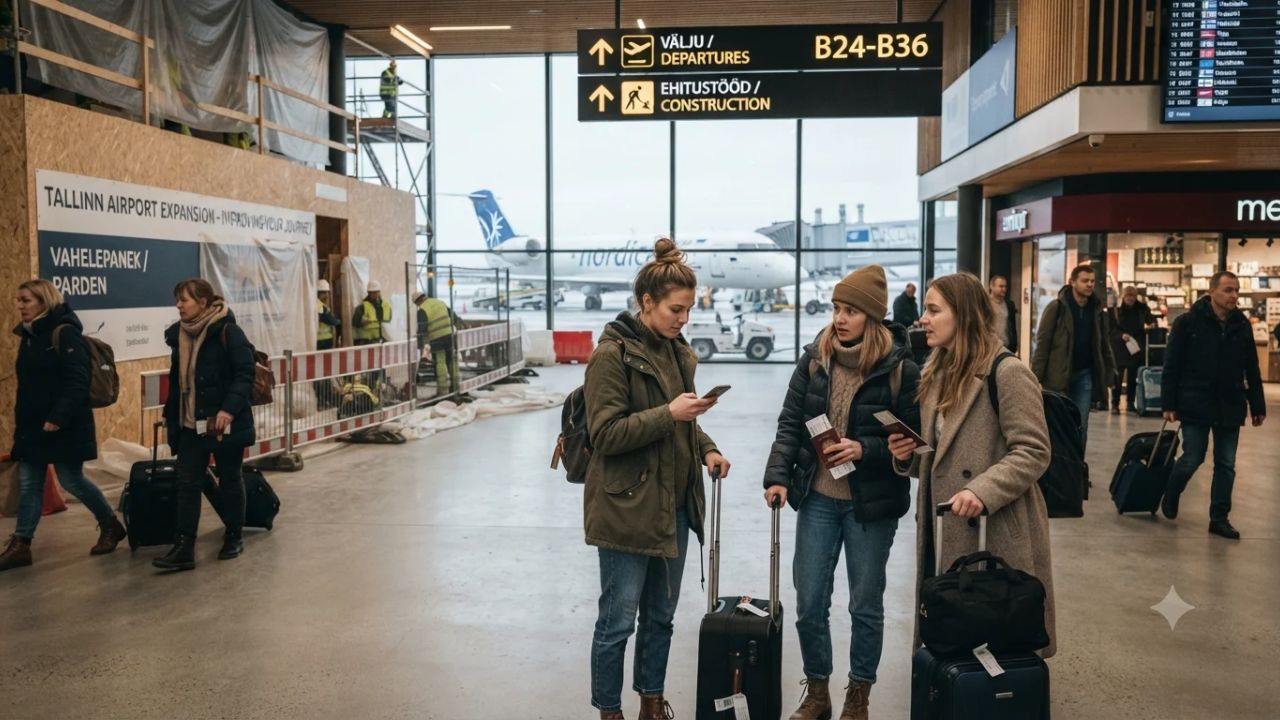
Originally engineered to accommodate just 2.8 million passengers annually, Estonia's primary international aviation gateway handled an unprecedented all-time monthly record of nearly 390,000 travelers in August 2026 alone. To resolve severe terminal congestion that saw 2.54 million passengers pass through its gates in the first eight months of the year—an 11 percent increase over 2025—Tallinn Airport (AS Tallinna Lennujaam) has officially awarded a 66.6 million euro construction contract to joint contractors Tallinna Ehitustrust OÜ and Ehitustrust OÜ, launching a 31-month expansion project designed to scale facility capacity to five million travelers per year.
Inside the €66.6M Overhaul: How Tallinn Airport Is Scaling for Five Million Travelers
The 31-month construction initiative begins with ground site preparations in autumn 2026, transitioning into heavy structural builds across interior passenger zones in early 2027. Crucially, the airport will remain fully operational throughout the build, with flight schedules and ground handling proceeding without scheduled shutdowns.
The engineering blueprint adds approximately 16,500 square meters of brand-new terminal architecture erected over existing parking grounds between the passenger building and the public transit hub. Simultaneously, crews will completely renovate 18,000 square meters of existing facilities between 2025 and 2029.
The expansion delivers tangible operational upgrades: two additional boarding gates, widened aircraft parking aprons, an expanded baggage reclaim hall with high-speed automated belts, and expanded border-control zones tailored specifically to streamline processing for non-Schengen flights connecting to the United Kingdom, Central Asia, and North America.
With 19 airlines operating across nearly 50 routes—led by airBaltic with a 29 percent market share and Wizz Air with 18 percent, alongside dense commuter frequencies to Warsaw, Helsinki, Riga, Frankfurt, and Stockholm—the upgrade directly underpins the national Tourism Action Plan 2026–2029 managed by the Ministry of Economic Affairs and Communications. The state strategy aims to elevate tourism service exports from 1.86 billion euros to 2.7 billion euros by 2029, reinforcing an industry that represents seven percent of Estonia’s national gross domestic product.
What Makes Tallinn Distinct: Medieval Spires, Digital Nomads, and Baltic Coasts
Tallinn presents an extraordinary juxtaposition: it is simultaneously one of Europe’s best-preserved medieval trading towns and the undisputed digital capital of the continent, where municipal services, startup incubation, and civic voting occur seamlessly online.
Perched above the Gulf of Finland, the Historic Centre (Old Town) of Tallinn is inscribed under the UNESCO World Heritage Convention. Encircled by two kilometers of original fourteenth-century limestone defensive walls and red-tiled watchtowers, its cobblestone streets wind between gothic guildhalls, merchant cellars, and the onion-domed Russian Orthodox Alexander Nevsky Cathedral atop Toompea Hill.
Yet just minutes past the ancient fortifications lies Telliskivi Creative City (Telliskivi Loomelinnak), a transformed industrial rail yard that now pulses with design studios, contemporary art centers like Fotografiska Tallinn, micro-breweries, and organic bakeries. Further east along the coastal promenade, the grand baroque Kadriorg Palace—commissioned by Peter the Great—opens onto peaceful oak groves and the modern glass architecture of the Kumu Art Museum, as highlighted by Visit Estonia.
Visitor Insider Tips: Navigating the Airport and Capital During Expansion
Because major construction will take place inside an active terminal, travelers heading to or from Tallinn must adapt their transit habits.
Airport Navigation and Transit Hacks
- Follow Physical Directional Signage Over Memory: Because construction barriers will shift pedestrian corridors between security, duty-free retail, and boarding gates, do not rely on previous airport layouts. Pay close attention to overhead temporary wayfinding signs.
- The Tram Line 4 Link: Skip expensive private taxi stands outside the terminal. Tram Line 4 departs right from the airport terminal's transit station, transporting travelers straight into downtown Tallinn (Hobujaama station) in under twenty minutes for less than two euros using contactless bank card tap-and-go validators.
- Allow Cushion Time for Non-Schengen Departures: If you are boarding flights bound for London or other non-Schengen destinations, arrive at least two hours before departure during morning and evening rush hours to comfortably navigate temporary border processing checkpoints.
Urban Exploration and Dining Etiquette
- Footwear for Old Town Cobblestones: Tallinn’s historic district is paved with centuries-old uneven granite cobblestones. Sturdy, flat walking shoes are non-negotiable; thin soles or high heels make walking up Pikk Jalg and Lühike Jalg streets hazardous, especially in wet autumn weather.
- Seasonal Rye and Smoked Fish Delicacies: In local taverns and contemporary Baltic bistros, savor authentic Estonian black rye bread (rukkileib), traditional sprats served on buttered toast with hard-boiled eggs (kiluvõileib), pan-seared Baltic herring, and slow-roasted wild chanterelle mushrooms harvested from surrounding pine forests.
- The Sauna Legacy: Take part in Estonia’s historic sauna culture. While the UNESCO-recognized smoke saunas of Võromaa lie in the south, urban travelers in Tallinn can experience historic wood-heated bathhouses like Kalma Saun in the Kalamaja district, founded in 1928.
Recommended Neighborhood Basing
- Kalamaja: Characterized by vibrant wooden two-story worker houses ("Tallinn houses"), quiet residential streets, artisanal coffee shops, and immediate access to the waterfront Seaplane Harbour (Lennusadam).
- Rotermann Quarter: A striking blend of restored nineteenth-century industrial limestone warehouses and ultra-modern glass architecture, packed with trendy wine bars, fashion boutiques, and international bistros right between Old Town and the passenger ferry port.
Cultural and Environmental Context: Digital Governance and Forest Conservation
Estonia’s relationship with its environment is deeply woven into national identity. Over fifty percent of the country’s territory is covered by dense boreal forest, with extensive peat bogs, wetlands, and coastal nature reserves protected under national conservation mandates.
The terminal expansion incorporates strict Baltic environmental standards, utilizing energy-efficient HVAC systems, sustainable timber finishes, and stormwater management systems designed to minimize ecological run-off into nearby Lake Ülemiste—the city’s primary freshwater reservoir.
Travelers are invited to explore nature responsibly through the State Forest Management Centre (RMK) trail network. Marked boardwalks allow visitors to traverse fragile peat bogs like Viru Raba in Lahemaa National Park without trampling delicate mosses, demonstrating how careful infrastructure safeguards ancient ecosystems while welcoming mindful global explorers.
FAQ: Traveling Through Tallinn Airport 2026
Will Tallinn Airport close during the €66.6 million terminal expansion?
No. The passenger terminal remains fully open and operational throughout the 31-month project, with flights and passenger services continuing alongside phased construction.
When does heavy construction inside the terminal begin?
Site preparation begins in autumn 2026, while substantial interior terminal renovation and structural work starts in early 2027 and continues through 2029.
How do I travel from Tallinn Airport to the city center?
Tram Line 4 connects the airport terminal directly with downtown Tallinn in under twenty minutes, accepting standard contactless credit or debit card payments on board.
What is the long-term passenger capacity of the new terminal?
The expansion will increase the airport's annual handling capacity to five million passengers, up from its original design baseline of 2.8 million.
As Tallinn expands its aviation threshold for the future, Estonia's blend of medieval tranquility and digital innovation remains as captivating as ever.
Related Travel Guides
Disclaimer
This article is for informational and educational purposes only. It does not constitute legal, financial, or professional advice. While we strive to provide accurate and up-to-date information, travel policies, regulations, and conditions change rapidly. Always verify information with official sources before making travel decisions. Nomad Lawyer makes no representations about the accuracy, reliability, completeness, or suitability of the information provided. Readers should consult qualified professionals for advice specific to their circumstances. The views expressed in this article are those of the author and do not necessarily reflect the views of Nomad Lawyer.
Raushan Kumar
Founder & Lead Developer
Full-stack developer with 11+ years of experience and a passionate traveller. Raushan built Nomad Lawyer from the ground up with a vision to create the best travel and law experience on the web.
Learn more about our team →