
Taiwan High Speed Rail Receives First Japan-Built N700ST Shinkansen Trains in 144-Car Fleet Expansion
Taiwan's high-speed rail network enters a new era with Japan-built N700ST Shinkansen trains arriving July 30, 2026, adding 144 cars and boosting peak capacity by 25 percent.

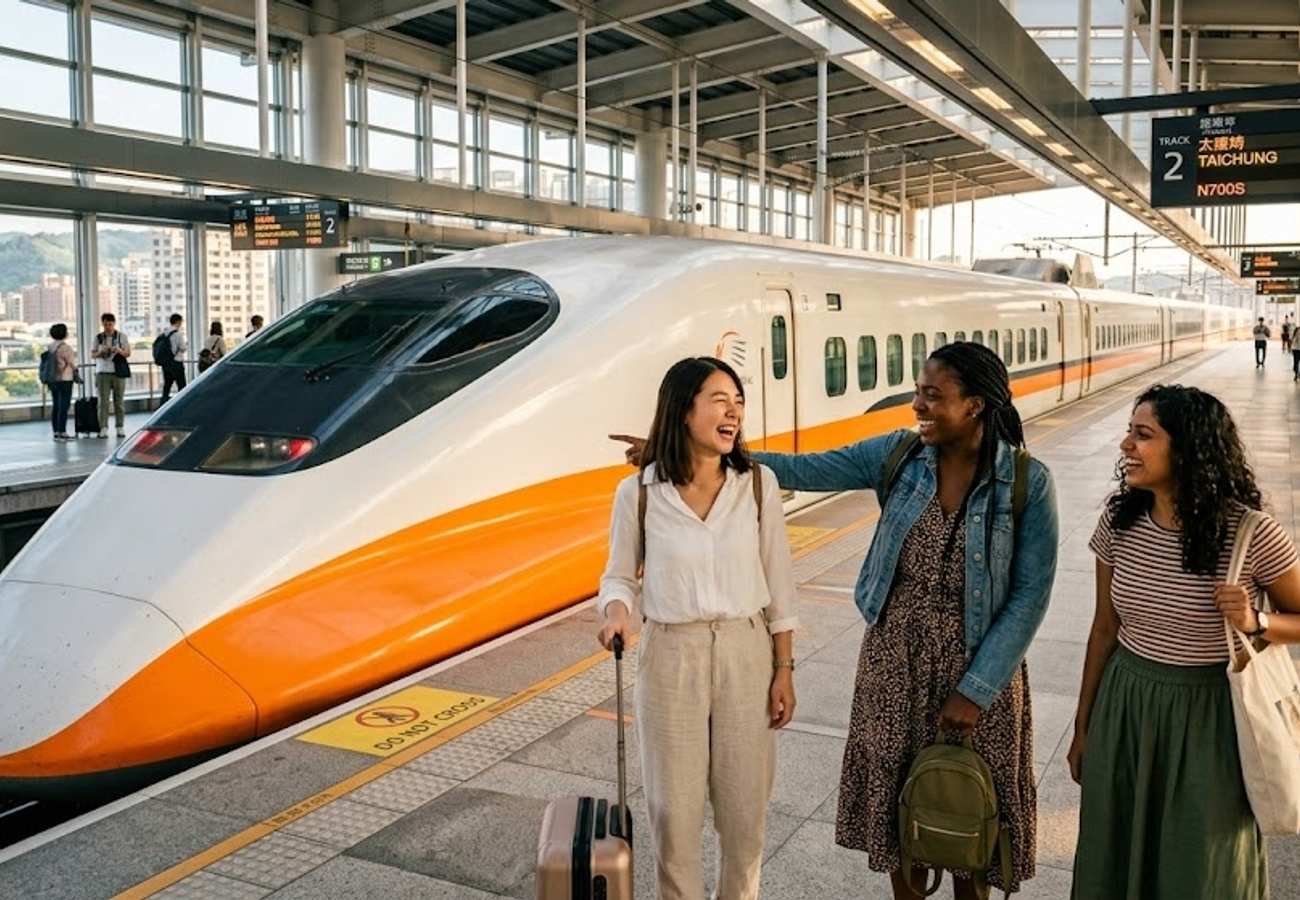
Image generated by AI
[Taipei, August 1, 2026] — Taiwan's high-speed rail network just added 144 new passenger cars to its fleet overnight. The first Japan-built N700ST Shinkansen-based train arrived at Taiwan High Speed Rail (THSR) stations on July 30, 2026, after completing rigorous testing — kicking off a procurement program valued at approximately 124 billion Japanese yen and promising a 25 percent capacity boost during peak travel periods.
The arrival marks the beginning of a massive modernization push. Between 2026 and 2030, approximately US$66.5 billion will flow into expanding and upgrading Taiwan's rail services and stations, targeting the heavily traveled Taipei–Kaohsiung corridor that millions of passengers depend on each year.
Taiwan's High-Speed Rail Faces Surging Passenger Demand
Ridership pressure on Taiwan's railway network has reached unprecedented levels. Between 2019 and 2022 alone, passenger numbers more than doubled, driven by rapid network expansion and growing domestic tourism. That surge shows no sign of slowing, and the existing 700T train fleet has been stretched to its operational limits during weekends, national holidays, and peak tourism seasons.
The 12 new N700ST trainsets — each comprising 12 cars — are designed to absorb that demand. Rather than replacing older trains outright, the program represents a genuine fleet expansion, adding 144 cars to the network and pushing peak capacity upward by roughly 25 percent. For travelers who have faced sold-out carriages during Lunar New Year or summer holiday rushes, the additional capacity could translate directly into better ticket availability and less crowded platforms.
Hitachi Toshiba Supreme Consortium Delivers Customized N700S Technology
The procurement agreement between Taiwan High Speed Rail Corporation and the Hitachi Toshiba Supreme Consortium covers 12 next-generation trainsets built on Japan's N700S Shinkansen platform. However, these are not off-the-shelf Japanese imports. Each train has been customized for Taiwan's specific operational environment, including adaptations for local climate conditions, track geometry, and passenger flow patterns.
Each N700ST train measures approximately 300 metres in length and will operate at a maximum commercial speed of 300 kilometres per hour along Taiwan's north-south high-speed railway. That speed matches the current 700T fleet's operating velocity, meaning the primary gains come not from faster journeys but from more frequent departures, greater seat availability, and modernized onboard systems.
| Category | Current Situation | N700ST Upgrade Impact |
|---|---|---|
| Railway corridor | Taipei to Kaohsiung | Increased capacity on Taiwan's main high-speed route |
| Train technology | Existing 700T fleet | New Shinkansen-based N700ST fleet |
| Total trains ordered | Limited expansion capacity | 12 additional trainsets |
| Total cars added | — | 144 new passenger cars |
| Maximum speed | 300 km/h operation | Maintained with improved efficiency |
| Peak capacity | Existing passenger pressure | Around 25% increase expected |
Passenger-Focused Features Redefine the THSR Travel Experience
The N700ST fleet introduces a suite of cabin upgrades that align with evolving global expectations for long-distance rail travel. Every seat will be equipped with a power socket — a feature absent from many older high-speed train configurations. Full-colour passenger information displays will replace older monochrome systems, providing real-time updates on arrival times, connecting services, and station facilities.
Luggage storage has been re-engineered to accommodate larger suitcases typical of international visitors, while additional wheelchair spaces and enhanced nursing facilities address accessibility needs that previous designs overlooked. Active suspension technology will reduce vibration throughout the cabin, creating a smoother ride — particularly noticeable on the longer segments between Taichung and Tainan.
For travelers planning multi-city itineraries, these improvements matter beyond mere comfort. They reduce the friction of moving between destinations, making it feasible to base a trip in Taipei, spend an afternoon in Taichung's cultural districts, and continue south to Kaohsiung for dinner — all on a single day's rail journey.
Toshiba SCiB Battery System Adds Operational Resilience
Beneath the passenger cabin, the N700ST trains carry technology that most riders will never see but may eventually rely on. The traction system combines silicon carbide power devices with a blower-less cooling architecture, allowing equipment to run smaller, lighter, and more energy-efficient than previous generations.
More significantly, the trains feature Toshiba's SCiB lithium-ion battery technology. During power interruptions — whether caused by natural disasters, grid failures, or equipment malfunctions — this system allows trains to continue moving slowly to a safe location while maintaining essential onboard services such as lighting and toilet operations. Passengers stranded between stations would retain basic amenities rather than sitting in a dark, non-functional carriage.
This resilience layer reflects a broader industry recognition that modern rail networks must withstand disruption, not just deliver speed. Taiwan's location in a seismically active region makes such backup systems particularly relevant, and other operators across Asia are watching closely.
Taipei–Kaohsiung Corridor Gains Tourism Leverage
The N700ST fleet operates along Taiwan's western corridor, connecting the capital Taipei with the southern port city of Kaohsiung and passing through major intermediate stops including Taichung and Tainan. This route already serves as the backbone of Taiwan's domestic tourism economy, but the additional capacity is expected to shift travel patterns in subtle ways.
International visitors arriving at Taoyuan International Airport can bypass domestic flights entirely, boarding high-speed rail directly to southern destinations. The expanded fleet makes this option more viable during peak periods when current trains frequently sell out. For tourism planners in Kaohsiung and Tainan — cities that have historically received less international attention than Taipei — the added capacity could mean a measurable increase in visitor arrivals.
Potential travel benefits include easier multi-city trip planning, greater accessibility to southern Taiwan's attractions, reduced pressure on domestic aviation routes, and improved travel confidence for international visitors navigating an unfamiliar transport system.
Why This Matters for Asia's Rail Tourism Competition
Taiwan's investment signals a regional trend. Across Asia, high-speed rail is evolving from a pure transport solution into a tourism strategy. South Korea, Japan, and China have all expanded their networks in recent years, and Southeast Asian countries including Indonesia and Vietnam are developing or planning high-speed corridors of their own.
The N700ST program demonstrates how rolling stock decisions ripple outward into destination competitiveness. A 25 percent capacity increase does not just move more people — it changes where those people can go, how long they stay, and how much they spend outside major gateway cities. For a destination like Taiwan, which competes with Japan, South Korea, and Thailand for international visitors, reliable and comfortable rail infrastructure is becoming a differentiating factor rather than a baseline expectation.
The US$66.5 billion committed through 2030 will extend beyond trains to encompass station modernization, regional mobility connections, and tourism integration — transforming what is currently a point-to-point rail service into a broader travel ecosystem.
Frequently Asked Questions
What is the N700ST Shinkansen train upgrade in Taiwan?
The N700ST upgrade is Taiwan's latest high-speed rail expansion, introducing 12 Japan-built trainsets based on the N700S Shinkansen platform. The fleet adds 144 passenger cars customized for Taiwan's operating conditions, with a maximum commercial speed of 300 km/h.
How many new high-speed trains will Taiwan receive?
Taiwan High Speed Rail will receive 12 N700ST trainsets, each with 12 cars, totaling 144 new passenger cars. Peak capacity is expected to rise by approximately 25 percent.
Will the new N700ST trains make travel faster in Taiwan?
The maximum operating speed remains 300 km/h, matching the existing fleet. Improvements focus on capacity, reliability, passenger amenities, and operational efficiency rather than higher speeds.
Which cities will benefit from Taiwan's new Shinkansen-based trains?
The N700ST fleet serves the Taipei–Kaohsiung corridor, with major stops including Taichung, Tainan, and Kaohsiung benefiting from improved connectivity and reduced crowding during peak periods.
How will the new trains impact tourism in Taiwan?
The expanded fleet supports multi-city travel by increasing ticket availability during peak seasons, encouraging international visitors to explore beyond Taipei, and reducing reliance on domestic flights for southbound journeys.
Are the N700ST trains replacing Taiwan's existing high-speed trains?
No. The N700ST program is a fleet expansion, not a replacement. The existing 700T trains remain in service, and the new trainsets add operational capacity to meet growing demand.
For travelers mapping a Taiwan itinerary in 2026 and beyond, the math just changed: 144 new rail cars mean 25 percent more seats during the busiest travel windows — and that could be the difference between a sold-out weekend and a seamless multi-city journey.
Related Travel Guides
Disclaimer
This article is for informational and educational purposes only. It does not constitute legal, financial, or professional advice. While we strive to provide accurate and up-to-date information, travel policies, regulations, and conditions change rapidly. Always verify information with official sources before making travel decisions. Nomad Lawyer makes no representations about the accuracy, reliability, completeness, or suitability of the information provided. Readers should consult qualified professionals for advice specific to their circumstances. The views expressed in this article are those of the author and do not necessarily reflect the views of Nomad Lawyer.
Preeti Gunjan
Contributor & Community Manager
A passionate traveller and community builder. Preeti helps grow the Nomad Lawyer community, fostering engagement and bringing the reader experience to life.
Learn more about our team →