
Sydney Airport Uber Pickup Guide 2026: Navigating T1, T2, and T3 Rideshare Zones
Master the 2026 Uber pickup systems at Sydney Airport, from T1's unique PIN-based queue to the Domestic Priority Pick-up zones at T2 and T3.

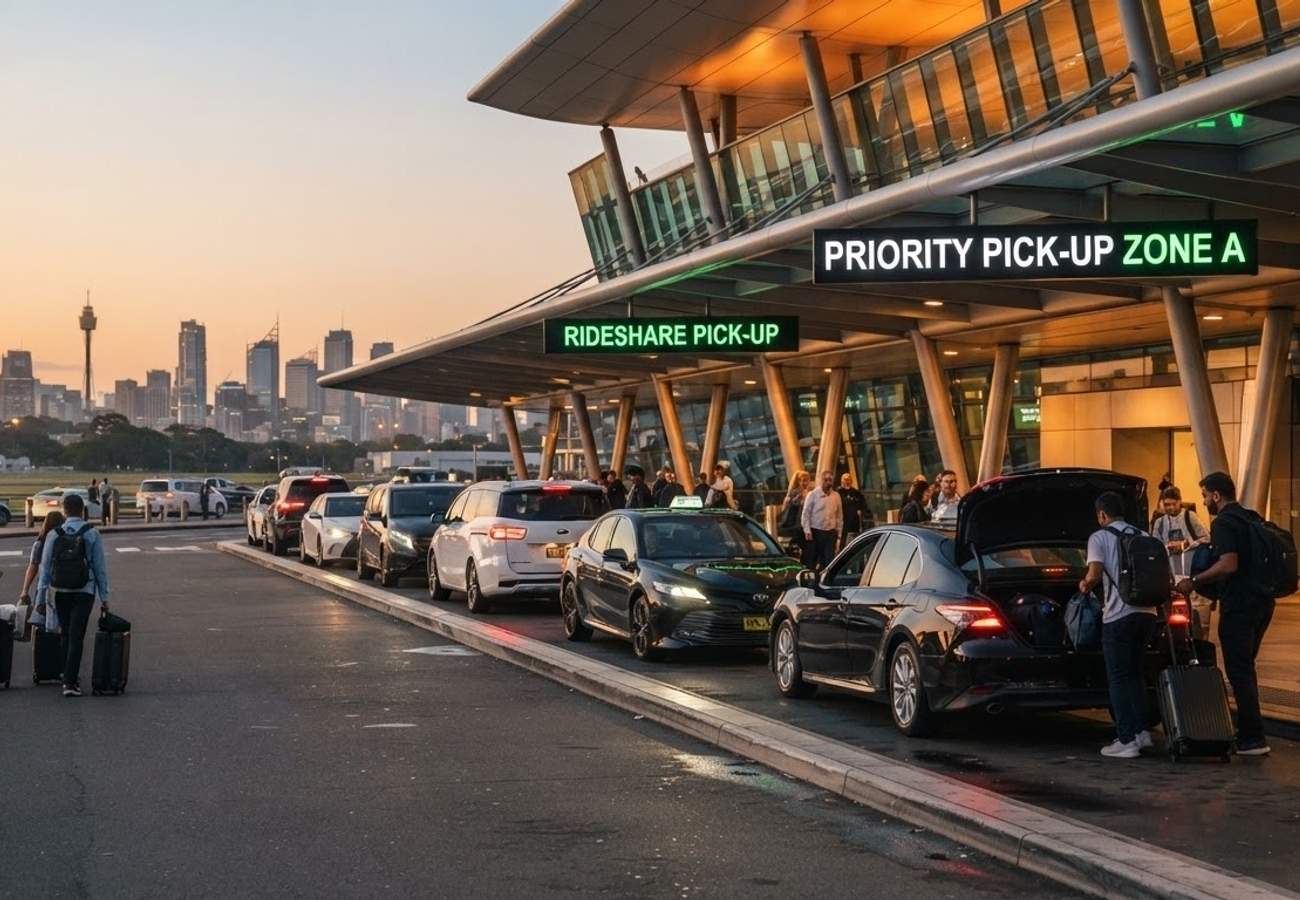
Image generated by AI
A standard UberX from Sydney Airport to the city center typically ranges from 35 to 55 Australian dollars, including tolls and airport access fees. For those landing at T1, the traditional "match-and-wait" system has been replaced by a high-efficiency PIN queue that eliminates the hunt for a specific license plate.
The Shift to Integrated Rideshare Logistics
Ground transportation at Sydney Airport has evolved into a highly regulated ecosystem where Uber, Ola, and DiDi operate within strict zonal boundaries. The most significant shift is the move away from remote parking garage pickups toward dedicated, terminal-adjacent zones.
The airport now implements a mandatory access fee for all rideshare vehicles entering these zones. This fee is automatically integrated into your final Uber fare. While this adds a small premium compared to a pickup from a nearby street in Mascot, it provides a streamlined experience that avoids the legal and logistical hurdles of unauthorized kerbside pickups.
T1 International: The PIN-Based Queue System
T1 International has introduced a modern logistics model to handle the surge of long-haul arrivals from North America, Asia, and the Middle East. The pickup zone is now located approximately 20 metres from the terminal doors, significantly reducing the transit time for jet-lagged passengers.
Rather than waiting for a specific driver to navigate the airport's complex road network, T1 utilizes a PIN system:
- Request: Order your UberX via the app once you have cleared customs.
- Receive: The app generates a short numeric PIN code.
- Queue: Follow the "Uber" or "Rideshare" signs to the kerbside pickup bays and join the line.
- Board: When you reach the front, provide your PIN to the next available driver.
This system prevents the common frustration of "driver cancellations" caused by traffic congestion, as you simply board the next vehicle in the stream regardless of who was originally assigned. For a mid-morning trip to Town Hall, expect fares between 40 to 60 Australian dollars for UberX, depending on demand.
T2 and T3 Domestic: Priority Pick-up Zones
Domestic arrivals for Virgin Australia, Jetstar (T2), and Qantas (T3) operate under a different logic. Pickups do not occur at the immediate terminal kerb to prevent gridlock. Instead, all rideshare traffic is funneled to the Domestic Priority Pick-up area.
For passengers at T2 and T3, the process involves following the green "Priority Pick-up" or "Rideshare" signage. This zone is a shared space for private vehicles and rideshare drivers. Because the airport charges a time-based fee for vehicles passing through the boom gates in this area, drivers are under pressure to move quickly.
Typical Fare Estimates (Weekday Early Evening):
- T2 to Surry Hills: Roughly 35 to 45 Australian dollars.
- Peak/Surge Pricing: Can exceed 50 Australian dollars during rain or major events.
Cultural & Environmental Value: Sustainable Transit
For the visitor, the real impact of these organized zones is a reduction in "dead-running"—the practice of empty cars circling terminals, which contributes significantly to local emissions and traffic congestion. By utilizing the PIN system at T1 and the Priority zones at T2/T3, Sydney Airport reduces the carbon footprint of each passenger trip.
Travelers looking to further support regional sustainability can opt for the T8 Airport & South Line train. While the train involves a station access surcharge, it remains the most eco-friendly way to reach the CBD, especially during peak hour traffic when road transit times spike.
Visitor Insider Tips
- The "Luggage First" Rule: At T2 and T3, do not request your Uber until you are physically walking toward the Priority Pick-up zone. If you order while waiting at the baggage carousel, your driver may incur higher parking fees and be more likely to cancel your request.
- Off-Peak Window: To avoid surge pricing and long queues, aim for arrivals between 10:00 AM and 2:00 PM.
- Taxi vs. Uber: If the Uber app shows a surge price above 60 Australian dollars for a city trip, check the official taxi rank. Metered taxis often provide a more stable price point during extreme demand spikes.
- Signage over GPS: The Uber app's GPS pin can occasionally lag or point to restricted roads. Always prioritize the physical green "Rideshare" signage over the app's map.
Tourism Outlook
The integration of PIN technology and priority zones signals a move toward "frictionless" arrivals. As Sydney continues to grow as a global hub, the airport's focus on reducing kerbside chaos will likely expand to include more automated transit options and expanded electric vehicle (EV) charging infrastructure within the rideshare holding areas.
Navigating the airport is now less about the search and more about the flow.
Related Travel Guides
Disclaimer
This article is for informational and educational purposes only. It does not constitute legal, financial, or professional advice. While we strive to provide accurate and up-to-date information, travel policies, regulations, and conditions change rapidly. Always verify information with official sources before making travel decisions. Nomad Lawyer makes no representations about the accuracy, reliability, completeness, or suitability of the information provided. Readers should consult qualified professionals for advice specific to their circumstances. The views expressed in this article are those of the author and do not necessarily reflect the views of Nomad Lawyer.
Preeti Gunjan
Contributor & Community Manager
A passionate traveller and community builder. Preeti helps grow the Nomad Lawyer community, fostering engagement and bringing the reader experience to life.
Learn more about our team →