Switzerland’s Bürgenstock Resort Earns Double MICHELIN Key Honour For Luxury Hospitality Excellence

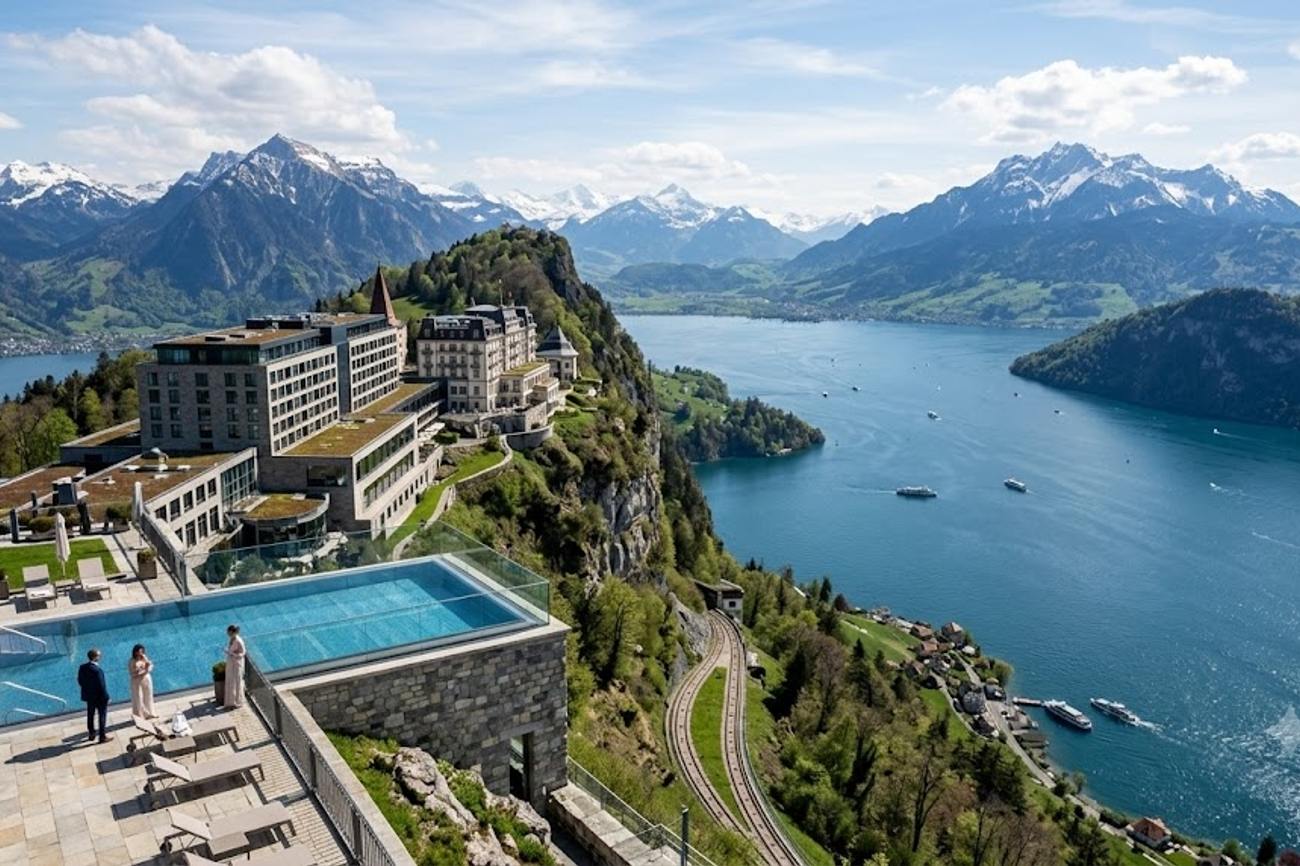
Image generated by AI
Ten hotels in Switzerland represent the absolute ceiling of luxury hospitality in 2026, having secured the three MICHELIN Key distinction. Among this elite group, the Bürgenstock Hotel & Alpine Spa has now maintained this top-tier ranking for three consecutive years, signaling a rare level of operational consistency in a market defined by hyper-competition. This stability, paired with the debut MICHELIN Key awarded to the Waldhotel by Bürgenstock on 18 September 2026, suggests a strategic diversification of the resort's value proposition—moving from a singular focus on traditional luxury to a dual-track offering of "high-glamour" and "holistic wellness."
The Mechanics of the MICHELIN Key System
The expansion of the Guide MICHELIN into the hotel sector mirrors its culinary origins, shifting the focus from simple amenity checklists to a qualitative assessment of "personality" and "character." For the Bürgenstock Resort Lake Lucerne, these awards are not merely marketing badges but validations of a specific capital investment strategy. The MICHELIN Key selection process utilizes five rigid benchmarks: the quality and consistency of service, the architectural and interior design, the hotel's unique personality, the overall guest experience, and the value for money.
The fact that the Bürgenstock Hotel & Alpine Spa has held three keys since 2024 indicates that the property has successfully navigated the "sophomore slump" often seen after major renovations or reopenings. In the luxury sector, maintaining a three-key status for three years (2024, 2025, and 2026) requires a rigorous adherence to service protocols that leave almost zero margin for error. This is particularly challenging in the Swiss market, where the baseline for hospitality is already among the highest globally.
Architectural Integration and Asset Diversification
The recent recognition of the Waldhotel by Bürgenstock marks a pivot toward "nature-focused" luxury, a trend currently dominating the high-net-worth travel segment. Designed by architect Matteo Thun, the property is an exercise in environmental blending. The structure is terraced to mirror the natural contours of the Bürgenberg mountain, utilizing a material palette of local stone and larch wood to minimize the visual impact on the alpine landscape.
From a logistical and sustainability standpoint, the Waldhotel serves as a case study in circular construction. The project integrated stones recovered during the initial excavation directly into the building's façade, reducing the need for imported materials and lowering the carbon footprint of the build. This architectural philosophy extends to the guest experience, where the 126 rooms and 11 suites are designed to prioritize "tranquillity" and "connection with nature" over traditional opulence.
The resort's scale is substantial, comprising four distinct hotels with a total of 360 rooms:
- Bürgenstock Hotel & Alpine Spa (The flagship luxury anchor)
- Waldhotel by Bürgenstock (The wellness and nature specialist)
- Palace Hotel by Bürgenstock (Classic luxury)
- Taverne 1879 (Boutique/Traditional)
This multi-tiered approach allows the resort to capture different traveler personas—the corporate elite, the wellness seeker, and the traditional luxury tourist—all within a single destination.
Expert Analysis: The Geopolitics of Luxury Ownership
The success of the Bürgenstock Resort is not merely a triumph of Swiss hospitality, but a result of strategic sovereign wealth investment. The resort is part of The Bürgenstock Collection, which is owned by Katara Hospitality, the Qatar-based global developer. This ownership model is critical to understanding why the resort can maintain such an aggressive standard of excellence.
For the traveler, the direct consequence of this ownership is a level of capitalization that independent Swiss hotels cannot match. The 10,000-square-metre Alpine Spa and the ability to recruit top-tier talent—such as Chef Christian Scharrer, who took over the Verbena restaurant in March 2026—are funded by a global portfolio that views these assets as "trophy properties." The "Home Kitchen" concept introduced by Scharrer reflects a broader shift in fine dining: moving away from sterile, formal gastronomy toward a "refined yet personal" approach. This is a calculated move to attract a younger generation of affluent travelers who value authenticity and intimacy over white-glove formality.
The Bürgenstock Resort in Switzerland has been awarded the prestigious Double MICHELIN Key honour for its exceptional luxury hospitality excellence, recognizing its commitment to providing outstanding services and amenities to its guests. For more information on the MICHELIN Guide and its rigorous evaluation process, visitors can refer to the official MICHELIN Guide website. This prestigious award is a testament to the resort's dedication to delivering unparalleled luxury experiences.
The pricing pressure created by this level of investment means that the Bürgenstock Resort effectively sets the price ceiling for the Lake Lucerne region. By securing MICHELIN Keys across multiple properties, they justify premium ADR (Average Daily Rate) increases, as the "Key" acts as a third-party guarantee of quality that mitigates the perceived risk for the guest.
Key Takeaways
- Consistent Elite Status: Bürgenstock Hotel & Alpine Spa is one of only ten hotels in Switzerland to hold three MICHELIN Keys for 2026, a title it has held since 2024.
- Wellness Pivot: The Waldhotel by Bürgenstock has entered the MICHELIN ranks with its first Key, emphasizing a shift toward sustainable, nature-integrated architecture and holistic health.
- Culinary Evolution: The introduction of Chef Christian Scharrer’s "Home Kitchen" concept at Verbena (March 2026) signals a move toward personalized, contemporary fine dining.
- Sovereign Backing: The resort's operational scale is supported by Katara Hospitality, enabling massive infrastructure like the 10,000-square-metre Alpine Spa.
- Environmental Integration: The Waldhotel utilizes a terraced design and recycled excavation stone to blend into the Bürgenberg landscape.
FAQ: Bürgenstock Resort 2026
What is the difference between the Bürgenstock Hotel and the Waldhotel? The Bürgenstock Hotel & Alpine Spa focuses on flagship luxury and comprehensive spa experiences (3 MICHELIN Keys). The Waldhotel is a "five-star superior" property focused on holistic wellbeing, nature-integrated architecture, and tranquility (1 MICHELIN Key).
What are MICHELIN Keys in the hotel industry? Unlike the "Star" system for food, MICHELIN Keys evaluate hotels based on five criteria: design, service consistency, personality, value for money, and the overall guest experience. Three Keys represent the highest possible distinction.
Who is the chef at the Waldhotel's signature restaurant? As of March 2026, the Verbena restaurant is led by Chef Christian Scharrer, who implements a "Home Kitchen" philosophy combining classic influences with modern, precise craftsmanship.
How many rooms are available across the entire Bürgenstock Resort? The resort features a total of 360 rooms spread across four distinct hotels: Bürgenstock Hotel & Alpine Spa, Palace Hotel, Waldhotel, and Taverne 1879.
When sovereign wealth meets alpine precision, the result is less of a hotel and more of a curated ecosystem of luxury.
Related Travel Guides
- Glasgow, Manchester and Rome Set for 2027 Hotel Rush as Oasis Tour Drives Travel Demand
- The Westin Pushkar Resort & Spa Appoints Rajat Sharma as New General Manager to Drive Luxury Hospitality Growth
- India’s Goa Tourism Gets New Boost as Sibaya Opens 40 Room Calangute Hotel With Stone Wood Hotels Partnership
This article is for informational purposes. Flight routes, passenger regulations, visa rules, and transit advisories are subject to change by airlines and aviation authorities. Readers are advised to verify schedules and travel documentation with relevant carriers and border agencies before departure.
Related Stories
Marriott Unveils 2026 Holiday and New Year Programmes Across 11 Luxury Resorts in the Americas
JW Marriott Mussoorie Walnut Grove Resort Appoints Rahul Valsakumar as Director of Food and Beverage to Lead Himalayan Luxury Dining