
Switzerland Leads Global Solar Railway Revolution With Italy Netherlands and South Korea to Transform Rail Infrastructure 2026
Switzerland is spearheading a global solar railway revolution, partnering with Italy, the Netherlands, and South Korea to integrate photovoltaic technology into active rail corridors for sustainable mobility.

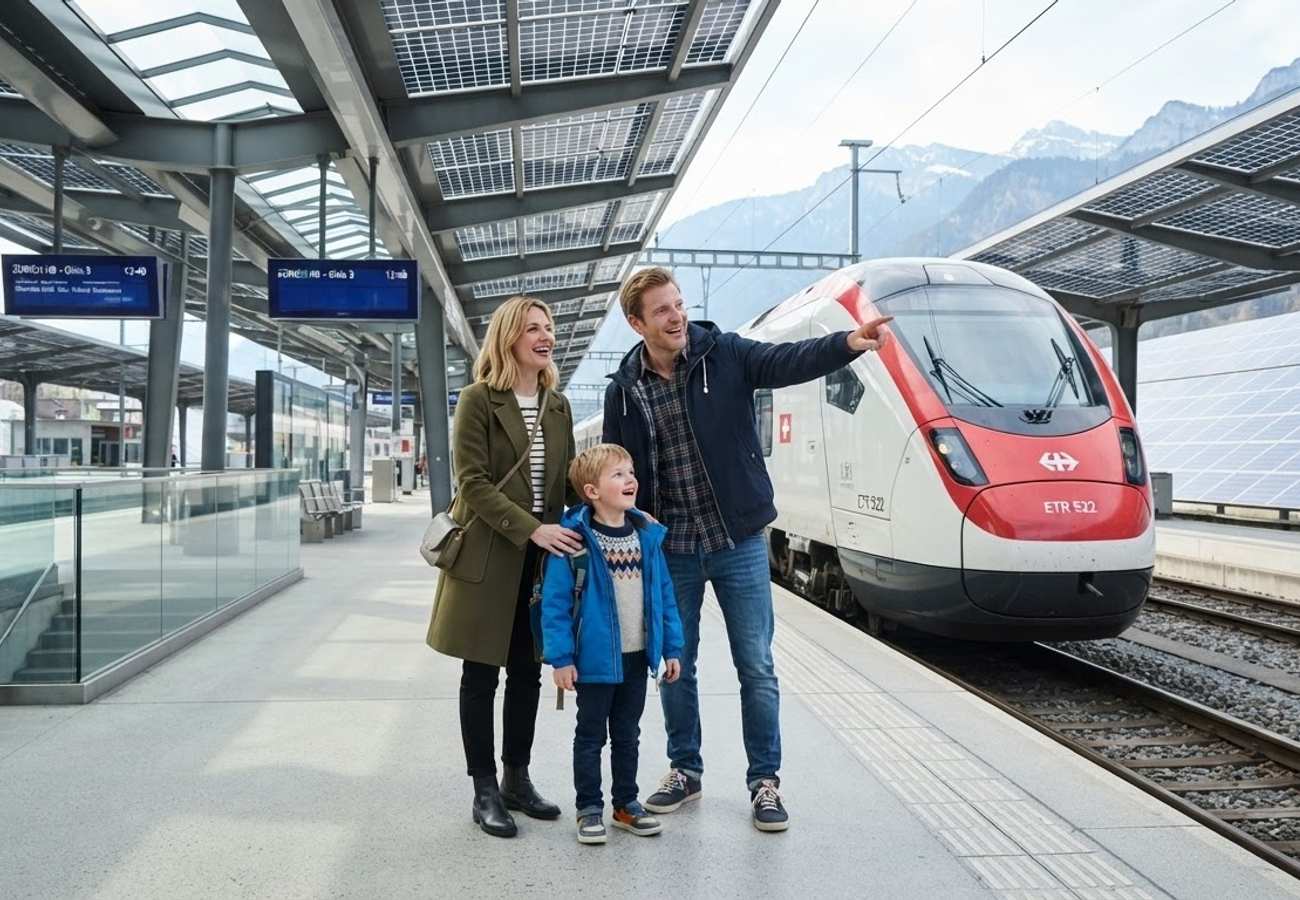
Image generated by AI
[Geneva, July 6, 2026] — A coalition of nations including Switzerland, Italy, the Netherlands, and South Korea is advancing a systemic overhaul of transport energy by integrating solar railway technology into active transit corridors. This initiative transforms traditional rail lines into dual-purpose energy assets, allowing infrastructure to generate renewable electricity while facilitating high-capacity passenger movement.
The shift toward solar-integrated rail is gaining momentum in economies with high electrification goals and dense transport networks. By embedding photovoltaic systems directly into the rail environment, these nations are moving away from a model where railways are passive energy consumers, instead positioning them as active contributors to national power grids and decarbonization targets.
Solar Integration Transforming Global Rail Corridors
The transition to solar-powered rail infrastructure represents a fundamental change in how renewable energy is harvested within urban and rural landscapes. Rather than utilizing separate land for solar farms, governments are leveraging existing right-of-way corridors to install energy-generating technology. This approach minimizes land-use conflicts and maximizes the efficiency of existing transport footprints.
Industry observers note that this evolution is particularly prevalent in regions where sustainability targets are strictly mandated. The integration of smart infrastructure allows for a more resilient energy loop, where the power generated on-site can potentially be used to power signaling, stations, and even the trains themselves.
| Region | Development Stage | Focus Area |
|---|---|---|
| Switzerland | Pilot operational | Track-mounted solar panels |
| Italy | Early pilot phase | Rail energy collaboration |
| Netherlands | Concept expansion | Smart infrastructure testing |
| South Korea | Government-backed pilots | Urban rail integration |
Switzerland Establishes Operational Solar Rail Model
Switzerland has emerged as a primary innovator in this sector, reporting record-breaking passenger rail activity in the first quarter of 2026 with nearly 5.79 billion passenger-kilometers. To support this growth sustainably, the Swiss government has deployed one of the first operational solar railway pilot systems globally.
This system utilizes photovoltaic panels installed specifically between active tracks. To ensure operational safety and durability, the modules feature reinforced engineering and anti-reflective coatings. Furthermore, the Swiss model incorporates automated cleaning mechanisms to prevent debris and dust from reducing energy yields. While the flat installation design results in some efficiency loss compared to angled panels, the stability of the energy output has proven the concept is scalable for other high-density networks.
Switzerland Solar Rail Pilot Specifications
| Component | Specification |
|---|---|
| Location | Val-de-Travers rail corridor |
| Capacity | Small-scale pilot deployment |
| Technology | Photovoltaic track integration |
| Maintenance | Automated cleaning system |
| Output | Pilot-level electricity generation |
Italy Adapts Renewable Rail Energy for Mediterranean Climates
Italy is currently integrating solar railway strategies into its broader network modernization plan. With high-speed rail serving approximately 56 million passengers annually, the Italian rail authority is focusing on how to scale solar technology across high-traffic routes.
The Italian approach emphasizes collaboration with European clean-energy innovators to adapt photovoltaic technology to the specific demands of the Mediterranean climate. By focusing on regions with high solar exposure, Italy aims to turn its national corridors into significant energy producers. This strategy aligns with the broader European transition toward transport-energy convergence, reducing the reliance on external power grids during peak travel periods.
Netherlands Evaluates Smart Infrastructure for Urban Mobility
In the Netherlands, where annual railway passenger traffic is projected to exceed 390 million by 2028, the focus has shifted toward "smart" infrastructure. The state-owned operator, Nederland’s Spoorwegen (NS), manages a massive operation of roughly 4,800 daily domestic trains.
While the Netherlands is currently in the conceptual and evaluation phase for rail-integrated solar, the country has a strong history of testing photovoltaic roads. Current assessments are focusing on how high-efficiency, compact solar systems can be embedded into dense urban and intercity corridors. The goal is to optimize energy generation within tight spatial constraints, ensuring that renewable energy is generated as close to the point of consumption as possible.
South Korea Integrates Solar Power into High-Density Transit
South Korea is leveraging its advanced digital infrastructure to enhance energy efficiency in its rail networks, which handled nearly 42.11 million passengers in Q1 2026. The South Korean model is characterized by government-backed initiatives that prioritize urban rail corridors.
Unlike the purely generative focus of some European pilots, South Korea is emphasizing the integration of solar power directly into railway substations. This is supported by smart monitoring and control systems that redistribute energy in real-time to optimize performance. This integration of digital oversight and renewable generation reflects a wider East Asian trend of creating "intelligent" green mobility ecosystems.
Analysis of Global Rail Infrastructure Transformation
The synchronization of solar energy with rail infrastructure marks a pivotal shift in sustainable tourism and global mobility. By reducing the carbon footprint of the journey itself, these nations are making low-carbon travel more viable for the general public.
The impact is twofold: first, it reduces the operational costs of rail networks by lowering energy procurement expenses. Second, it enhances the environmental profile of destination connectivity, making rail an even more attractive alternative to short-haul aviation. As these pilots move from the experimental phase to full-scale deployment, the ability to generate power on-site will likely lead to more resilient transport networks that can operate independently of volatile energy markets.
Why This Matters (Information Gain)
The move toward solar-integrated rail is not merely about "green energy" but about the strategic optimization of land and infrastructure. In the aviation and transport sector, the "last mile" and the "transit corridor" are often wasted spaces. By transforming these corridors into power plants, countries are creating a new asset class of infrastructure.
For the travel industry, this signals a transition toward "Net-Zero Corridors." When a passenger travels from a city center to a tourist destination via a solar-powered rail line, the entire value chain of the trip becomes sustainable. This will likely influence future tourism certifications and consumer choices, where the method of arrival becomes as important as the destination itself. The collaboration between Switzerland, Italy, the Netherlands, and South Korea suggests a future where global rail standards are unified by renewable energy integration.
The era of passive infrastructure is ending, replaced by energy-generating networks that power the future of global mobility.
Related Travel Guides
Disclaimer
This article is for informational and educational purposes only. It does not constitute legal, financial, or professional advice. While we strive to provide accurate and up-to-date information, travel policies, regulations, and conditions change rapidly. Always verify information with official sources before making travel decisions. Nomad Lawyer makes no representations about the accuracy, reliability, completeness, or suitability of the information provided. Readers should consult qualified professionals for advice specific to their circumstances. The views expressed in this article are those of the author and do not necessarily reflect the views of Nomad Lawyer.
Kunal K Choudhary
Co-Founder & Contributor
A passionate traveller and tech enthusiast. Kunal contributes to the vision and growth of Nomad Lawyer, bringing fresh perspectives and driving the community forward.
Learn more about our team →