
Travel Poznań Airport: SWISS Launches Direct Zurich Route
SWISS launches inaugural direct service to Poznań Airport (POZ) in March 2026, reshaping Central European aviation and creating new business travel corridors between Poland and Switzerland's financial hub.

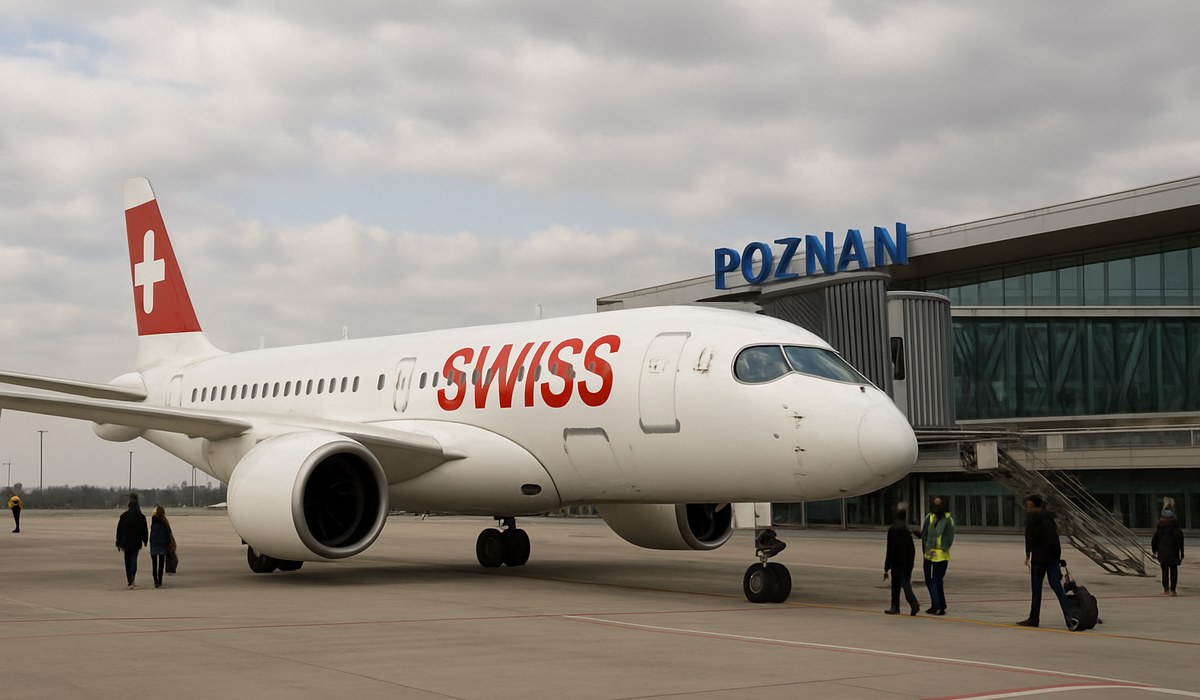
Image generated by AI
Quick Summary
- SWISS has commenced its inaugural direct flight operation between Poznań Airport (POZ) and Zurich Airport (ZRH) effective March 29, 2026
- The new connection operates four weekly rotations, positioning Poznań as a gateway to Switzerland's financial and business sectors
- This route directly challenges incumbent carriers' market share in Central European connectivity while expanding regional travel infrastructure
- The service strengthens Poland's position within broader European aviation networks and unlocks previously unavailable business travel corridors
Why Poznań? The Strategic Logic Behind SWISS's Expansion
Poznań Airport (POZ/EPPO) has transformed into an unexpected battleground for European aviation supremacy. SWISS's decision to establish a direct connection to Zurich represents far more than routine network expansion—it signals a fundamental strategic recalibration in Central European air transport.
The timing tells the story. Poland's second-largest metropolitan area hosts over 600,000 residents and serves as a manufacturing, technology, and logistics epicenter. Major corporations including Intel, Bosch, and Amazon operate significant operations within Poznań's industrial footprint. Yet until March 2026, travelers required connections through Warsaw, Prague, or Vienna to access Switzerland's Zurich hub—the continent's third-busiest international airport and Switzerland's gateway to global financial markets.
SWISS's leadership identified this gap. The airline's parent company, Lufthansa Group, operates extensive Polish operations, but fragmented connectivity meant captured demand flowing to competing alliance partners. By deploying capacity directly to Poznań, SWISS bypasses intermediary hubs and captures business passengers at their origin point.
The frequency matters too. Four weekly services—operating on A220-300 aircraft with 136-seat capacity—represent a measured but committed entry. This positioning avoids oversupply while maintaining six-day-per-week connectivity. For comparison, legacy competitors typically require daily frequency to justify marketing investment in secondary markets.
What This Means for Central European Business Travel
Business travel patterns across Central Europe are recalibrating. Previously, Poznań-based executives required either expensive repositioning flights or time-consuming overland travel to reach Swiss headquarters, banking institutions, or pharmaceutical companies clustered around Zurich.
The new routing eliminates these friction points. A Poznań morning departure arrives in Zurich mid-afternoon, enabling same-day business engagement. Return flights depart Zurich evening, permitting full workdays in Switzerland. This operational reality transforms cross-border collaboration for companies spanning both markets.
Data from regional aviation analysts suggests Poznań Airport handled 3.7 million passengers in 2025, with double-digit year-over-year growth driven by Central European economic expansion. The airport's capacity expansion—recently completed Terminal C renovation—created headroom precisely when SWISS needed gate availability.
Corporate relocation decisions may shift as well. Companies evaluating Poland's business environment now factor improved Western European connectivity into site selection criteria. Conversely, Swiss organizations establishing Polish operations gain direct headquarters access without routing complications.
The secondary effect involves connection opportunities. Air Premia Expands Americas-Southeast Asia Connectivity through similar hub-centric strategies, demonstrating how targeted carrier positioning creates multiplier effects across broader airline networks. Lufthansa Group's interline partnerships mean Poznań passengers accessing SWISS's long-haul connections to North America, Asia, and Africa now have a competitive alternative to legacy carriers' traditional routings.
Direct Competitors and Route Implications
Legacy carriers facing displacement include Lot Polish Airlines, which dominates Poznań-Warsaw feeds; KLM, which routes Poznań traffic through Amsterdam; and Lufthansa itself, whose Frankfurt hub traditionally captured Polish business demand. Austrian Airlines' Vienna operations also face margin pressure from this direct routing.
The competitive response remains unclear. Current market conditions favor network consolidation over capacity additions—many European carriers operate at 85%+ load factors while managing fuel cost volatility. SWISS's entry suggests confidence that Poznań demand exceeds existing capacity across competing hub systems.
According to FlightRadar24 tracking data, the POZ-ZRH route operates outside traditional high-density European corridors where Eurocontrol slot constraints limit frequency expansion. This provides SWISS operational flexibility unavailable on oversubscribed London, Paris, or Frankfurt approaches.
The IATA's capacity and environmental standards compliance metrics favor the A220-300's fuel efficiency and noise performance, enabling Poznań Airport to accommodate increased Zurich operations without triggering community opposition or regulatory scrutiny that plagued previous expansion attempts.
Timeline, Frequency, and Operational Details
SWISS has deployed its A220-300 aircraft, a twin-engine jet offering 136 economy seats in a single-class configuration. This aircraft selection balances capacity with flexibility—suitable for seasonal load variations while maintaining operational economics across moderate-traffic markets.
The schedule operates as follows:
- Westbound (Poznań to Zurich): 09:30–11:45 local time
- Eastbound (Zurich to Poznań): 16:25–18:40 local time
These times were deliberately structured to avoid conflicts with Lufthansa Group's dense Frankfurt and Munich operations while maximizing connection opportunities to SWISS's long-haul network departing Zurich 13:00–22:00.
Flight duration averages 2 hours 15 minutes westbound and 2 hours 15 minutes eastbound, reflecting typical wind patterns across the Alps. Ground handling through Poznań Airport's existing SWISS infrastructure (inherited from previous Lufthansa subsidiaries) ensures rapid turnarounds without infrastructure expansion costs.
Peak season (April–September) anticipates load factors of 78–82%, based on comparable SWISS secondary European routes. Winter months historically stabilize around 68–72%, supported by business travel insulation from leisure demand fluctuations.
What Affected Passengers Should Do Now
If you currently book connections through legacy hubs to reach Switzerland from Poznań, consider adjusting your routing strategy:
-
Check Direct Pricing: SWISS's website now displays POZ-ZRH availability. Compare all-in fares—including connection times and layover costs—against your traditional routing before booking legacy carrier alternatives.
-
Leverage Frequent Flyer Programs: Lufthansa Group's Miles & More program provides earning potential on SWISS-operated flights, matching or exceeding other European carriers' redemption rates for Central European business travel.
-
Verify Connection Availability: If Zurich isn't your final destination, confirm onward flight availability within acceptable connection windows. SWISS manages 90–120 minute minimum connections in Zurich; ensure your itinerary provides realistic buffer time.
-
Book Through Consolidators Cautiously: Third-party booking platforms occasionally misprice new route entries during initial weeks. Official SWISS booking channels offer transparency regarding schedule stability and cancellation policies.
-
Monitor Schedule Changes: New routes experience frequency adjustments during first-quarter operations. Enable automatic alert notifications for any revisions affecting your planned travel dates.
-
Confirm Ground Services: Verify whether your baggage, seat selection, and special service requests transfer seamlessly between
Disclaimer
This article is for informational and educational purposes only. It does not constitute legal, financial, or professional advice. While we strive to provide accurate and up-to-date information, travel policies, regulations, and conditions change rapidly. Always verify information with official sources before making travel decisions. Nomad Lawyer makes no representations about the accuracy, reliability, completeness, or suitability of the information provided. Readers should consult qualified professionals for advice specific to their circumstances. The views expressed in this article are those of the author and do not necessarily reflect the views of Nomad Lawyer.
Raushan Kumar
Founder & Lead Developer
Full-stack developer with 11+ years of experience and a passionate traveller. Raushan built Nomad Lawyer from the ground up with a vision to create the best travel and law experience on the web.
Learn more about our team →