
Qatar Airways' Surprising A380 Absence from US Routes: Only One Flight Recorded as Airline Recalibrates Global Strategy
Breaking airline news and aviation industry updates for 2026.

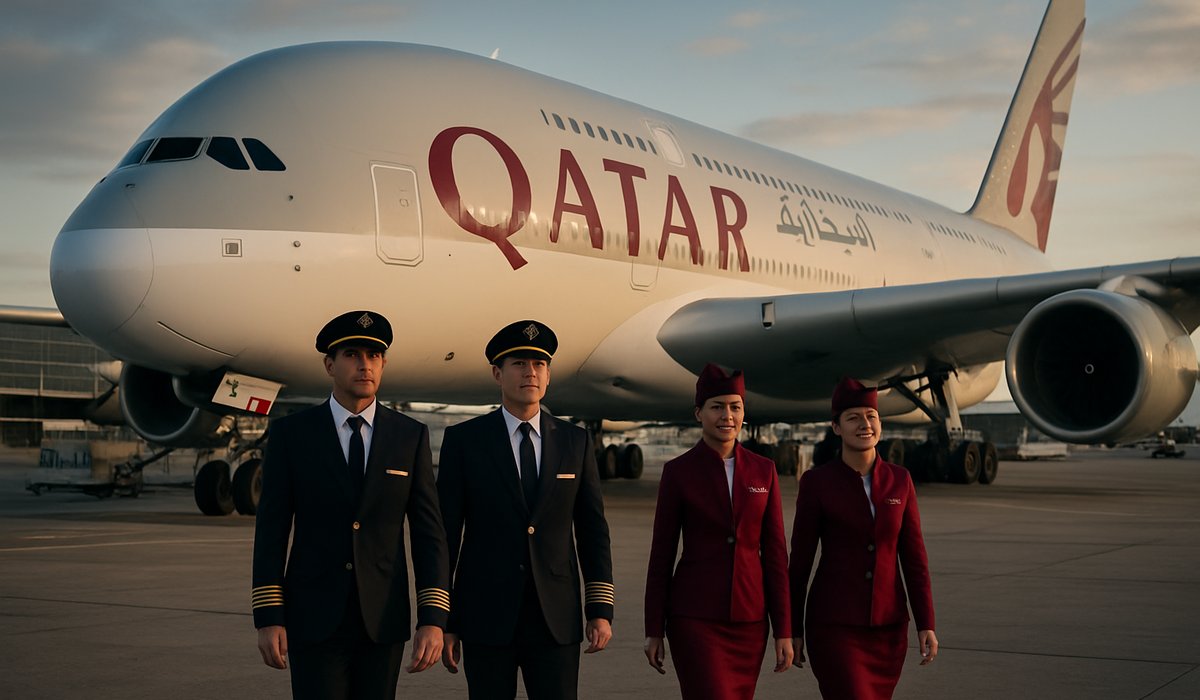
Image generated by AI
Qatar Airways' Surprising A380 Absence from US Routes: Only One Flight Recorded as Airline Recalibrates Global Strategy
The carrier's iconic double-decker aircraft remains largely absent from American skies despite fleet recovery, raising questions about transatlantic capacity and demand
Fleet Recovery Masks Continued A380 Underutilization
Qatar Airways' ambitious fleet of eight Airbus A380 superjumbos has experienced significant operational turbulence throughout the year, with geopolitical tensions and strategic capacity adjustments leaving the airline's marquee aircraft largely grounded. However, recent fleet data reveals a more nuanced picture: while five of the eight quad-engine giants have returned to active service following earlier groundings, the carrier's deployment of these aircraft—particularly on lucrative US routes—remains remarkably limited.
The disclosure that Qatar Airways has operated merely a single A380 service to the United States underscores a dramatic shift in how the Middle Eastern carrier is deploying its most prestigious aircraft. This represents a stark contrast to industry expectations surrounding the flagship aircraft and raises critical questions about transatlantic demand, route profitability, and the airline's strategic positioning in competitive North American markets.
Geopolitical Pressures and Operational Constraints
The year's tumultuous operational environment—marked by the ongoing Iran conflict and its ripple effects across global aviation—forced Qatar Airways to drastically reassess its fleet deployment. The Iran tensions triggered significant capacity reductions, leading to temporary A380 groundings that disrupted the airline's planned schedule and forced a comprehensive review of which markets could sustain the economics of operating the world's largest passenger aircraft.
The A380s currently in Qatar Airways' active fleet average 10.5 years in service, each accommodating 517 passengers across three cabin classes. Despite these technical specifications positioning the aircraft as ideal for premium long-haul routes—where the airline commands substantial market share—the decision to severely limit American deployment signals deeper economic concerns.
Strategic Reorientation and Market Dynamics
Industry analysts attribute the limited A380 deployment to several intersecting factors. Jet fuel price volatility, coupled with shifting travel demand patterns, has rendered the ultra-large aircraft economically marginal on certain routes. Additionally, Qatar Airways' network strategy increasingly favors its Boeing 777 and Airbus A350 fleets, which offer superior flexibility, lower operating costs, and comparable revenue generation on routes where A380 utilization cannot be justified.
The carrier's 54% reduction in overall A380 flights reflects broader aviation industry trends, wherein traditional hub-and-spoke models using megacarrier aircraft face pressure from point-to-point operations using smaller, more efficient widebodies.
Looking Forward
As global travel patterns stabilize, Qatar Airways faces critical decisions regarding A380 future deployment. The aircraft's limited American presence suggests the airline is recalibrating its long-haul strategy, potentially signaling broader market shifts in transatlantic aviation demand and profitability thresholds for ultra-capacity aircraft.
FAQ: Qatar Airways A380 and US Aviation
Why has Qatar Airways used its A380 so rarely on US routes? Geopolitical tensions, fluctuating jet fuel prices, and economics of operating ultra-large aircraft on routes with inconsistent premium demand have driven the carrier to prioritize more flexible widebody aircraft like the Boeing 777 and Airbus A350.
How many Airbus A380s does Qatar Airways currently operate? Qatar Airways maintains an eight-aircraft A380 fleet, with five presently active following earlier groundings related to regional conflicts and capacity adjustments.
What is affecting airline capacity and route planning globally? Rising aviation fuel costs, geopolitical instability, and shifting travel demand patterns are forcing carriers to optimize fleet deployment and reconsider which aircraft serve specific markets profitably.
Are airlines phasing out the Airbus A380? While several carriers have retired A380s, others—including Qatar Airways and Emirates—continue operating the aircraft selectively on premium routes where demand and economics align favorably.
How do airline baggage charges and fees relate to capacity decisions? Reduced aircraft capacity forces airlines to optimize ancillary revenue streams, including baggage fees, seat selection charges, and premium cabin pricing to maintain profitability on smaller aircraft deployments.
Related Travel Guides
External Resources
Disclaimer
This article is for informational and educational purposes only. It does not constitute legal, financial, or professional advice. While we strive to provide accurate and up-to-date information, travel policies, regulations, and conditions change rapidly. Always verify information with official sources before making travel decisions. Nomad Lawyer makes no representations about the accuracy, reliability, completeness, or suitability of the information provided. Readers should consult qualified professionals for advice specific to their circumstances. The views expressed in this article are those of the author and do not necessarily reflect the views of Nomad Lawyer.
Raushan Kumar
Founder & Lead Developer
Full-stack developer with 11+ years of experience and a passionate traveller. Raushan built Nomad Lawyer from the ground up with a vision to create the best travel and law experience on the web.
Learn more about our team →