
Airbus A350-1000 Emerges as Workhorse on Long-Haul Routes as Airlines Modernize Fleet Operations in 2026
Breaking airline news and aviation industry updates for 2026.

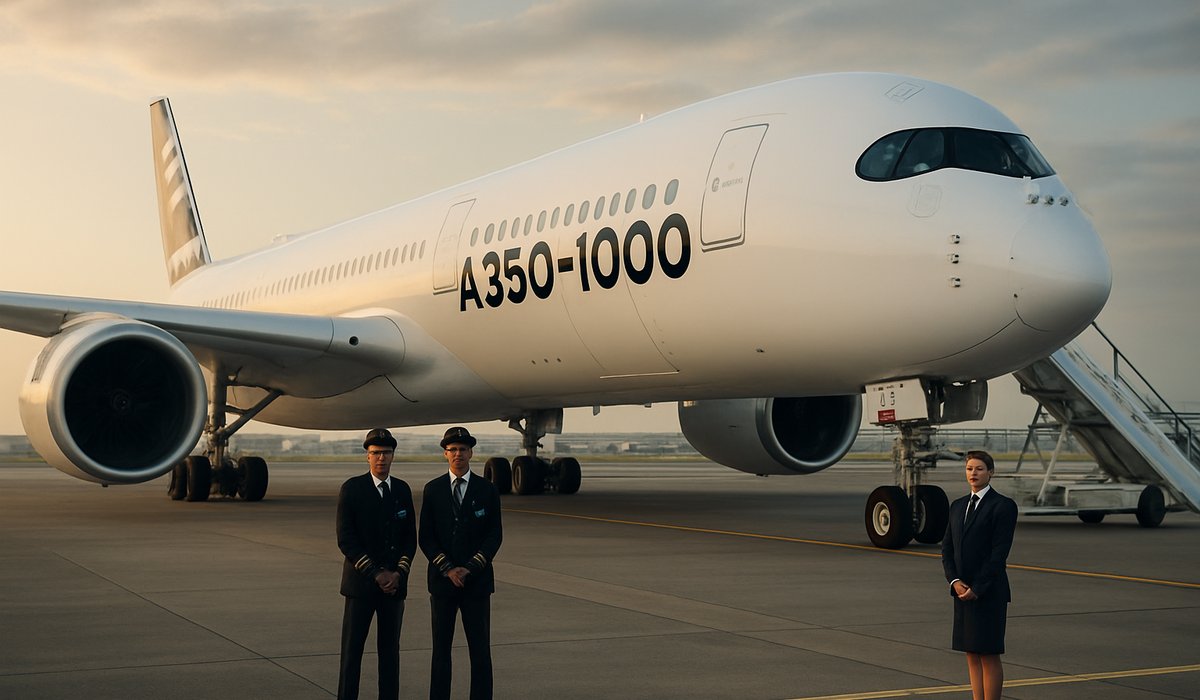
Image generated by AI
Airbus A350-1000 Emerges as Workhorse on Long-Haul Routes as Airlines Modernize Fleet Operations in 2026
Exclusive analysis reveals the seven most-deployed A350-1000 routes globally, signaling a fundamental shift in wide-body aviation strategy
A Rare but Critical Aircraft Reshapes International Aviation
The Airbus A350-1000 is carving out an increasingly significant role in global aviation despite remaining a relatively exclusive aircraft type. With just over 100 units currently operational worldwide and 367 total orders on the books, the wide-body jet is positioning itself as the premium successor to the aging Boeing 777-300ER—a position that carries substantial implications for long-haul travel patterns and airline capacity planning through 2026 and beyond.
The Strategic Importance of a Niche Aircraft
While the A350-1000 may not dominate airline fleets like narrow-body competitors, its strategic deployment signals a critical transformation in how carriers approach intercontinental routes. Unlike the Boeing 777-9, which more closely mirrors the dimensions and capacity of legacy 747 aircraft, the A350-1000 offers airlines a direct technological upgrade path for their 777-300ER operations—the industry's most prolific wide-body aircraft for premium long-haul services.
Seven Primary Routes Driving A350-1000 Operations
Industry data tracking frequency and deployment patterns across 2026 reveals concentrated utilization on specific high-value international corridors. These routes typically connect major financial centers, hub airports, and markets where premium long-haul capacity commands premium yields. The concentration of operations on select frequencies underscores how carriers are strategically deploying the A350-1000 on routes where fuel efficiency, passenger capacity, and modern cabin amenities generate maximum revenue per flight.
Market Dynamics and Fleet Modernization Pressures
Airlines investing in A350-1000 aircraft are responding to multiple industry pressures: volatile jet fuel prices, strict environmental regulations, and passenger expectations for modern cabin technologies. The aircraft's superior fuel efficiency compared to aging 777-300ERs directly addresses these concerns while delivering competitive capacity on ultra-long-haul markets without the operational constraints of larger platforms.
The relatively modest global population of A350-1000s—just over 100 in service—reflects both the aircraft's recent commercial maturity and the extended development cycles characterizing modern wide-body programs. However, the cumulative 367 orders indicate substantial confidence among major international carriers regarding the platform's long-term viability.
Implications for Global Travel Markets
The strategic deployment pattern emerging in 2026 suggests airlines have identified specific routes where the A350-1000's capabilities deliver optimal commercial performance. This targeted deployment approach differs markedly from fleet-wide rollouts, instead reflecting calculated capacity decisions tied directly to demand forecasting and revenue management on premium international corridors.
FAQ: Understanding A350-1000 Deployment Strategies
What is the difference between the Boeing 777-9 and the Airbus A350-1000? The 777-9 is significantly larger, designed to replace the Boeing 747, while the A350-1000 directly succeeds the 777-300ER with similar passenger capacity and comparable range capabilities.
Why are so few A350-1000 aircraft in service despite 367 orders? Manufacturing capacity constraints, extended delivery schedules, and the aircraft's relatively recent certification contribute to the limited operational fleet despite strong order books.
How does the A350-1000 reduce airline operating costs? Superior fuel efficiency, lower maintenance requirements, and optimized crew scheduling compared to older wide-body platforms directly decrease per-seat operating expenses on long-haul routes.
Which airlines operate the most A350-1000 aircraft? Major carriers including Qatar Airways, Air France, and Singapore Airlines have prioritized A350-1000 acquisitions for flagship long-haul networks.
Will the A350-1000 eventually replace all 777-300ERs? Production rates and airline financial capacity suggest gradual replacement over 10-15 years rather than complete fleet transition in the near term.
Related Travel Guides
External Resources
Disclaimer
This article is for informational and educational purposes only. It does not constitute legal, financial, or professional advice. While we strive to provide accurate and up-to-date information, travel policies, regulations, and conditions change rapidly. Always verify information with official sources before making travel decisions. Nomad Lawyer makes no representations about the accuracy, reliability, completeness, or suitability of the information provided. Readers should consult qualified professionals for advice specific to their circumstances. The views expressed in this article are those of the author and do not necessarily reflect the views of Nomad Lawyer.
Preeti Gunjan
Contributor & Community Manager
A passionate traveller and community builder. Preeti helps grow the Nomad Lawyer community, fostering engagement and bringing the reader experience to life.
Learn more about our team →