
Four Major International Carriers Phase Out Airbus A380 Services to Australia, Signaling Shift in Long-Haul Strategy
Breaking airline news and aviation industry updates for 2026.

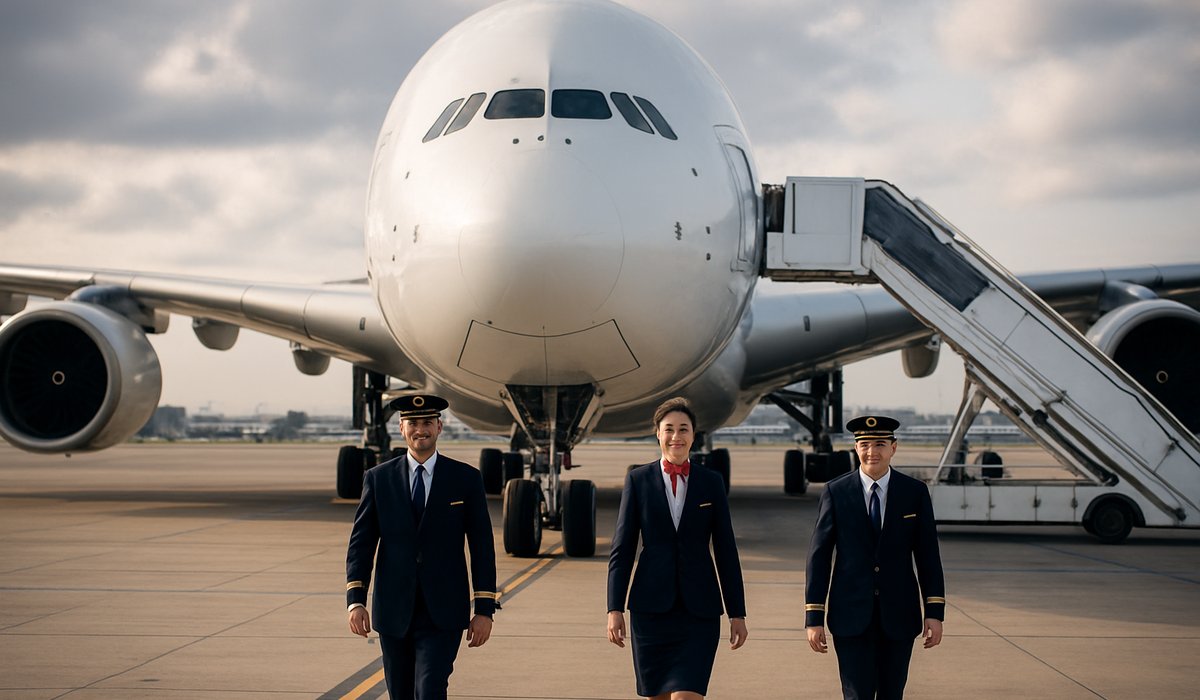
Image generated by AI
Four Major International Carriers Phase Out Airbus A380 Services to Australia, Signaling Shift in Long-Haul Strategy
Emirates, Singapore Airlines, Qatar Airways, and Asiana Airlines end superjumbo operations on Australian routes as airlines reassess fleet economics
The A380 Exodus: Australia Loses Four International Carriers
Australia's reign as a premium destination for the world's largest passenger aircraft is rapidly contracting. Four major international airlines—Emirates, Singapore Airlines, Qatar Airways, and Asiana Airlines—have confirmed they will discontinue Airbus A380 operations to the country between June 2026 and February 2027, leaving only Qantas to operate the iconic superjumbo on Australian routes.
The departure marks a significant turning point for aviation's double-deck flagship, which once symbolized capacity and prestige on ultra-long-haul corridors. The phased withdrawal underscores mounting pressure on carriers to recalibrate fleet deployment strategies amid volatile jet fuel prices, shifting passenger demand patterns, and the rising operational costs associated with four-engine aircraft.
Why Airlines Are Walking Away from the Superjumbo
The A380's exit from Australia reflects broader industry headwinds. Despite its 853-seat capacity, the aircraft demands substantially higher fuel consumption and maintenance expenses compared to newer twin-engine wide-body jets like the Boeing 777-9 and Airbus A350. With international aviation still recovering from pandemic-related disruptions and economic uncertainty weighing on premium leisure travel, carriers are increasingly favoring fuel-efficient alternatives that deliver better unit economics.
Operating costs for the A380 remain among the highest in commercial aviation. Combined with stringent airport slot limitations and infrastructure requirements for handling the superjumbo's size, airlines face mounting pressure to retire the aging fleet in favor of modern, long-range aircraft that offer comparable or superior payload-range capabilities at lower per-seat operating costs.
Qantas: The Lone Flag-Bearer Down Under
While the international carriers pivot away, Australia's national carrier Qantas continues its commitment to the A380, maintaining the superjumbo on select routes. However, even Qantas has gradually reduced its A380 presence in recent years, converting some services to the Boeing 787 Dreamliner and Airbus A350 as part of its broader fleet modernization initiative.
The asymmetry reflects divergent strategic priorities. Qantas leverages the A380's prestige and capacity advantages on monopolistic domestic-international routes where competing carriers cannot match frequencies, whereas international players require flexibility to deploy capacity across multiple markets with varying demand profiles.
Broader Industry Implications for Long-Haul Travel
The A380 retirements signal a permanent realignment in long-haul aviation architecture. Only a handful of carriers—including Lufthansa, Air France, and British Airways—continue operating the superjumbo globally, primarily on European and Asian networks where density and heritage brand strength justify the economics.
For Australian travelers and tourism operators, the transition may compress premium capacity on certain routes, potentially elevating business-class fares on competitive corridors while encouraging airlines to add frequencies using smaller wide-body aircraft instead.
FAQ: A380 Withdrawal and Aviation Implications
Why are airlines replacing the A380 with smaller aircraft? Newer twin-engine jets like the Boeing 777-9 and Airbus A350 consume 20-30% less fuel per seat, reducing airline operating costs despite lower per-flight capacity. This makes them more profitable on variable-demand routes.
Will A380 retirement increase airfare prices to Australia? Potentially on premium cabins. Reduced superjumbo capacity may compress business-class inventory, though airlines will likely add frequencies using smaller aircraft to maintain overall seat availability.
How many A380s remain in active service globally? Approximately 260 A380 aircraft are in active commercial service worldwide, concentrated among European and Middle Eastern carriers. Production ended in 2021 after limited demand.
Is Qantas planning to retire its A380 fleet? Qantas has not announced imminent retirement plans, but the airline is gradually shifting long-haul capacity to newer aircraft. Future A380 operations will likely remain limited to signature routes where the aircraft's prestige and capacity justify economics.
What routes will replace A380 service between Australia and international hubs? Airlines will predominantly deploy Boeing 777-300ER, Boeing 787 Dreamliner, and Airbus A350-900 aircraft, offering equivalent or enhanced passenger experience with superior fuel efficiency and operational flexibility.
Related Travel Guides
Flight Delay Compensation Guide 2026
Understanding Airline Route Changes
Airport Security Process Updated (2026)
External Resources
Disclaimer
This article is for informational and educational purposes only. It does not constitute legal, financial, or professional advice. While we strive to provide accurate and up-to-date information, travel policies, regulations, and conditions change rapidly. Always verify information with official sources before making travel decisions. Nomad Lawyer makes no representations about the accuracy, reliability, completeness, or suitability of the information provided. Readers should consult qualified professionals for advice specific to their circumstances. The views expressed in this article are those of the author and do not necessarily reflect the views of Nomad Lawyer.
Raushan Kumar
Founder & Lead Developer
Full-stack developer with 11+ years of experience and a passionate traveller. Raushan built Nomad Lawyer from the ground up with a vision to create the best travel and law experience on the web.
Learn more about our team →