
RAF Launches Historic Airborne Medical Mission to Remote Atlantic Island Amid Hantavirus Outbreak
Breaking airline news and aviation industry updates for 2026.

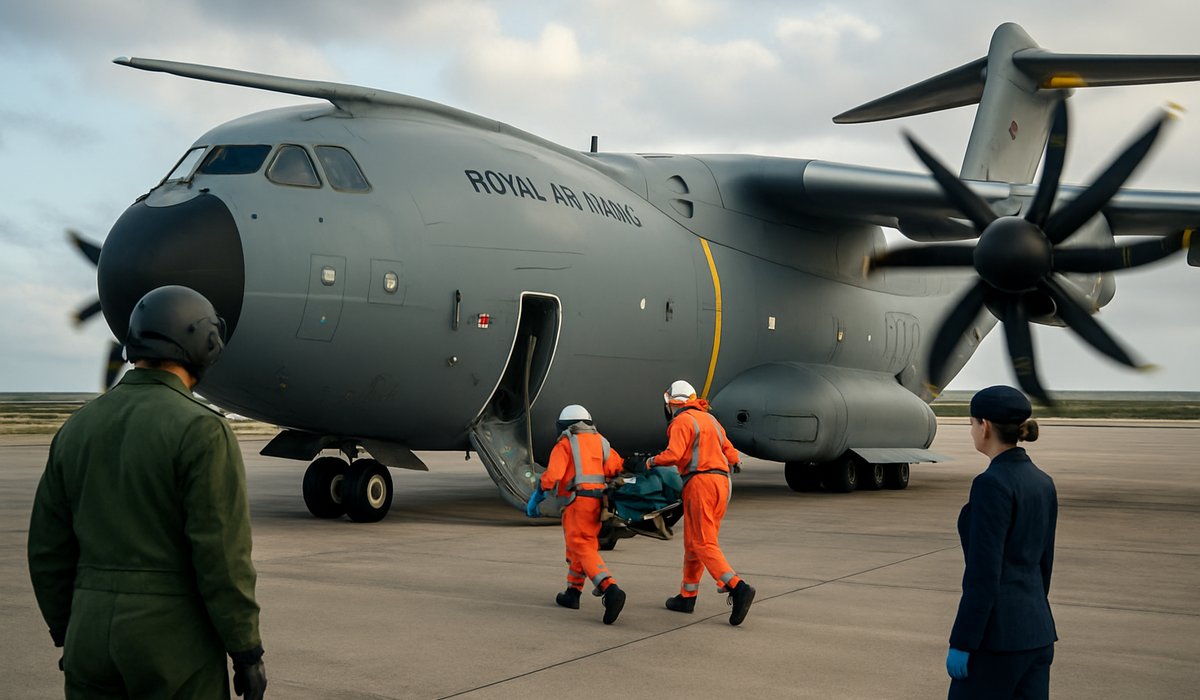
Image generated by AI
RAF Launches Historic Airborne Medical Mission to Remote Atlantic Island Amid Hantavirus Outbreak
Military paramedics parachuted into Earth's most isolated settlement in unprecedented humanitarian operation
Breaking: Historic Airdrop Delivers Critical Medical Response
The Royal Air Force has executed a groundbreaking humanitarian operation, deploying six elite paratroopers and two military medical specialists from 16 Air Assault Brigade to Tristan da Cunha on Saturday. The intervention marks the first time in RAF history that medical personnel have been delivered via parachute to provide emergency assistance, underscoring the extraordinary challenges of reaching one of the world's most geographically isolated human settlements.
The deployment was conducted using an Airbus A400M transport aircraft, which successfully navigated the logistical complexities of reaching the South Atlantic island—a destination accessible only by sea under normal circumstances. The emergency response was triggered by a confirmed hantavirus case identified within the island's small population.
Reaching the Unreachable: Operational Significance
Tristan da Cunha, located approximately 2,430 kilometers from the nearest major landmass in South Africa, presents extraordinary challenges for medical interventions. With no airport and limited maritime access due to unpredictable South Atlantic weather conditions, traditional evacuation and supply routes often prove unreliable or impossible for extended periods.
The successful airdrop operation demonstrates the RAF's capability to mobilize rapid-response medical teams to remote locations where conventional transportation infrastructure is absent. The paramedics were tasked with providing immediate clinical assessment and containment measures for the hantavirus case—a serious rodent-borne virus that can cause severe respiratory complications.
Military Medicine in Crisis Response
The 16 Air Assault Brigade's deployment reflects broader shifts in military aviation's role in global public health emergencies. Military medical units increasingly serve as critical assets for rapid humanitarian response when civilian infrastructure cannot reach affected populations. The A400M's long-range capabilities and cargo capacity make it particularly valuable for such missions, enabling deployment of both personnel and medical equipment to isolated territories.
The operation comes as remote island communities face heightened vulnerability to infectious disease outbreaks, with limited healthcare infrastructure and populations that lack immunity to certain pathogens. Hantavirus, transmitted primarily through rodent contact, requires swift epidemiological assessment and public health intervention to prevent community spread.
Strategic Implications for Remote Communities
This precedent-setting mission establishes a template for future military-medical coordination in addressing health crises on isolated territories. As climate change and environmental pressures continue to affect remote populations, collaborative operations between defense ministries and healthcare authorities may become increasingly essential for protecting vulnerable communities beyond conventional medical reach.
FAQ: Military Humanitarian Operations and Remote Medical Response
What is hantavirus and why is it a concern in isolated communities? Hantavirus is a potentially fatal rodent-borne pathogen spread through contact with infected rodent droppings or saliva. Remote island populations face elevated risk due to limited healthcare capacity and difficulty accessing advanced medical interventions.
How does the A400M enable remote humanitarian missions? The Airbus A400M combines extended range (2,000+ km), substantial cargo capacity, and short-field landing capability, making it ideal for reaching isolated territories where conventional airports may not exist.
Why was parachute deployment necessary rather than traditional landing? Tristan da Cunha lacks airport infrastructure, forcing the RAF to employ airborne insertion—the only practical method for rapid personnel deployment to the island's remote location.
How often does the RAF conduct humanitarian airdrop operations? This marked the first RAF humanitarian parachute mission of its kind, though military organizations globally conduct occasional emergency airborne deployments for crisis response.
What is the future of military-medical cooperation for remote regions? As isolated communities face increasing health vulnerabilities, defense and healthcare partnerships are expected to expand, creating specialized rapid-response protocols for unreachable populations.
Related Travel Guides
Flight Delay Compensation Guide 2026
Understanding Airline Route Changes
Airport Security Process Updated (2026)
External Resources
Disclaimer
This article is for informational and educational purposes only. It does not constitute legal, financial, or professional advice. While we strive to provide accurate and up-to-date information, travel policies, regulations, and conditions change rapidly. Always verify information with official sources before making travel decisions. Nomad Lawyer makes no representations about the accuracy, reliability, completeness, or suitability of the information provided. Readers should consult qualified professionals for advice specific to their circumstances. The views expressed in this article are those of the author and do not necessarily reflect the views of Nomad Lawyer.
Kunal K Choudhary
Co-Founder & Contributor
A passionate traveller and tech enthusiast. Kunal contributes to the vision and growth of Nomad Lawyer, bringing fresh perspectives and driving the community forward.
Learn more about our team →