
Airbus A220 Emerges as Industry's Quietest Aircraft, Significantly Outperforming Boeing 737 MAX on Noise Reduction
Breaking airline news and aviation industry updates for 2026.

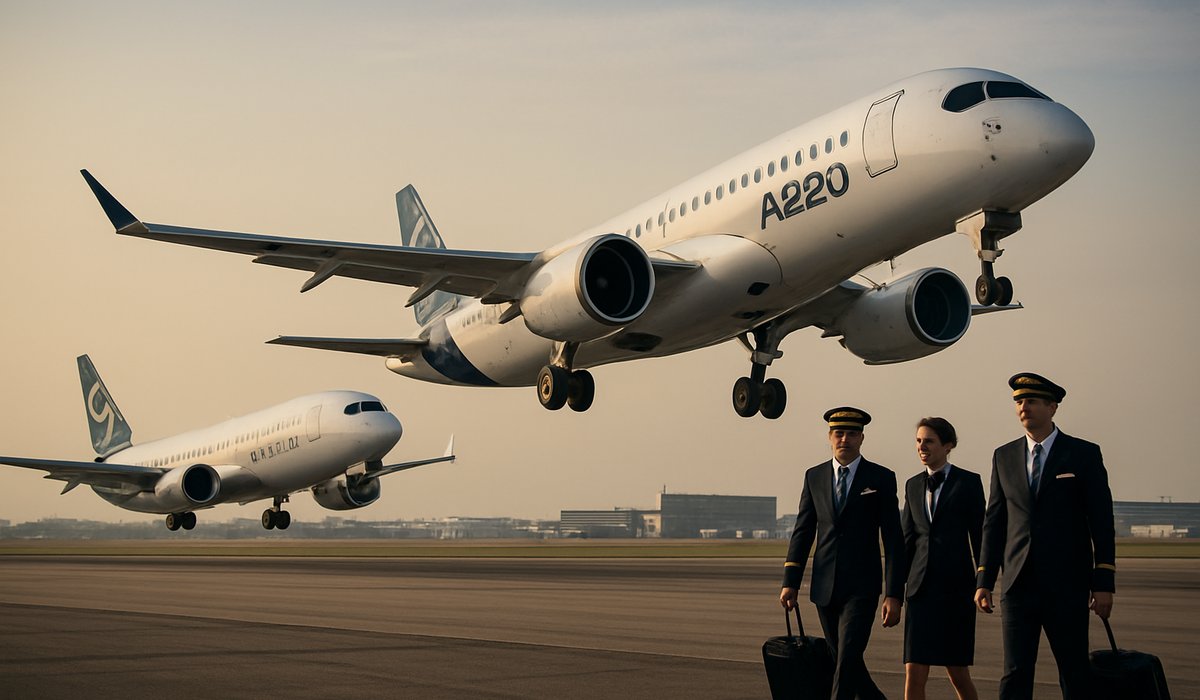
Image generated by AI
Airbus A220 Emerges as Industry's Quietest Aircraft, Significantly Outperforming Boeing 737 MAX on Noise Reduction
New data reveals the narrow-body competition shifts as European manufacturer's newest jet redefines acoustic standards for commercial aviation
A New Benchmark for Cabin Quietness
The aviation industry has a new noise champion. The Airbus A220 has established itself as the quietest commercial aircraft currently in active service, a distinction that carries significant implications for passenger comfort, airport operations, and environmental compliance across the globe.
While Boeing's redesigned 737 MAX has garnered recognition for achieving a 50 percent noise reduction compared to its predecessor, the 737 Next Generation series, the newer Airbus platform operates at substantially lower decibel levels during takeoff procedures. This represents a decisive shift in how airlines are evaluating aircraft selection criteria beyond traditional metrics like acquisition costs and fuel efficiency.
Understanding the Acoustic Advantage
The A220-300 configuration delivers a compelling paradox: despite maintaining seating capacity comparable to conventional single-aisle aircraft, it accomplishes this through a markedly more compact fuselage design. This structural efficiency translates directly into reduced noise generation during critical flight phases, particularly during takeoff when engine thrust demands peak performance.
The aircraft's superior acoustic performance stems from multiple design innovations, including advanced engine technology and aerodynamic refinements that minimize sound propagation. For regional carriers and full-service airlines operating dense domestic networks, this capability offers tangible operational benefits beyond passenger satisfaction metrics.
Industry Implications and Market Positioning
The noise differential carries considerable weight in today's regulatory environment. Airports worldwide face increasingly stringent noise ordinances, with many major hubs implementing surcharges and operational restrictions for louder aircraft. Airlines selecting the A220 gain a competitive advantage in capacity-constrained markets where noise-related curfews and landing fees directly impact profitability.
Airbus has successfully positioned the A220 as the sustainability-focused choice for operators seeking to balance capacity requirements with environmental responsibility. The aircraft's quieter operation aligns with broader industry commitments to carbon neutrality and reduced noise pollution—priorities gaining regulatory momentum across Europe, Asia-Pacific, and North America.
The Broader Competition
Boeing's 737 MAX improvements represent genuine progress in acoustic engineering, but the generational gap between the two platforms is evident. As airlines phase in next-generation fleets over the coming decade, noise performance is transitioning from a tertiary consideration to a primary purchasing criterion alongside fuel economics and operational flexibility.
This competitive dynamic reflects the aviation industry's recognition that noise mitigation has evolved from an environmental courtesy into a commercial necessity, reshaping how manufacturers invest in research and development priorities.
FAQ: Airbus A220 Noise Performance and Aircraft Selection
Q: How many decibels quieter is the Airbus A220 compared to the Boeing 737 MAX? A: While specific decibel measurements vary by testing methodology and conditions, the A220 operates significantly quieter during takeoff, though exact comparative figures depend on engine configuration and aircraft load factors.
Q: Does the A220's quieter operation affect ticket pricing for passengers? A: The noise advantage primarily benefits airlines through reduced noise-related airport fees and operational flexibility rather than directly lowering consumer fares, though long-term cost savings may eventually translate to improved pricing competitiveness.
Q: What makes the A220 quieter than larger aircraft in its capacity class? A: The aircraft's smaller fuselage generates less overall noise energy, while advanced engine design and aerodynamic optimization further reduce sound propagation during critical flight phases.
Q: Will noise performance become a major factor in future airline fleet selection? A: Yes—increasingly stringent airport noise regulations and environmental sustainability mandates are elevating acoustic performance to a primary consideration alongside fuel efficiency and acquisition costs.
Q: Are there other aircraft entering production with similar noise reduction capabilities? A: Several manufacturers are developing next-generation narrow-body and regional jets emphasizing quieter operations, intensifying competition in the acoustic efficiency segment.
Related Travel Guides
Flight Delay Compensation Guide 2026
Understanding Airline Route Changes
Airport Security Process Updated (2026)
External Resources
Disclaimer
This article is for informational and educational purposes only. It does not constitute legal, financial, or professional advice. While we strive to provide accurate and up-to-date information, travel policies, regulations, and conditions change rapidly. Always verify information with official sources before making travel decisions. Nomad Lawyer makes no representations about the accuracy, reliability, completeness, or suitability of the information provided. Readers should consult qualified professionals for advice specific to their circumstances. The views expressed in this article are those of the author and do not necessarily reflect the views of Nomad Lawyer.
Preeti Gunjan
Contributor & Community Manager
A passionate traveller and community builder. Preeti helps grow the Nomad Lawyer community, fostering engagement and bringing the reader experience to life.
Learn more about our team →