
Starlux Airlines Establishes Critical Taipei-Bali Gateway, Reshaping Southeast Asia's Aviation Landscape
Starlux Airlines announces new Taipei-Denpasar-Bali route starting Oct. 1, with 5X-weekly Airbus A321neo flights. This expands their Southeast Asia network to 13+ destinations.

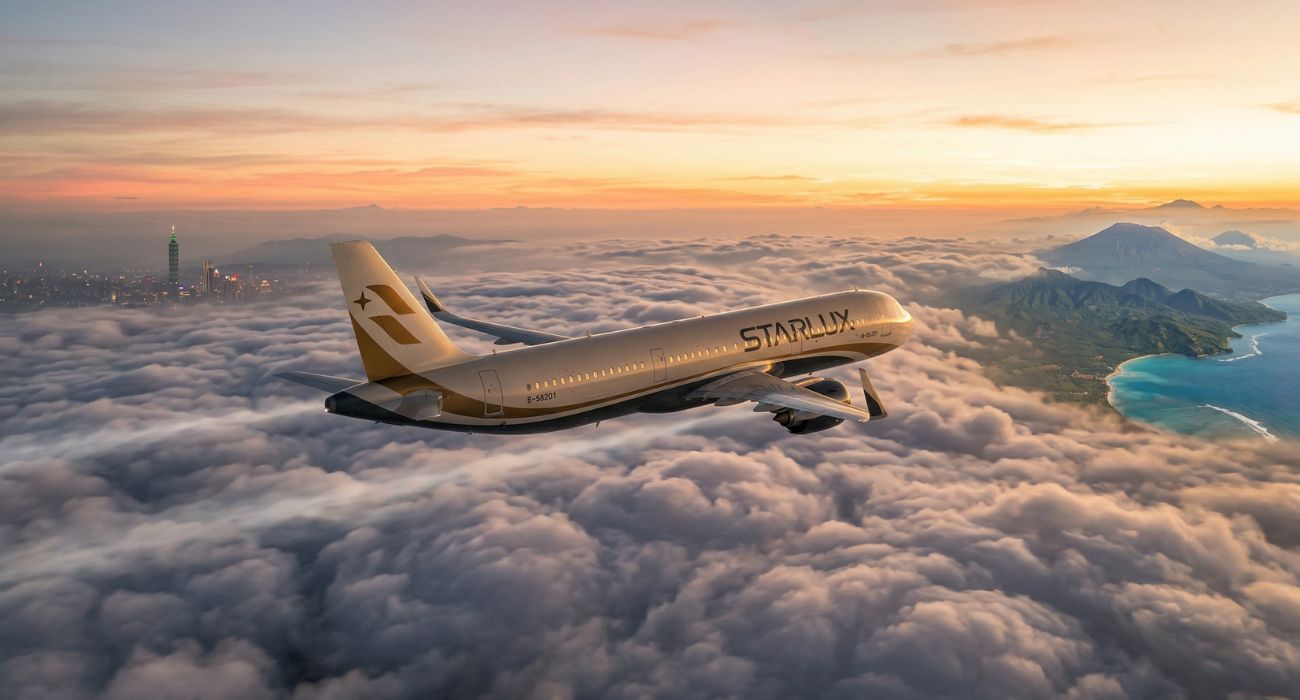
Image generated by AI
Quick Summary
- Starlux Airlines launches five-times-weekly Taipei–Denpasar-Bali service starting October 1, 2026
- The new route uses Airbus A321neo, offering both economy and business-class seating
- Service supports direct Taiwan-Indonesia travel and transit connections from North America and Europe
- The launch expands Starlux's Southeast Asia network to over 13 destinations
- Route coincides with new Busan (June 2026) and Prague (August 2026) service launches
Starlux Airlines Establishes Critical Taipei-Bali Gateway
TAIPEI — In a significant move to strengthen bilateral air connectivity, Starlux Airlines will inaugurate a new five-times-weekly service linking Taiwan's capital with Indonesia's premier leisure destination on October 1, 2026. The carrier's deployment of its modern Airbus A321neo fleet on this route signals a strategic pivot toward capturing growing demand for point-to-point travel between Northeast and Southeast Asia, while simultaneously positioning Taipei as an increasingly vital hub for transcontinental connections.
The route establishment represents more than incremental network growth—it underscores Taiwan-Indonesia aviation ties at a moment when regional carriers are competing fiercely for market share across fast-expanding leisure corridors. For Starlux, the Taipei-Denpasar launch becomes the cornerstone of an ambitious 2026 expansion strategy that also encompasses inaugural services to Busan and Prague, marking the airline's European market entry.
Unlocking Regional Demand Through Strategic Scheduling
Operating five flights weekly, the Taipei-Denpasar service will accommodate both leisure travelers and connecting passengers originating from North American and European gateways. The A321neo's 194-seat configuration strikes an optimal balance between capacity and operational efficiency, enabling Starlux to maintain profitable load factors while offering competitive seat accessibility across premium and economy cabins.
The aircraft selection reflects contemporary aviation economics. The A321neo delivers 25 percent better fuel efficiency than predecessor models, translating to lower carbon emissions and sustainable operations—a growing consideration for conscious travelers and institutional booking managers alike. On-board amenities including extended business-class legroom, seatback in-flight entertainment systems, and complimentary Wi-Fi position the offering competitively against regional peers.
Denpasar-Bali's positioning as a year-round destination ensures demand stability across seasonal fluctuations. Unlike routes dependent on narrowly defined peak periods, Bali attracts consistent international visitor flows driven by its tropical climate, cultural authenticity, and well-developed tourism infrastructure. Consequently, five-weekly frequencies provide sufficient capacity to serve both shoulder seasons and peak travel periods without operational redundancy.
Passenger rights protections under IATA standards apply to all flights on this route, ensuring traveler compensation provisions for disruptions, delays exceeding defined thresholds, and cancellations. These protections create a comprehensive framework for international passengers transiting through Taipei.
Economic Implications for Bali's Tourism Sector
Bali's tourism economy—valued at approximately $5.2 billion annually—stands to benefit substantially from enhanced air connectivity. Direct flight access from Taiwan eliminates transit friction that previously deterred price-sensitive leisure travelers. Industry analysts project the new route could increase annual visitor arrivals from Taiwan by 15–20 percent within the first operational year, with cascading benefits for local hospitality, dining, and cultural attraction sectors.
The route's significance extends beyond immediate tourism metrics. By establishing seamless connections for North American and European passengers transiting through Taipei, Starlux facilitates a broader trend toward alternative hub strategies. Rather than concentrating Asia-bound traffic through traditional Middle Eastern and Southeast Asian hubs, the route leverages Taipei's geographic positioning and modern infrastructure to capture premium leisure and business segments seeking Asian exploration.
For Indonesia's aviation sector, the service strengthens international gateway capacity at a critical moment. As the archipelago pursues ambitious inbound tourism targets, enhanced air accessibility becomes foundational infrastructure. Garuda Indonesia and Lion Air's domestic networks will benefit from increased international feeder traffic, creating multiplier effects across the broader travel ecosystem.
Real-time flight tracking via FlightRadar24 will allow passengers to monitor daily Taipei-Denpasar operations, verify on-time performance, and access historical flight data, building confidence in the new service's reliability.
Bali's Enduring Appeal as a Global Tourism Destination
Bali has long ranked among Asia's most sought-after destinations, attracting millions of international travelers annually. The island's appeal spans diverse traveler profiles—beach seekers drawn to Seminyak and Kuta, cultural explorers gravitating toward Ubud's temples and rice terraces, and adventure tourists tackling Mount Agung's volcanic trails.
The destination's tourism infrastructure supports both budget and luxury segments. International hotel brands maintain significant property portfolios alongside boutique villa operators catering to premium travelers. Bali's culinary scene has evolved considerably, with world-class restaurants and street food markets coexisting authentically.
For Taiwanese travelers, the direct Taipei-Denpasar service removes itinerary complexity that previously required connections through Singapore, Kuala Lumpur, or Jakarta. This convenience factor meaningfully lowers barriers to Bali travel, particularly for short-stay visitors maximizing limited holiday windows. The approximately four-hour flight duration positions Bali within comfortable range for long-weekend itineraries—a scheduling advantage that should drive robust load factors year-round.
Strategic Competitive Positioning
Starlux's aggressive Southeast Asia expansion reflects calculated competitive strategy. The carrier now operates over 13 regional destinations, establishing itself as a meaningful player in short to medium-haul regional aviation. Competitors including rival Taiwan carriers have historically dominated these routes; Starlux's modern fleet and internationally benchmarked service standards now challenge established market positions.
The airline's hub strategy differs markedly from network carriers focused on long-haul connections. Instead, Starlux emphasizes point-to-point efficiency—a model increasingly validated by changing traveler preferences and cost-conscious corporate travel policies. The Taipei-Denpasar route exemplifies this approach: direct access without forced connections appeals specifically to independent travelers and small-group bookings.
Timing proves strategically significant. The October 2026 launch precedes peak Northern Hemisphere winter travel demand, capturing holiday season traffic when leisure bookings peak across North American and European markets. This scheduling maximizes revenue potential during the route's critical establishment phase.
Eurocontrol and Asia-Pacific air traffic management authorities coordinate airspace access across the Taipei-Denpasar corridor, ensuring safe and efficient routing for all carriers operating this segment.
Taipei's Emergence as a Regional Aviation Nexus
Taiwan's capital undergoes steady transformation from a secondary Asian hub into an increasingly critical connectivity node. Improved air service quality and increased flight frequencies position Taipei advantageously within regional aviation hierarchies historically dominated by Singapore, Bangkok, and Kuala Lumpur.
Starlux's simultaneous launch of European and secondary Asian routes reflects sophisticated market assessment. The Prague debut in August 2026 and Busan introduction in June 2026 complement the Denpasar service, creating network density that attracts corporate travel departments seeking streamlined routing options across multiple regions.
For business travelers and premium leisure passengers, simplified ticketing through a single carrier reduces booking complexity compared to multi-airline itineraries. This operational advantage strengthens Starlux's positioning within corporate travel procurement channels, particularly among companies with significant Taiwan-Asia-Europe operational footprints. Taipei Taoyuan International Airport's continuous infrastructure investment further reinforces the hub's capacity to accommodate Starlux's growing network ambitions.
Passenger Experience and Airbus A321neo Details
The A321neo deployment underscores Starlux's commitment to modern service delivery. The aircraft's advanced cabin pressurization systems reduce passenger fatigue, while CFM LEAP-1A engines create a noticeably quieter in-cabin environment compared to legacy narrow-body alternatives. For a four to five-hour segment, these refinements accumulate into measurable passenger satisfaction advantages.
Business-class passengers receive premium meal services, enhanced amenity kits, and priority ground handling—services increasingly expected across premium leisure routes where affluent travelers justify ticket premiums. Economy accommodations feature 18-inch seat widths and advanced entertainment systems across individual seatback screens. Complimentary Wi-Fi connectivity supports both leisure and corporate travelers maintaining productivity during flight.
Starlux's reputation for attentive cabin service—modeled partly on long-haul premium carrier standards—differentiates the product meaningfully from lower-cost regional competitors. Passengers can expect multilingual crew support, refined meal presentations, and consistent service standards across all booking classes.
Airline Expansion and Future Network Plans
The Taipei-Denpasar launch initiates broader network densification for Starlux. Management has signaled intentions to expand destinations significantly beyond current operations toward 25+ regional and international points by 2028. This trajectory positions the carrier as a substantive competitor within Asia-Pacific aviation despite historical scale disadvantages versus long-established legacy carriers.
Industry observers note Starlux's consistent strategic focus on underserved leisure corridors where network giants maintain limited frequency. This niche positioning strategy has proven commercially effective for emerging carriers throughout global aviation markets; Starlux applies similar principles intelligently within the Asia-Pacific context.
The 2026 expansion trio—Busan, Prague, and Bali—signals Starlux's readiness to compete simultaneously across Northeast Asia, Europe, and Southeast Asia. Few carriers at Starlux's operational scale attempt simultaneous multi-regional expansion; success across these launches would substantially accelerate the airline's trajectory toward meaningful global network status.
Frequently Asked Questions
When does Starlux Airlines begin Taipei-Denpasar service? Starlux Airlines officially launches the Taipei to Denpasar-Bali route on October 1, 2026, operating five flights weekly using the Airbus A321neo aircraft.
What aircraft does Starlux use on the Taipei-Bali route? The carrier deploys the Airbus A321neo, a modern narrow-body offering superior fuel efficiency, quieter engines, and enhanced passenger comfort features including seatback entertainment systems and Wi-Fi connectivity.
Does the Taipei-Denpasar route support connecting passengers from North America and Europe? Yes. Starlux's codeshare agreements and Taipei hub positioning enable North American and European passengers to connect efficiently to Bali, with minimal transit complexity at Taipei Taoyuan International Airport.
How many Southeast Asia destinations does Starlux currently serve? With the addition of Denpasar, Starlux Airlines operates service to over 13 Southeast Asian destinations, including Singapore, Kuala Lumpur, and Bangkok, alongside its broader international network.
What other new routes is Starlux launching in 2026? Beyond the Taipei-Bali route, Starlux introduces Busan service from June 1, 2026, and Prague service from August 1, 2026—the latter marking the airline's historic first European destination.
Disclaimer
This article is for informational and educational purposes only. It does not constitute legal, financial, or professional advice. While we strive to provide accurate and up-to-date information, travel policies, regulations, and conditions change rapidly. Always verify information with official sources before making travel decisions. Nomad Lawyer makes no representations about the accuracy, reliability, completeness, or suitability of the information provided. Readers should consult qualified professionals for advice specific to their circumstances. The views expressed in this article are those of the author and do not necessarily reflect the views of Nomad Lawyer.
Raushan Kumar
Founder & Lead Developer
Full-stack developer with 11+ years of experience and a passionate traveller. Raushan built Nomad Lawyer from the ground up with a vision to create the best travel and law experience on the web.
Learn more about our team →