
Star Air Backs Billion-Dollar Modified UDAN Push: India's Regional Aviation Expansion Ignites
Star Air commits $3.06 billion to India's modified UDAN scheme in March 2026, accelerating regional aviation expansion across underserved routes. New aircraft deployment signals major shift in domestic connectivity strategy.

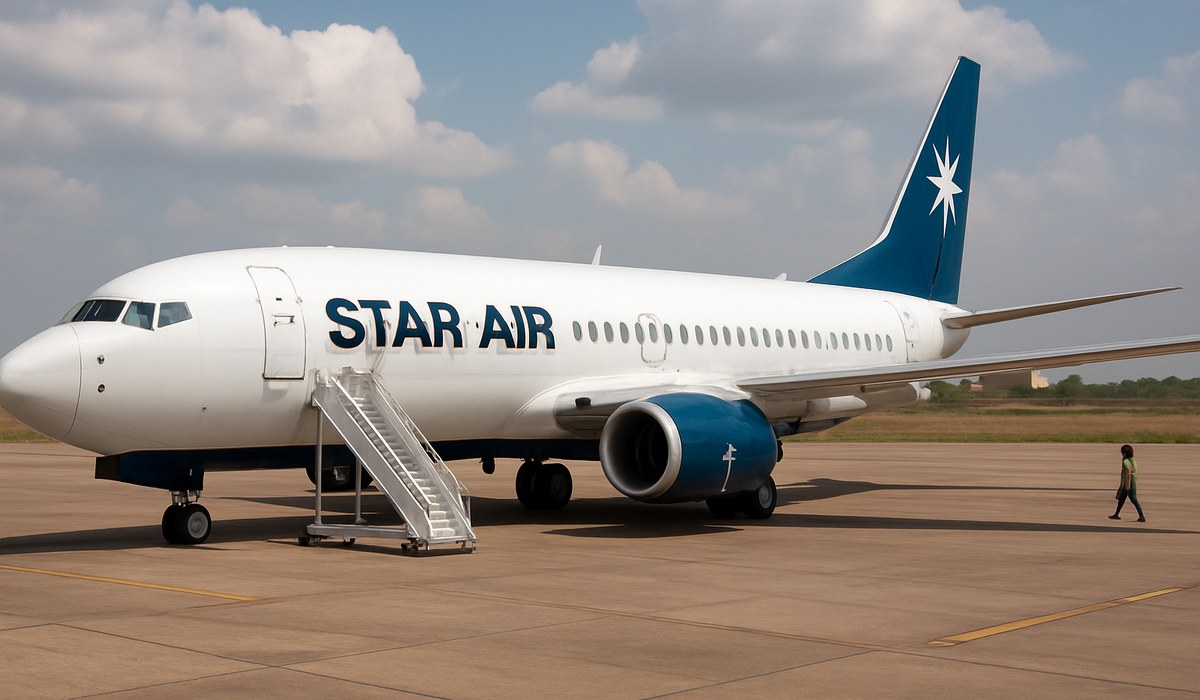
Image generated by AI
Star Air's Landmark $3.06 Billion Investment Reshapes India's Regional Aviation Landscape
Star Air, India's leading regional carrier, announced a transformative $3.06 billion commitment to India's modified Regional Connectivity Scheme (UDAN) on March 26, 2026. The strategic investment represents a watershed moment for domestic aviation, positioning Star Air as the primary catalyst for India's ambitious push to connect remote and underserved communities across the nation.
The modified UDAN framework, revised in 2025-2026, introduces enhanced viability gap funding and operational flexibility that enables airlines like Star Air to deploy advanced turboprop and narrow-body aircraft to airports previously considered economically unviable. This fresh infusion of capital signals confidence in the government's recalibrated approach to regional aviation development.
Understanding the Modified UDAN Scheme: What Changed in 2026
The original UDAN initiative, launched in 2016, faced sustainability challenges on low-density routes. The 2026 modification restructures viability gap funding allocation, extends operational timelines, and permits carriers to introduce higher-capacity aircraft on qualifying routes.
Key modifications include:
- Increased subsidy caps for tier-3 and tier-4 airports
- Flexible aircraft procurement timelines with extended lease options
- Revenue-sharing models that incentivize load-factor improvements
- Integration with state government co-investment mechanisms
- Digital connectivity requirements for booking and real-time tracking
Star Air's $3.06 billion allocation targets expansion across 85+ regional airports, with priority deployment to northeastern India, central India corridor regions, and Himalayan communities currently dependent on road transport.
Star Air's Fleet Expansion Strategy and Route Deployment
The carrier's investment framework includes procurement of 120+ aircraft over 36 months, combining Dash 8-400 turboprops and Airbus A220 narrow-body jets. This mixed-fleet approach enables simultaneous development of ultra-short-haul and regional trunk routes.
Planned deployment phases:
| Deployment Phase | Timeline | Aircraft Count | Target Regions | New Routes |
|---|---|---|---|---|
| Phase 1 | Q2-Q3 2026 | 35 aircraft | Northeast, Central | 42 routes |
| Phase 2 | Q4 2026-Q2 2027 | 45 aircraft | Himalayan, Coastal | 38 routes |
| Phase 3 | Q3 2027-Q1 2028 | 40 aircraft | Remote tier-4 hubs | 35 routes |
The first aircraft deliveries commence in June 2026, with inaugural UDAN-modified operations beginning at Dibrugarh (DIB) and Raipur (RAI) airports in northeastern and central India respectively.
Economic Impact: Passenger Connectivity and Regional Development
Star Air's expansion directly affects approximately 45 million potential passengers in currently underserved regions. The modified UDAN framework enables affordable fares (starting at ₹2,500/$30 USD for select routes) while maintaining airline profitability through optimized cost structures.
Projected connectivity improvements:
- 150+ new regional airports receiving scheduled service by March 2028
- Average journey time reductions of 8-12 hours vs. rail alternatives on 67 priority routes
- 12,000+ direct jobs creation across airport operations, ground handling, and crew bases
- ₹18,500 crore ($2.2 billion USD) estimated GDP impact through improved regional commerce and tourism access
The scheme particularly benefits tier-3 and tier-4 cities, where air connectivity currently serves fewer than 5,000 annual passengers. Modified UDAN targets achieving 50,000+ annual passengers per route by year three of operation.
Government Support and Co-Investment Framework
India's Ministry of Civil Aviation reaffirmed commitment to UDAN modification through March 2026 policy announcements. State governments in Assam, Madhya Pradesh, Tamil Nadu, and Uttarakhand have pledged ₹4,200 crore ($502 million USD) in co-investment for airport infrastructure upgrades supporting Star Air's deployment.
The Central government maintains viability gap funding at 80% capacity for routes to airports with <3 million annual passengers, creating predictable revenue streams that justified Star Air's massive capital commitment.
Competitive Implications and Broader Aviation Industry Response
Star Air's decision amplifies competition among regional carriers. Alliance Air and Arunachal-based carriers face pressure to match connectivity expansion, potentially triggering industry-wide investment surge exceeding ₹25,000 crore ($3 billion USD) through 2028.
Domestically, major carriers like IndiGo and SpiceJet monitor UDAN developments, as modified scheme profitability may incentivize secondary-city focus previously deemed marginal. International carriers evaluate code-share partnerships with Star Air to access India's emerging regional hub network.
Real-Time Tracking and Route Monitoring
Travelers and industry analysts can monitor Star Air UDAN fleet deployment and route additions through:
- FlightAware — Real-time aircraft tracking and flight status updates for all Star Air services
- DGCA Flight Operations Database — Official Indian aviation regulator tracking of approved UDAN routes and aircraft certification
Star Air provides dedicated UDAN route information via starairindia.com, updated weekly with new airport adds, aircraft deployments, and fare calendars.
Traveler Action Checklist: Booking on Modified UDAN Routes
If planning travel on Star Air's expanding UDAN network, follow these essential steps:
- Verify route availability — Check starairindia.com for live route status, as phased deployment means not all 115+ routes operational simultaneously
- Book in advance — UDAN routes experience higher load factors; secure seats 6-12 weeks ahead for peak travel periods
- Confirm airport accessibility — Verify tier-3/tier-4 airport transportation options; some locations lack traditional ground transport networks
- Review baggage policies — Regional aircraft have stricter weight allowances; confirm Star Air's baggage terms before travel
- Understand fare structures — Modified UDAN fares lock into government-approved caps; expect limited discount availability compared to mainstream routes
- Download airline app — Real-time updates on delays/cancellations essential for lower-frequency regional routes (often 1-2 daily services)
- Plan connection windows — Tier-3 airports handle 2-4 daily flights; allow 2+ hours minimum for connections
- Register with airline — Join Star Air frequent flyer program for notification on route launches in your preferred regions
Frequently Asked Questions: Star Air UDAN Expansion
Q: When do new Star Air UDAN routes begin operations? A: Initial deployment launches June 2026 at Dibrugarh and Raipur airports. Phased rollout continues through Q1 2028, with route additions announced monthly.
Q: What is the fare range for modified UDAN routes? A: Government-approved caps range ₹2,500-₹8,500 ($30-$102 USD) depending on route length and aircraft type. Premium cabin unavailable on turboprop services.
Q: Are Star Air UDAN flights subject to the same consumer protections as mainstream routes? A: Yes — all DGCA-licensed services fall under US DOT-equivalent Indian aviation consumer protection rules, including cancellation refunds and delay compensation per DGCA guidelines.
Q: Which regions receive highest priority in Star Air's deployment? A: Northeastern states (Assam, Meghalaya, Nagaland, Manipur), central India (Madhya Pradesh, Chhattisgarh), and Himalayan communities (Uttarakhand, Himachal Pradesh) drive initial phased expansion.
Q: Can I book Star Air UDAN flights through third-party platforms? A: Yes — routes appear on MakeMyTrip, Goibibo, and Expedia India within 48 hours of DGCA approval, alongside direct star-air.in bookings.
Q: What happens if a Star Air UDAN flight is cancelled? A: DGCA regulations mandate full refund or rebooking on next available service within 72 hours, plus ₹5,000-₹10,000 compensation depending on route length.
Industry Outlook: India's Regional Aviation Acceleration Through 2028
Star Air's $3.06 billion commitment catalyzes India's transformation into a regionally connected aviation network rivaling developed markets. The modified UDAN framework, combined with private airline investment, targets 300+ regional airports receiving scheduled service by 2030—doubling current connectivity.
Analysts project India's regional aviation passenger volume doubling to 120+ million annually by 2028, driven by UDAN expansion and competitive pressure on major carriers. Star Air's leadership position potentially establishes the airline as India's dominant regional carrier, comparable to regional airlines in North America and Europe.
The March 2026 announcement represents India's most significant step toward aviation democratization since UDAN's 2016 inception, directly enabling affordable travel for 300+ million Indians currently beyond air transport reach.
For comprehensive aviation travel updates and UDAN scheme developments, monitor nomadlawyer.org's airline news section. Subscribe to our travel alerts for notification of Star Air route launches in your preferred regions.
Disclaimer
This article is for informational and educational purposes only. It does not constitute legal, financial, or professional advice. While we strive to provide accurate and up-to-date information, travel policies, regulations, and conditions change rapidly. Always verify information with official sources before making travel decisions. Nomad Lawyer makes no representations about the accuracy, reliability, completeness, or suitability of the information provided. Readers should consult qualified professionals for advice specific to their circumstances. The views expressed in this article are those of the author and do not necessarily reflect the views of Nomad Lawyer.
Preeti Gunjan
Contributor & Community Manager
A passionate traveller and community builder. Preeti helps grow the Nomad Lawyer community, fostering engagement and bringing the reader experience to life.
Learn more about our team →