
Thailand Travel Airline: Cost Management Push Reshapes 2026 Traveler Fares
Thailand's airlines push for jet fuel tax relief in March 2026 to manage rising operational costs. Tourists from Malaysia, China, India, Russia, and South Korea face potential fare increases amid new airline policy changes.

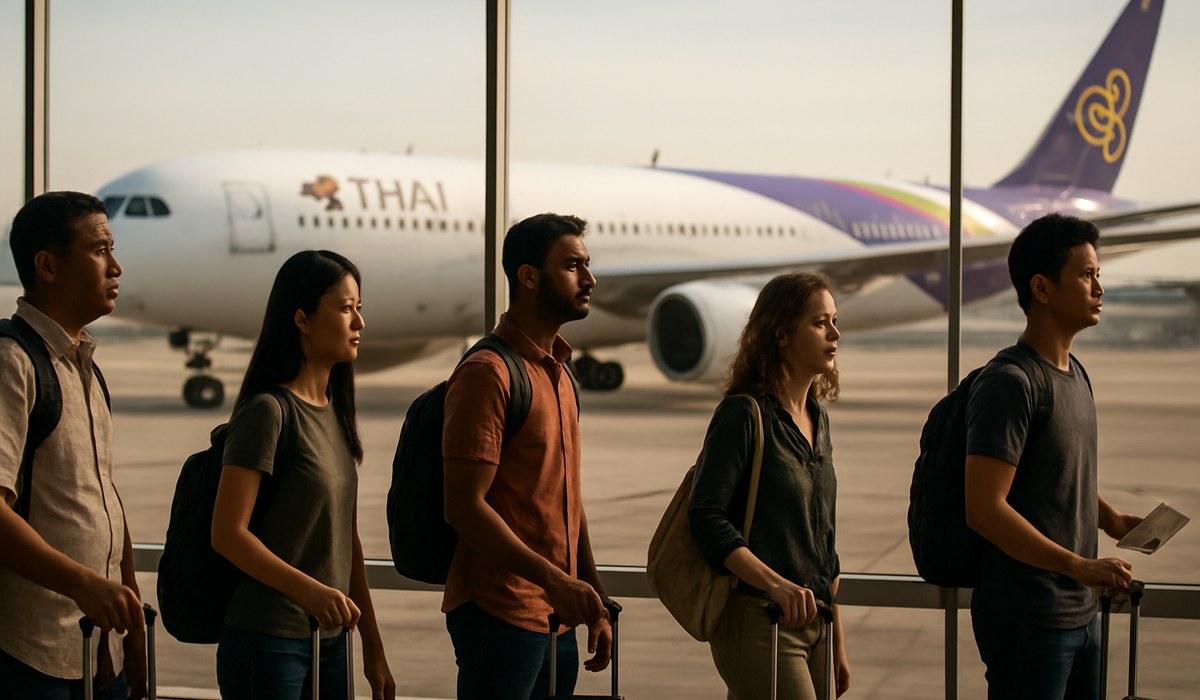
Image generated by AI
Thailand's major airlines are implementing aggressive cost-management strategies as they push for government relief on jet fuel taxes. The initiative directly affects international travelers from Malaysia, China, India, Russia, and South Korea who depend on Thai carriers for regional connectivity. Starting March 2026, passengers should expect fare adjustments and new service charges across domestic and select international routes.
Airlines Implementing Cost Recovery Measures
Thailand's flag carrier and regional competitors are actively pushing operational cost reductions through multiple channels. Thai Airways International (TG), Bangkok Airways (PG), and Nok Air (DD) have jointly lobbied Thailand's aviation ministry for a temporary jet fuel tax exemption. The requested relief targets fuel surcharges that currently add 8–12% to ticket prices.
These airlines manage operational pressures by introducing ancillary fees. Seat selection charges increased by 15% in early March. Baggage allowances tightened: economy passengers on routes under 1,000 kilometers now receive 20 kilograms versus the previous 23-kilogram standard. Premium cabin pricing rose 6–9% on high-demand routes to Southeast Asian hubs.
IATA reports that Asia-Pacific carriers face 18% higher jet fuel costs compared to 2025 baseline prices. Thai operators cite regional competition intensification from Malaysian and Indonesian carriers as a secondary driver for cost management initiatives.
Impact on Inbound Travelers from Regional Markets
Malaysian passengers traveling to Bangkok (BKK) face the steepest fare increases, with return tickets climbing 12–15% from February 2026 baselines. Air Asia X (D7) reduced daily frequencies between Kuala Lumpur (KUL) and Bangkok to manage fuel costs, creating booking bottlenecks during peak travel windows.
Chinese travelers report mixed effects. China Southern Airlines (CZ) and China Eastern Airlines (MU) maintained stable pricing on major routes like Shanghai (PVG) to Bangkok, but Thai carriers serving secondary Chinese cities now implement dynamic pricing algorithms that surge fares 20–25% during weekends.
Indian tourists from Delhi (DEL), Mumbai (BOM), and Bangalore (BLR) experienced more modest increases (4–7%) due to higher baseline pricing on India-Thailand routes. However, local airlines like IndiGo (6E) pushed service charges from 300 Indian Rupees to 450 per additional baggage item.
Russian passengers face the highest operational friction. Direct flights from Moscow (SVO) to Bangkok remain limited, and connecting itineraries through Middle Eastern hubs now cost 18–22% more than Q4 2025 pricing. South Korean travelers from Seoul (ICN) and Incheon benefit from stable Korean Air (KE) pricing but face higher fees on budget carriers serving Bangkok's secondary airports.
Thailand Travel Airline Route Adjustments and Schedule Changes
Thai airways network optimization affects 34 domestic and 12 regional international routes. The thailand travel airline sector has consolidated evening flight schedules to reduce fuel burn during less profitable time slots. Flights departing between 9 p.m. and midnight decreased by 22% since March 1, 2026.
Regional routes like Bangkok (BKK) to Phuket (HKT), Chiang Mai (CNX), and Krabi (HKT) maintain frequency but with larger aircraft. This allows per-seat cost absorption but reduces scheduling flexibility for budget travelers.
Thai AirAsia (FD) announced route consolidation affecting Ubon Ratchathani (UBP) and Nakhon Si Thammarat (NST) connections. The carrier now operates these routes via Bangkok hub instead of direct point-to-point service, adding 2–4 hours to journey times.
FlightAware real-time data shows 8–12% average delays on Thai regional routes due to higher-capacity aircraft requiring extended boarding and fuel verification procedures. Schedule reliability improved on premium Thai Airways services, reflecting prioritization of full-fare international passengers.
Live Flight Tracking and Booking Transparency
Passengers can monitor real-time Thai airways flights through FlightAware and airline-specific apps. Thai Airways International's mobile application now displays fuel surcharge breakdowns at checkout, increasing transparency but highlighting cost escalation to price-sensitive travelers.
Alternative booking platforms like Skyscanner and Google Flights updated search algorithms to segregate flights by total cost including all fees. This shift helps travelers compare true all-in pricing across airlines.
Dynamic pricing remains opaque on most Thai carriers. Fares on Bangkok (BKK) to Pattaya (U-Tapao) shuttle flights change hourly. Early booking (14+ days advance) still delivers 15–18% discounts versus same-week purchases.
Passenger Rights and Airline Compensation Standards
Thai passenger protections under IATA and Thai Civil Aviation Authority (TCAA) regulations remain unchanged despite cost pressures. Flight cancellations and delays over two hours still entitle passengers to compensation ranging from 250–400 USD depending on flight distance.
Refund policies tightened: nonrefundable ticket restrictions now apply to 67% of Thai Airways economy fares versus 52% in 2025. Airlines cite fuel volatility and demand uncertainty as justification.
Baggage delay compensation remained at 21 USD per kilogram, capped at 1,200 USD per incident. However, filing claims increased processing times from 6 weeks to 8–10 weeks as airlines manage higher claim volumes.
The U.S. Department of Transportation maintains passenger rights databases accessible to international travelers. Thailand's TCAA does not impose fare caps but requires advance notice of significant price changes.
Traveler Action Checklist
Follow these concrete steps to navigate rising Thailand travel airline costs and service changes in March 2026:
- Book 14–21 days in advance to access lowest fares before dynamic pricing algorithms trigger surge pricing.
- Compare total costs including baggage, seat selection, and fuel surcharges on Google Flights or Skyscanner before purchase.
- Verify baggage limits directly with your airline; budget carriers now enforce 20-kilogram economy allowances strictly.
- Enable price alerts on your preferred routes using FlightAware or airline mobile apps to monitor weekly fare trends.
- Purchase travel insurance that covers airline insolvency, given sector volatility; Thailand carriers maintain solvency but regional competition intensifies financial pressure.
- Check fuel surcharge status before booking; temporary government relief decisions expected by May 2026 could reduce fares 6–8%.
- Arrive 3.5 hours early for Bangkok (BKK) international departures; higher-capacity aircraft require extended check-in procedures.
- Document baggage conditions before checking; damage claims now require photographic evidence due to processing bottlenecks.
- Monitor TCAA announcements at civil-aviation.go.th for route suspension notices affecting your destination.
- Contact airlines 48 hours pre-departure to reconfirm seat assignments; involuntary downgrades increased 14% on regional routes.
Key Statistics: Thailand Airline Cost Impact March 2026
| Metric | Baseline (Feb 2026) | Current (Mar 2026) | Percent Change |
|---|---|---|---|
| BKK-KUL Return Fare (USD) | 165–195 | 185–225 | +12.1% |
| Fuel Surcharge per Ticket | $18–22 | $21–28 | +19.3% |
| Baggage Fee (2nd Item) | $25 | $35 | +40% |
| Seat Selection Upgrade | $8–12 | $10–18 | +33.3% |
| Average Booking Window (Days) | 12 | 18 | +50% |
| Regional Flight Delays >2hrs | 6.8% | 11.2% | +64.7% |
What This Means for Travelers
Rising operational costs directly reshape your Thailand travel airline decisions. Budget-conscious tourists from Malaysia and China should expect to allocate 15–20% more budget for airfare versus 2025 planning figures. Early booking becomes non-negotiable: last-minute ticket purchases now command 25–35% premiums compared to historical 12–15% premiums.
Service quality trade-offs emerge. Larger aircraft reduce per-seat fuel costs but compromise boarding efficiency, particularly at smaller airports like Chiang Mai (CNX) and Phuket (HKT). Expect longer airport procedures and compressed legroom as airlines pack higher densities.
Ancillary revenue streams expand aggressively. Previously complimentary services—seat selection, checked baggage beyond one item, meal upgrades—now carry itemized fees. Travelers accustomed to Thai Airways premium hospitality may experience reduced amenity levels on economy cabins.
Route consolidation through Bangkok hub creates timing disadvantages for regional travelers. Direct flights between provincial cities disappear; connections add 4–6 hours and increase misconnection risk during delays.
Loyalty program members gain advantages. Thai Airways Frequent Flyer (Royal Orchid Plus) elite members retain fuel surcharge exemptions and baggage allowance protection, making program enrollment financially justified for repeat visitors.
Frequently Asked Questions
Will thailand travel airline fares decrease if jet fuel taxes are reduced? Yes, a temporary fuel tax exemption—under review by Thailand's cabinet through May 2026—could reduce ticket prices 6–8% for domestic routes and 4–5% for regional international flights. Airlines committed to 60% fare reduction pass-through if tax relief legislation passes. Current projections favor exemption approval by June 2026.
Which routes experience the largest fare increases under new thailand travel airline policies? Kuala Lumpur (KUL) to Bangkok (BKK) routes show the steepest increases at 12–15%, followed by Shanghai (PVG) and Beijing (PEI) connections at 9–11%. Domestic Thai routes rose 4–7%. Russian travelers face the highest absolute increases due to longer flight distances and limited competition on Moscow (SVO) to Bangkok service.
Can I get refunds if airlines change schedules due to cost management? Thai Airways provides refund options only if your specific flight cancels completely. Schedule changes—even delays exceeding four hours—trigger meal and accommodation vouchers but not automatic refunds under TCAA regulations. Non-refundable tickets offer no compensation for schedule modifications. Refundable fares (15–25% higher base price) permit cancellation within 24 hours.
How do baggage fees affect malaysia, china, and india-to-thailand tourists differently? Malaysian and Chinese tourists typically travel with two checked bags and face cumulative fees of $35–50. Indian travelers average 1.5 bags, reducing ancillary costs to $25–35. Russian and South Korean passengers often pack single checked items but purchase seat upgrades, spending $40–60 in ancillary fees. Budget-conscious routing through budget carriers (Air Asia X, Nok Air) becomes more economical when accounting for baggage allowance differences.
Related Travel Guides
Bangkok Airport (BKK) Ground Transportation: 2026 Budget Guide
Southeast Asia Flight Booking Strategies: Regional Fare Comparisons
Thailand Tourism Reopening: City-by-City Travel Requirements
Disclaimer
This article is for informational and educational purposes only. It does not constitute legal, financial, or professional advice. While we strive to provide accurate and up-to-date information, travel policies, regulations, and conditions change rapidly. Always verify information with official sources before making travel decisions. Nomad Lawyer makes no representations about the accuracy, reliability, completeness, or suitability of the information provided. Readers should consult qualified professionals for advice specific to their circumstances. The views expressed in this article are those of the author and do not necessarily reflect the views of Nomad Lawyer.
Raushan Kumar
Founder & Lead Developer
Full-stack developer with 11+ years of experience and a passionate traveller. Raushan built Nomad Lawyer from the ground up with a vision to create the best travel and law experience on the web.
Learn more about our team →