
St. Louis Airport Meltdown Sparks Travel Chaos as 95 Delays and 8 Cancellations Crush Southwest Airlines, Air Canada, and Frontier
Breaking airline news: A massive operational meltdown at St. Louis Lambert International Airport sparks severe travel chaos, forcing 95 brutal delays and 8 permanent cancellations across Southwest, Frontier, and Air Canada.

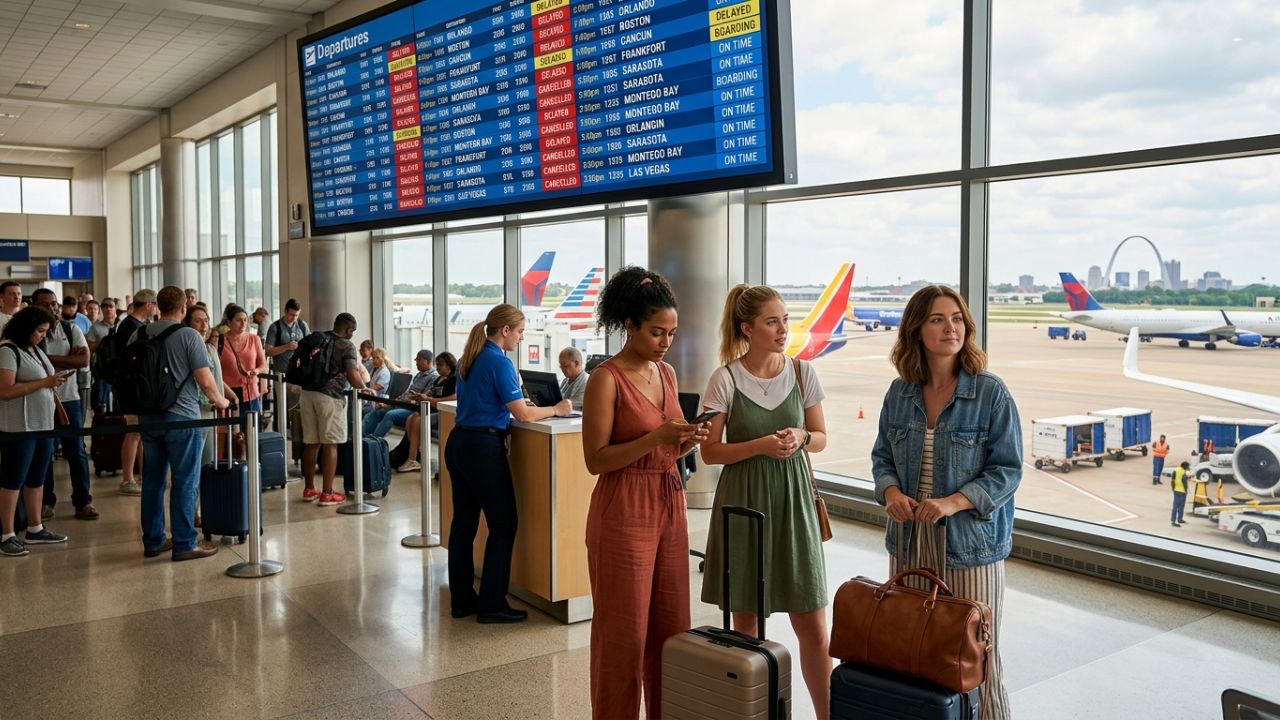
Image representing the incredibly severe travel chaos actively unfolding at St. Louis Lambert International Airport (STL). As international and domestic travelers suffer unprecedented airport disruptions, a massive operational breakdown has forced exactly 8 permanent flight cancellations and an incredibly brutal 95 flight delays. Major legacy carriers and transborder partners including Southwest Airlines, Frontier Airlines, Air Canada, SkyWest, and Mesa Airlines are battling intense logistical friction, leaving thousands of passengers completely stranded on highly critical routes heading to Denver, Toronto, Chicago, Dallas, and Atlanta. (Image Credit: US Aviation Network / Hub Analysis)
St. Louis Airport Meltdown Sparks Travel Chaos as 95 Delays and 8 Cancellations Crush Southwest Airlines, Air Canada, and Frontier
As Aviation Updates Report Severe Airport Disruptions Across the US Transit Network, Thousands of Passengers Are Left Completely Stranded Amidst Cascading Airline Meltdowns
While millions of passengers expect a seamless start to their highly anticipated summer vacations and critical corporate travel, the absolute latest airline news continues to report terrifying operational meltdowns completely fracturing the American aviation grid. Currently, an incredibly severe wave of travel chaos has violently struck St. Louis Lambert International Airport (STL). Functioning as a highly critical Midwest transfer point for massive domestic and international flight connections, this sudden operational breakdown has officially triggered an incredibly brutal 95 flight delays and exactly 8 devastating flight cancellations, instantly generating massive airport disruptions across highly critical global schedules. This intense, cascading logistical failure has directly crushed the operational integrity of massive legacy carriers and vital regional partners, specifically including Southwest Airlines, Frontier Airlines, SkyWest, Air Canada, and Mesa Airlines.
For highly strategic aviation analysts and the exhausted traveling public, this sudden terminal gridlock highlights the extreme, terrifying fragility of modern domestic networks. The severe disruption at St. Louis is actively creating a massive ripple effect, severely destabilizing unpredictable schedules for passengers relying on flexible flight options. As desperate, stranded travelers scramble to salvage their fractured itineraries, critical connecting routes directly feeding into massive mega-hubs like Denver, Toronto, Chicago, Dallas, and Atlanta have been severely compromised. Aviation authorities are currently monitoring the rapidly deteriorating situation, forcing airlines into a desperate scramble to coordinate with air traffic control to stabilize departure sequencing before the massive delays permanently paralyze the Midwest transit grid.
Section-Wise Breakdown: The Anatomy of the Regional Meltdown
The highly detailed aeronautical data definitively exposes exactly how this massive operational failure is structurally designed to completely shatter passenger itineraries across multiple airlines:
Southwest Airlines and the Domestic Hub Stress The disruption pattern heavily reveals a terrifying, system-wide impact rather than isolated airline performance issues. Southwest Airlines absolutely recorded the highest operational load and suffered the most severe direct hit. Underscoring its massive dominant regional presence and incredibly high-frequency short-haul network, Southwest logged an astonishing 66 delayed flights. American Airlines directly followed, suffering 8 severe delays that immediately contributed to broader hub connectivity disruptions. Delta Air Lines officially registered 7 delayed flights alongside cancellation-related disruptions across its massive regional partner operations. United Airlines reported exactly 1 cancellation and multiple delays, highlighting intense pressure across all major legacy networks operating out of the St. Louis hub.
Cross-Border Gridlock and Regional Network Collapse The massive friction completely cascaded directly into the transborder and regional feeder networks. Air Canada services officially recorded 2 permanent cancellations, indicating incredibly severe cross-border scheduling strain actively destroying international connectivity to Toronto. Ultra-low-cost carrier Frontier Airlines experienced exactly 2 cancellations without recorded delays, completely stranding its massive leisure passenger base. Regional operators saw incredibly significant impacts: Mesa Airlines (operating under United) faced exactly 5 delays and a highly proportional impact rate, while SkyWest reported 3 severely delayed flights. Endeavor Air, actively operating under Delta Connection, reported exactly 3 delays, fiercely highlighting how highly fragile regional feeder networks instantly contribute to cascading disruption patterns across major US hubs.
Operational Details: The Factual Aviation Disruption Matrix
To provide exact, factual clarity on the immense operational scale of the St. Louis airport meltdown, aviation analysts have mapped the specific delay metrics and highly impacted carriers exactly as provided by official flight tracking sources. The following factual matrix exactly details the precise breakdown:
Factual Aviation Disruption Matrix: St. Louis Hub (STL)
| Impacted Airline | Cancelled Flights | Delayed Flights | Operational Network Impact |
|---|---|---|---|
| Southwest Airlines | 0 | 66 | Highest operational load disrupted. |
| Air Canada | 2 | 0 | Cross-border scheduling strain (Toronto). |
| Frontier Airlines | 2 | 0 | Severe ultra-low-cost schedule collapse. |
| United Airlines | 1 | Multiple | System-wide legacy connectivity delayed. |
| American Airlines | 0 | 8 | Broader hub connectivity disruptions. |
| Delta Air Lines | Partner Cuts | 7 | Localized delays spreading system-wide. |
| Mesa Airlines (United) | 0 | 5 | Regional feeder network paralyzed. |
| SkyWest / Endeavor | 0 | 3 Each | Cascading regional delays. |
Data reflects the confirmed massive operational delays, permanent cancellations, and specific airline network disruptions officially recorded at St. Louis Lambert International Airport. (Source: FlightAware)
Passenger Impact: Surviving the Terminal Squeeze
For the thousands of tourists and highly critical business travelers utterly exhausted by the agonizing threat of flight cancellations and massively missed connections, this sudden St. Louis meltdown is absolutely devastating. The incredibly severe airport disruptions mean that passengers experienced incredibly extended waiting times at departure gates, terrifying last-minute gate changes, and massively increased congestion in terminal areas. Rebooking counters actively experienced incredibly high demand as massive cancellations forced brutal schedule adjustments across multiple carriers simultaneously. Operational strain also extended heavily to baggage handling systems and aircraft turnaround times, triggering massive secondary delays on outbound flights later in the day. Travel experts fiercely advise travelers to closely track flights in real-time, anticipate severe delays, and demand immediate alternative rebooking options.
Industry Analysis: The Cascading Knock-On Effect
Aviation experts closely monitoring these massive aviation updates emphasize that these massive disruptions are part of a terrifying, growing pattern of irregular and highly inconsistent flight schedules caused heavily by massive U.S. air traffic congestion. Analysts state that the terrifying lack of operational flexibility is a massive missing piece in the puzzle for air traffic delays. The 95-delay event temporarily reduced schedule reliability across the board, actively affecting traveler confidence for short-trip leisure markets and massive weekend tourism segments. This massive ripple effect directly influences hotel occupancy, rental mobility demand, and massive local tourism spending in connected destination cities like Denver, Chicago, and Dallas.
Conclusion: A Fractured Regional Network
The terrifying travel chaos that currently paralyzes St. Louis Lambert International Airport is actively proving that Midwest domestic hubs remain highly vulnerable to sudden, cascading failure. With exactly 8 permanent cancellations and an incredibly brutal 95 delays completely crushing the operational schedules of Southwest, Frontier, SkyWest, Air Canada, and Mesa, the regional transit grid is officially fighting for survival. As airlines frantically prioritize aircraft repositioning and desperately attempt schedule recovery over the next 24 to 48 hours, passengers heading to Denver, Toronto, Chicago, Dallas, and Atlanta are strongly advised to heavily maintain absolute flexibility with their highly compromised travel plans. (Source: FlightAware via Nomad Lawyer)
Key Takeaways
- Massive Terminal Meltdown: St. Louis Lambert International Airport suffered a brutal operational breakdown featuring exactly 95 delays and 8 permanent cancellations.
- Southwest Airlines Crushed: Southwest bore the absolute brunt of the massive failure, recording an astonishing 66 delayed flights.
- Legacy Carriers Compromised: Massive legacy operators including Delta (7 delays), American (8 delays), and United (1 cancellation) suffered severe network stress.
- Cross-Border Gridlock: Air Canada suffered 2 permanent cancellations, directly severing highly critical international connectivity to Toronto.
- Regional Networks Shattered: Crucial feeder airlines explicitly including Mesa Airlines (5 delays), SkyWest (3 delays), and Endeavor Air (3 delays) were heavily paralyzed.
✈️ Frequently Asked Questions (Factual Aviation Data)
Exactly how many flights were completely disrupted during the St. Louis airport meltdown? Real-time aviation tracking data officially confirms that the massive operational breakdown resulted in exactly 95 flight delays and 8 permanent flight cancellations.
Which specific major airline suffered the absolute highest raw volume of delays at St. Louis? Southwest Airlines officially recorded the absolute highest disruption levels among all carriers, reporting an incredibly massive 66 delayed flights.
How did the massive meltdown specifically impact legacy carriers like Delta and American? Delta Air Lines experienced severe operational impact with exactly 7 delayed flights, while American Airlines officially reported exactly 8 delayed services.
What specific international carrier experienced severe cancellations during this crisis? Air Canada officially recorded exactly 2 permanent cancellations, directly indicating severe cross-border scheduling strain actively affecting connectivity to Toronto.
How were the highly critical regional feeder networks specifically impacted by the delays? Regional operators were crushed: Mesa Airlines faced 5 delays, while both SkyWest and Endeavor Air heavily reported exactly 3 delayed flights each.
What specific ultra-low-cost carrier suffered direct flight cancellations without delays? Frontier Airlines explicitly experienced exactly 2 permanent cancellations without any recorded delays, completely stranding its massive leisure passenger base.
What specific major domestic and international hubs suffered massive ripple effects from St. Louis? The interconnected crisis heavily delayed highly critical routes heading directly to massive mega-hubs specifically including Denver, Toronto, Chicago, Dallas, and Atlanta.
What specific operational factor do aviation experts primarily blame for the massive STL delays? Aviation experts explicitly point to a massive, growing pattern of severe U.S. air traffic congestion compounded by a highly terrifying lack of operational flexibility.
🌍 Related Travel Guides & Tourism Resources
- Navigate Airport Disruptions Like a Pro Master the art of surviving unexpected travel chaos when your massive domestic hub connection fails.
- Breaking Tourism News & Expansion Updates Stay ahead of the market with our real-time aviation updates and global destination intelligence.
- Global Flight Cancellation Defense Grid Essential legal rights and compensation tactics when legacy airlines completely shatter your transborder itinerary.
⚖️ Disclaimer
The flight disruption metrics, delay statistics, and airline operational data provided in this report are for informational purposes only. The specific variables regarding the St. Louis Lambert International Airport (STL) meltdown—including the exactly 95 delays, 8 cancellations, the specific impact on Southwest Airlines, Frontier, Air Canada, and Mesa Airlines, and the route disruptions to Denver and Toronto—are based on real-time aviation tracking data provided by FlightAware active at the time of publication (June 16, 2026). NomadLawyer does not guarantee the absolute accuracy or current validity of the specific future recovery timelines provided and assumes no liability for unannounced extended ground stops, localized terminal closures, or any financial consequences resulting from the use of this analytical content. Passengers navigating the global aviation network are strongly advised to utilize official airline mobile platforms for real-time routing updates and aggressively verify rebooking compensation options directly with their carrier.
Disclaimer
This article is for informational and educational purposes only. It does not constitute legal, financial, or professional advice. While we strive to provide accurate and up-to-date information, travel policies, regulations, and conditions change rapidly. Always verify information with official sources before making travel decisions. Nomad Lawyer makes no representations about the accuracy, reliability, completeness, or suitability of the information provided. Readers should consult qualified professionals for advice specific to their circumstances. The views expressed in this article are those of the author and do not necessarily reflect the views of Nomad Lawyer.
Kunal K Choudhary
Co-Founder & Contributor
A passionate traveller and tech enthusiast. Kunal contributes to the vision and growth of Nomad Lawyer, bringing fresh perspectives and driving the community forward.
Learn more about our team →