
Travel Chaos Hits St. John’s Airport as Air Canada, PAL, and Porter Airlines Execute Sudden Flight Cancellations to Toronto and Halifax: Latest Airline News
A highly disruptive operational bottleneck at St. John’s International Airport violently strands passengers as major Canadian carriers suffer severe cascading delays and sudden groundings.

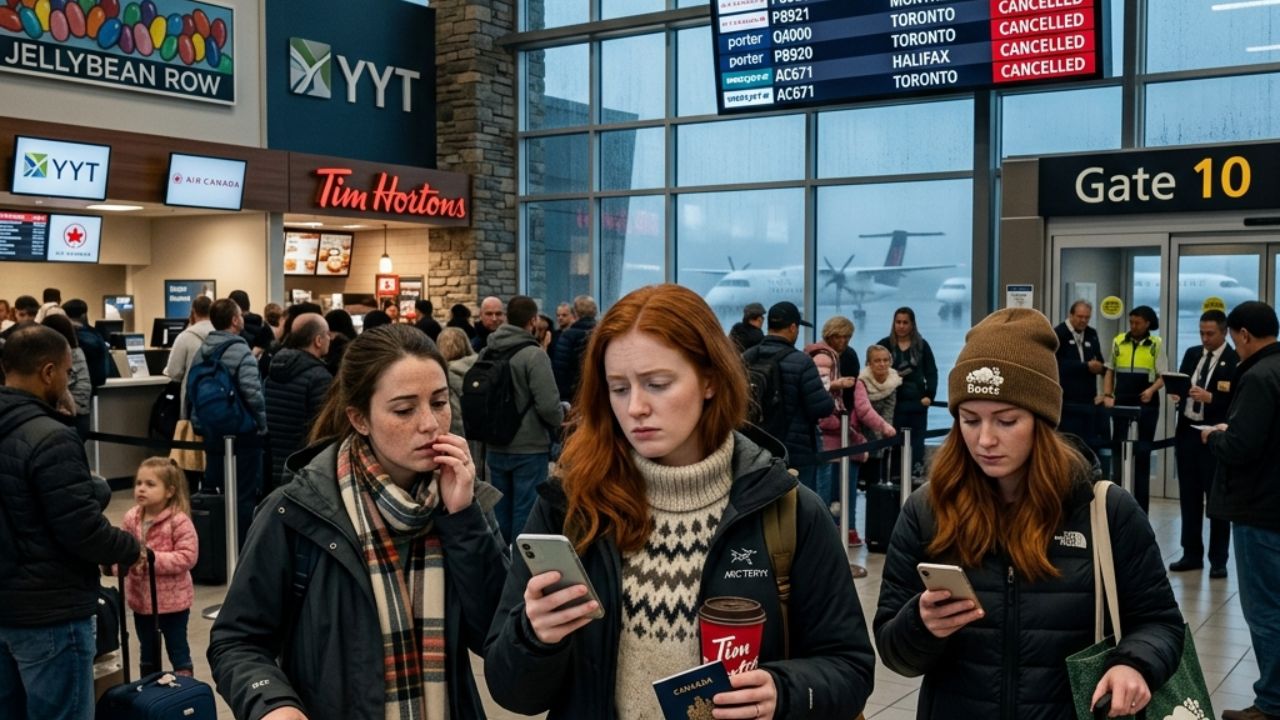
Image generated by AI
A Sudden Logistical Bottleneck in Newfoundland
While the broader global passenger network frequently battles unpredictable localized weather events and massive transcontinental congestion, a highly disruptive wave of operational friction is currently severely straining regional operations across the Canadian East Coast. Delivering highly urgent, breaking airline news, verified flight data confirms that St. John’s International Airport (YYT) succumbed to an unexpected and highly frustrating scheduling bottleneck on May 31, 2026. While desperate travelers attempt to navigate sudden, terrifying airport disruptions, these exclusive aviation updates reveal that major regional and mainline carriers—including Air Canada, PAL Airlines, and Porter Airlines—were violently forced into aggressive ground holds, resulting in severe rolling delays and 6 outright flight cancellations. By aggressively stalling critical domestic departures across this massive hub, this localized failure has triggered uncontrollable, rolling travel chaos, leaving hundreds of passengers entirely stranded and completely severing vital routes connecting St. John's to Halifax, Montreal, Ottawa, and Toronto.
Expanded Overview: The Scale of the St. John's Gridlock
The sudden execution of these mass cancellations serves as an undeniable example of how rapidly carrier-specific operational hurdles can completely dismantle a major aviation hub's highly optimized schedule. Historically, St. John's operates as a highly efficient, economically vital gateway linking Newfoundland and Labrador to massive transcontinental connection points across mainland Canada.
However, the sheer impact of today's disruption has completely dismantled that reliability. Because St. John's serves as a highly vital aviation hub for the eastern maritime provinces, these cascading service interruptions quickly began affecting major cities across the entire country. Stranded passengers faced devastatingly long lines at customer service counters while airline gate agents scrambled desperately to clear the mounting backlog of disrupted aircraft. Flight networks are feeling the severe strain from coast to coast. Ultimately, what started as isolated, localized schedule changes ballooned rapidly into a much wider travel headache. Airport officials heavily advised everyone to aggressively verify their departure status before heading out to the terminal, especially with so many widespread domestic connections completely compromised.
Section-Wise Breakdown of the Hub Disruptions
Air Canada and PAL Airlines Suffer Severe Groundings
The operational friction was violently absorbed by Canada's most critical domestic operators. Air Canada, the massive mainline flag carrier, took a highly destructive hit regarding localized cancellations out of YYT. The carrier executed 2 absolute cancelled flights, which represented a severe 16% cancellation rate for its schedule out of St. John's. It also logged 3 highly disruptive delays, pushing its localized delay rate to a massive 25%.
Simultaneously, PAL Airlines—a highly critical regional operator for the eastern provinces—absorbed an equally brutal blow to its localized departure board, logging 2 absolute flight cancellations. This represented an 11% cancellation rate for the regional carrier, severely limiting intra-provincial mobility. PAL also logged 2 rolling delays on its active schedule.
Porter Airlines Crippled by Massive Rolling Delays
Rounding out the disruption, Porter Airlines violently struggled to keep its active fleet moving. The carrier executed 2 absolute flight cancellations, translating to a highly disruptive 10% failure to launch rate for the day. However, Porter suffered the absolute worst regarding active ground holds, executing a massive 6 rolling delays. This skyrocketed Porter's localized delay rate to an incredible 30%, severely punishing regional travelers attempting to connect westward.
Secondary Disruptions Ripple Across Canadian Hubs
The massive bottleneck in St. John's instantly pushed devastating ripple effects across the entire Canadian aviation network. The specific destinations connected through these tracking schedules span several prominent urban hubs. Looking closely at the patterns across these urban centers, travelers in St. John’s experienced notable impacts. During peak chaos windows, the airport logged up to four cancellations and four delays, which then shifted into two cancellations and seven delays.
Meanwhile, passengers navigating the massive mega-hub in Toronto (YYZ/YTZ) dealt with a frustrating mix of challenges, absorbing one cancellation and two delays on inbound flights. Further east, Halifax Stanfield International Airport (YHZ) saw a peak of two cancellations and one delay directly tied to the St. John's bottleneck. Conversely, operations into Montreal-Trudeau (YUL) and Ottawa Macdonald-Cartier (YOW) remained relatively stable, with zero cancellations into Montreal (one delay) and extremely low cancellations stretching into Ottawa (one delay).
Verified St. John's Flight Disruption Metrics Table
To fully comprehend the highly severe operational parameters and massive logistical breakdown dictating this localized network collapse, the following table explicitly details the exact cancellation and delay metrics across the heavily impacted carriers operating at St. John's:
| Airline | Cancelled Flights | Delayed Flights |
|---|---|---|
| PAL Airlines | 2 | 2 |
| Porter Airlines | 2 | 6 |
| Air Canada | 2 | 3 |
Passenger Impact: Stranded Commuters and Emergency Rebooking
For the modern domestic commuter, the passenger impact of these massive, sudden regional disruptions is physically exhausting. Flight cancellations can be incredibly frustrating, but airport officials urge passengers to take immediate, proactive steps. Because these hubs handle immense daily traffic, the regional backlog is expanding quickly. Disgruntled travelers face incredibly lengthy queues inside YYT while gate agents scramble to rebook missed connections. Security lines remain packed as families watch the departure boards update with frustrating news.
Stranded travelers must immediately reach out to the airline’s customer service either in person at the airport or over the phone. If caught in the massive lines at St. John's, utilizing the airline’s online chat system or mobile application can heavily bypass the physical wait. Passengers are strongly urged to aggressively familiarize themselves with airline policies regarding cancellations. Many airlines offer robust rebooking options or direct compensation if the cancellation is actively within their operational control.
Industry Analysis: The Vulnerability of Eastern Corridors
From a macroeconomic and industry operations perspective, the widespread flight cancellations and escalating delays at St. John’s International Airport directly highlight the fragile interconnectedness of Canada’s aviation network. With major carriers like Air Canada, Porter, and PAL Airlines collectively grounding six flights and leaving up to 30% of scheduled services severely delayed, the operational ripple effects quickly choked vital transit corridors stretching to Toronto, Halifax, Montreal, and Ottawa. For travel analysts, these metrics emphasize the critical ripple effects that minor regional carrier delays can introduce into massive, broader flight paths, turning isolated coastal constraints into a widespread logistical headache across the entire Canadian aviation sector.
Conclusion: A Highly Volatile Recovery Phase for St. John's
The sudden, highly publicized reporting of 6 outright cancellations across regional and mainline carriers at St. John's International Airport is a textbook example of how rapidly localized operational constraints can devolve into terminal gridlock. By completely severing critical domestic connections to Toronto, Halifax, and Ottawa, the disruption has proven that regional Canadian schedules remain highly vulnerable to sudden friction. As fleet managers aggressively attempt to normalize operations by late this evening, passengers are urgently advised to completely avoid arriving at the airport without aggressively verifying their specific departure status and monitoring their airline's official app for real-time flight updates.
Key Takeaways
- Localized Commuter Gridlock: St. John's International Airport (YYT) suffered a highly concentrated wave of exactly 6 outright flight cancellations.
- Air Canada and PAL Devastated: Mainline operator Air Canada suffered 2 cancellations and 3 delays, while PAL Airlines executed 2 outright cancellations.
- Porter Airlines Disrupted: Porter recorded 2 absolute cancellations alongside an incredible 30% delay rate (6 flights delayed).
- Coastal Canada Severed: Highly critical domestic connections bound for Toronto, Halifax, Montreal, and Ottawa suffered targeted cancellations and rolling ground holds.
- Passenger Chaos: Stranded regional travelers are heavily urged to utilize airline mobile apps for instant rebooking and to avoid the massive customer service queues forming inside the terminal.
Disclaimer: The specific flight cancellation counts, delay percentages, and destination impacts presented in this report are based on verified flight tracking data regarding operations at St. John's International Airport on May 31, 2026. Official causes for this operational breakdown, subsequent network recovery timelines, and passenger compensation procedures are highly volatile and subject to continuous, real-time update. Affected passengers are urgently advised to monitor their specific booking status directly via their airline's official portal.
Disclaimer
This article is for informational and educational purposes only. It does not constitute legal, financial, or professional advice. While we strive to provide accurate and up-to-date information, travel policies, regulations, and conditions change rapidly. Always verify information with official sources before making travel decisions. Nomad Lawyer makes no representations about the accuracy, reliability, completeness, or suitability of the information provided. Readers should consult qualified professionals for advice specific to their circumstances. The views expressed in this article are those of the author and do not necessarily reflect the views of Nomad Lawyer.
Kunal K Choudhary
Co-Founder & Contributor
A passionate traveller and tech enthusiast. Kunal contributes to the vision and growth of Nomad Lawyer, bringing fresh perspectives and driving the community forward.
Learn more about our team →