
Sri Lanka Tourism Shifts to High-Value Luxury and Wellness Strategy in 2026
Sri Lanka is pivoting from arrival volume to high-yield tourism, prioritizing luxury wellness, premium rail travel, and extended stays to increase revenue per visitor across its 58,000+ hotel rooms.
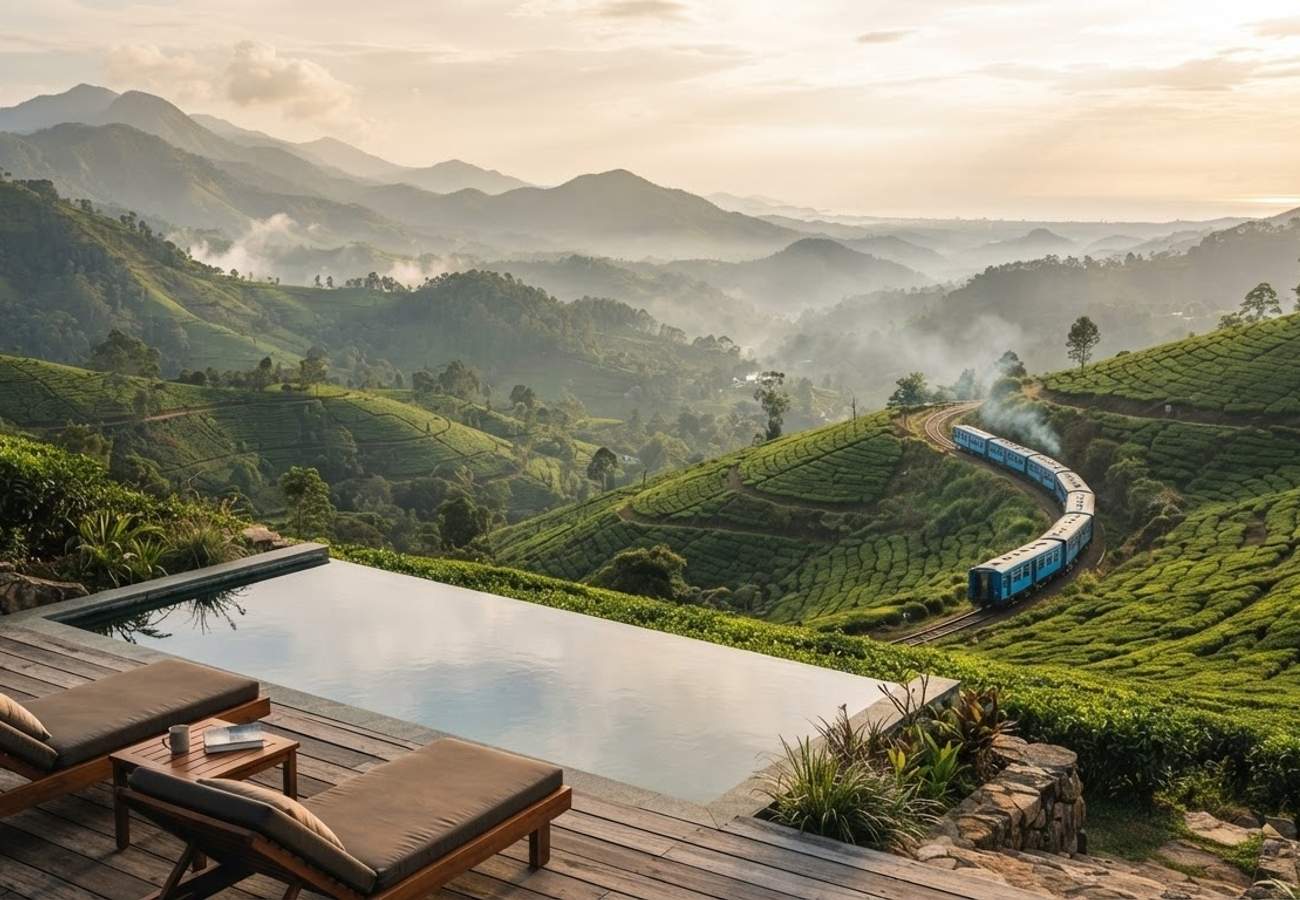
Image generated by AI
Sri Lanka is fundamentally restructuring its tourism model, moving away from raw arrival statistics to prioritize "high-yield" visitors who spend more and stay longer.
The island nation is rewriting its industry playbook to focus on revenue per visitor rather than simple gate counts. With a registered accommodation capacity now exceeding 58,000 rooms, the strategy targets lucrative segments: luxury health spas, extended-stay itineraries, premium rail tours, and community-based eco-tourism.
The Pivot to High-Yield Metrics
For years, the primary KPI for Sri Lankan tourism was the total number of arrivals. Current planning shifts this focus toward average spending and length of stay. Market analysis indicates that a traveler booking premium accommodation and curated excursions generates significantly more economic value than a short-term visitor utilizing low-cost activities.
To support this, the Sri Lanka Tourism Development Authority (SLTDA) has revised the estimated average daily tourist spending to US$148. The goal is to transition from merely filling rooms to creating high-margin, integrated experiences.
Luxury Wellness and Bespoke Itineraries
Wellness has become a primary pillar of the 2026 strategy. Leveraging established Ayurveda traditions and yoga retreats, the government is promoting luxury wellness as a core draw rather than a standalone activity.
Recent efforts include:
- ILTM Asia Pacific 2026: 15 Sri Lankan companies participated in a dedicated pavilion in Singapore to showcase luxury accommodation, wildlife, and bespoke experiences.
- Integrated Routing: New itineraries combine wellness retreats with visits to Kandy, Ella, Galle, and Yala.
- Strategic Promotion: A dedicated wellness program was highlighted in July 2026 to attract international high-net-worth individuals.
Infrastructure and Experience Diversification
The shift toward high-value travel relies on diversifying the "tourism product" to encourage longer stays.
Premium Rail Travel The railway network, particularly in the central highlands between Kandy and Ella, is being repositioned. Rather than treating trains as simple transport, they are being marketed as premium sightseeing products. This aligns with the public investment program aimed at addressing existing weaknesses in rail and road infrastructure.
Eco-Lodges and Geographic Dispersion To prevent over-concentration in major hubs, the state is promoting community-based eco-lodges. This distributes spending into rural areas and develops underused sectors including marine and nature-based tourism in regions like Sigiriya and the eastern coast.
Capacity and Growth Data
The transition to high-yield tourism occurs against a backdrop of significant capacity expansion.
Accommodation and Arrival Statistics
| Metric | Value |
|---|---|
| Total Registered Hotel Rooms | 58,000+ |
| New Rooms Added (2025) | 4,600 |
| 2025 International Arrivals | 2,362,521 |
| Jan–July 2026 Arrivals | 1,343,418 |
| Estimated Avg. Daily Spend | US$148 |
| 2026 Optimistic Arrival Projection | 3,000,000 |
Why This Matters: Industry Analysis
From a logistical perspective, this shift is a necessary response to the "volume trap." When a destination focuses solely on arrival numbers, it often leads to over-tourism, strained infrastructure, and lower-margin revenue that fails to justify the environmental cost.
For travelers, the real impact is a move toward "slow travel." By incentivizing longer stays, Sri Lanka is effectively encouraging a multi-stop circuit (Colombo $\rightarrow$ Kandy $\rightarrow$ Ella $\rightarrow$ Yala $\rightarrow$ Galle). This not only increases the spend per head but also reduces the pressure on any single destination.
Our analysis of the data suggests that the addition of 4,600 rooms in 2025 creates a surplus that can only be sustained if the average length of stay increases. If the country continues to rely on short-term visitors, it risks a capacity glut. The focus on "high-yield" is therefore as much about economic sustainability as it is about luxury branding.
Forward Outlook
Market trends suggest Sri Lanka will increasingly integrate MICE (Meetings, Incentives, Conferences, and Exhibitions) tourism into this high-value framework. Expect a surge in boutique heritage properties and specialized wellness certifications as the country competes with other luxury Asian destinations. The success of this pivot will depend on whether the promised infrastructure upgrades to rail and road networks can keep pace with the expectations of premium travelers.
The era of the budget-stopover is ending; the era of the curated residency has begun.
Related Travel Guides
Disclaimer
This article is for informational and educational purposes only. It does not constitute legal, financial, or professional advice. While we strive to provide accurate and up-to-date information, travel policies, regulations, and conditions change rapidly. Always verify information with official sources before making travel decisions. Nomad Lawyer makes no representations about the accuracy, reliability, completeness, or suitability of the information provided. Readers should consult qualified professionals for advice specific to their circumstances. The views expressed in this article are those of the author and do not necessarily reflect the views of Nomad Lawyer.