
Split-Ticketing Unlocks Up to 30% Holiday Airfare Savings as Baggage Fees Loom

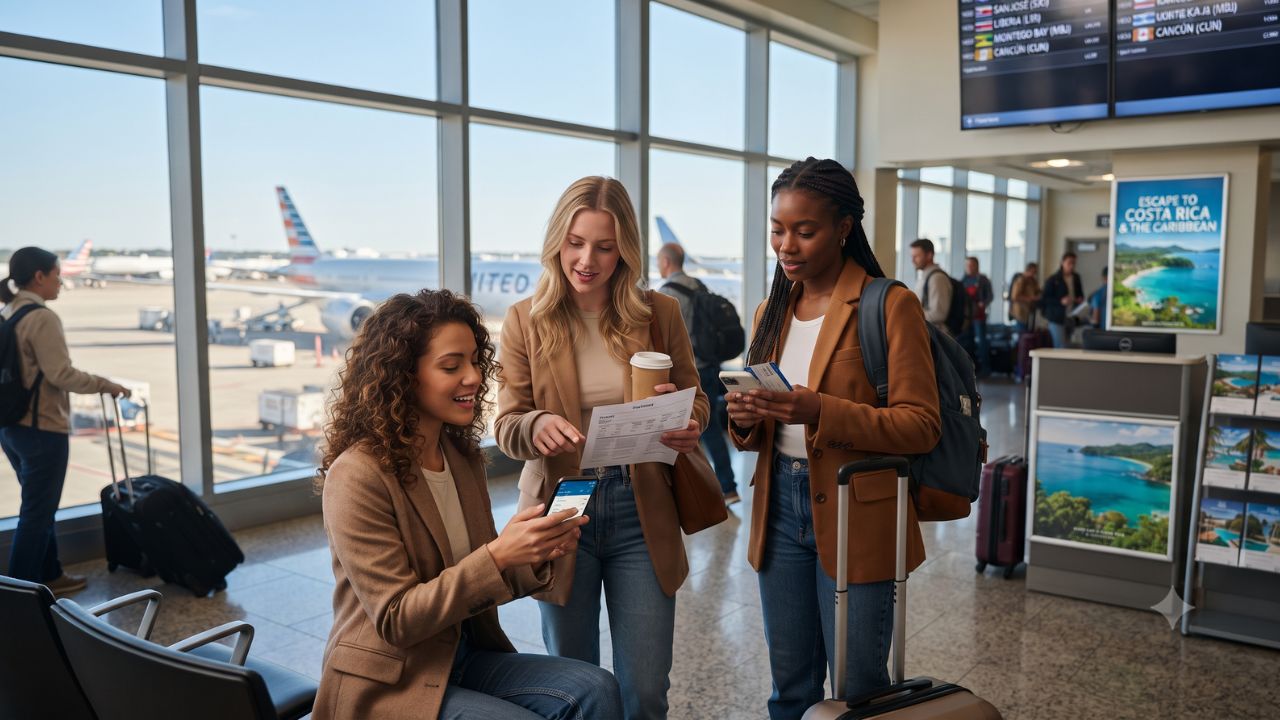
Booking two separate one-way airline tickets instead of a traditional round-trip fare unlocks airfare savings of up to 29 percent domestically and 30 percent on international routes for Thanksgiving and Christmas travel, according to flight pricing data released on 12 October 2026 by KAYAK. Based on millions of consumer flight queries analyzed between 1 April and 1 September 2026, the study demonstrates how dynamic revenue management algorithms generate profound directional price asymmetries across competitive domestic hubs and winter-sun vacation markets. While Washington, DC leads domestic savings potential at 29 percent and Simpson Bay in St Maarten tops international comparisons at 30 percent, travelers who embrace split-ticketing must navigate hidden financial hazards: baggage fees, seat selection charges, and unprotected self-transfer risks that can instantly eliminate headline ticket discounts.
The seasonal pricing spread reflects structural shifts in how airlines price holiday flight capacity. Historically, commercial carriers penalized one-way bookings with punitive pricing to deter business travelers from stitching together low-cost itineraries. Today, widespread fare unbundling and hyper-competitive point-to-point networks allow passengers to assemble hybrid itineraries across competing carriers. However, comparing headline ticket prices without accounting for total checkout expenditures creates an illusion of value, particularly when Thanksgiving falls late on 26 November and Christmas arrives on Friday, 25 December.
Directional Asymmetry: How Revenue Algorithms Split Round-Trip Pricing
The economic engine driving split-ticketing savings is directional inventory imbalance. On high-density holiday routes, airline revenue management systems price individual flight legs based on real-time seat availability rather than the holistic value of a round-trip ticket. A traveler departing Chicago for Thanksgiving may find one airline offering the lowest outward morning departure, while a rival network operator offers the cheapest return evening flight. Booking these segments as isolated transactions breaks the carrier’s ability to impose round-trip bundle pricing.
Domestically, KAYAK identified substantial price differentials across major metropolitan areas: Washington, DC recorded a 29 percent potential saving when comparing two one-way tickets against standard return fares, followed by Chicago at 28 percent and San Diego at 22 percent. In multi-airport metropolitan areas like New York, split-ticketing enables travelers to depart via John F. Kennedy International and return through LaGuardia or Newark Liberty, though surface transit costs across boroughs can erode ticket savings.
International winter-sun destinations exhibit even wider fare divergences. Simpson Bay in St Maarten recorded the highest international differential at 30 percent, followed by Liberia in Costa Rica at 23 percent and Lima in Peru at 20 percent. Travelers bound for Costa Rica can evaluate landing in Liberia for Pacific beach access and returning via San José, capturing route savings while exploring multiple ecological regions. However, transcontinental and long-haul benchmark searches conducted in July 2026 illustrate that split-ticket discounts are not universal: San Francisco to New York cost $363 as a return ticket versus $364 as two one-ways, while Los Angeles to Tokyo priced at $896 for a return against $879 for separate fares.
Calendar Windows and Ancillary Cost Reality: The True Math of Holiday Booking
Capturing split-ticket savings requires disciplined execution across tight seasonal booking windows. For Thanksgiving on 26 November 2026, historical pricing patterns show domestic airfares hitting seasonal lows approximately five weeks prior to the holiday, followed by steep price spikes inside two weeks of departure. Flying on Thanksgiving Day itself delivers dramatic discounts: travelers departing on 26 November save up to 19 percent domestically and 49 percent internationally compared to Friday, 20 November, which KAYAK identified as the single priciest departure date of the holiday season.
Christmas travel exhibits a broader booking window. Historical airfare dips occur between four and seven weeks prior to Christmas Day (25 December 2026), covering mid-November through early December. Furthermore, shifting flights directly into Christmas week saves up to 18 percent domestically and 34 percent internationally compared to traveling during the preceding week.
| Destination Market | Maximum Reported Split Saving | Core Routing Examined | Optimal Booking / Departure Window | Key Ancillary Expense Risk |
|---|---|---|---|---|
| Washington, DC | 29% Domestic | Cross-airline one-way matching | 5 weeks before Thanksgiving (mid-October) | Peak domestic checked baggage fees ($45–$50 each way) |
| Chicago (ORD/MDW) | 28% Domestic | Multi-carrier Midwest trunk routes | Midweek departures (Thanksgiving Day saves 19%) | Carry-on restrictions on unbundled Basic Economy fares |
| San Diego (SAN) | 22% Domestic | Nonstop vs. connecting split legs | 4 to 7 weeks before Christmas (late November) | Seat assignment charges applied across separate airlines |
| St Maarten (SXM) | 30% International | Transatlantic / Caribbean sun routes | Off-peak holiday week departures (saves up to 34%) | Airport departure taxes and baggage fees paid twice |
| Liberia, Costa Rica (LIR) | 23% International | Open-jaw itineraries (LIR / SJO) | Advance international booking window | Ground transfers between regional Costa Rican airports |
| Lima, Peru (LIM) | 20% International | South American north-south corridors | Early booking prior to December peak demand | Currency conversion fees and separate international luggage caps |
However, ancillary fee structures threaten to erase these percentage gains. Consider luggage policies enforced by carriers like American Airlines, which charges $45 online or $50 at the airport for a standard first checked bag on domestic routes. When purchasing two separate one-way tickets, a passenger paying online incurs $45 on the outbound flight and $45 on the return, adding an immediate $90 to the total itinerary cost. For a family of four checking luggage on independent one-way tickets, baggage fees easily exceed $360, turning an apparent 20 percent airfare saving into a net financial loss.
Expert Analysis: The Self-Transfer Hazard and Regulatory Protection Gaps
The fundamental drawback of split-ticketing lies in the legal separation of the booking contracts. When a passenger purchases a standard round-trip ticket, the issuing airline is legally bound to transport the traveler to their final destination and back. If a winter blizzard cancels the outbound leg, the airline must rebook the entire itinerary or provide a complete refund under consumer rules enforced by the US Department of Transportation.
For travelers booking this route, the direct consequence is complete loss of connection protection across unlinked itineraries. If flight delays or ground-stop orders disrupt an outward one-way flight, the independent airline operating the return leg has zero legal obligation to adjust the ticket. The return carrier will classify the traveler as a no-show, immediately cancelling the seat and forfeiting the fare without compensation. Travelers constructing self-transfer connections across separate carriers assume 100 percent of the misconnection risk.
The pricing pressure this creates means that airlines utilize aggressive ancillary unbundling to offset discounts generated by split-ticket searches. Under US Department of Transportation regulations, airlines must permit passengers to cancel a reservation within 24 hours of purchase without penalty if the ticket was booked at least seven days before departure. However, travelers booking two separate one-way flights must monitor two independent 24-hour clocks. If one flight confirms but the complementary return leg spikes in price minutes later, the traveler must execute separate cancellation requests on different platforms to avoid unwanted ticket charges.
Split-ticketing functions effectively for solo travelers carrying a single personal item who possess the schedule flexibility to fly on holiday mornings. For families, travelers checking heavy baggage, or those connecting through weather-vulnerable hubs, the legal protection of a unified round-trip ticket far outweighs the speculative savings of separate bookings.
Key Takeaways
- 30% Split-Ticketing Savings: KAYAK’s 12 October 2026 data shows booking two separate one-way tickets can save up to 29 percent domestically and 30 percent internationally.
- Top Savings Hubs: Washington, DC (29%), Chicago (28%), and San Diego (22%) lead domestic savings, while St Maarten (30%) and Liberia, Costa Rica (23%) top international markets.
- Holiday Flight Timing: Flying on Thanksgiving Day (26 Nov) saves up to 19 percent domestically and 49 percent internationally versus traveling on Friday, 20 November.
- Baggage Fee Erosion: Standard checked luggage fees—such as American Airlines' $45 online rate—cost $90 round-trip across separate tickets, quickly wiping out ticket discounts.
- Zero Misconnection Protection: Downstream airlines on separate one-way tickets treat delayed connecting passengers as no-shows, forfeiting return fare value.
FAQ: Holiday Flight Booking and Split Ticketing 2026
What is split-ticketing, and how does it save money on holiday flights?
Split-ticketing involves buying two separate one-way tickets on different airlines instead of a single round-trip ticket, allowing travelers to capture the cheapest available fare in each direction.
Which holiday travel dates offer the cheapest departure flights?
Departing on Thanksgiving Day (26 November 2026) saves up to 49 percent internationally compared to 20 November, while Christmas week flights save up to 34 percent versus the preceding week.
What are the main risks of booking separate one-way tickets?
If your first flight is delayed or cancelled, the second airline will treat you as a no-show and forfeit your ticket. Baggage and seat fees must also be paid twice.
Does the US DOT 24-hour refund rule apply to separate one-way tickets?
Yes, but each ticket operates on an independent 24-hour window. Both reservations must be cancelled separately if you need to reverse the itinerary.
[In the high-stakes arena of holiday flight pricing, calculating total baggage fees and connection risks matters far more than chasing raw ticket discounts.]
Related Travel Guides
- Singapore Airlines Overhauls Fleet Amenities with SISLEY, BYREDO, and First-Ever Business Class Sleepwear
- Air India Boeing 787 Diverted to Jaipur Following Squawk 7500 Hijack Alert on Frankfurt–Delhi Flight
- South American Airline Consolidation: GOL, Avianca, and LATAM Reshape Fares Amid Rising Charges
Disclaimer
This article is for informational and educational purposes only. It does not constitute legal, financial, or professional advice. While we strive to provide accurate and up-to-date information, travel policies, regulations, and conditions change rapidly. Always verify information with official sources before making travel decisions. Nomad Lawyer makes no representations about the accuracy, reliability, completeness, or suitability of the information provided. Readers should consult qualified professionals for advice specific to their circumstances. The views expressed in this article are those of the author and do not necessarily reflect the views of Nomad Lawyer.
Kunal K Choudhary
Co-Founder & Contributor
A passionate traveller and tech enthusiast. Kunal contributes to the vision and growth of Nomad Lawyer, bringing fresh perspectives and driving the community forward.
Learn more about our team →