
Germany Expands Green Air-Rail Network as Lufthansa and Deutsche Bahn Replace Domestic Flights

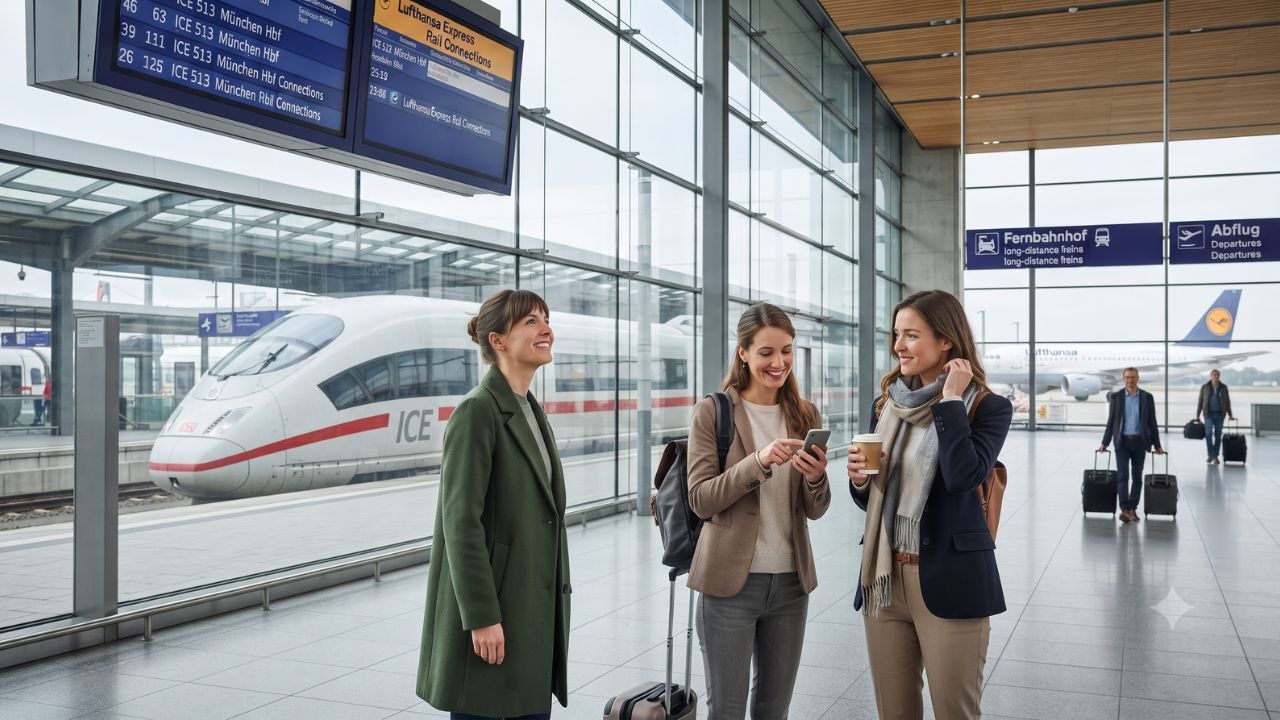
Compelled by the European Union’s ReFuelEU Aviation mandate requiring sustainable aviation fuel to constitute at least 2 percent of airport fuel supplies from 2025 before surging to 6 percent in 2030, Germany is accelerating the substitution of domestic feeder flights with high-speed Intercity Express (ICE) rail corridors. Centered on the dual mega-hubs of Frankfurt and Munich, the expansion of the Lufthansa Express Rail partnership with Deutsche Bahn is transforming Germany’s transport architecture. By shifting short-haul domestic passengers from narrowbody aircraft onto high-speed electric trains, Lufthansa frees scarce runway slots at congested hub airports for high-yield intercontinental widebody flights while hedging against escalating carbon compliance costs.
The strategic pivot addresses compounding operational realities confronting European aviation. With domestic aviation taxes and emissions trading fees placing heavy cost burdens on short-range routes, commercial carriers cannot justify burning expensive jet fuel on 45-minute sectors between regional cities and hub gateways. By integrating high-speed rail stations directly into airport booking systems, travelers receive a single ticket that pairs an ICE rail leg with an intercontinental flight. As Frankfurt International Airport expands terminal connectivity to its long-distance train station and Munich Airport deepens Bavarian rail links, intermodal transport is transitioning from an environmental pilot project into a primary operational pillar.
Intermodal Mechanics: The Lufthansa Express Rail Operational Blueprint
The operational engine of Germany’s air-rail integration is the Lufthansa Express Rail network. Under this framework, passengers booking international travel can select participating Deutsche Bahn stations as their origin or destination point. Frankfurt Airport’s long-distance railway station (Frankfurt Flughafen Fernbahnhof), situated directly adjacent to Terminal 1, provides seamless pedestrian access from train platforms into airline check-in concourses and security checkpoints.
The service currently links Frankfurt Airport with major economic and urban centers across Germany, including Cologne, Düsseldorf, Stuttgart, Aachen, Hamburg, and Berlin. In southern Germany, Munich Airport utilizes rail links to feed international flights, connecting passengers across Bavaria to destinations such as Nuremberg, the Alpine resort of Garmisch-Partenkirchen, and Salzburg across the Austrian border.
A critical commercial benefit of the program is contractually guaranteed connection protection. Unlike unlinked self-transfer journeys where a delayed train causes the forfeiture of an air ticket, a passenger holding an integrated Lufthansa Express Rail ticket is fully protected. If an ICE service suffers delays, Lufthansa automatically rebooks the passenger onto the next available flight without change fees. Conversely, if an incoming international flight arrives late at Frankfurt or Munich, the traveler is accommodated on the next scheduled train.
Progress is also underway regarding synchronized luggage handling. While current protocols require passengers to manage their bags on the train and drop them at designated airport terminal desks, expanding operational agreements between airline ground crews, airport operators, and Deutsche Bahn aim to introduce regional baggage drop facilities, streamlining physical transfers for families and long-haul travelers carrying heavy luggage.
Regulatory Catalysts: ReFuelEU Mandates and Runway Slot Monetization
The primary catalyst accelerating this modal shift is the European Union's statutory decarbonization timeline overseen by the European Commission. Under the ReFuelEU Aviation regulation, fuel suppliers at commercial EU airports must supply at least 2 percent sustainable aviation fuel (SAF) from 2025, climbing to 6 percent in 2030 and reaching 70 percent by 2050. Because synthetic and bio-based SAF trades at three to four times the price of conventional fossil kerosene, consuming alternative fuels on short-haul domestic feeder flights generates unsustainable unit cost spikes.
| Intermodal Corridor | Rail Gateway / Station | High-Speed Rolling Stock | Feeder Flight Policy | Connection & Rebooking Protection |
|---|---|---|---|---|
| Cologne–Frankfurt | Köln Hbf to Frankfurt Airport | ICE 3 / ICE 4 Fleet | Flight frequencies fully substituted by rail | Guaranteed flight rebooking; terminal airside bag drop |
| Stuttgart–Frankfurt | Stuttgart Hbf to Frankfurt Airport | ICE High-Speed Network | Primary rail-air feeder corridor | Automatic re-ticketing upon train delay; mileage accrual |
| Düsseldorf–Frankfurt | Düsseldorf Hbf to Frankfurt Airport | ICE Sprinter Services | Rail prioritized over narrowbody air links | Integrated boarding pass issued for train and flight legs |
| Munich–Nuremberg | Nürnberg Hbf to Munich Gateway | Regional / Intercity Rail | Short-haul flight reduction | Protected transfer window into Munich long-haul bank |
| Munich–Salzburg | Salzburg Hbf (Austria) to Munich | Cross-Border EuroCity / ICE | Rail feeder for Alpine international travelers | Single-ticket customs and immigration processing |
Simultaneously, runway slot scarcity at Frankfurt and Munich restricts airline expansion. By eliminating low-margin domestic flights connecting cities like Cologne or Nuremberg to hub airports, Lufthansa can repurpose valuable takeoff and landing slots for widebody departures to North America, Asia, and Africa.
The rail integration also supports national tourism dispersal. International visitors landing in Frankfurt gain immediate rail access to regional cultural destinations, including the historic Römerberg, the Städel Museum, and the Rhine Valley wine country near Mainz and Heidelberg. Arriving in Munich provides direct rail links to Marienplatz, Nymphenburg Palace, the English Garden, and Alpine outdoor destinations, allowing international travelers to combine long-haul urban visits with regional excursions without renting vehicles.
Expert Analysis: The Air-Rail Modal Shift and Passenger Legal Realities
The deepening integration between airlines and national railway operators represents a necessary evolution in European transport, yet it alters the contractual rights passengers rely upon during travel disruptions. In European aviation, passenger protection is strictly governed by European Regulation (EC) No 261/2004, which mandates standardized cash compensation for flight cancellations and extended delays. High-speed rail travel, however, falls under the European Rail Passenger Rights Regulation (EU 2021/782), which establishes different compensation thresholds and liability frameworks.
For travelers booking this route, the direct consequence is a bifurcated legal environment when delays occur. If an ICE train connecting to Frankfurt Airport experiences overhead wire damage or signaling failure that results in a missed intercontinental connection, Lufthansa’s commercial agreement ensures the passenger is rebooked onto a subsequent flight, provided with meals, and given hotel accommodation if an overnight stay is required. However, because the initial disruption occurred on rail infrastructure rather than an aircraft, the traveler cannot claim the €600 statutory flight cancellation compensation mandated under EU261, as rail operators are exempt from airline cash compensation statutes.
The pricing pressure this creates means that airlines must price Express Rail combination tickets competitively against private vehicle use and independent train tickets. As ReFuelEU compliance costs drive up airline ticket prices across the continent, commercial carriers are using discounted rail legs to preserve accessible entry-level fares for long-haul itineraries. Passengers who choose an Express Rail itinerary often pay less than purchasing a standalone flight and an independent Deutsche Bahn ticket separately, while gaining complete connection insurance.
Until seamless baggage transfer is deployed across all regional German stations, passengers must weigh the convenience of direct airport rail platforms against the physical requirement of carrying luggage aboard ICE train carriages. For travelers prioritizing travel reliability and reduced carbon footprints, the air-rail model offers the most durable transit path through Central Europe.
Key Takeaways
- EU SAF Mandate Enforced: Under ReFuelEU Aviation rules, European airports enforce a minimum 2 percent SAF requirement from 2025, rising to 6 percent in 2030, driving airlines toward rail substitution.
- Slot Optimization Strategy: Shifting short-haul domestic passengers to ICE trains frees scarce takeoff and landing slots at Frankfurt and Munich for high-yield intercontinental flights.
- Lufthansa Express Rail Expansion: Deutsche Bahn high-speed ICE trains connect major cities including Cologne, Düsseldorf, Stuttgart, Hamburg, and Berlin directly to Frankfurt Airport's long-distance station.
- Guaranteed Connection Protection: Integrated tickets protect passengers against missed connections, providing free automatic rebooking on subsequent trains or flights during disruptions.
- Regional Tourism Dispersal: Direct rail links facilitate regional travel from Frankfurt to the Rhine Valley and Heidelberg, and from Munich to Nuremberg and the Bavarian Alps.
FAQ: Lufthansa Express Rail and German Air-Rail Travel 2026
What is Lufthansa Express Rail, and how does it work?
Lufthansa Express Rail is an intermodal partnership with Deutsche Bahn that allows travelers to book a combined train and flight itinerary under a single ticket, with guaranteed connection protection.
What happens if my ICE train is delayed and I miss my flight?
If your qualifying train leg is delayed, Lufthansa automatically rebooks you onto the next available flight to your destination at no additional charge and provides care if needed.
Do I have to carry my own luggage on the train?
Yes. Currently, passengers must take their luggage aboard the ICE train and drop it off at the airport check-in desks or bag-drop kiosks upon arrival at the airport rail station.
Which airports in Germany feature direct long-distance train connections?
Frankfurt International Airport features a fully integrated long-distance train station (Frankfurt Flughafen Fernbahnhof) connected directly to Terminal 1, providing direct ICE access.
[As European aviation adapts to strict climate mandates, Germany’s air-rail network demonstrates how trains and airplanes can share the journey.]
Related Travel Guides
Disclaimer
This article is for informational and educational purposes only. It does not constitute legal, financial, or professional advice. While we strive to provide accurate and up-to-date information, travel policies, regulations, and conditions change rapidly. Always verify information with official sources before making travel decisions. Nomad Lawyer makes no representations about the accuracy, reliability, completeness, or suitability of the information provided. Readers should consult qualified professionals for advice specific to their circumstances. The views expressed in this article are those of the author and do not necessarily reflect the views of Nomad Lawyer.
Preeti Gunjan
Contributor & Community Manager
A passionate traveller and community builder. Preeti helps grow the Nomad Lawyer community, fostering engagement and bringing the reader experience to life.
Learn more about our team →