
South American Airline Consolidation: GOL, Avianca, and LATAM Reshape Fares Amid Rising Charges

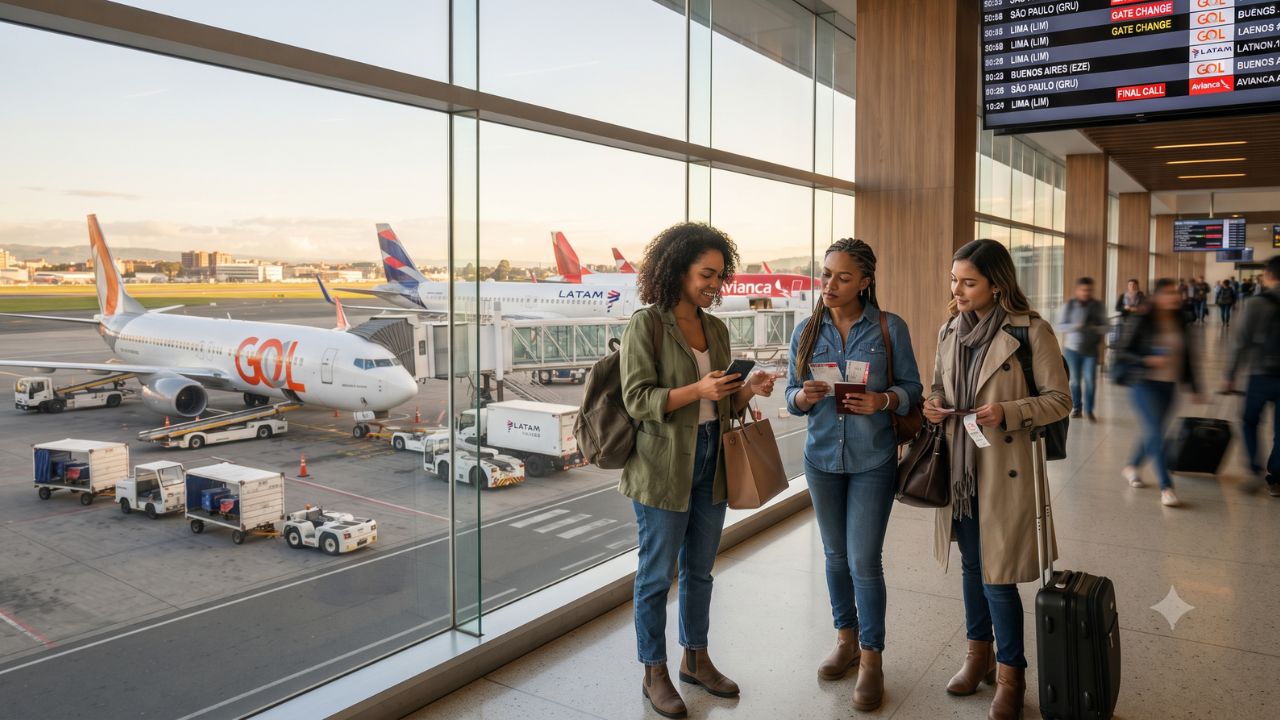
Controlling more than 70 percent of Colombia's domestic seat capacity while uniting Brazil's all-Boeing 737 operator with an Andean Airbus fleet under the Abra Group holding framework, South America's major commercial airlines are consolidating operations to survive severe margin compression. Facing steep increases in airport passenger facility charges (PFCs), dollar-denominated aircraft lease rates, and climbing overflight navigation surcharges, GOL Linhas Aéreas, Avianca, and LATAM Airlines are trading isolated competition for integrated capacity sharing. For travelers crossing the continent, this commercial convergence eliminates legacy fare boundaries, replacing traditional full-service tickets with aggressively unbundled pricing tiers and punitive ancillary baggage fees.
The restructuring follows post-bankruptcy reorganizations that reshaped Latin America's aviation map. Following their exits from Chapter 11 legal proceedings, both GOL and Avianca re-engineered their cost structures around fleet interchangeability, high-density cabins, and ancillary monetization. Meanwhile, LATAM Colombia has strengthened its presence across trunk routes linking Bogotá, São Paulo, and Lima, establishing an intense competitive counterweight. As state civil aviation regulators step in to supervise market concentration, travelers are encountering an operating environment where budget preservation requires strict planning discipline.
Corporate Reorganization and the Abra Group Alliance Architecture
The primary vehicle driving cross-border integration between Brazil and Colombia is the Abra Group holding structure. Under this corporate architecture, GOL and Avianca coordinate route networks, capital distribution, and aircraft deployment while preserving separate air operator certificates (AOCs), brand identities, and union collective bargaining agreements. The holding framework allows the carriers to operate as a coordinated commercial bloc across two dozen nations without executing a full legal merger.
Operationally, the alliance enables single-ticket distribution and interline baggage transfers between GOL’s Brazilian domestic network and Avianca’s international routes departing Bogotá’s El Dorado International Airport (BOG). When passengers book combined itineraries through São Paulo–Guarulhos (GRU) or Bogotá, luggage is interlined through to the final destination, though statutory customs declarations must still be executed at the initial international port of entry. The commercial partnership is supported by mutual loyalty integration, permitting points transfers and reciprocal elite status recognition between GOL’s Smiles and Avianca’s LifeMiles programs.
The operational coordination extends into capacity deployment through ACMI (Aircraft, Crew, Maintenance, and Insurance) wet-lease operations. Under regulatory approvals granted by Aeronáutica Civil de Colombia (Aerocivil) alongside aviation bodies in El Salvador and Guatemala, GOL Boeing 737 aircraft and Brazilian flight crews operate international corridors on behalf of Avianca, including the high-density Bogotá–San Salvador–Guatemala City link. This tactical asset sharing allows the carriers to maintain daily schedule integrity during peak seasons without requiring capital-heavy fleet acquisitions, complying with regulatory oversight from Brazil’s Agência Nacional de Aviação Civil (ANAC).
Unbundled Tiers and Penalty Structures: The True Cost of Air Travel
To offset non-fuel operational expense increases—such as airport security charges and international navigation fees—airlines have unbundled base fares. Basic and Light fare classes across GOL, Avianca, and LATAM Colombia now strip overhead bin access entirely, restricting passengers to a single compact personal item that fits under the seat in front of them.
| Airline / Entity | Primary Fleet Type | Economy Overhead Carry-On | Standard Checked Allowance | Basic Fare Bin Access | Overweight / Airport Penalties |
|---|---|---|---|---|---|
| GOL Linhas Aéreas | Boeing 737 Family (NG & MAX) | 12 kg (55 x 35 x 25 cm) on Light/Plus/Max | 1 Bag (23 kg) on Plus; 2 Bags (32 kg) on Max | Strictly Excluded (Personal item only) | R$ 170 (USD 35) domestic; BRL 400–500 (USD 100) international |
| Avianca | Airbus A320 Family (ceo & neo) | 10 kg on Standard / Plus / Premium | 1 Bag (23 kg) on Standard; 2 Bags (23 kg) on Max | Strictly Excluded (Under-seat item only) | Route-specific dynamic airport counter fees |
| LATAM Colombia | Airbus A320 Family (ceo & neo) | 12 kg on Standard / 16 kg on Premium | 1 Bag (23 kg) on Standard; 2 Bags (23 kg) on Premium | Strictly Excluded on Basic tickets | Dynamic airport fees; up to 40% savings online 48h prior |
| Wingo (Low-Cost) | Boeing 737-800 | Extra Ancillary Fee Required | Extra Ancillary Fee Required | Excluded (Under-seat item only) | Punitive gate fees for oversized hand baggage |
Fee structures penalize travelers who fail to prepay baggage allowances. For GOL flights, adding a 23 kg checked bag online costs USD 40 to USD 59, but purchasing the same allowance at the airport counter triggers steep surcharges. Overweight bags on GOL domestic flights incur immediate fees of R$ 170 (approximately USD 35), rising to BRL 400–500 (USD 100) on international sectors. LATAM applies dynamic ancillary pricing that rewards advance bookings with discounts up to 40 percent when luggage is purchased at least 48 hours before scheduled departure, while charging premium rates at check-in desks.
Expert Analysis: Duopolistic Market Power and Consumer Booking Adaptation
The consolidation of South American aviation around Abra Group and LATAM Airlines Group has transformed passenger fare dynamics by eliminating aggressive pricing competition across core regional corridors. In Colombia, Avianca and LATAM Colombia control more than 70 percent of domestic capacity, effectively establishing a commercial duopoly over routes linking Bogotá with Medellín, Cali, Cartagena, and Barranquilla.
For travelers booking this route, the direct consequence is that unbundled advertised fares mask the actual cash expenditure required to travel. A budget-conscious passenger purchasing an enticing USD 60 basic one-way ticket between Bogotá and São Paulo often finds the final checkout cost exceeding USD 140 once a standard 10 kg overhead carry-on, seat allocation, and credit card processing charges are attached. Attempting to bring an unpurchased rollaboard bag to the departure gate results in immediate penalty baggage fees that exceed the original cost of the ticket.
The pricing pressure this creates means that regional travelers must alter purchasing behaviors to protect household travel budgets. Consumer booking patterns across Brazil and Colombia show an expansion in advance purchase windows, with passengers now securing domestic flights two to four weeks early to avoid late-booking fare premiums that run two to three times higher than baseline rates. Leisure travelers are also abandoning long-standing weekend getaway habits ("puentes festivos"), migrating flights to Tuesday and Wednesday departures where load factors and base fares remain lower.
Simultaneously, carriers are accelerating fleet modernization to cut unit operational costs (CASM). Transitioning to next-generation Boeing 737 MAX aircraft at GOL and Airbus A320neo jets at Avianca and LATAM generates 15 to 20 percent reductions in fuel burn. By combining fuel-efficient aircraft with unbundled ancillary pricing, South American airline leadership protects corporate balance sheets against fuel spikes, leaving travelers responsible for navigating complex add-on fee schedules.
Key Takeaways
- 70% Market Dominance: Avianca and LATAM Colombia control over 70 percent of domestic passenger capacity across primary Colombian trunk routes.
- Abra Group Integration: GOL and Avianca coordinate networks, reciprocal Smiles and LifeMiles loyalty accruals, and cross-border wet-lease operations under a unified holding umbrella.
- Overhead Bin Exclusions: Basic and Light fare classes across all three major operators exclude overhead cabin baggage, permitting only one under-seat personal item.
- Baggage Penalty Escalation: Airport desk baggage fees carry steep penalties, with GOL domestic overweight charges hitting R$ 170 (USD 35) and international penalties reaching BRL 500 (USD 100).
- Advance Booking Shift: To avoid price surges that multiply fares two-to-threefold, travelers are booking regional flights two to four weeks ahead and shifting travel to midweek departures.
FAQ: South American Airline Partnerships and Baggage Fees 2026
What is the Abra Group, and how does it affect passenger bookings?
Abra Group is the holding company uniting GOL and Avianca. It allows passengers to book single-ticket connecting itineraries and earn reciprocal loyalty miles across Brazil and Colombia while keeping airlines under separate operations.
Can I bring a carry-on suitcase on a Basic or Light fare in South America?
No. Basic fares on GOL, Avianca, and LATAM include only one personal item that must fit under the seat. Overhead carry-on bags require booking a higher fare tier or paying an add-on fee.
How much can I save by paying for luggage in advance on LATAM?
LATAM offers discounts of up to 40 percent on checked baggage when added online at least 48 hours prior to scheduled departure compared to airport check-in desk rates.
What are the carry-on baggage weight limits on GOL and Avianca?
GOL permits one overhead carry-on bag weighing up to 12 kg on eligible fare tiers, while Avianca restricts standard overhead cabin bags to 10 kg.
[As South American carriers tighten capacity and unbundle services, travelers must calculate total baggage fees before celebrating a discounted base fare.]
Related Travel Guides
Disclaimer
This article is for informational and educational purposes only. It does not constitute legal, financial, or professional advice. While we strive to provide accurate and up-to-date information, travel policies, regulations, and conditions change rapidly. Always verify information with official sources before making travel decisions. Nomad Lawyer makes no representations about the accuracy, reliability, completeness, or suitability of the information provided. Readers should consult qualified professionals for advice specific to their circumstances. The views expressed in this article are those of the author and do not necessarily reflect the views of Nomad Lawyer.
Raushan Kumar
Founder & Lead Developer
Full-stack developer with 11+ years of experience and a passionate traveller. Raushan built Nomad Lawyer from the ground up with a vision to create the best travel and law experience on the web.
Learn more about our team →