
Spirit Airlines' $87 Million LaGuardia Slots Face Uncertain Future as Budget Carriers Balk at Price Tag
Breaking airline news and aviation industry updates for 2026.

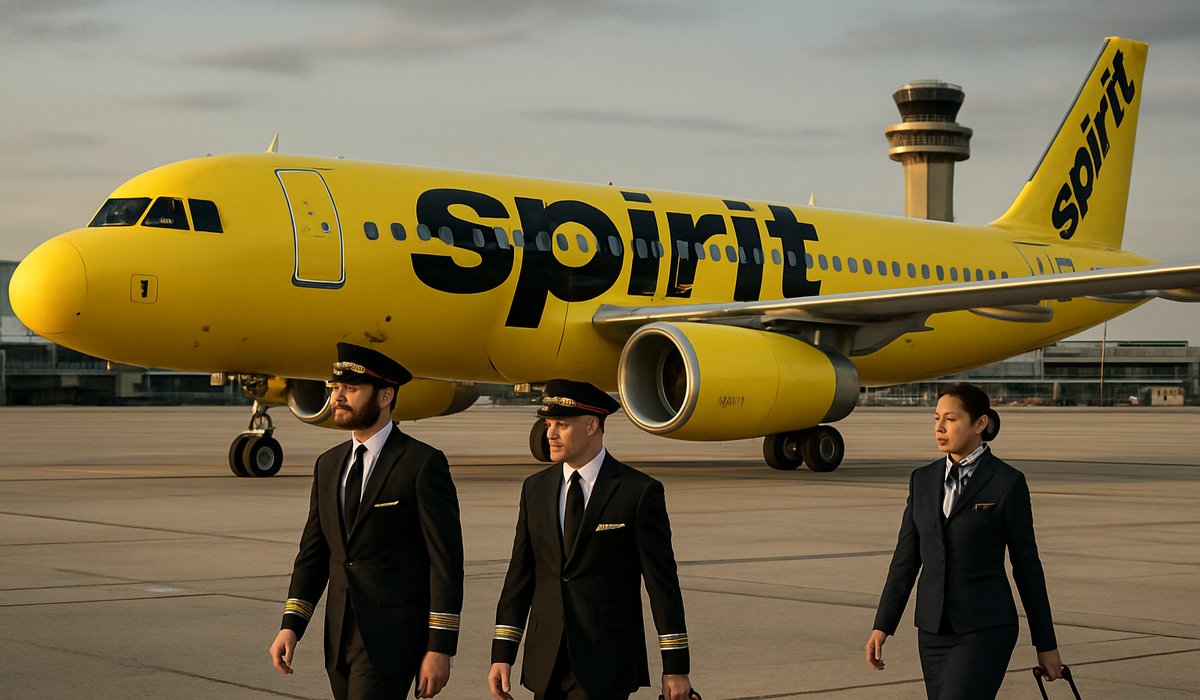
Image generated by AI
Spirit Airlines' $87 Million LaGuardia Slots Face Uncertain Future as Budget Carriers Balk at Price Tag
Bankruptcy court authorizes sale of premium flight slots, but aviation market dynamics and carrier economics complicate the transaction
Court-Approved Asset Sale Offers Rare Access to Capacity-Constrained New York Hub
Spirit Airlines' financial collapse has unlocked an extraordinary asset: 22 daily flight slots at LaGuardia Airport, valued at approximately $87 million by bankruptcy proceedings. Yet this seemingly attractive opportunity is proving far more complex than the headline valuation suggests, with potential buyers expressing significant hesitation about the asking price in a shifting aviation landscape.
The sale, authorized by a federal bankruptcy court, represents one of the few instances when access to LaGuardia's tightly rationed takeoff and landing slots becomes available. The airport operates under decades-old federal regulations that strictly cap flight operations, making each slot extraordinarily valuable for carriers seeking to expand operations at this premium New York City gateway. However, the path to completing this transaction reflects deeper complications within the budget airline segment and broader industry economics.
Market Realities Clash with Valuation
Despite the apparent attractiveness of guaranteed daily access to a major metropolitan airport, budget carriers—the logical bidders for a former ultra-low-cost operator's assets—have shown limited enthusiasm for the asking price. The reluctance underscores critical shifts in airline economics: volatile jet fuel prices, persistent labor cost pressures, and tightening profit margins on legacy short-haul routes have fundamentally altered the financial viability calculations for carriers operating thin-margin business models.
Spirit's own operational struggles that led to bankruptcy filing demonstrate the vulnerability of ultra-low-cost carriers in competitive Northeast markets, where established legacy carriers maintain substantial pricing power and network advantages. Potential acquirers appear skeptical that deploying premium-priced slots to operate the cost structure that defined Spirit's failed strategy would generate sufficient returns to justify the $87 million investment.
Industry Implications for the Slot Market
This development carries broader significance for aviation industry observers tracking how airline fees, route economics, and capital allocation patterns evolve in the post-pandemic environment. The LaGuardia slot market—traditionally viewed as an almost guaranteed revenue generator—now faces questions about valuation assumptions that have held for decades.
The outcome of this sale process may reshape how carriers evaluate expansion opportunities at congested hubs and could influence future bankruptcies involving slot-rich carriers at capacity-constrained airports nationwide.
Frequently Asked Questions
What are airline flight slots and why are they valuable? Flight slots are time-specific authorizations to take off or land at an airport during particular hours. At capacity-constrained airports like LaGuardia, slots are worth millions because federal regulations strictly limit total operations, creating artificial scarcity that translates directly into operational exclusivity and revenue potential.
Why are budget carriers hesitant to purchase Spirit's LaGuardia slots? Ultra-low-cost carriers operate on razor-thin margins dependent on high-frequency, high-load-factor operations. The $87 million upfront investment for slots, combined with rising jet fuel prices and labor costs, may not generate sufficient returns under traditional budget carrier business models, particularly on competitive Northeast routes.
How do jet fuel prices affect airline slot valuations? Higher fuel costs directly reduce profitability per flight. When jet fuel prices spike due to geopolitical events or supply disruptions, the expected returns from operating additional flights decline, making premium-priced slots less attractive to cost-sensitive carriers planning expansion strategies.
Could legacy carriers acquire these slots instead? Yes, though this would represent an unusual shift—legacy carriers typically prioritize premium-cabin operations on lucrative routes rather than budget service. If a legacy carrier acquired the slots, it would likely redeploy them for higher-yield operations, fundamentally changing their operational profile from Spirit's original positioning.
What happens if the slots don't sell at the asking price? The bankruptcy court may authorize a reduced asking price or alternative arrangements. Alternatively, slots could be allocated through industry mechanisms or returned to federal slot pools, potentially redistributing capacity among other carriers competing for LaGuardia access.
Related Travel Guides
External Resources
Disclaimer
This article is for informational and educational purposes only. It does not constitute legal, financial, or professional advice. While we strive to provide accurate and up-to-date information, travel policies, regulations, and conditions change rapidly. Always verify information with official sources before making travel decisions. Nomad Lawyer makes no representations about the accuracy, reliability, completeness, or suitability of the information provided. Readers should consult qualified professionals for advice specific to their circumstances. The views expressed in this article are those of the author and do not necessarily reflect the views of Nomad Lawyer.
Preeti Gunjan
Contributor & Community Manager
A passionate traveller and community builder. Preeti helps grow the Nomad Lawyer community, fostering engagement and bringing the reader experience to life.
Learn more about our team →