
Special Trains Rush to Aid After Jammu–Srinagar Highway Landslides Close Kashmir's Main Road
Special trains rush to the Katra–Banihal route in 2026 as massive landslides block Kashmir's only all-weather highway, stranding thousands during peak spring travel season and forcing Indian Railways to activate emergency rail services.

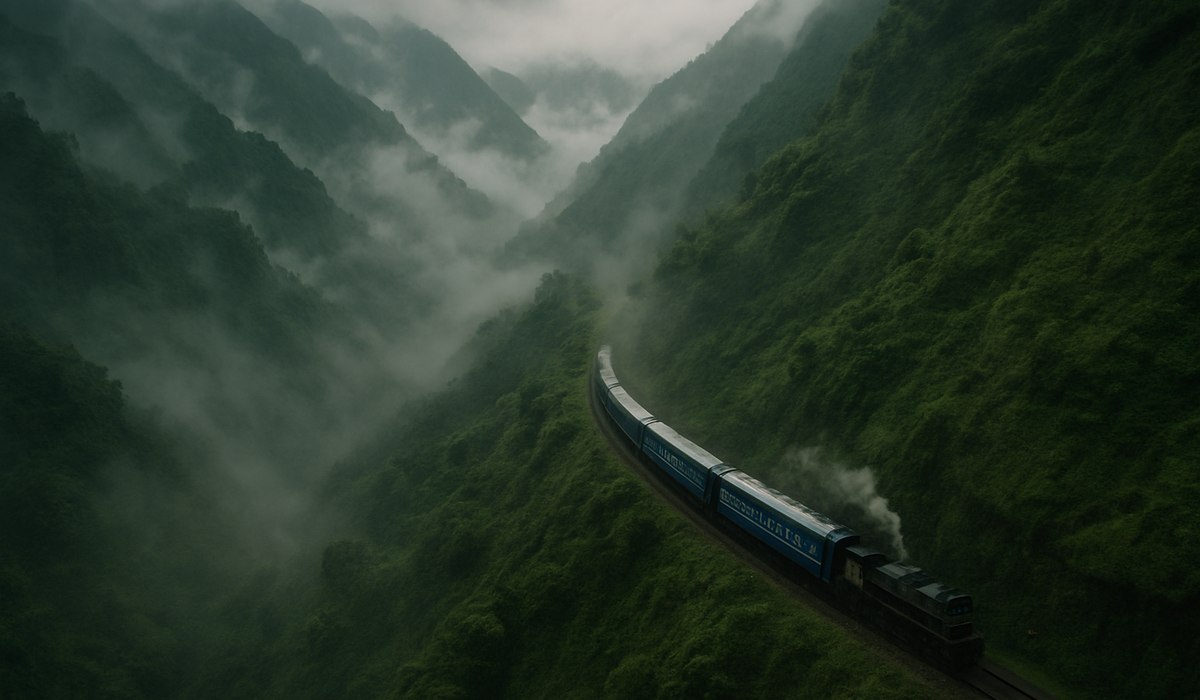
Image generated by AI
Special Trains Rush to Kashmir as Landslides Paralyze Highway
Indian Railways has activated special trains between Shri Mata Vaishno Devi Katra and Banihal stations after torrential rains triggered catastrophic landslides along the Jammu–Srinagar Highway during spring 2026. The 270-kilometer route—Kashmir's only all-weather road connection to mainland India—remains intermittently blocked, trapping over 1,000 vehicles and stranding thousands of passengers. The special trains rush represents the Northern Railway's emergency response to bypass the unstable Ramban–Banihal sector, where rockslides and shooting stones have halted traffic indefinitely. Peak travel season disruptions compound the crisis as pilgrims, tourists, and migrant workers face uncertain waits at makeshift shelters along the mountain corridor.
Landslides Sever Kashmir's Main Road Lifeline
Heavy monsoon-like rainfall in April 2026 unleashed a series of devastating landslides across the Jammu–Srinagar National Highway, particularly in the vulnerable Ramban–Banihal mountain passes. The Shalgadi and Chamlawas sectors experienced complete blockages, forcing road authorities to suspend all traffic movements. Publicly available reports confirm multiple slides and stone falls overwhelmed clearing operations as unstable slopes continued to crumble throughout the day.
The highway serves as the sole reliable year-round connection between Kashmir Valley and the rest of India, carrying essential medical supplies, food, fuel, and tourist coaches. Partial reopenings lasted only hours before renewed slips forced fresh closures. For travelers dependent on a single-day road journey to Srinagar or Jammu, the indefinite shutdown triggered cascading cancellations of hotel bookings, pilgrimage schedules, and onward flight connections. The disruption strikes precisely when Kashmir's tourism industry enters its busiest season, with thousands of visitors from across India converging on the valley. Remote communities along the blocked section faced acute shortages of fresh food and medicines as supply convoys couldn't proceed.
Railway Division Deploys Special Katra–Banihal Trains
The Jammu division of Northern Railway responded to the crisis by introducing special unreserved trains operating between Katra and Banihal on select dates throughout April 2026. These emergency services specifically target stranded highway passengers, offering a critical bypass around the landslide-affected zones. The unreserved configuration allows high-volume, short-notice boarding—essential when most displaced passengers hold bus tickets rather than rail reservations.
Operators positioned these trains strategically at Katra and Banihal stations, located at opposite ends of the worst-affected highway stretch. By routing passengers via rail, Indian Railways enables travelers to skip the unstable mountain sector entirely, then continue by local transport on safer road segments. Historical precedent informed this strategy: during January 2026, similar special trains between Katra and Srinagar carried over 3,000 passengers in just 48 hours when snow and flight cancellations created comparable chaos. The special trains rush model proved effective at absorbing displaced passengers while circumventing natural disasters. However, unreserved compartments create crowding challenges when families with luggage, children, and elderly passengers compete for limited seating. Visit the Northern Railway official website for real-time schedule updates and seat availability confirmations before boarding.
Impact on Tourism and Travel Plans
Spring 2026 marks Kashmir's crucial tourism recovery window, making the highway closure economically devastating for hotels, tour operators, and local guides. Thousands of advance bookings face cancellation as travelers abandon plans amid uncertain reopening timelines. Families returning home, students resuming university terms, and pilgrims heading to religious sites find themselves marooned at wayside towns with inadequate shelter, food, and sanitation facilities.
The special trains rush provides essential relief but demands difficult logistical choices: passengers must either abandon vehicles to secure rail seats or endure indefinite roadside waits. Tour operators juggle transferring customers between blocked vehicles and railway stations at Katra and Banihal, incurring unexpected costs while managing frustrated clients. Migrant workers dependent on predictable daily movement suffer income losses during extended lockdowns. These repeated disruptions underscore how fragile mountain connectivity remains—a single natural disaster paralyzes thousands of lives when no viable alternative routes exist. Check Trainline for booking options and schedule coordination with your journey plans.
Ongoing Challenges and Weather Concerns
Monsoon forecasts for April–May 2026 predict continuing rainfall, creating elevated risk of additional slides even after current blockages clear. Saturated slopes remain unstable for weeks following heavy precipitation, meaning sudden slips could resume without notice. Road authorities must balance reopening pressure against legitimate safety hazards—premature traffic resumption has historically caused accidents in these vulnerable sectors.
The Ramban–Banihal corridor has earned notoriety for seasonal instability due to steep gradients, fractured geology, and limited drainage infrastructure. Climate scientists warn that increasingly intense rainfall patterns from global warming are exacerbating landslide frequency across the Himalayas. Short-term relief via special trains cannot substitute for permanent infrastructure improvements—elevated highways, reinforced tunnels, and advanced early-warning systems require decades and substantial investment. Meanwhile, communities dependent on this single artery remain perpetually vulnerable. Travelers should monitor weather forecasts obsessively and maintain flexible itineraries throughout spring. Official advisories from the Jammu–Kashmir administration and Northern Railway provide the most current traffic status.
| Metric | Details |
|---|---|
| Affected Highway | Jammu–Srinagar National Highway (270 km total length) |
| Blocked Sector | Ramban–Banihal mountain passes, particularly Shalgadi and Chamlawas |
| Vehicles Stranded | Over 1,000 (buses, trucks, private cars) |
| Rail Alternative | Katra–Banihal special trains (unreserved configuration) |
| Passengers Transported (Jan 2026 precedent) | 3,000+ in 48 hours |
| Primary Cause | Monsoon rainfall triggering multiple landslides |
| Reopening Timeline | Indefinite (weather-dependent) |
| Peak Travel Season | March–June (spring/early summer tourism surge) |
| Journey Duration (Rail) | Approximately 6–8 hours (vs. 10–12 hours by road when operational) |
What This Means for Travelers
The April 2026 landslide crisis and subsequent special trains rush deployment require immediate action if you're planning Kashmir travel:
-
Postpone non-essential trips until the Jammu–Srinagar Highway reopens with confirmed road clearance from official sources, not informal driver assurances.
-
Book flexible accommodations with cancellation policies allowing changes up to 48 hours before arrival, given unpredictable highway reopening windows.
-
Consider flying directly to Srinagar's Sheikh ul-Alam International Airport if your origin city has direct connections, bypassing the Highway disruption entirely.
-
Monitor Northern Railway announcements daily—special trains operate on select dates only, and seats fill within hours during peak season.
-
Register with your hotel or tour operator for SMS updates on highway status changes; most lodges track road conditions better than online sources.
-
Pack extra medications and snacks if attempting the journey, as roadside facilities become overwhelmed during extended closures.
-
**Allocate 12–16 hours
Disclaimer
This article is for informational and educational purposes only. It does not constitute legal, financial, or professional advice. While we strive to provide accurate and up-to-date information, travel policies, regulations, and conditions change rapidly. Always verify information with official sources before making travel decisions. Nomad Lawyer makes no representations about the accuracy, reliability, completeness, or suitability of the information provided. Readers should consult qualified professionals for advice specific to their circumstances. The views expressed in this article are those of the author and do not necessarily reflect the views of Nomad Lawyer.
Kunal K Choudhary
Co-Founder & Contributor
A passionate traveller and tech enthusiast. Kunal contributes to the vision and growth of Nomad Lawyer, bringing fresh perspectives and driving the community forward.
Learn more about our team →