
Special Trains Deployed After Landslides Shut Jammu-Srinagar Highway
Indian Railways deploys special trains between Katra and Banihal as landslides block National Highway 44 in 2026, stranding over 1,200 vehicles and forcing emergency rail services to evacuate hundreds of tourists and pilgrims from Kashmir.

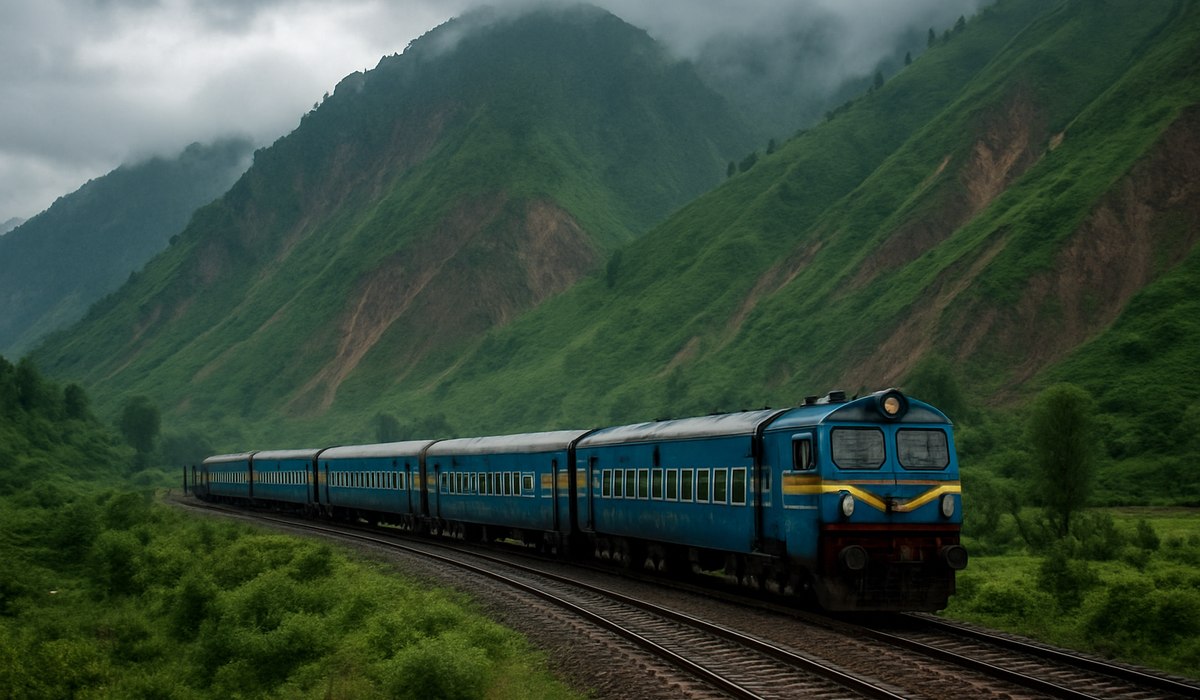
Image generated by AI
Emergency Rail Services Activated Following Highway Closure
Special trains between Katra and Banihal are ferrying stranded travelers as multiple landslides shut Kashmir's vital National Highway 44 for days in April 2026. Heavy rainfall triggered severe earth movements along the Ramban and Banihal stretches, burying road sections and forcing authorities to suspend traffic indefinitely. With over 1,200 vehicles trapped across the region, Indian Railways' Jammu division launched unreserved emergency services to evacuate hundreds of passengers—including tourists, pilgrims, and migrant workers—stranded far from their destinations. The upgraded Udhampur-Srinagar-Baramulla rail corridor now serves as the primary bypass route, offering the most reliable passage as road restoration crews battle ongoing rockfalls and unstable slopes.
Multiple Landslides Cripple National Highway 44
The Ramban and Banihal sectors of NH44 experienced catastrophic failures when persistent heavy rain destabilized mountain slopes across the region. A massive slide near Shalgari buried significant sections of the carriageway, while debris blocked approaches to the Banihal-Qazigund road tunnel, rendering the main highway impassable. Regional authorities reported that machinery and road crews faced extremely challenging working conditions, with intermittent fresh slippages repeatedly halting restoration attempts. The unstable geology and continued moisture meant no clear timeline existed for safe reopening. This disruption severed the primary all-weather connection between the Kashmir Valley and the rest of India, creating a transportation crisis affecting freight, commerce, and passenger movement throughout Jammu and Kashmir.
Over 1,200 Vehicles Stranded Across Region
Traffic queues extended across multiple checkpoints as the highway blockade trapped thousands of stranded passengers. Long columns of trucks carrying essential supplies, commercial buses, and private vehicles accumulated at Nagrota, Udhampur, Ramban, Banihal, Qazigund, and Anantnag. Partial restoration efforts permitted only controlled, intermittent movement at select intervals before fresh rockfalls forced renewed suspensions. Passengers endured extended waits without adequate food, water, or shelter facilities while awaiting updates on road conditions. The backlog encompassed diverse travelers—tourists heading to Kashmir Valley destinations, pilgrims visiting religious sites, students returning to educational institutions, and migrant workers traveling home. Freight delays rippled through commercial supply chains as essential goods destined for Kashmir remained stuck on the roadside indefinitely.
Railways Step In With Special Trains Deployment
Recognizing the critical bottleneck, Indian Railways' Jammu division announced special trains deployed specifically to bypass the landslide-affected zone. Operating between Shri Mata Vaishno Devi Katra and Banihal stations on April 9-10, these unreserved services maximize passenger capacity by eliminating seat reservations. The trains utilize the upgraded high-altitude rail infrastructure, including modern tunnels and bridges that shortened travel times significantly. By routing directly between these two stations, the emergency service effectively circumvents the worst-affected Ramban district stretches, providing predictable connections independent of road conditions. Railways coordinated with district administrations and traffic authorities to manage passenger flows toward functional stations, prioritizing vulnerable travelers and those facing immediate hardship. This coordinated deployment demonstrates how India's rail network functions as redundancy when mountain highways face repeated weather disruptions.
Travel Disruption Affects Tourists and Pilgrims
Thousands of travelers faced unexpected delays and uncertainty as the highway closure disrupted established itineraries. Tourists heading to Kashmir's renowned destinations—including Gulmarg ski resorts, Dal Lake houseboats, and Mughal gardens—found their journeys indefinitely postponed. Pilgrims visiting the Vaishno Devi Temple at Katra encountered blocked routes, stranding them at waypoints without facilities. Students attempting to reach educational institutions and migrant workers traveling to employment faced similar predicaments. Social media and local news spread information about special trains deployed to relieve the crisis, gradually redirecting passenger flows toward railway stations. Media coverage from Jammu, Udhampur, and Qazigund documented scenes of exhausted travelers, vehicle columns stretching for kilometers, and the logistical challenges of moving thousands away from chokepoints. The emergency rail services provided both practical relief and psychological reassurance to those caught in the disruption, though unreserved format meant coaches frequently operated at maximum capacity.
How to Book the Best Fare
Passengers affected by the Jammu-Srinagar highway closure can access emergency rail services through multiple channels. Visit the Indian Railways official booking portal to check real-time availability for special trains operating between Katra and Banihal. Unreserved ticket counters at stations including Katra, Udhampur, and Banihal stations provide same-day booking without advance reservation requirements. The Trainline platform also displays Indian Railways schedules and may offer fare comparisons for alternative routes. During emergencies, station staff prioritize stranded passengers and those without onward accommodations. Ticket costs for special services remain subsidized to encourage utilization of the rail corridor. Travelers should arrive at stations early, as unreserved coaches fill rapidly. Consider purchasing tickets directly at station windows rather than relying on online systems during high-demand periods, as servers may experience delays. Railway staff at major stations provide guidance on boarding protocols and connecting services.
Detailed Service Change Overview
| Aspect | Details |
|---|---|
| Route | Shri Mata Vaishno Devi Katra to Banihal |
| Operating Dates | April 9-10, 2026 (subject to extension) |
| Service Type | Unreserved emergency relief trains |
| Journey Duration | Approximately 2.5-3 hours |
| Daily Frequency | Multiple departures (schedule varies) |
| Capacity | Enhanced unreserved seating for maximum throughput |
| Ticket Cost | Subsidized emergency fares |
| Primary Passengers | Stranded highway travelers, tourists, pilgrims |
| Booking Method | Station counters, IRCTC portal, walk-up basis |
| Bypassed Route | Landslide-affected Ramban and Banihal NH44 stretches |
What This Means for Travelers
The special trains deployed service provides several critical advantages for passengers affected by the highway closure:
-
Route Certainty: Rail corridors remain operational regardless of mountain weather conditions or geological instability, ensuring predictable travel schedules when highways face repeated disruptions.
-
Capacity Relief: Unreserved services accommodate surge passenger demand without requiring advance booking, crucial during emergencies when thousands seek alternative transportation simultaneously.
-
Time Savings: The upgraded Udhampur-Srinagar-Baramulla line bypasses worst-affected highway stretches entirely, reducing total journey time compared to waiting for road clearance.
-
Cost Efficiency: Emergency fares remain subsidized to encourage rail utilization during crises, making this option financially accessible for stranded travelers of all socioeconomic backgrounds.
-
Coordination Support: Railway staff work alongside district administrations to prioritize vulnerable passengers—elderly travelers, families with children, medical cases—ensuring equitable access to limited seats.
-
Future Planning: This deployment establishes rail corridors as mandatory alternative routes in mountain regions, encouraging infrastructure investment to reduce highway-dependent transportation networks.
Travelers currently stranded should immediately redirect toward functional railway stations rather than remaining in vehicle queues facing prolonged uncertainty and deteriorating facility conditions.
Disclaimer
This article is for informational and educational purposes only. It does not constitute legal, financial, or professional advice. While we strive to provide accurate and up-to-date information, travel policies, regulations, and conditions change rapidly. Always verify information with official sources before making travel decisions. Nomad Lawyer makes no representations about the accuracy, reliability, completeness, or suitability of the information provided. Readers should consult qualified professionals for advice specific to their circumstances. The views expressed in this article are those of the author and do not necessarily reflect the views of Nomad Lawyer.
Preeti Gunjan
Contributor & Community Manager
A passionate traveller and community builder. Preeti helps grow the Nomad Lawyer community, fostering engagement and bringing the reader experience to life.
Learn more about our team →