
Spain's Iryo Rail Expansion Aligns With European Union High-Speed Connectivity Goals for 2027
Private rail operator Iryo is scaling its Spanish network as Madrid, Rome, and Brussels synchronize efforts to liberalize high-speed rail and reduce carbon emissions by 2027.

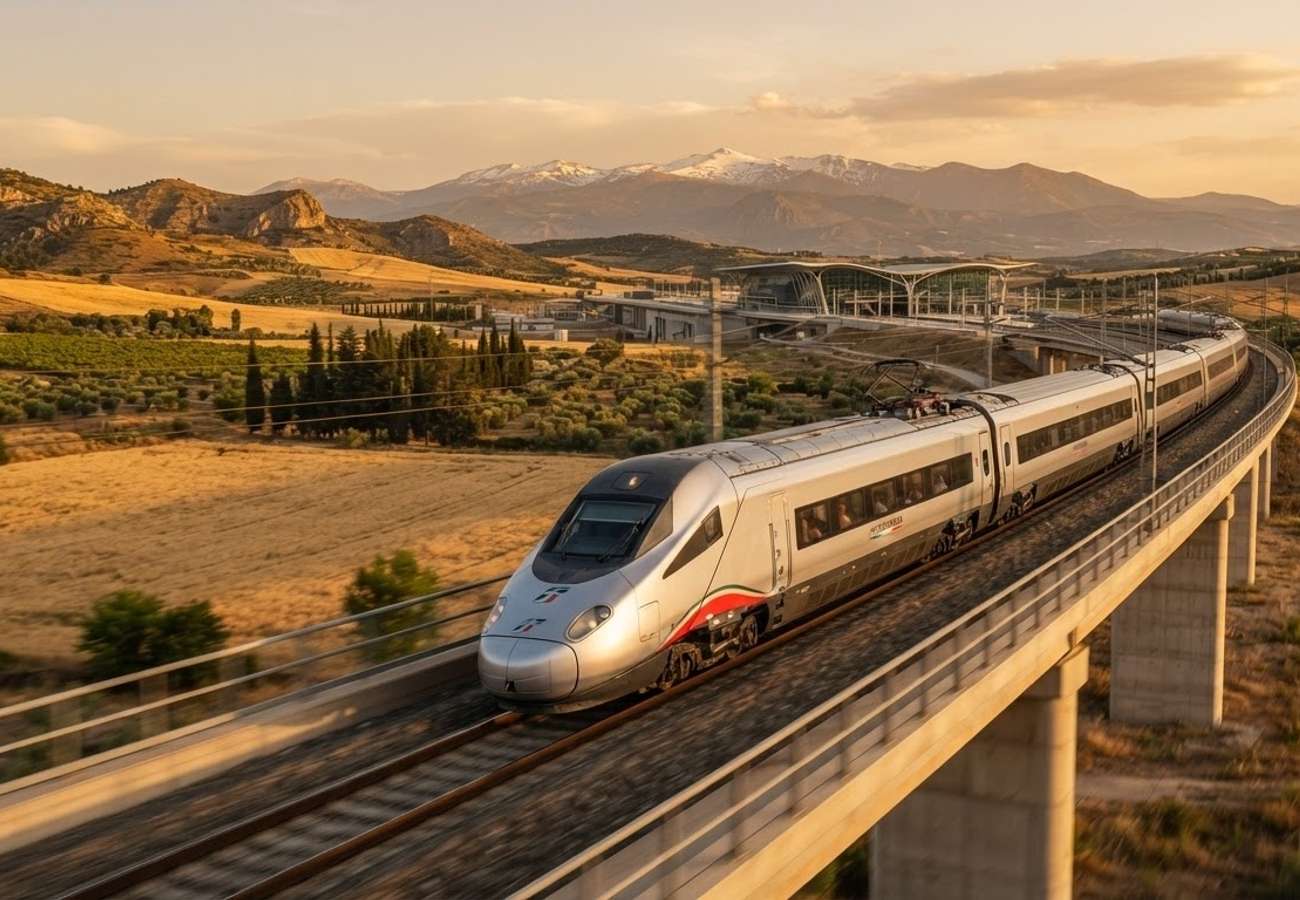
Image generated by AI
Spain's private rail sector is undergoing a massive transformation as Iryo accelerates its network growth to align with a broader European Union mandate for open-access rail by 2027. This strategic shift, mirrored across Madrid, Rome, and Brussels, aims to dismantle state monopolies, slash ticket prices, and provide a viable low-carbon alternative to short-haul flights.
The Spanish high-speed rail market is currently transitioning into a more aggressive phase of competition. Iryo, the first private entity to enter this space, is consolidating its operational footprint to prepare for a wider European alignment. This movement replicates the competitive framework already proven successful in Italy and directly supports the European Union's objective of creating a denser, more integrated cross-border rail network.
Iryo Establishes Dominance in Spanish High-Speed Corridors
Since its commercial debut in late 2022, Iryo has rapidly evolved into a cornerstone of Spain's transport infrastructure. Operated by the ILSA consortium—which is majority-owned by Italy's Trenitalia and supported by Spanish partners Globalvia and Air Nostrum—the operator utilizes the advanced Frecciarossa 1000 trainsets. These high-performance trains now link a comprehensive list of major urban centers, including Madrid, Barcelona, Valencia, Alicante, Zaragoza, Seville, Malaga, Cordoba, Cuenca, Albacete, and Tarragona.
The company's growth trajectory began on the high-traffic Madrid–Barcelona line in November 2022. Within a few months, Iryo expanded its reach to include the Madrid–Cuenca–Valencia, Madrid–Cordoba–Seville–Malaga, and Madrid–Alicante routes. This expansion placed Iryo in direct competition with the state-owned incumbent Renfe and the French-backed low-cost operator Ouigo.
Industry data reveals the scale of this disruption: Iryo moved more than 10 million passengers during its first full year of operation. The operator has focused on a service model that emphasizes flexible ticketing, four distinct comfort classes, and high-tier onboard connectivity. This approach is designed specifically to lure travelers away from regional flights and private vehicles.
Further strengthening its position in 2026, Iryo restored its services on the Madrid–Seville corridor following essential infrastructure upgrades, reinstating up to 14 daily trips. Market analysts view this move as a critical step in cementing Iryo's nationwide presence before the next wave of route openings scheduled for 2027.
The Italian Blueprint for Rail Liberalization
The current evolution of the Spanish rail market is not an isolated event but a mirror of the "Italian Model." Over a decade ago, Italy introduced the private operator Italo to compete alongside the state-run Trenitalia. This liberalization led to a dramatic increase in passenger volumes and a significant drop in average fares. Research from central banks and European regulators indicates that passenger-kilometers on Italian high-speed lines nearly doubled during the 2010s as a direct result of this intensified competition.
Trenitalia has since transitioned from a domestic monopoly to a global exporter of this competitive model. By launching open-access services in France and establishing the ILSA consortium in Spain, Trenitalia is utilizing the Frecciarossa 1000 platform as a standardized backbone for European expansion.
Simultaneously, Italy's Italo is eyeing growth beyond its home borders, with strategic investments targeting the long-distance market in Germany as it begins its own liberalization process. This trend suggests that the Italian experience—where multiple operators share the same high-speed corridors—is now the gold standard for EU member states seeking to modernize their transit networks.
For the end-user, this shift is tangible. The multi-operator framework currently operating in Spain (Renfe, Ouigo, and Iryo) is expected to deepen by 2027, leading to more diverse price points and a wider array of luxury and budget options for the traveling public.
European Commission Targets 2027 for Rail Integration
The expansion of Iryo is happening in lockstep with high-level policy shifts in Brussels. The European Commission has recently unveiled a roadmap to accelerate high-speed rail adoption across the bloc. This plan focuses on three primary pillars:
- Fair Track Access: Ensuring non-discriminatory access to service facilities for new entrants.
- Capacity Allocation: Improving how train slots are distributed to prevent state monopolies from blocking competitors.
- Infrastructure Funding: Providing dedicated research grants for next-generation high-speed rolling stock.
A key component of this regulatory push is the elimination of anti-competitive practices, such as the intentional scrapping of viable rolling stock to limit competition. Many of these initiatives are timed for implementation by 2027, which coincides with Spain's own timeline for the second phase of its rail liberalization.
In Spain, the infrastructure manager ADIF is executing a staged rollout to open more routes. While the initial focus was on the Mediterranean and Andalusian axes, ADIF intends to finalize capacity offerings for lines leading to Galicia, Asturias, Cantabria, Cadiz, and Huelva by 2027. This opens the door for Iryo to extend its network into the northern and Atlantic regions of the country.
Impact on Passenger Experience and Regional Connectivity
While specific timetables for the next phase of expansion have not been released, the ability of the ILSA consortium to rapidly deploy services on the Madrid-based axes suggests a swift rollout once ADIF releases new capacity packages.
For travelers, the continued expansion of Iryo by 2027 is expected to produce several key benefits:
- Increased Frequency: More daily departures between major city pairs, reducing wait times.
- Price Compression: Intense competition between three major brands typically forces a reduction in average ticket prices.
- Environmental Gains: The shift from air to rail significantly lowers the carbon footprint of long-distance travel within the Iberian Peninsula.
As the EU moves toward a fully integrated rail space with interoperable trains, operators like Iryo are uniquely positioned. Because they utilize a pan-European rolling stock platform and have experience in both the Italian and Spanish markets, they are primary candidates for operating seamless, cross-border high-speed links that bypass the need for traditional border transfers.
Why This Matters: The Shift to "Rail-First" Tourism
From a logistical and legal standpoint, the synchronization of Spain, Italy, and the EU around 2027 creates a "Rail-First" ecosystem. For the modern traveler, this means the era of the "budget flight" as the only affordable long-distance option is ending. The introduction of tiered pricing (from low-cost to premium) on high-speed rail allows business travelers and tourists to choose their level of comfort without sacrificing the speed of air travel.
Moreover, the legal push for "non-discriminatory access" ensures that the market remains open. This prevents a situation where one private company simply replaces a state monopoly. Instead, it fosters a permanent environment of competition that benefits the consumer through constant service improvements and price wars.
The alignment of European rail policy and private investment is effectively turning the 2027 horizon into a tipping point for sustainable, high-speed continental mobility.
Related Travel Guides
Disclaimer
This article is for informational and educational purposes only. It does not constitute legal, financial, or professional advice. While we strive to provide accurate and up-to-date information, travel policies, regulations, and conditions change rapidly. Always verify information with official sources before making travel decisions. Nomad Lawyer makes no representations about the accuracy, reliability, completeness, or suitability of the information provided. Readers should consult qualified professionals for advice specific to their circumstances. The views expressed in this article are those of the author and do not necessarily reflect the views of Nomad Lawyer.
Preeti Gunjan
Contributor & Community Manager
A passionate traveller and community builder. Preeti helps grow the Nomad Lawyer community, fostering engagement and bringing the reader experience to life.
Learn more about our team →