
Spain Tourism Shift: 17% Surge in Autonomous Accommodation Growth Revitalizes Rural Economies in 2026
Spain is witnessing a structural pivot in hospitality as independent accommodation providers grow by 17%, bypassing traditional hotel models to rebuild rural economies in Teruel and beyond.

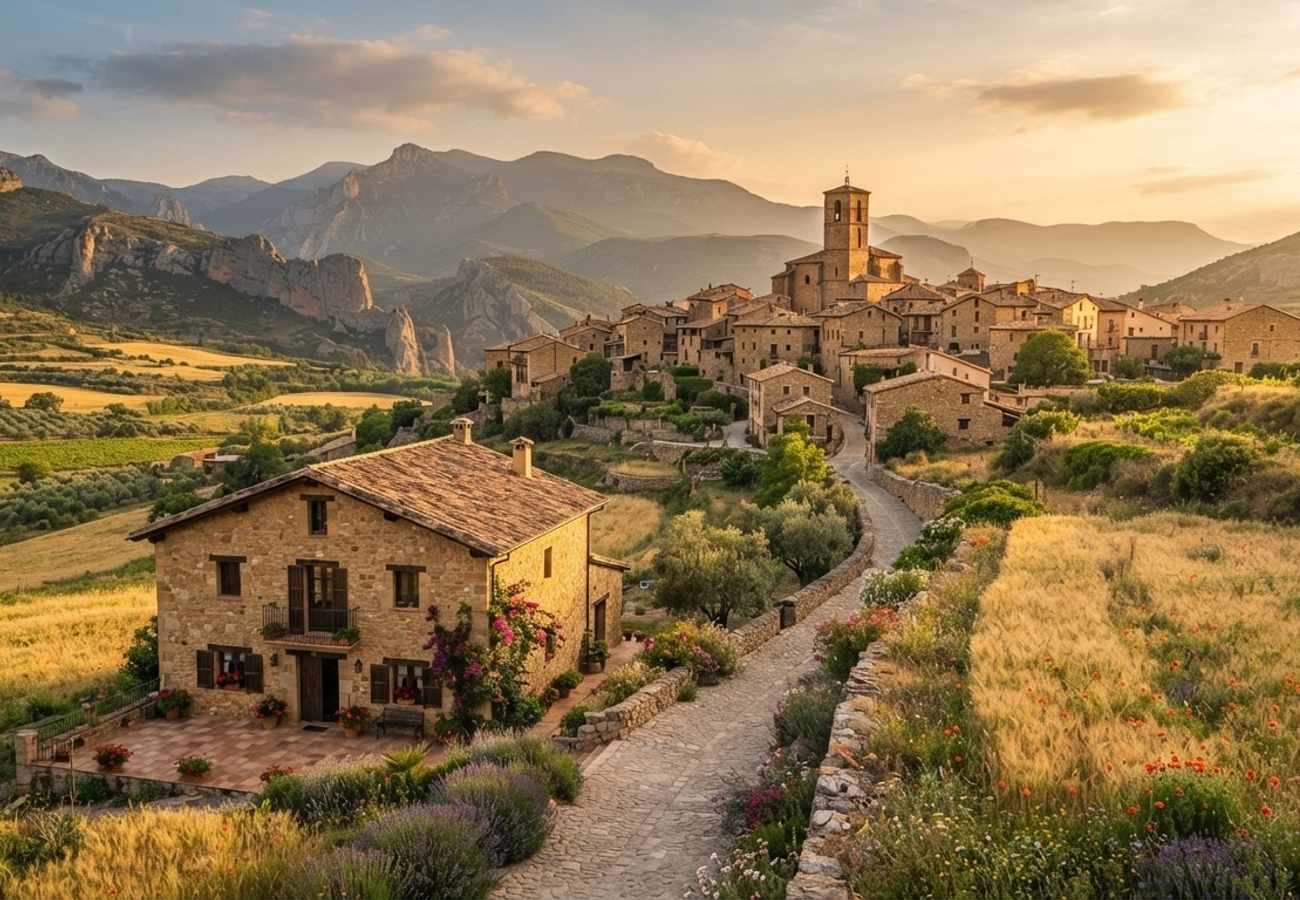
Image generated by AI
Spain is experiencing a fundamental reorganization of its tourism sector as micro-entrepreneurship disrupts traditional workforce dynamics. While general self-employment across the economy grew by a marginal 1.8%, independent accommodation providers saw a dramatic 17% increase, signaling a mass migration of labor from corporate payrolls to decentralized, owner-operated lodging.
This shift is particularly evident in the Spanish interior, where homeowners are converting residential properties into business assets to combat inflation and meet a growing traveler demand for authentic, non-coastal experiences. This movement is providing a vital economic lifeline to middle-class residents in provinces like Teruel, though it creates a growing tension with organized hotel labor unions.
Structural Divergence in Spain's Tourism Labor Market
The post-pandemic recovery in Spain has revealed a stark contrast in how the service sector is evolving. Data from Turespaña indicates that total tourism-related employment has hit record highs, with over 3.1 million workers registered in the national Social Security system. However, this aggregate figure masks a deeper transition: the rise of the micro-host.
While the broader Spanish economy saw self-employment grow by only 1.8%, the specific segment of autonomous accommodation operators surged by 17%. This suggests that the growth in tourism is not being driven by the expansion of large hotel chains, but by a decentralized network of primary residents, agricultural families, and fractional property owners.
Corporate hotel operators are currently struggling with rising operational overheads, utility inflation, and the constraints of rigid collective bargaining agreements. In contrast, these agile micro-operators are leveraging private real estate to enter the tourism value chain directly, bypassing the institutional burdens of the corporate hospitality model.
Shifting Consumer Preferences Toward Non-Hotel Stays
The growth of independent hosts mirrors a clear change in how domestic and international tourists choose to travel. According to the Instituto Nacional de Estadística (INE) Extrahotelero Occupancy Survey, overnight stays in non-hotel accommodations—including rural lodgings, campsites, hostels, and tourist apartments—reached a record 146.3 million in 2025, a 3.0% year-on-year increase.
Tourist apartments were the dominant force in this category, representing 52.1% of all extra-hotel stays, while rural tourism establishments accounted for 8.8%. The trend has only accelerated into 2026. In January 2026 alone, rural tourism stays jumped by 24.0% compared to the previous year. This surge is driven by a desire for cultural and open-air experiences away from the overcrowded "sun-and-beach" corridors.
Conversely, traditional hotels in coastal and secondary urban markets have seen stagnant or negative growth, with some recording a -1.7% decline. International travelers are leading this charge, with usage of short-term rentals increasing between 10.1% and 10.7%.
The Rise of VUT Management and Administrative Reclassification
A primary engine behind this boom is the strategic reclassification of real estate. In regions such as Aragon, Andalusia, Catalonia, and the Valencian Community, owners are registering inherited village homes and family farmsteads (masías) as Viviendas de Uso Turístico (VUTs).
By moving away from traditional commercial categories—such as formal pensions or staff-heavy hostales—owners avoid the heavy administrative and legal burdens associated with commercial lodging. Traditional establishments must adhere to strict commercial building codes, install industrial fire safety systems, and hire staff under regional collective agreements.
By operating as a VUT under the autónomo (self-employed) tax regime, hosts achieve several strategic advantages:
- Reduction of Payroll Liabilities: Owners replace salaried employees and employer Social Security contributions with their own labor, managing cleaning and guest relations personally.
- Optimized Tax Deductions: The autónomo status allows for the direct deduction of utility costs, maintenance, and digital platform commissions from gross revenues.
- Asset Flexibility: Property owners maintain the legal right to use the dwelling as a personal residence during off-peak seasons, allowing them to toggle between a home and a business.
Economic Metrics of the Micro-Hospitality Boom
The following data highlights the divergence between institutional hospitality and the burgeoning micro-host sector.
| Macroeconomic & Labour Metric | National / Institutional Baseline | Micro-Hospitality Segment | Official Data Source |
|---|---|---|---|
| Self-Employment Growth Rate | +1.8% (General Economy) | +17.0% (Accommodation Operators) | INE |
| Tourism Sector Employment | ~3.1 Million Total Affiliates | Rapidly Growing Autonomous Share | Turespaña / Ministry of Tourism |
| Extra-Hotel Overnight Stays (2025) | 146.3 Million (+3.0% YoY) | Rural Tourism: 12.8M Stays (+1.2% YoY) | INE Extrahotelero Survey |
| Rural Tourism Stays (Jan 2026) | +3.6% Total Extra-Hotel Stays | +24.0% Rural Stays Growth YoY | INE Extrahotelero Jan 2026 |
| Tourist Apartment Share (2025) | 52.1% of Extra-Hotel Stays | High Micro-Host Asset Concentration | INE Annual Reports |
| F&B Employment Bifurcation | +4.1% Salaried F&B Growth | +0.1% Self-Employed F&B Growth | INE Labour Accounting |
Property Financialisation as an Inflation Hedge
The acceleration of this trend is rooted in household-level risk management. Persistent inflation in energy and food, combined with high central bank interest rates, has eroded the real disposable income of Spain's middle class.
For residents in the interior provinces, traditional wages are no longer sufficient to maintain purchasing power. Consequently, homeowners are treating their real estate equity as a financial buffer. Instead of entering long-term lease contracts—which are subject to strict rent controls and difficult eviction processes under national law—owners are "financialising" their homes.
By converting properties into VUTs, owners can implement dynamic pricing. Unlike a fixed salary or a long-term lease, accommodation rates can be adjusted in real-time to track inflation, creating a flexible income stream that protects the owner's capital. This model relies on direct labor substitution; by removing the corporate layers of management and housekeeping payrolls, the owner retains a significantly higher percentage of the gross guest spend.
Why This Matters: The Impact on the Modern Traveler
For the traveler, this shift represents a move toward "hyper-localization." The 17% growth in autonomous hosts means that visitors are no longer confined to sterile hotel environments but are instead integrated into the actual social fabric of rural Spain. This provides a more authentic experience but also shifts the nature of the hospitality contract from a corporate guarantee to a personal interaction.
From a legal and logistical standpoint, the rise of VUTs creates a complex landscape. Travelers may find more variety and competitive pricing in rural areas, but they may also encounter varying standards of service since these properties are managed by individuals rather than professional hospitality corporations. For the local economy, this is a double-edged sword: while it injects capital into dying villages in Teruel and beyond, it simultaneously puts pressure on the traditional hotel workforce and may eventually impact local housing availability.
The Spanish interior is no longer just a destination; it is becoming a decentralized network of micro-businesses.
Related Travel Guides
Disclaimer
This article is for informational and educational purposes only. It does not constitute legal, financial, or professional advice. While we strive to provide accurate and up-to-date information, travel policies, regulations, and conditions change rapidly. Always verify information with official sources before making travel decisions. Nomad Lawyer makes no representations about the accuracy, reliability, completeness, or suitability of the information provided. Readers should consult qualified professionals for advice specific to their circumstances. The views expressed in this article are those of the author and do not necessarily reflect the views of Nomad Lawyer.
Preeti Gunjan
Contributor & Community Manager
A passionate traveller and community builder. Preeti helps grow the Nomad Lawyer community, fostering engagement and bringing the reader experience to life.
Learn more about our team →