
Spain Expands Wellness Tourism Network Across 70+ Thermal Spa Municipalities

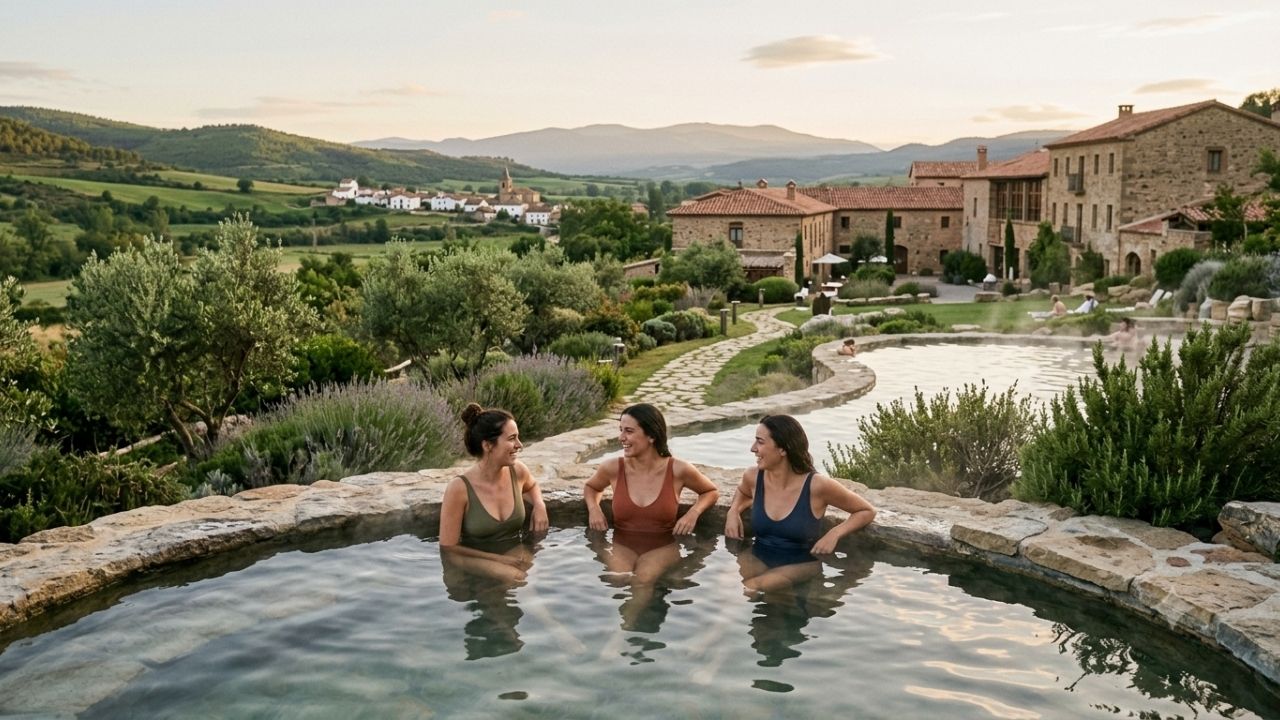
Image generated by AI
National investments in digital infrastructure and municipal cooperation have connected over 70 thermal municipalities across inland Spain, offering European travelers year-round mineral spa itineraries.
[MADRID, Spain, Aug. 31, 2026] — Spain’s national tourism strategy has taken a major step toward regional diversification following the expansion of its Thermal Towns network, which now connects more than 70 municipalities participating under the Spanish Federation of Municipalities and Provinces (FEMP). By integrating ancient mineral springs with local gastronomy, UNESCO biosphere reserves, and Roman historical sites, the initiative offers European travelers sustainable, year-round alternatives to crowded coastal resorts and big cities.
The expansion comes as inbound travel from key European markets reaches historic levels. Official data from INE records over 4.83 million combined arrivals from the Netherlands (2,255,334; +2.7%), Portugal (1,486,522; +7.7%), and Switzerland (1,092,815; +6.9%) during the first half of 2026. The thermal network provides these established visitor segments with a centralized digital catalogue to filter inland destinations by water chemistry, historic bathhouses, and surrounding wine regions.
Regional Thermal Circuits Highlight Galicia, La Rioja, Aragón, and Andalusia
Spain’s thermal ecosystem operates across diverse geographical landscapes, featuring distinct mineral compositions, water temperatures, and historical origins:
- Ourense (Galicia): Known as the Thermal Capital of Galicia with 2,000 years of bathing history, the city features the 5-kilometer Miño Thermal Route along the Miño River. Springs at As Burgas emerge above 60°C, while outdoor pools at Outariz regulate water temperatures between 35°C and 41°C. A 30-minute Thermal Train connects free public pools and commercial spas, providing access to nearby Sil River canyons and Ribeira Sacra vineyards.
- La Rioja Thermal Triangle: Positioned within a 50-kilometer corridor along the Cidacos and Alhama rivers, Arnedillo offers free public thermal pools (38°C to 48°C) reached via a 600-meter riverside walking trail. The route integrates historic spa facilities in Grávalos and Cervera del Río Alhama within a UNESCO Biosphere Reserve.
- Aragón Geological Contrasts: Features Spain's only natural thermal lake at Alhama de Aragón in Zaragoza province (maintaining a constant 32°C temperature near Monasterio de Piedra), contrasted with the outdoor saline springs of Naval in Huesca (26% salinity), allowing bathers to float effortlessly.
- Murcia and Andalusia Mountain Routes: Archena in Murcia’s Ricote Valley preserves 2,500 years of thermal heritage along a 7-kilometer Segura River walk (average regional temperature 18°C). In Andalusia, Lanjarón (49 km from Granada) pairs Sierra Nevada mineral waters with Moorish castle architecture, while Tolox connects to Sierra de las Nieves National Park and Alhama de Granada preserves Roman and Moorish bath structures.
- Roman Heritage in Extremadura and Galicia: Alange near Mérida preserves intact Roman baths dating back roughly two millennia, while Lugo features Roman thermal springs alongside its UNESCO-listed Roman city walls.
Comprehensive Data Breakdown: Thermal Destinations and Outbound European Visitor Data
The table below outlines key regional thermal destinations, water specifications, and cultural features across Spain:
| Destination & Region | Primary Thermal Feature | Water Temperature / Salinity | Signature Cultural & Natural Context |
|---|---|---|---|
| Ourense (Galicia) | Miño Thermal Route (5 km), As Burgas | Emerges >60°C; Pools 35°C–41°C | 2,000-year history, Ribeira Sacra wine country |
| Arnedillo (La Rioja) | Public outdoor river pools (600m path) | 38°C to 48°C | UNESCO Biosphere Reserve, La Rioja vineyards |
| Alhama de Aragón (Zaragoza) | Spain's only natural thermal lake | 32°C Constant | Monasterio de Piedra waterfalls & gardens |
| Naval (Huesca) | Intensely saline spring pools | 26% Salinity (High Buoyancy) | Somontano de Barbastro hiking & active tourism |
| Archena (Murcia) | Ricote Valley thermal complex | 2,500-Year Heritage (18°C Avg) | 7 km Segura River walk, historic spa facilities |
| Lanjarón & Tolox (Andalusia) | Sierra Nevada & Sierra de las Nieves | Historic Spas (Tolox opened 1867) | Moorish architecture, mountain walking routes |
| Alange (Extremadura) | Restored Roman thermal baths | 2,000-Year-Old Structure | 20 km from Mérida UNESCO Roman ruins |
| Mondariz & O Grove (Galicia) | Water Palace (>3,000 sq m) / A Toxa | Founded 1873 / Island Spa | Rías Baixas coastline, Galician seafood & wine |
The table below details inbound tourist arrivals from key European markets and national digital contract investments:
| Market / Development Category | Official 2026 Statistical Data | YoY Growth / Contract Value | Strategic Thermal Tourism Benefit |
|---|---|---|---|
| Netherlands Inbound Tourists | 2,255,334 Visitors (Jan–Jun) | +2.7% Year-on-Year | Diversifies Dutch travel into inland regional breaks |
| Portugal Inbound Tourists | 1,486,522 Visitors (Jan–Jun) | +7.7% Year-on-Year | Expands cross-border Iberian spa itineraries |
| Switzerland Inbound Tourists | 1,092,815 Visitors (Jan–Jun) | +6.9% Year-on-Year | Appeals to mountain, river & historic spa seekers |
| Digital Catalogue Contract | National Recovery Plan Allocation | €41,315 Public Contract | Centralizes 70+ spa towns by water chemistry |
| Tourism Intelligence Contract | Thermal Towns & Convention Bureau | €359,264.46 Public Contract | Upgrades local data management & visitor tracking |
National Digital Catalogue Enhances Year-Round Destination Discovery
To make the 70-destination network accessible to international travelers, Spanish tourism authorities are deploying a centralized digital experiences catalogue funded through Recovery Plan public contracts (€41,315 for digital catalogue development; €359,264.46 for local Tourism Intelligence Systems).
The digital platform allows travelers to search destinations according to specific criteria:
- Hydrogeochemical Profiling: Filter by bicarbonate, sulfate, saline, or high-temperature mineral water types.
- Geographic & Seasonal Filtering: Select mountain springs in La Rioja, river-based routes in Galicia, or coastal island spas in A Toxa.
- Cultural & Gastronomic Pairings: Combine spa reservations with nearby Roman archaeological ruins, Michelin-starred regional dining, or local wine routes.
Because natural hot spring temperatures remain constant regardless of weather conditions, thermal destinations provide inland municipalities with a resilient, year-round tourism product that operates independently of summer beach seasons.
Why This Matters: Practical Guidance for European Wellness Travelers
For European tourists planning travel across Spain, the expanded Thermal Towns network delivers actionable advantages:
- Authentic Slower Travel: Soaking in natural outdoor pools like Arnedillo or Outariz allows visitors to experience rural Spanish culture at a relaxed pace.
- Multi-Theme Itineraries: Travelers can pair wellness stays with major cultural attractions, such as exploring Roman ruins in Mérida after bathing in Alange's ancient thermal waters.
- Year-Round Travel Flexibility: High spring temperatures enable comfortable outdoor bathing during autumn, winter, and spring, avoiding summer heatwaves and peak hotel pricing.
- Direct Regional Economic Support: Visiting inland thermal municipalities distributes tourist spending directly into rural communities, supporting local hospitality businesses and historical preservation.
Frequently Asked Questions
How many destinations participate in Spain's national Thermal Towns network?
More than 70 municipalities and local entities across Spain participate in the official Thermal Towns network governed under FEMP guidelines.
Which Spanish town features the country's only natural thermal lake?
Alhama de Aragón in Zaragoza province features Spain's only natural thermal lake, where water maintains a constant year-round temperature of approximately 32°C.
How warm are the thermal springs along Ourense's Miño Thermal Route?
Springs at As Burgas emerge above 60°C, while outdoor river bathing pools at Outariz are regulated to comfortable soaking temperatures between 35°C and 41°C.
What digital tools are available for international travelers searching Spanish thermal towns?
Spain has launched a national digital catalogue allowing travelers to search thermal destinations by water mineral type, geographic region, and nearby heritage or wine attractions.
Related Travel Guides
Disclaimer
This article is for informational and educational purposes only. It does not constitute legal, financial, or professional advice. While we strive to provide accurate and up-to-date information, travel policies, regulations, and conditions change rapidly. Always verify information with official sources before making travel decisions. Nomad Lawyer makes no representations about the accuracy, reliability, completeness, or suitability of the information provided. Readers should consult qualified professionals for advice specific to their circumstances. The views expressed in this article are those of the author and do not necessarily reflect the views of Nomad Lawyer.
Raushan Kumar
Founder & Lead Developer
Full-stack developer with 11+ years of experience and a passionate traveller. Raushan built Nomad Lawyer from the ground up with a vision to create the best travel and law experience on the web.
Learn more about our team →