
Spain October Bank Holiday Traffic: DGT Manages 5.76 Million Road Trips Across National Day

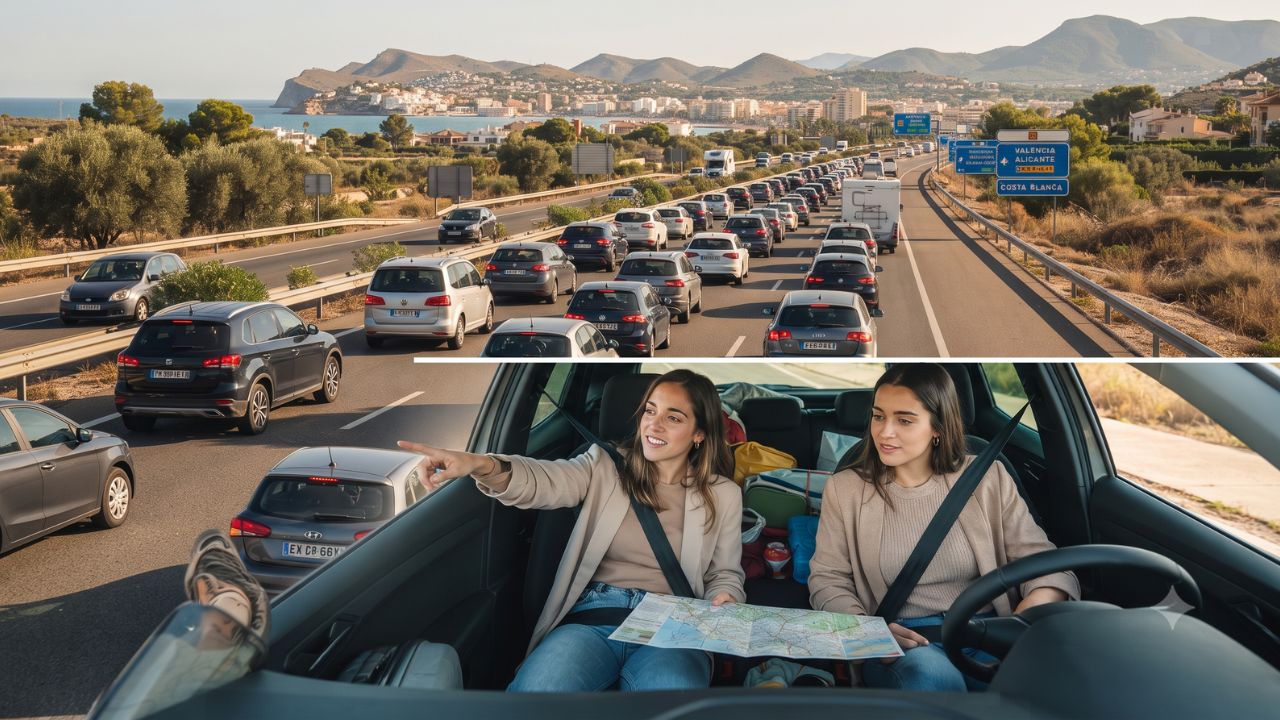
Between 15:00 on Friday, 9 October and midnight on Monday, 12 October 2026, Spain’s highway network will absorb approximately 5,760,000 long-distance vehicle journeys as the country celebrates its National Day. According to official holiday mobility forecasts released by the Directorate-General for Traffic (DGT), daily vehicle movements will average 1,440,000 trips across the four-day long weekend, creating heavy bottlenecks along corridors linking Madrid, Barcelona, and Valencia with Mediterranean coastal resorts and Pyrenean mountain retreats.
The massive traffic volume stems from overlapping regional holidays. While the Fiesta Nacional de España falls on Monday, 12 October, the Valencian Community observes an additional public holiday on Friday, 9 October. Simultaneously, thousands of travelers are driving into Aragon for Zaragoza’s annual Fiestas del Pilar. To maintain safety across autovías and autopistas, the Guardia Civil traffic division is deploying aerial helicopter units, speed cameras, and reversible lane corridors.
Peak Congestion Windows and Highway Management Operations
The DGT special mobility operation focuses on managing traffic flows during concentrated departure and return windows. Outbound delays peak on Friday, 9 October between 16:00 and 22:00, as urban workers exit major metropolitan centers, followed by a second outbound surge on Saturday, 10 October from 09:00 to 13:00. While Sunday features localized leisure travel, Monday, 12 October presents severe return congestion from 16:00 to 23:00 on access corridors leading back into Madrid, Barcelona, Seville, and Bilbao.
To prevent gridlock, highway authorities are installing temporary cone-separated reversible lanes and opening motorway hard shoulders to ordinary passenger cars where safety parameters permit. Non-urgent roadworks have been halted nationwide, and circulating restrictions have been enacted for heavy goods vehicles (HGVs), oversized transports, and hazardous cargo haulers during peak hours.
DGT Holiday Traffic Operation: Peak Windows and Travel Corridors
The table below outlines the forecast departure windows, key holiday travel hubs, and traffic management measures across Spain's motorway network.
| Travel Period & Date | Active Time Window | Primary Flow Movement | Target Regional Corridors | Operational DGT Measure |
|---|---|---|---|---|
| Friday, 9 October | 16:00 – 22:00 | Major urban departures | Outbound from Madrid, Barcelona, Valencia | Reversible lanes, HGV freight restrictions |
| Saturday, 10 October | 09:00 – 13:00 | Outbound coastal & mountain runs | A-3 (Levante), A-4 (Andalusia), A-1 (North) | Aerial drone surveillance, speed enforcement |
| Sunday, 11 October | Intermittent daytime | Regional leisure & festival travel | Aragon (Zaragoza A-2), Costa Brava, Costa Blanca | Localized traffic diversions, breathalyzer checks |
| Monday, 12 October | 16:00 – 23:00 | Concentrated city return traffic | Inbound access motorways to metropolitan hubs | Shoulder lane opening, emergency response patrols |
| Entire Holiday Scope | 9–12 Oct (4 Days) | 5,760,000 Total Journeys | Nationwide Motorway System | 1,440,000 daily trips managed by DGT |
Regional Travel Dynamics: Zaragoza and the Mediterranean Coast
The October holiday represents one of Spain's most culturally significant autumn breaks. Information curated by Spain Tourism highlights how cultural festivals and mild coastal weather direct domestic travel choices:
- Zaragoza and the Fiestas del Pilar: The capital of Aragon becomes a primary destination as devotees and cultural travelers converge on the Plaza del Pilar for floral offerings, traditional jota performances, and street parades, putting heavy demand on the A-2 and AP-68 motorways.
- Mediterranean Coastal Getaways: With sea temperatures remaining pleasant in mid-October, the Costa Blanca (Alicante), Costa del Sol (Málaga), and Costa Cálida (Murcia) draw hundreds of thousands of domestic holidaymakers opening coastal vacation homes for the long weekend.
- Mountain and Rural Tourism: Northern travelers head toward the national parks of the Pyrenees and Picos de Europa, where autumn beech and oak forests reach full seasonal color changes, increasing vehicle flow along regional secondary roads like the N-330 and N-260.
Visitor Insider Tips for Driving in Spain During Holiday Weekends
Navigating Spanish motorways during national holiday operations requires strategic timing, emergency awareness, and localized route knowledge.
- Opt for High-Speed Rail Over Motorway Drives: If traveling between major metropolitan hubs like Madrid, Barcelona, Valencia, Zaragoza, or Seville, avoid rental car congestion entirely by booking high-speed rail via Renfe (AVE and Avlo) or competing operators like Iryo and Ouigo. High-speed trains cover the Madrid-to-Zaragoza route in just 75 minutes.
- The V-16 Connected Emergency Warning Device: Under Spain's road safety regulations, passenger and rental vehicles involved in roadside breakdowns should use the approved V-16 connected flashing light device. Placed magnetically on the car roof without exiting the vehicle, it transmits real-time geolocation coordinates directly to the DGT 3.0 cloud network to alert approaching traffic.
- Avoiding Toll Road Bottlenecks: While many of Spain’s former autopistas (such as sections of the AP-7 along the Mediterranean and the AP-2 between Zaragoza and the coast) are now toll-free, service stations along these motorways experience extreme fuel queues. Refuel at regional stations located 2–3 kilometers off the main motorway exits.
- Distraction Enforcement and Mobile Rules: Spain enforces strict zero-tolerance rules for mobile phone handling while driving. DGT overhead cameras and unmarked surveillance vans automatically detect handheld phone usage, carrying on-the-spot fines of €200 and loss of 6 driving license points.
Cultural and Environmental Context: Balancing Mobility and Highway Safety
The surge of millions of private vehicles across a four-day holiday underscores Spain's ongoing transition toward safer and more sustainable regional mobility. While road trips remain an integral part of Spanish family traditions—connecting urban workers with ancestral villages (el pueblo) and coastal second homes—concentrated traffic spikes generate substantial carbon emissions and road safety pressures.
To minimize environmental and human costs, the DGT combines rigorous enforcement with technological innovation. The DGT 3.0 platform links connected vehicles, roadside variable-message LED panels, and mobile navigation applications in real time, routing drivers around localized collisions and reducing fuel-wasting idling in stationary queues.
At the same time, regional authorities are investing heavily in multimodal transport interchanges. Encouraging travelers to pair regional passenger rail with local electric carsharing at provincial stations helps preserve air quality in historic city centers like Zaragoza, Toledo, and Segovia during high-density festival periods.
FAQ: Driving in Spain During the October Holiday
What are the peak driving hours to avoid during the October holiday?
Avoid driving outbound on Friday, 9 October from 16:00 to 22:00 and Saturday, 10 October from 09:00 to 13:00. Return traffic peaks on Monday, 12 October between 16:00 and 23:00.
How can motorists check live traffic conditions across Spain?
Drivers can access real-time road condition updates on the official DGT website, follow official DGT social media bulletins, or call the automated Spanish traffic information line at 011.
What is the purpose of Spain’s V-16 connected emergency device?
The V-16 device is a magnetic flashing light that sits atop a broken-down vehicle, broadcasting incident coordinates directly to traffic control systems to warn approaching motorists.
Are heavy freight trucks restricted on motorways during the holiday?
Yes, the DGT enforces scheduled restrictions on heavy goods vehicles, dangerous goods transports, and oversized freight along major travel corridors throughout the holiday weekend.
Related Travel Guides
- Europe Biometric Border System EES: Spain and Italy Airport Entry Guidelines
- New York to Vermont Scenic Drive: Small Towns, Covered Bridges, and Autumn Routes
- High-Speed Rail Across Spain: AVE Routes, Booking Tips, and Regional Station Guides
Whether traveling by high-speed rail or driving the autovías, smart timing and route awareness ensure an unforgettable autumn holiday across Spain.
Disclaimer
This article is for informational and educational purposes only. It does not constitute legal, financial, or professional advice. While we strive to provide accurate and up-to-date information, travel policies, regulations, and conditions change rapidly. Always verify information with official sources before making travel decisions. Nomad Lawyer makes no representations about the accuracy, reliability, completeness, or suitability of the information provided. Readers should consult qualified professionals for advice specific to their circumstances. The views expressed in this article are those of the author and do not necessarily reflect the views of Nomad Lawyer.
Raushan Kumar
Founder & Lead Developer
Full-stack developer with 11+ years of experience and a passionate traveller. Raushan built Nomad Lawyer from the ground up with a vision to create the best travel and law experience on the web.
Learn more about our team →