
Iran Tourism Contracts 47.6% in H1 2026 as Airspace Restrictions and Security Risks Mount

International tourist arrivals in Iran plunged by 47.6 percent during the first six months of 2026, registering more than double the 22 percent contraction seen across the broader Middle East. According to data compiled in the September 2026 World Tourism Barometer from UN Tourism, the country experienced one of the sharpest tourism retrenchments in the world, even as global international travel managed a modest 0.4 percent expansion with 690 million border crossings worldwide.
The dramatic downturn follows the sharp escalation of military tensions involving Iran, Israel, and the United States from 28 February 2026, which triggered widespread commercial airspace closures, carrier reroutings, and severe government travel warnings. Complementary research from the World Bank documented a 43 percent year-on-year drop in air passenger arrivals into Iran during the first quarter of 2026, leaving hotel lobbies empty and traditional artisan bazaars across Isfahan, Shiraz, and Yazd struggling for financial survival.
Geopolitical Friction, Airspace Locks, and Aviation Sanctions
The contraction across Iran’s inbound travel sector is the direct result of cascading logistical barriers. Following military developments in late February 2026, international airlines suspended flights through Iranian airspace or redirected long-haul corridors around the Persian Gulf. Regional transit hubs felt the impact immediately; Dubai International Airport saw connecting passenger traffic drop 31.3 percent during the first half of the year as airlines adjusted routing networks.
While limited regional flight operations between Tehran and select neighboring capitals gradually resumed between May and June, consumer confidence remained depressed. The United Kingdom’s Foreign, Commonwealth & Development Office (FCDO) and the US Department of State maintained strict advisories warning against all travel to Iran, automatically voiding standard international travel insurance policies and forcing group tour operators to cancel seasonal departure schedules.
Adding further operational hurdles, additional United States aviation sanctions enacted in September 2026 targeted aircraft maintenance, parts procurement, and refueling arrangements, creating long-term structural barriers for Iranian civil aviation.
Iran and Regional Aviation Mobility Performance (H1 2026)
The table below outlines international arrival shifts, aviation passenger indicators, and regional benchmarks across the first half of 2026.
| Travel & Mobility Indicator | Reporting Period | Reported Percentage Shift | Direct Impact on Tourism Ecosystem |
|---|---|---|---|
| Iran International Tourist Arrivals | January–June 2026 | −47.6% | Halving of overseas leisure visitors and group cultural tours |
| Iran Air Passenger Inflow | Q1 2026 (Jan–Mar) | −43.0% YoY | Flight cancellations and restricted international carrier access |
| Middle East Regional Arrivals | January–June 2026 | −22.0% | Broad regional downturn driven by airspace volatility |
| Global International Arrivals | January–June 2026 | +0.4% (690M travelers) | UN Tourism lowered full-year 2026 global outlook to 1–2% |
| Dubai Airport Transit Flow | January–June 2026 | −31.3% | Major Gulf connecting hub handling rerouted traffic |
| US & UK Travel Advisories | Active through 2026 | Level 4 / "Advise Against All" | Nullifies standard commercial travel insurance policies |
Cultural Heritage at a Standstill: Isfahan, Shiraz, and Yazd
The collapse in international visitor arrivals directly threatens the preservation of some of the ancient world's most significant cultural monuments. Monitored through the UNESCO World Heritage Centre, Iran’s historical corridors hold immense global architectural significance:
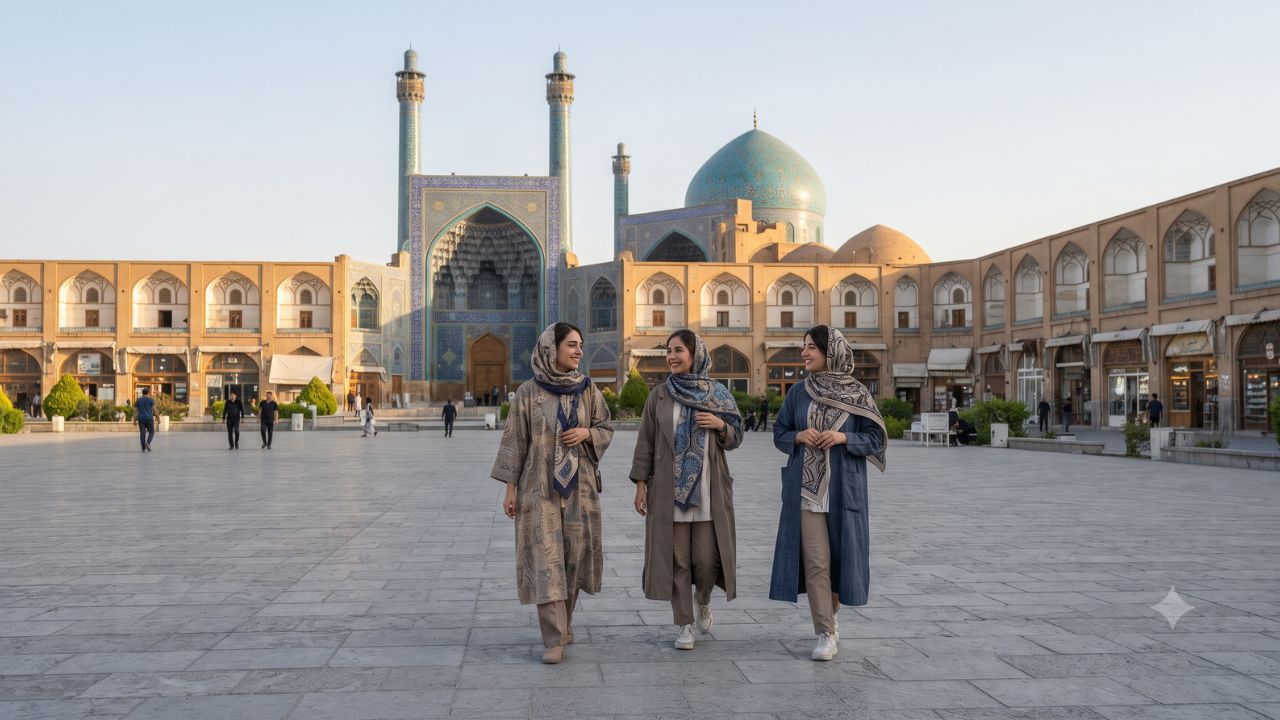
- Isfahan’s Islamic Architecture: Centered around Naqsh-e Jahan Square, Isfahan's 17th-century Safavid monuments—including the Shah Mosque, the Sheikh Lotfollah Mosque, and the Ali Qapu Palace—are experiencing a severe absence of foreign cultural delegations. Family-run enamelware, miniature painting, and hand-woven carpet workshops along the Grand Bazaar have seen foreign revenues evaporate.
- Shiraz and Persepolis: In Fars province, the ceremonial capital of the Achaemenid Empire at Persepolis stands largely devoid of international tour groups. In Shiraz, cultural travelers who once visited the gardens of Hafez and the stained-glass sanctuaries of the Nasir al-Mulk Mosque have stayed away due to flight cancellations.
- The Mud-Brick City of Yazd: Famous for its historic windcatchers (badgirs), underground aqueducts (qanats), and Zoroastrian fire temples, Yazd's traditional adobe boutique hotels face extreme operational deficits, relying intermittently on domestic holidaymakers to maintain historic earthen structures.
Visitor Insider Tips for Essential Regional Transit
For independent travelers, dual nationals, and international journalists who must navigate travel to Iran, understanding operational logistics is crucial.
- Managing Airline Route Reliability: Avoid booking multi-airline itineraries with separate tickets through European hubs, as flight cancellations can leave travelers stranded without rebooking protections. Regional carriers like Qatar Airways, Turkish Airlines, or flydubai provide the most resilient scheduled connections into Tehran's Imam Khomeini International Airport (IKA).
- Cash-Only Economy Protocols: Due to international banking sanctions, international Visa, Mastercard, and American Express cards do not function in Iran. Visitors must bring physical cash in clean, uncreased Euro or US Dollar banknotes and exchange them at certified exchange shops (Sarrafi) in Tehran or obtain a local prepaid tourist debit card (such as the MahCard) upon arrival.
- Local Currency Denominations (Rial vs. Toman): While the official currency is the Iranian Rial (IRR), prices are universally quoted in "Toman" (1 Toman = 10 Rials). Always verify with drivers and shopkeepers whether a quoted fare is in Tomans or Rials before completing transactions.
- Specialized Travel Insurance Requirements: Because standard policies exclude travel to destinations under Level 4 advisories, secure specialized high-risk travel and medical evacuation insurance policies through dedicated international underwriters prior to departure.
Cultural and Environmental Context: Sustaining Traditional Artisan Guilds
The decline in foreign visitor receipts is having an acute effect on Iran's traditional craft guilds. In cities like Isfahan and Tabriz, master carpet weavers, silver engravers, and tile restorers rely on international collectors and cultural visitors to fund the expensive apprentice systems that keep intangible Persian artistic techniques alive.
Without the income generated by independent cultural tourism, local craft cooperatives are turning to regional domestic markets and digital trade channels across Central Asia. However, the economic strain has forced many workshops to cut hours, raising concerns among heritage experts about the long-term transmission of centuries-old restoration skills needed to maintain UNESCO-listed adobe cities and historic brick domes.
Local conservationists emphasize that tourism remains one of the few avenues for direct cultural dialogue and mutual understanding, hoping that restored diplomatic channels and stabilized air corridors will eventually reopen these ancient crossroads to the world.
FAQ: Iran Travel and Tourism in 2026
Why did tourist arrivals to Iran fall by 47.6% in 2026?
Arrivals dropped sharply due to heightened regional security risks, commercial airspace closures, international airline route cancellations, and strict government travel advisories.
Are international credit cards accepted in Iran?
No, international banking systems like Visa and Mastercard do not work in Iran due to financial sanctions. Travelers must carry cash in Euros or US Dollars to exchange locally.
Which Iranian heritage sites are most affected by the slowdown?
Key cultural destinations including UNESCO-listed Persepolis, Isfahan’s Naqsh-e Jahan Square, and the historic desert city of Yazd have experienced the steepest declines in foreign visitors.
How did Middle East tourism perform overall in the first half of 2026?
The Middle East experienced a 22 percent decline in tourist arrivals in H1 2026, while global tourism grew by 0.4 percent overall.
Related Travel Guides
- Israel Tourism Contracts 30% in H1 2026: Regional Security and Travel Analysis
- Historic Travel Trends 2027: Ancient Fortresses, Walking Trails, and World Heritage
- Silk Roads Cultural Routes: Exploring Ancient Caravanserais and Desert Oases
While political volatility has severed aviation corridors, the timeless heritage of ancient Persia remains one of the world's most profound cultural treasures.
Disclaimer
This article is for informational and educational purposes only. It does not constitute legal, financial, or professional advice. While we strive to provide accurate and up-to-date information, travel policies, regulations, and conditions change rapidly. Always verify information with official sources before making travel decisions. Nomad Lawyer makes no representations about the accuracy, reliability, completeness, or suitability of the information provided. Readers should consult qualified professionals for advice specific to their circumstances. The views expressed in this article are those of the author and do not necessarily reflect the views of Nomad Lawyer.
Raushan Kumar
Founder & Lead Developer
Full-stack developer with 11+ years of experience and a passionate traveller. Raushan built Nomad Lawyer from the ground up with a vision to create the best travel and law experience on the web.
Learn more about our team →