
Israel Tourism Contracts 30% in H1 2026 as Regional Security and Flight Cuts Impact Travel

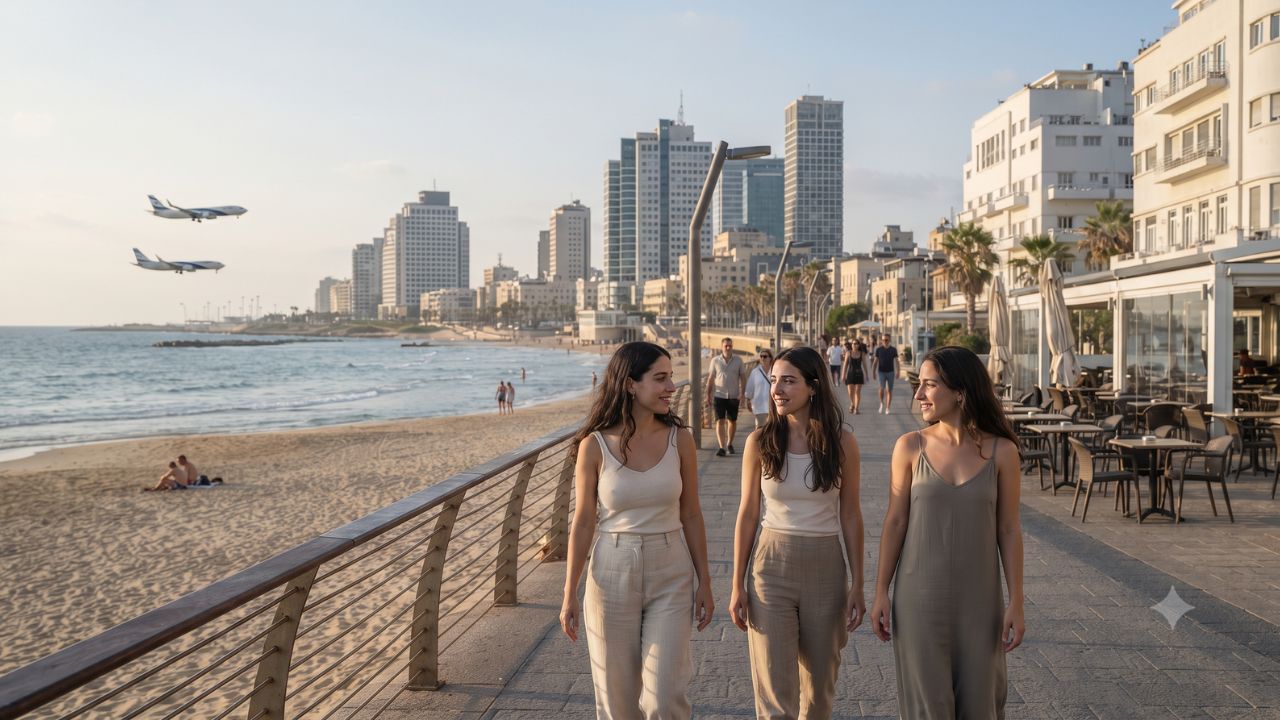
In the first six months of 2026, foreign visitor arrivals into Israel plummeted to 439,700—a steep 78 percent collapse compared to the 1.97 million international travelers who entered the country during the identical period in 2023. According to data published by the Israel Central Bureau of Statistics and verified in the September report from UN Tourism, international tourist arrivals shrank 30.0 percent year-on-year against the 621,800 arrivals registered during the first half of 2025, representing a net loss of 182,100 visitors.
The contraction reflects the profound toll of continuing regional security risks, sudden commercial airspace closures, and mass cancellations by international carriers serving Tel Aviv’s Ben Gurion Airport. While June 2026 showed a minor statistical increase—reaching 83,300 total arrivals compared to a severely depressed base of 56,600 in June 2025—the broader hospitality economy remains deeply strained. From the stone alleyways of the Old City of Jerusalem to the coastal promenades of Tel Aviv, businesses that once relied on steady overseas foot traffic are pivoting toward domestic weekenders to survive.
Economic Contraction Across Hotels, Dining, and Retail
The absence of international travelers has altered the financial dynamics of Israel's hospitality sector. Total revenue across tourist hotels fell to 5.4 billion Israeli shekels (NIS) during the first half of 2026, marking an 11.5 percent drop from the 6.1 billion shekels generated in the first half of 2025.
To prevent widespread closures, hotels turned aggressively to the domestic market. Israeli domestic travelers accounted for 83 percent of total hotel revenues between January and June 2026. However, high domestic occupancy rates could not fully offset the lack of overseas group bookings; average monthly employment in the hotel sector fell from approximately 41,000 workers to 38,000 positions.
Foreign transaction data indicates an even deeper retrenchment when measured against pre-conflict baselines. Comparing the first half of 2026 with the first half of 2023, foreign credit card expenditures dropped 43.9 percent at hotels, 36.5 percent across restaurants and cafes, and 52.8 percent at airport and city duty-free retailers.
Israel Tourism Performance and Foreign Spending Metrics (H1 2026)
The table below summarizes visitor volume shifts, source market concentrations, and economic indicators comparing the first half of 2026 with prior years.
| Metric / Indicator | First Half 2025 | First Half 2026 | Performance Change | Baseline Benchmark Context |
|---|---|---|---|---|
| Total Visitor Arrivals | 621,800 | 439,700 | −29.3% (−182,100 visitors) | 1,970,000 arrivals in H1 2023 (−78% drop) |
| Tourist Arrival Rate | Baseline | Reduced volume | −30.0% YoY | UN Tourism regional monitoring |
| June Arrival Volume | 56,600 | 83,300 | +47.2% (Low baseline effect) | 81,900 overnight stays in June 2026 |
| Tourist Hotel Revenues | 6.1 Billion NIS | 5.4 Billion NIS | −11.5% | 83% supported by domestic guests |
| Hotel Sector Workforce | ~41,000 staff | ~38,000 staff | −3,000 jobs lost | Reflects reduced international tour groups |
| Hotel Foreign Card Spend | Pre-war reference | Current spend | −43.9% vs H1 2023 | Direct indicator of international wallet loss |
| Dining Foreign Card Spend | Pre-war reference | Current spend | −36.5% vs H1 2023 | Measured across cafes and restaurants |
| Duty-Free Foreign Spend | Pre-war reference | Current spend | −52.8% vs H1 2023 | Retail contraction at transit gateways |
Source Market Concentrations: The Core Visitor Base
Despite severe declines across organized group tours and pilgrimage circuits, a handful of traditional source markets continue to supply the majority of remaining international traffic.
According to inbound data compiled by the Israel Ministry of Tourism, four countries accounted for 59.4 percent of all foreign arrivals during the first half of 2026:
- United States (36.0% Market Share): Remains the largest inbound contributor, composed primarily of family visits, diaspora travelers, specialized business professionals, and independent visitors.
- France (10.5% Market Share): Represents the second-largest overseas market, driven largely by dual-national families and heritage travel.
- United Kingdom (7.6% Market Share): Sustains regular individual travel links, although organized group pilgrimage packages remain heavily suppressed.
- Russia (5.3% Market Share): Continues to generate family reunification visits and independent travel.
Visitor Insider Tips for Travel Planning and Ground Logistics
For independent travelers, journalists, and professionals with necessary travel to Israel, local knowledge regarding flight logistics and safety protocols is essential.
- Flight Selection and Interline Insurance: Due to fluctuating security alerts, European and American carriers frequently suspend operations into Tel Aviv on short notice. When booking, prioritize national carriers like El Al, which maintain flight continuity and dedicated security protocols, or ensure your travel insurance includes explicit force majeure and political evacuation riders.
- Red Alert Apps and Shelter Familiarization: Download the Home Front Command mobile application immediately upon arrival. The app issues real-time localized civil defense alerts in English. Upon checking into any accommodation in Tel Aviv or Jerusalem, locate the designated reinforced security room (Mamad) on your floor or the communal shelter (Miklat) in the basement.
- Shabbat Transport and Rail Links: Israel Railways connects Ben Gurion Airport directly to Tel Aviv-Savidor and Jerusalem-Yitzhak Navon in under 25 minutes. However, all scheduled public trains and urban buses stop operating from Friday afternoon before sundown until Saturday evening after dark. Plan private sherut (shared taxi) transfers if arriving during the Sabbath.
- Cash and Digital Currency: Israel is an overwhelmingly digital payment economy. Foreign Visa and Mastercard contactless cards are accepted across almost all transit gates, restaurants, and street food kiosks. Keep small amounts of Israeli shekels (20 and 50 NIS banknotes) for open-air market vendors in Jerusalem’s Mahane Yehuda or Old City souks.
Cultural and Environmental Context: Community Impact and Heritage Stewardship
The ongoing crisis in tourism highlights the deep interdependence between heritage conservation, local livelihoods, and regional peace. In historic quarters like Jerusalem's Old City, centuries-old ceramic workshops, olive wood carvers, and family-run guesthouses that have welcomed pilgrims across generations face severe financial insolvency as organized group pilgrimages remain halted.
The shift toward domestic weekend staycations has temporarily cushioned beachfront hotels in Tel Aviv, Herzliya, and Eilat, but has done little for traditional cultural guides, regional bus operators, and archaeological conservators.
Environmental stewards working across Dead Sea monitoring reserves and Judean desert nature parks continue maintenance efforts despite reduced gate receipts. Preserving fragile historical sites without the financial stream generated by millions of overseas visitors presents a major challenge, requiring government emergency grants to keep conservation teams active on active excavation sites until regional stability returns.
FAQ: Visiting Israel in 2026
How much did international tourist arrivals fall in Israel in 2026?
International tourist arrivals fell 30 percent year-on-year in the first half of 2026 to 439,700, and remain 78 percent below 2023 pre-conflict numbers.
Which country sends the highest number of visitors to Israel?
The United States represents the largest source market, accounting for approximately 36 percent of all international visitor arrivals in early 2026.
How are hotels in Israel coping with the drop in foreign tourists?
Hotels rely heavily on domestic travelers, who generated 83 percent of total hotel revenues in the first half of 2026, though total revenues still declined 11.5 percent.
Are commercial flights operating into Tel Aviv’s Ben Gurion Airport?
Yes, flights operate, but international schedules face frequent disruptions and cancellations. Domestic carrier El Al maintains the most consistent scheduled service.
Related Travel Guides
- Europe Biometric Border System EES: Entry Guidelines and Border Updates
- Spain October Bank Holiday Traffic: DGT Safety Advisory and Highway Guide
- Middle East Travel Logistics: Navigating Transit Hubs, Visas, and Flight Schedules
As Israel navigates profound geopolitical shifts, the future of its cultural tourism relies on the return of regional stability and open skies.
Disclaimer
This article is for informational and educational purposes only. It does not constitute legal, financial, or professional advice. While we strive to provide accurate and up-to-date information, travel policies, regulations, and conditions change rapidly. Always verify information with official sources before making travel decisions. Nomad Lawyer makes no representations about the accuracy, reliability, completeness, or suitability of the information provided. Readers should consult qualified professionals for advice specific to their circumstances. The views expressed in this article are those of the author and do not necessarily reflect the views of Nomad Lawyer.
Raushan Kumar
Founder & Lead Developer
Full-stack developer with 11+ years of experience and a passionate traveller. Raushan built Nomad Lawyer from the ground up with a vision to create the best travel and law experience on the web.
Learn more about our team →