
Spain Leads a Wider European Shift as Galicia and Brittany Gain From Climate-Driven Relocation
Spain Leads a Wider European Shift as Galicia and Brittany Gain From Climate-Driven Relocation

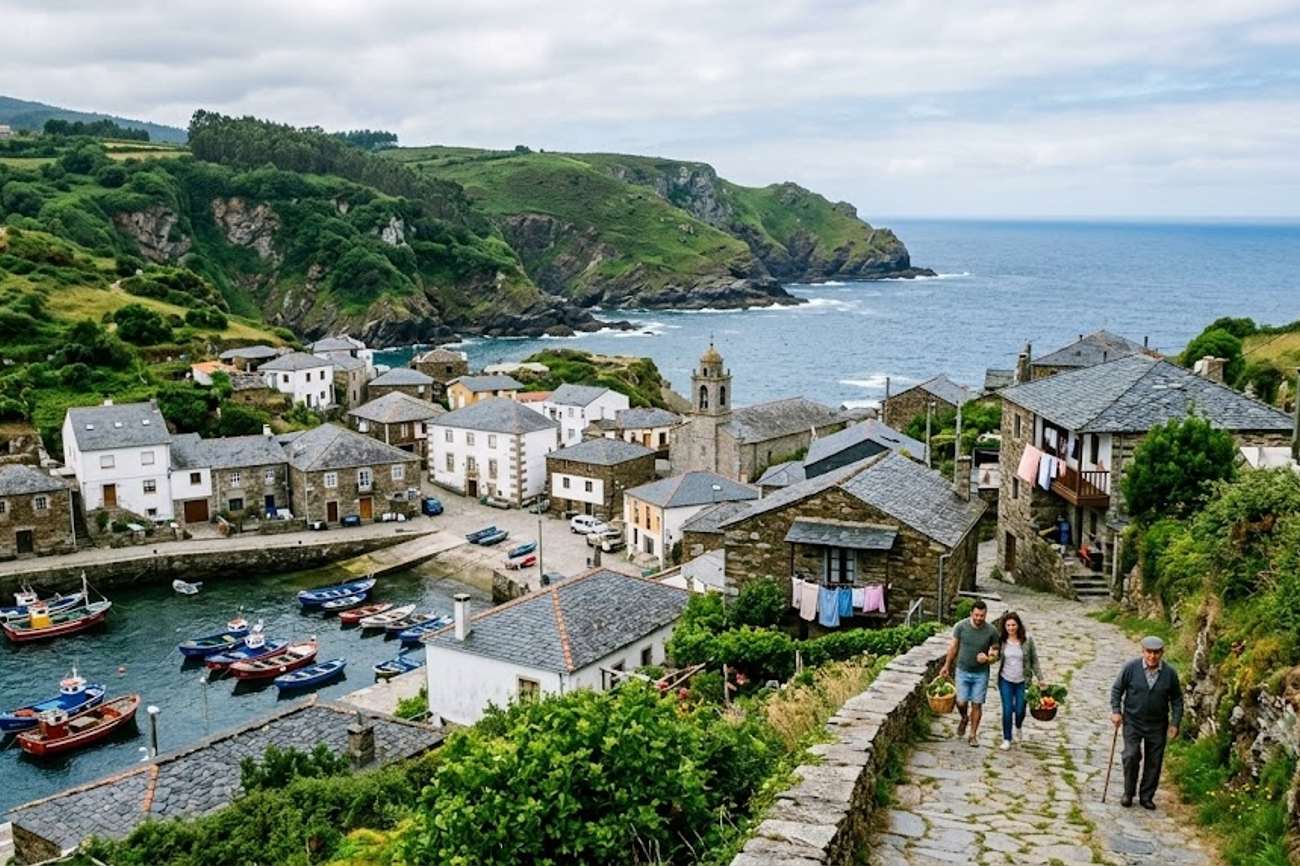
Image generated by AI
1.75°C is the precise increase in Spain's average temperatures since 1961, a statistic that is fundamentally rewriting the European property and tourism map. This thermal shift is no longer a theoretical projection but a primary driver of "climate-driven relocation," as affluent residents and long-term travelers abandon the scorching Mediterranean coastlines for the Atlantic fringes and alpine heights. The migration pattern is clear: the traditional prestige of the Costa del Sol or the French Riviera is being eclipsed by the practical necessity of water security and thermal comfort.
The Atlantic Pivot: Spain’s Northern Ascent
For decades, the Spanish tourism engine was fueled by the "Sun and Beach" model of the south. However, the data now suggests a systemic failure of that model during peak summer months. Spain's environment ministry has confirmed that 2025 tied with 2024 as the third-warmest year in the nation's history. The volatility is most evident in rainfall patterns; June 2026 saw mainland rainfall drop to just 12.4 millimetres, representing a mere 39% of the 1991–2020 average.
This environmental instability has turned Galicia into a strategic sanctuary. Unlike the arid south, Galicia leverages its Atlantic positioning to offer a resilient alternative. The region is not merely a refuge for those fleeing heat, but a growing economic powerhouse. In 2025, the regional tourism authority recorded 8.8 million visitors, a 7.3% increase over 2024. This surge in arrivals translated into more than €451 million in revenue for hotels and alternative accommodations, with overall sector profitability climbing by 7%.
The appeal is concentrated in urban hubs that maintain high-end services while offering a temperate climate. Cities such as A Coruña, Vigo, and Santiago de Compostela—along with the Rías Baixas and Baiona—are repositioning themselves as "liveable" cities. This is a critical distinction for the "digital nomad" and retiree demographics who require broadband and healthcare but can no longer tolerate 40°C summers. The shift is personal as well as statistical; residents are migrating from the Costa del Sol to border towns like Tomiño specifically to escape the chronic water shortages and extreme heatwaves that have plagued southern Spain.
France’s Northward Recalibration
France is mirroring the Spanish experience, with a documented drift toward Brittany and Normandy. The data provided by Météo-France indicates that 2025 was the fourth-hottest year since 1900. The imbalance is stark: heat records now outnumber cold records by a ratio of ten to one, and one out of every two days in 2025 exceeded seasonal norms.
The cost of this climate stress is quantified in the government's first annual climate-impact assessment. In 2025, two primary heatwaves affected 80% of the French population, while forest fires consumed over 30,500 hectares. This systemic risk led to water-use restrictions across 78 different departments, making the Mediterranean coast a liability for those seeking long-term stability.
Brittany has emerged as the primary beneficiary of this instability. According to INSEE, Brittany's population grew to approximately 3.51 million by January 2026, a 0.6% annual increase. Crucially, this growth occurred despite a negative natural balance, proving that the population increase is driven entirely by migration. The tourism sector is following the residents; during the 2025 season, Brittany recorded 7.77 million hotel nights and 14.56 million camping nights, signaling a shift in how travelers distribute their summer spend across the hexagonal territory.
The Alpine Alternative in Italy
Italy’s climate response is different, focusing on altitude rather than latitude. While the Po Valley continues to struggle with heat, the elevated regions of Trentino-Alto Adige, the Aosta Valley, and the northern Apennines are seeing a surge in demand. The urgency is underscored by the National Research Council’s Institute for BioEconomy, which reported that 2026 was the hottest summer since 1950, with a national average of 24.3°C and an August average of 25.6°C.
The result is a "vertical migration." High-altitude hubs like Bolzano, Merano, Trento, Rovereto, and Aosta are no longer just winter ski destinations but summer wellness retreats. Trentino’s 2025 statistics highlight this trend: arrivals rose by 3.3% and overnight stays increased by 3.2%, with total overnight stays exceeding 20 million. This marks the region's most successful tourism year in a decade.
| Region | Key Growth Hubs | 2025/26 Driver | Primary Metric |
|---|---|---|---|
| Galicia (Spain) | Vigo, A Coruña, Santiago | Atlantic Resilience | 8.8M Visitors (+7.3%) |
| Brittany (France) | Brest, Lorient, Morbihan | Thermal Comfort | 3.51M Population (+0.6%) |
| Trentino (Italy) | Bolzano, Trento, Merano | Altitude/Cooling | 20M+ Overnight Stays |
Expert Analysis: The Devaluation of the "Sun Coast"
For the modern traveler and real estate investor, the data indicates a fundamental shift in "destination equity." For fifty years, the Mediterranean coastline was the gold standard for luxury and retirement. We are now entering an era where "climate resilience" is a more valuable asset than "beach proximity."
The direct consequence for travelers booking these routes is a projected increase in pricing and a shortage of accommodation in northern hubs. As Brittany and Galicia move from "off-the-beaten-path" to "primary sanctuaries," the pricing pressure will likely mirror the inflation seen in the Mediterranean over the last three decades. We are seeing the birth of the "Coolcation"—a trend where the luxury traveler prioritizes a 22°C afternoon over a 35°C beach day.
Furthermore, the reliance on migration to grow populations in regions like Brittany suggests that the middle class is "hedging" their climate risk. They are buying property in the north not just for holidays, but as a survival strategy for a future where the south becomes seasonally uninhabitable. This creates a secondary market for premium infrastructure—high-speed rail and healthcare—in regions that were previously overlooked by central governments.
Key Takeaways
- Thermal Migration: Affluent populations are shifting from the Mediterranean to the Atlantic (Galicia, Brittany) and the Alps (Trentino) to escape extreme heat and water scarcity.
- Economic Pivot: Galicia's tourism revenue hit over €451 million in 2025, with a 7.3% increase in visitors, proving that "cooler" is becoming a marketable luxury.
- Demographic Shift: Brittany's population growth to 3.51 million is driven exclusively by migration, as residents flee the heatwaves that affected 80% of France in 2025.
- Verticality as Value: Northern Italy is leveraging altitude to combat the hottest summer since 1950, with Trentino recording its strongest tourism year in a decade.
- Resource Scarcity: Severe rainfall deficits (e.g., June 2026 in Spain at 39% of normal) are transforming water security into a primary driver of property value.
FAQ: European Climate Migration 2026
Why are people moving from the Costa del Sol to Galicia? Residents are fleeing extreme heat and chronic water shortages. Galicia offers a cooler Atlantic climate and more reliable water resources while still providing urban amenities in cities like Vigo and A Coruña.
Is Brittany becoming a popular summer destination? Yes. With 7.77 million hotel nights and 14.56 million camping nights in 2025, Brittany is seeing a surge in tourism as travelers avoid the heatwaves and wildfires common in southern France.
Which parts of Italy are best for avoiding summer heat? High-altitude regions such as Trentino-Alto Adige and the Aosta Valley are the primary alternatives, offering cooler mountain environments in cities like Bolzano and Merano.
How is climate change affecting hotel demand in Europe? Demand is shifting away from traditional Mediterranean hubs toward northern and elevated regions. This is extending the tourism seasons in places like Galicia and the Italian Alps.
The map of European luxury is no longer drawn by the sun, but by the shade.
Tags: Galicia Tourism 2026, Brittany Migration Trends, Trentino-Alto Adige, Climate-Driven Relocation Europe, Spain Environment Ministry 2026, Météo-France Data
Related Travel Guides
Disclaimer
This article is for informational and educational purposes only. It does not constitute legal, financial, or professional advice. While we strive to provide accurate and up-to-date information, travel policies, regulations, and conditions change rapidly. Always verify information with official sources before making travel decisions. Nomad Lawyer makes no representations about the accuracy, reliability, completeness, or suitability of the information provided. Readers should consult qualified professionals for advice specific to their circumstances. The views expressed in this article are those of the author and do not necessarily reflect the views of Nomad Lawyer.
Kunal K Choudhary
Co-Founder & Contributor
A passionate traveller and tech enthusiast. Kunal contributes to the vision and growth of Nomad Lawyer, bringing fresh perspectives and driving the community forward.
Learn more about our team →