
Spain, Italy, Greece Face Record Overtourism in 2026: Your Guide to Avoiding Peak Season Chaos
European destinations hit saturation limits in 2026. Here's what you need to know about overtourism hotspots and how remote workers can travel smarter.

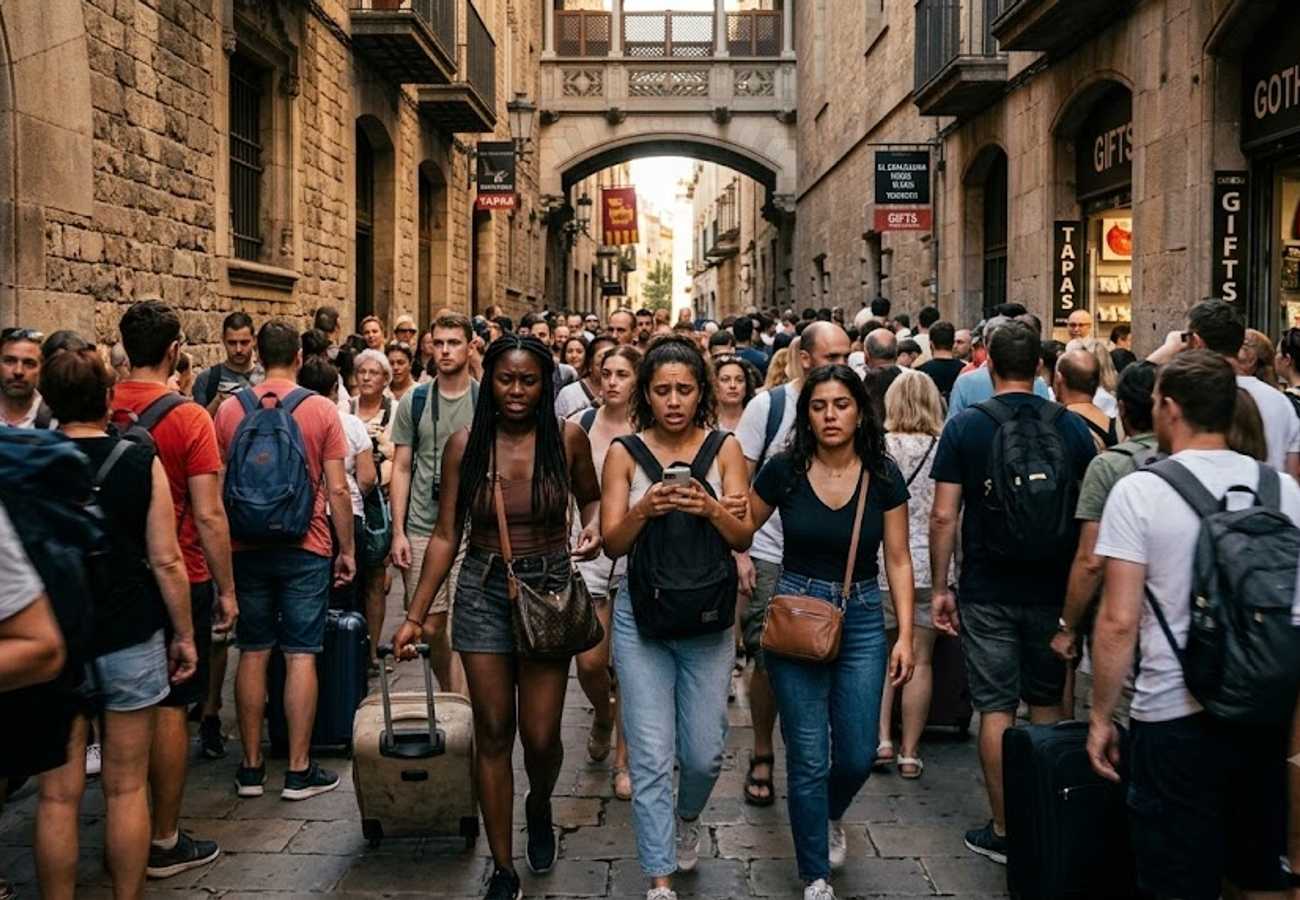
Image generated by AI
I spent six weeks last summer navigating the chaos of Spain's overtourism epicentre, and what I witnessed wasn't temporary congestion—it was structural breakdown. Eurostat Tourism Statistics now confirms what locals have been saying for years: Europe's most celebrated destinations are operating beyond capacity, and the problem is accelerating in 2026.
The Hard Numbers: Where Overtourism Is Breaking Infrastructure
Official EU statistical data shows foreign overnight stays are clustering in a shrinking number of cities rather than spreading across regions. Spain leads this crisis. The National Statistics Institute (INE) reports that monthly international arrivals hit record levels in 2026, with double-digit growth concentrated in five zones: Mallorca, Barcelona, Tenerife, Lanzarote, and Madrid.
I watched Barcelona's Gothic Quarter turn into a theme park on my last visit—not metaphorically. Between 9 AM and 6 PM, you cannot move through the narrow streets without being part of a human current. The infrastructure wasn't designed for this. Water systems strain, rental housing has been converted to short-term lets at such scale that locals cannot afford apartments, and local buses collapse under demand.
Italy mirrors this exactly. Rome's Metro Line A operates at 130% capacity during peak hours. Venice sees up to 60,000 daily visitors in August, all funnelled through a single medieval lagoon system built for medieval populations. Florence's Uffizi Gallery requires two-hour queues just to enter.
The Nomad Reality: When Popular Destinations Stop Being Liveable
Here's what matters for remote workers: these destinations aren't just crowded anymore—they're dysfunctional for anyone trying to actually work there.
I tried basing myself in Barcelona for a month in June 2026. The coworking spaces were overbooked. Internet cafés had queues. Accommodation costs had inflated 40% year-over-year because short-term rental operators were outbidding long-term tenants. A studio apartment in Eixample that rented for €800/month two years ago was now €1,400 as an Airbnb. When I finally found a month-long rental for €1,600, it was a cramped converted storage room in a neighbourhood where noise complaints about tourist groups were filed nightly.
The real issue? Local governments are losing control. Barcelona announced visitor caps. Venice has introduced entry fees. Dubrovnik limits cruise arrivals. These aren't solutions—they're band-aids on systemic failure.
"Skip peak season entirely if you work remotely. I went to Barcelona in April and it was 70% less crowded. Same city, zero stress. June-September is just paying premium prices to sit in queues. The local cafés are empty in shoulder season and actually feel like real neighbourhoods." — r/digitalnomad, 2026
Greece and Croatia: The Island Problem
Greece's island system offers a case study in how geography guarantees overtourism. Santorini and Mykonos operate at double capacity during July-August. A single cruise ship can add 3,000 people to an island with 2,000 residents.
I spent time in Santorini in early June and watched the transformation. In the first week, the town felt manageable. By week three, it was unreliable for basic services. Water shortages hit mid-afternoon. Restaurants stopped seating new customers by 7 PM. Ferry schedules collapsed because too many day-trippers overwhelmed port infrastructure.
Croatia's Dubrovnik is now a case study in visitor management—and it's still struggling. The medieval city has hard capacity limits. Adding crowds doesn't add tourism revenue; it just creates congestion that damages the experience for everyone.
"Dubrovnik in July is wall-to-wall people. I went in May and saw the actual city. Same medieval streets, same views, zero crowds, 40% cheaper hotels. The Game of Thrones tours are mostly gone by early June." — r/travel, 2026
France's Dual Crisis: Paris Plus the Mediterranean
France faces both urban and seasonal overtourism. Paris hits 30+ million visitors annually, concentrated in six central districts. The Marais is no longer a neighbourhood—it's a walking tour route.
The French Riviera saturates June through September. Nice's beaches become sardine cans. Monaco is functionally inaccessible during summer months unless you book months ahead.
Where to Actually Go If You're Working Remotely
The solution isn't visiting these cities in off-season (though that helps). It's recognizing that 2026 overtourism has shifted the entire calculus for digital nomads.
Portugal's Porto and Lisbon neighbourhoods beyond Alfama: I found quiet coworking spaces and month-long apartments at reasonable rates in Marvila and Alvalade. These neighbourhoods have excellent metro access but weren't yet flooded with tourist infrastructure.
Southern Spain outside the coast: Granada's Albaicín is crowded but manageable. Córdoba's historic centre maintains authentic local rhythm even in summer. Cost of living is 35% lower than Barcelona with 60% fewer tourists.
Greek mainland: Thessaloniki operates at sustainable capacity. Athens' neighbourhoods outside Plaka (try Psyrri) maintain local character. Costs are lower, services work, and coworking spaces have actual seats available.
Croatian inland: Dalmatian coast is saturated, but Split's interior hills and Zadar's old town see fraction of Dubrovnik's crowds. Workable internet, functional cafés, apartments available at short-term rates.
French alternatives: Lyon and Marseille have strong coworking scenes, reliable apartments, and authentic urban life. Provence towns like Avignon maintain seasonal rhythm without August collapse.
Practical Visitor Guide
Best Time to Visit (2026): April-May and September-October. Avoid June-August entirely for overtourism zones. Accommodation is 30-50% cheaper, restaurants operate normally, and infrastructure functions.
If You Must Visit Peak Season: Arrive mid-week, not weekends. Stay 4+ km from city centres. Visit major attractions before 8 AM or after 5 PM. Book everything advance—queues, transport, restaurants all require pre-booking.
Local Safety & Overtourism Reality: Crowded areas = pickpocketing zones. Barcelona's Ramblas, Venice's main bridge, Rome's Colosseum surround—these aren't unsafe, but theft increases with crowd density. Keep bags close, don't carry valuables, trust locals' route recommendations over tourist maps.
Budget Expectations (2026):
- Barcelona/Venice/Paris: €150-200/night accommodation, €20-30 meals, €15-25 attraction entry
- Split/Athens/Granada: €60-90/night, €12-18 meals, €8-15 attractions
- Shoulder season (April-May, Sept-Oct) cuts these 35-45%
Work-From-Travel Reality: Coworking spaces in major cities now require advance booking and cost €25-40/day. Cafés are overrun 10 AM-3 PM. Best work hours are early morning (6-10 AM) or late afternoon (5 PM-close). Accommodation with reliable WiFi costs premium—factor €150+ minimum for consistent internet in overtourism zones.
Getting Around: Public transport is unreliable in peak season. Book metro/bus passes daily rather than relying on day tickets. Walking is actually faster than public transport in central Barcelona and Venice. Rent scooters/bikes for secondary destinations.
Real Talk: If your work requires consistent productivity and calm focus, avoid Europe's major cities June-September 2026. The three-month shoulder season (March-May, September-November) offers the same cities at 60-70% lower stress and cost. Nomad-friendly secondary cities work year-round.
The 2026 overtourism crisis isn't a travel warning—it's a productivity and experience crisis for anyone trying to actually live in these places.
Related Travel Guides
Disclaimer
This article is for informational and educational purposes only. It does not constitute legal, financial, or professional advice. While we strive to provide accurate and up-to-date information, travel policies, regulations, and conditions change rapidly. Always verify information with official sources before making travel decisions. Nomad Lawyer makes no representations about the accuracy, reliability, completeness, or suitability of the information provided. Readers should consult qualified professionals for advice specific to their circumstances. The views expressed in this article are those of the author and do not necessarily reflect the views of Nomad Lawyer.
Preeti Gunjan
Contributor & Community Manager
A passionate traveller and community builder. Preeti helps grow the Nomad Lawyer community, fostering engagement and bringing the reader experience to life.
Learn more about our team →