
Spain Airport Strikes Collide With EU Entry/Exit System Rollout April 2026
Spain airport strikes at 12 major hubs converge with the EU's new Entry/Exit System launch on April 10, 2026, threatening Easter travellers with compounded delays and border processing chaos across Schengen routes.

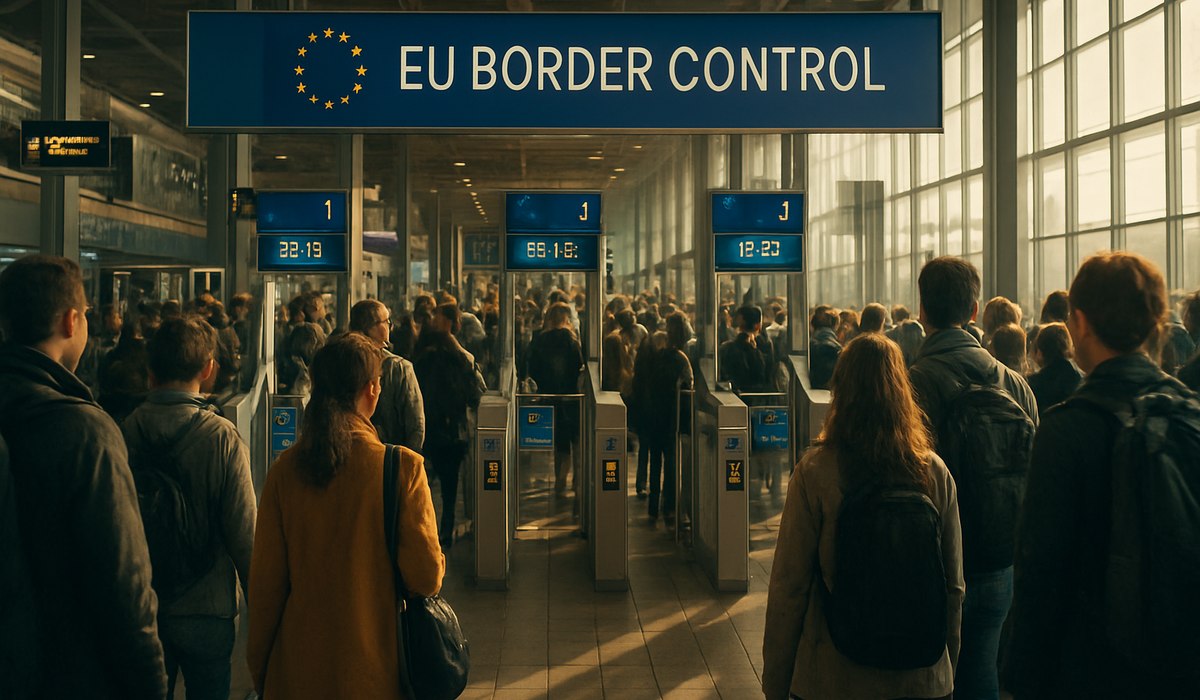
Image generated by AI
Spain Airport Strikes Collide With EU Entry/Exit System Rollout
Spain airport strikes at 12 major hubs are converging with Europe's new Entry/Exit System (EES) launch on April 10, 2026, creating a perfect storm of travel disruptions for spring holiday passengers. Ground handling staff walkouts have already caused baggage backlogs, delayed departures, and occasional cancellations across critical Spanish gateways. Simultaneously, the EU's mandatory biometric border system rolls out across all Schengen entry points, introducing mandatory digital registration instead of passport stamps. Together, these compounding disruptions threaten to extend processing times dramatically, leaving travellers facing longer queues, missed connections, and confusion during one of Europe's busiest travel seasons.
Strikes at 12 Spanish Airports Disrupt Spring Travel
Industrial action by ground handling personnel continues to pressure operations at Spain's busiest aviation hubs. Madrid Barajas, Barcelona El Prat, Palma de Mallorca, Málaga, Alicante, and major Canary and Balearic island airports all face strike calendars concentrated on peak travel periods.
The underlying dispute centers on pay disputes, inadequate staffing levels, and poor working conditions for handling agents responsible for check-in, ramp operations, and baggage loading. Recent reports from Palma and Barcelona documented thousands of unprocessed suitcases abandoned in terminal areas and aircraft stands, illustrating how rapidly disruption escalates when ground services are curtailed.
Union federations have temporarily suspended some strike calls to permit ongoing negotiations, but retained the right to renew industrial action. Airlines and airport operators have urged passengers to travel with hand luggage only where feasible and to allocate extra time at check-in desks, as staffing levels fluctuate by shift and location even without formal work stoppages. Consumer protection groups across Spain emphasize passenger rights under European air passenger regulations, encouraging travellers to retain receipts, boarding passes, and written disruption confirmations for compensation claims.
EU's New Entry/Exit System Compounds Delays
The Entry/Exit System represents Europe's most significant border regime transformation in years. Launching fully on April 10, 2026, across all Schengen external border crossings, EES replaces traditional passport stamping with digital biometric registration for non-EU nationals entering the zone for short stays.
The system captures traveller names, travel document details, facial images, and fingerprints in a centralized database designed to track overstays, enhance security screening, and accelerate repeat crossings for registered visitors. Official EU communications positioned the system as a modernization tool, yet airport and airline associations have issued repeated warnings about extended processing times during initial rollout phases.
Early trial data referenced in industry coverage indicates border checks lengthened by up to 70 percent compared to traditional stamping procedures, particularly affecting passengers unfamiliar with self-service biometric kiosks or requiring additional assistance. While member states retain flexibility in activation timing and methods, some high-volume routes may temporarily adjust biometric collection protocols to manage queue buildup. Regardless, from April 10 forward, non-EU arrivals in Spain and other Schengen countries will undergo electronic EES recording rather than conventional passport marking.
What Travellers Should Know and Do
The convergence of Spain airport strikes and EES rollout creates dual pressure on airport infrastructure. Ground handling disruptions ripple rapidly through airline networks, slowing turnarounds and increasing missed-slot risk. Simultaneously, EES processing occurs at border control stages, where passengers are individually screened one-by-one through biometric systems.
Travellers transiting or arriving in affected Spanish airports face potential bottlenecks at both check-in and border control. Those checking luggage may experience additional delays from reduced ground staff availability or work-to-rule campaigns. Conversely, hand luggage-only travellers skip baggage backlogs but still encounter EES biometric processing at border gates.
Industry analysts recommend building 3-4 hours of buffer time into Spanish airport connections during this period, substantially above typical Schengen routing allowances. Monitor strike calendars via Spanish airport operator websites and your airline's passenger advisories. Verify passport validity dates well before departure, as expired documents cannot process through EES systems. Non-EU citizens should expect to enroll biometric data during their first EES crossing; subsequent Schengen entries within 24 months utilize stored digital profiles, theoretically accelerating future border passage.
Passenger Rights Under European Regulations
EU Regulation 261/2004 protects air passengers experiencing delays and cancellations, regardless of Spain airport strikes or infrastructure disruptions. Passengers face eligibility for compensation ranging from €250–€600 depending on flight distance when airlines fail to operate scheduled services or incur delays exceeding three hours at destination.
Ground handling disruptions, while operationally disruptive, don't automatically exempt airlines from compensation obligations. Airlines must demonstrate that industrial action constitutes an extraordinary circumstance beyond their reasonable control—a threshold that becomes harder to establish when strike calendars are publicly announced weeks in advance.
Passengers retain unconditional rights to refreshments, accommodation (if overnight delay), and communication facilities during extended disruptions. Airlines must provide written confirmation of any delay or cancellation, which forms the legal basis for compensation claims submitted to national enforcement bodies or through private claim management services.
For baggage irregularities arising from strike-period disruptions, airline liability caps at approximately €1,355 per passenger under EU rules, though comprehensive travel insurance frequently offers higher coverage limits. Documentation retention—boarding passes, receipts, written delay confirmations, photographic evidence of baggage damage—strengthens claim submissions significantly.
Traveler Action Checklist
Follow these essential steps to navigate Spain airport strikes and EES rollout successfully:
-
Monitor strike calendars on Madrid Barajas, Barcelona El Prat, and your destination airport's official website daily through mid-April.
-
Verify your passport validity—ensure expiration dates extend minimum six months beyond your travel completion date for EES system compatibility.
-
Book earlier flights if possible; morning departures typically encounter fewer accumulated delays than afternoon or evening slots.
-
Pack carry-on strategically—restrict checked baggage where feasible to avoid ground handling backlogs; consolidate into one roller bag.
-
Allocate 4 hours minimum at Spanish origin airports for check-in, security, and potential EES biometric enrollment for first-time crossings.
-
Register with your airline's flight status notifications and request SMS or email alerts for schedule changes or gate reassignments.
-
Document everything—photograph boarding passes, baggage tags, delay announcement screens, and any written disruption confirmations for compensation claims.
-
Contact your travel insurer before departure; confirm coverage includes strike-related disruption and obtain claim reference numbers.
-
Download offline copies of airline confirmations, seat assignments, and passport data pages in case airport WiFi becomes congested.
-
Arrive at borders 90 minutes early—allow extra time for your first EES biometric enrollment; subsequent crossings process faster with stored digital profiles.
Key Data Table
| Metric | Detail |
|---|---|
| Strike Scope | 12 major Spanish airports including Madrid Barajas, Barcelona, Palma, Málaga, Alicante |
| Affected Workforce | Ground handling staff (check-in, ramp ops, baggage loading) |
| EES Launch Date | April 10, 2026 (full rollout across Schengen borders) |
| Processing Time Increase | Up to 70% longer for initial EES border checks (industry trial data) |
| Eligible Compensation | €250–€600 per passenger for 3+ hour delays (EU Regulation 261/2 |
Disclaimer
This article is for informational and educational purposes only. It does not constitute legal, financial, or professional advice. While we strive to provide accurate and up-to-date information, travel policies, regulations, and conditions change rapidly. Always verify information with official sources before making travel decisions. Nomad Lawyer makes no representations about the accuracy, reliability, completeness, or suitability of the information provided. Readers should consult qualified professionals for advice specific to their circumstances. The views expressed in this article are those of the author and do not necessarily reflect the views of Nomad Lawyer.
Kunal K Choudhary
Co-Founder & Contributor
A passionate traveller and tech enthusiast. Kunal contributes to the vision and growth of Nomad Lawyer, bringing fresh perspectives and driving the community forward.
Learn more about our team →