
Sudden Travel Chaos Engulfs Southwest Airlines Flight SWA4512 as Boeing 737 Diverts Back to San Antonio, Stranding Dallas Passengers Amidst Airport Disruptions: Airline News
Southwest Airlines Flight SWA4512 triggers massive travel chaos, violently aborting its route to Dallas Love Field and executing an unscheduled return-to-origin diversion back to San Antonio.

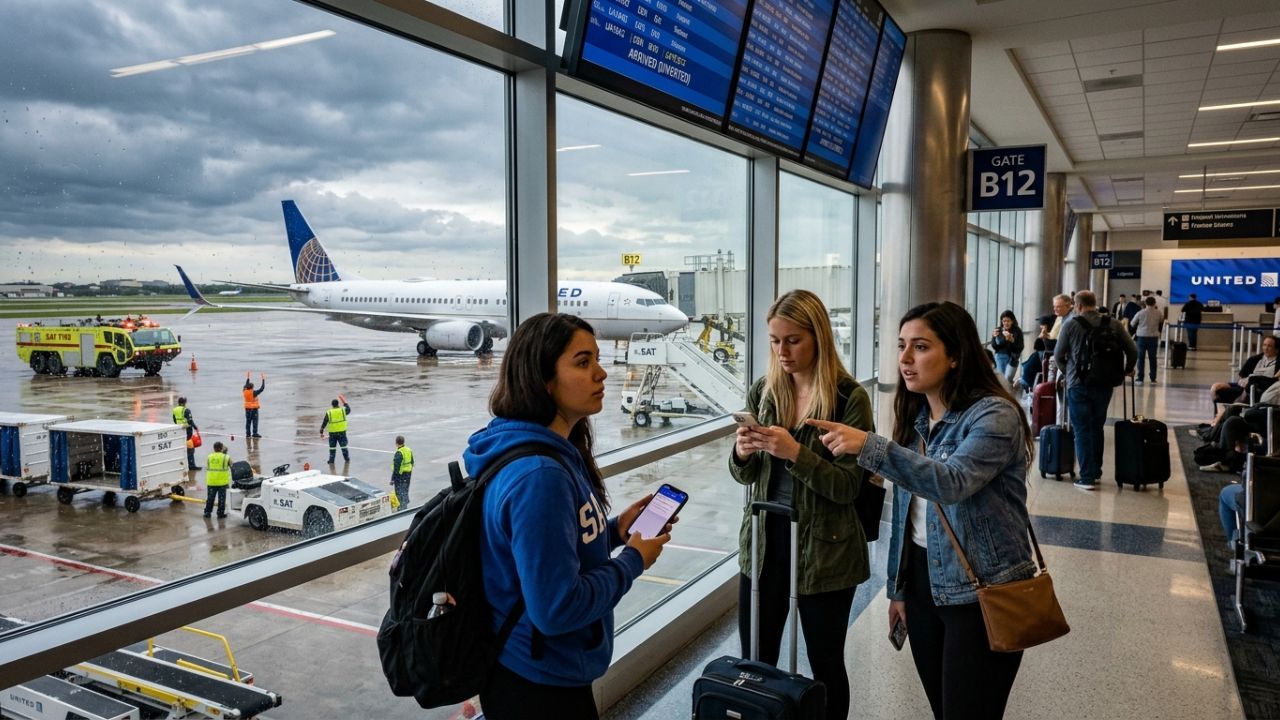
Image generated by AI
In a highly disruptive operational incident that instantly triggered localized travel chaos, Southwest Airlines Flight SWA4512 abruptly aborted its primary flight path, executing a massive "return-to-origin" diversion that trapped hundreds of passengers inside the Texas aviation grid. Reported on June 20, 2026, as stranded travelers desperately monitored the latest airline news for an official explanation, the Boeing 737-8H4 originally departed from San Antonio International Airport on June 19, heavily loaded with passengers bound for Dallas Love Field. Instead of completing this incredibly common, high-frequency domestic route, the aircraft experienced an unexpected operational development mid-flight. Rather than diverting to an alternate airfield or attempting to push through to Dallas, the flight crew made the extremely costly decision to turn the massive commercial jet entirely around, landing safely back in San Antonio. While standard flight cancellations are frequently mitigated by rapid rebooking, a mid-air return to the departure city generates immediate, severe airport disruptions by resetting a passenger's itinerary back to zero. As aviation authorities work to determine the exact catalyst, this sudden operational reset by Southwest Airlines represents today's most crucial headline in breaking aviation updates.
By introducing direct passenger coordination and dynamic scheduling backups, the regional aviation hubs target growing passenger demand across vital commerce sectors. The choice to coordinate flight departures in phases helps to manage gate capacity, supporting the country's broader regional transportation network.
Context: The Agony of the Return-to-Origin Diversion
For the US domestic aviation network, the sudden diversion of Southwest Airlines Flight SWA4512 exposes the highly sensitive, zero-tolerance safety parameters that dictate modern commercial flight paths.
On the early morning of June 19, 2026, the Boeing 737-800, officially registered as N8607M, departed San Antonio International Airport. Flight logs confirm the aircraft appeared to begin the short domestic journey under completely normal operating conditions. The route between San Antonio and Dallas is one of the most frequently traveled domestic sectors within Texas, essentially serving as an airborne commuter highway. However, mid-flight, the flight deck crews made the critical operational decision to abandon the Dallas approach entirely. The aircraft was aggressively rerouted back to its exact point of origin, remaining airborne for approximately two hours and twenty-one minutes before touching down significantly later than originally anticipated. The exact reason behind the diversion remains under assessment because Southwest Airlines has not publicly disclosed the specific technical, weather-related, or air traffic control circumstances. While passengers frequently perceive diversions as terrifying emergencies, aviation experts heavily emphasize that airlines intentionally prioritize absolute safety above schedule adherence. A return-to-origin maneuver allows the airline to instantly access their own familiar maintenance hubs rather than stranding an aircraft at an unequipped rural airfield.
To view live flight schedules, verify the active departure status of your specific Southwest itinerary, or to track potential route restorations prior to heading to the airport, travelers must consult official aviation directories. For direct updates regarding how these sudden operational failures might impact your current flight cancellations out of San Antonio or Dallas, travelers should aggressively utilize the official digital portals of their respective airlines. To explore live flight tracking and monitor the exact severity of the cascading bottlenecks paralyzing the broader Texas airspace, passengers can consult the official FlightAware tracking service.
Section-Wise Breakdown: Dissecting the Route Change
The Catalyst for Returning to Base
While Southwest Airlines has not issued a final operational report regarding Flight SWA4512, commercial aircraft return to their departure airport only when flight crews determine that doing so offers the safest and most practical solution to an emerging operational situation. Factors that can violently force a Boeing 737-8H4 back to its origin include highly specific technical indications on the flight deck, massive weather developments blocking the destination airspace, or sudden air traffic management flow restrictions at Dallas Love Field.
The Strategic Value of the Origin Airport
Returning to San Antonio provided Southwest Airlines with immediate, massive operational advantages. By bringing the aircraft back to base, the airline gained instant access to familiar facilities, proprietary maintenance resources, and fully staffed airline support teams. Aviation safety protocols prioritize caution and prevention over schedule adherence; bringing a potentially compromised aircraft back to a heavily equipped maintenance hub allows technical inspections to be conducted efficiently, even if it temporarily devastates the passengers' itineraries.
Expert Perspective on Operational Caution
Anup Kumar Keshan, Founder and Editor-in-Chief of Travel And Tour World, summarized the incident: “Southwest Airlines Flight SWA4512’s return to San Antonio instead of continuing to Dallas demonstrates the aviation industry’s commitment to proactive safety decisions. While this Boeing 737-8H4 aviation incident has attracted attention across the United States, such operational actions reflect established procedures designed to protect passengers, crew, and overall flight reliability.”
Technical Roster: Flight SWA4512 Incident Matrix
To ensure absolute factual accuracy regarding the specific aircraft, the exact route involved, and the precise operational terminology defining this event, the following matrix details the strictly verified flight data:
Official Flight Diversion Data: Southwest Airlines SWA4512
| Operational Parameter | Verified Flight Data |
|---|---|
| Operating Carrier | Southwest Airlines |
| Flight Number | SWA4512 |
| Aircraft Type | Boeing 737-8H4 (737-800) |
| Aircraft Registration | N8607M |
| Origin Airport | San Antonio International Airport |
| Scheduled Destination | Dallas Love Field |
| Diversion Classification | Return-to-Origin |
| Airborne Duration | 2 Hours, 21 Minutes |
| Incident Date | June 19, 2026 |
Data accurately reflects the verified diversion metrics recorded for Flight SWA4512 on June 19, 2026. The incident highlights the strict precautionary safety parameters governing Southwest Airlines' domestic operations.
Passenger Impact: The Itinerary Reset Nightmare
For the passengers physically trapped aboard Flight SWA4512, the immediate impact of this mid-air diversion was severe logistical exhaustion and the total destruction of their onward travel itineraries.
When a fully loaded Boeing 737-800 departs a city, flies for over two hours, and then lands at the exact same airport it just left, the resulting travel chaos is instantaneous. Passengers attempting to reach Dallas to catch critical connecting flights were instantly stranded in San Antonio, essentially right back where they started the day. Once the aircraft landed, airline teams simultaneously began coordinating massive support services designed to minimize disruption. However, because a return-to-origin diversion triggers a complex series of logistical responses involving aircraft inspections, passenger rebooking, and potential aircraft substitutions, the stranded travelers were subjected to immense wait times and massive uncertainty regarding their arrival schedules in Dallas.
Industry Analysis: The Mechanics of Safety Management
Aviation analysts monitoring the operational status of Flight SWA4512 note that passengers must urgently understand the hidden mechanics of return-to-origin diversions to successfully navigate this specific travel chaos.
Analysts emphasize that modern commercial aviation depends on layered safety systems designed to identify potential concerns early and provide crews with multiple options for addressing them. The Boeing 737-800’s return to San Antonio illustrates how airlines prioritize extreme caution whenever circumstances warrant additional assessment. While passengers naturally focus on reaching their destination on time, dispatchers and air traffic controllers focus first on ensuring safe operations. In an era where a minor technical fault can develop into a catastrophic event, a return-to-origin maneuver demonstrates that operational flexibility remains one of the industry’s most valuable, albeit frustrating, safety tools.
Actionable Advice for Surviving Origin Diversions
If you are currently trapped on an aircraft that has returned to its departure city, or find yourself stranded during an operational breakdown, you must execute this strategic survival checklist immediately:
- Exploit the Digital Alternatives: The exact second the pilot announces the return to San Antonio, do not panic. Use the aircraft's Wi-Fi or your cellular data the moment you land to check the Southwest Airlines app. You must attempt to secure a rebooked flight out of San Antonio before you even deplane, completely bypassing the massive physical line that will immediately form at the customer service desk.
- Audit Ground Transportation Instantly: The drive from San Antonio to Dallas is roughly four to five hours. If Southwest cannot confirm a replacement aircraft or immediately rebook you, instantly book a rental car while still sitting on the plane. You can drive to Dallas faster than waiting 12 hours for the airline to fix a broken jet.
- Understand Hotel Accommodation Rules: Because you have returned to your origin city, the airline assumes you can just go home. If you are a connecting passenger who was only in San Antonio for a layover, you must aggressively demand hotel accommodations via the online chat system if the diversion was caused by a carrier-controlled technical issue.
FAQ: Southwest Airlines Flight SWA4512 Diversion
Why did Southwest Airlines Flight SWA4512 divert?
The exact cause remains officially undisclosed. However, the aircraft executed a "return-to-origin" diversion, likely triggered by a technical indication or operational restriction that required the aircraft to utilize San Antonio's maintenance resources.
Which aircraft was operating Flight SWA4512?
The flight was operated by a Boeing 737-8H4 (also classified as a 737-800), officially registered as N8607M.
How long was Flight SWA4512 airborne before returning?
Flight tracking data confirms the aircraft remained airborne for exactly two hours and twenty-one minutes before touching down back at San Antonio International Airport on June 19, 2026.
The Reality of Precautionary Aviation Safety
The sudden return-to-origin diversion of Southwest Airlines Flight SWA4512 proves definitively that commercial airlines will ruthlessly prioritize safety over passenger convenience. By effectively abandoning the route to Dallas and turning a massive Boeing 737-800 entirely around, the flight crew instantly stranded passengers and destroyed connecting itineraries. Yet, as exhausted travelers frantically attempt to rebook their flights or secure rental cars to drive out of San Antonio, they must accept a critical new reality: an aborted flight is the ultimate safety net. Surviving this level of unexpected travel chaos now demands extreme psychological adaptability, a complete refusal to panic, and the tactical discipline to instantly exploit alternative ground transportation the exact second the aircraft's wheels touch back down in the origin city.
Key Takeaways
- Return-to-Origin Diversion: Southwest Airlines Flight SWA4512 unexpectedly abandoned its route to Dallas, landing back at San Antonio International Airport on June 19, 2026.
- Aircraft Details: The flight was operated by a Boeing 737-8H4 (Registration N8607M).
- Flight Duration: The aircraft remained airborne for exactly two hours and twenty-one minutes before officially returning to base.
- Undisclosed Catalyst: Southwest Airlines has not officially disclosed the exact reason (e.g., technical or operational) for the route abandonment.
- Passenger Strategy: Stranded travelers must immediately utilize airline mobile applications to secure rebookings or actively pivot to rental cars to complete the short Texas route.
Related Travel Guides
Massive Travel Chaos Paralyzes Chicago O'Hare with 1,425 Disruptions
Disclaimer
This article is for informational and educational purposes only. It does not constitute legal, financial, or professional advice. While we strive to provide accurate and up-to-date information, travel policies, regulations, and conditions change rapidly. Always verify information with official sources before making travel decisions. Nomad Lawyer makes no representations about the accuracy, reliability, completeness, or suitability of the information provided. Readers should consult qualified professionals for advice specific to their circumstances. The views expressed in this article are those of the author and do not necessarily reflect the views of Nomad Lawyer.
Kunal K Choudhary
Co-Founder & Contributor
A passionate traveller and tech enthusiast. Kunal contributes to the vision and growth of Nomad Lawyer, bringing fresh perspectives and driving the community forward.
Learn more about our team →