
Southwest Airlines Grounds 38 Flights and Delays 52 More at Baltimore/Washington International Airport in 2026
Southwest Airlines operational failures at Baltimore/Washington International Airport led to 38 cancellations and 52 delays, disrupting travel across the US and the Caribbean.

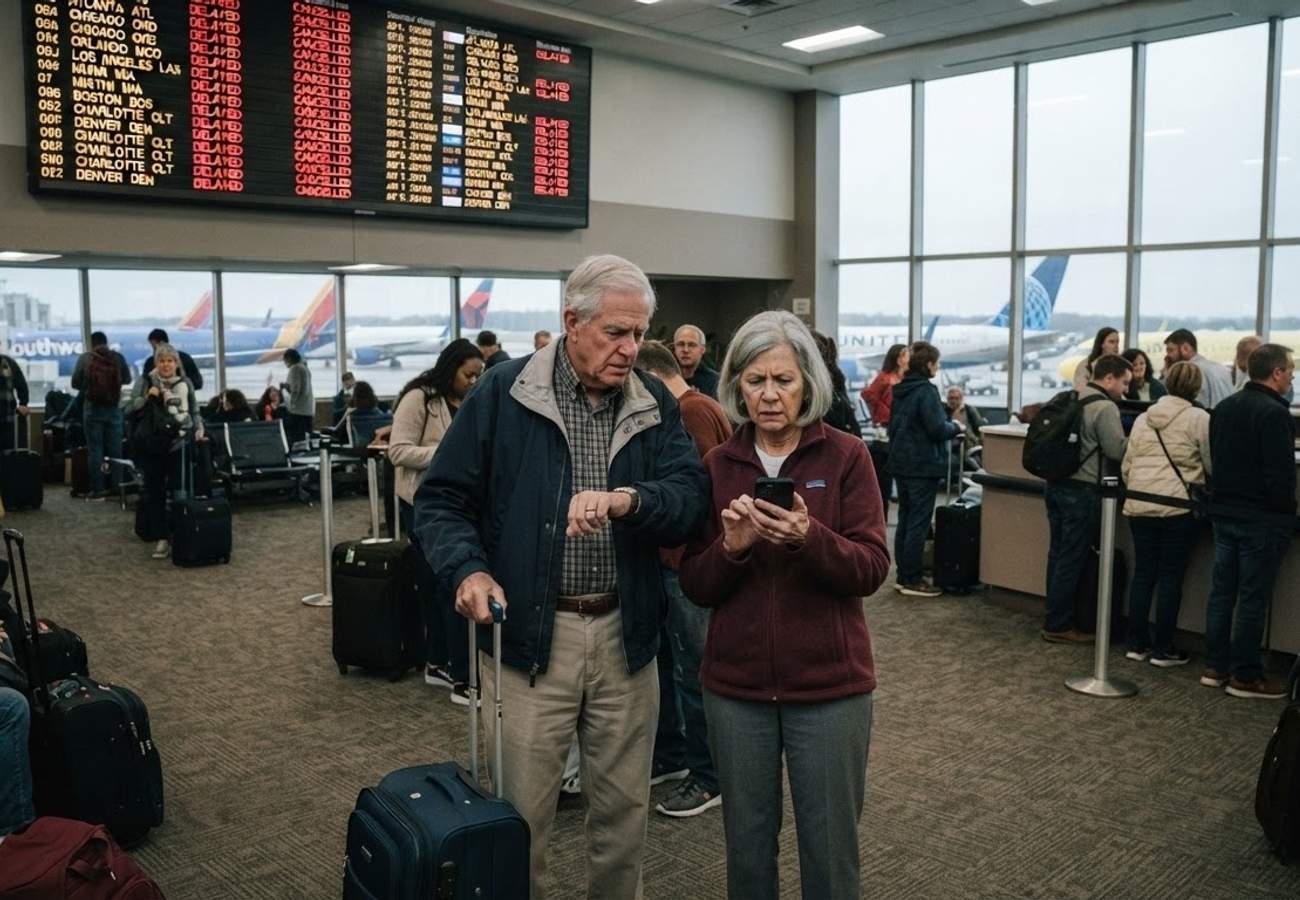
Image generated by AI
[Baltimore, July 6, 2026] — A significant operational failure at Baltimore/Washington International Airport (BWI) has resulted in Southwest Airlines grounding 38 flights and delaying an additional 52 services. The disruption has triggered a ripple effect across the United States and several international destinations, specifically impacting travel to Mexico, Jamaica, the Dominican Republic, and Sint Maarten.
The sudden instability in flight schedules has placed immense pressure on BWI, one of the primary aviation hubs in the Mid-Atlantic region. Passengers are facing a cascade of logistical challenges, including missed connections and the urgent need to reorganize hotel accommodations and ground transportation. Industry observers note that the scale of these disruptions highlights the vulnerability of regional networks when a primary carrier faces systemic operational setbacks.
Network-Wide Disruptions Across US and Caribbean Hubs
The operational instability extended far beyond the gates of BWI, affecting a vast array of domestic and international city pairs. Flight tracking data indicates that the disruptions touched nearly every major region of the United States, from the West Coast hubs of Los Angeles, Seattle, and Sacramento to the East Coast corridors of Boston, New York (Islip), and Hartford.
In the Midwest and South, passengers in Chicago, Detroit, Minneapolis–Saint Paul, and St. Louis reported significant schedule changes. The impact was particularly acute for those traveling to leisure-heavy destinations. Routes connecting to Orlando, Tampa, Fort Myers, and Jacksonville saw a spike in delays, while business routes to Austin, Dallas, and Nashville were similarly hampered.
The international reach of the disruption was most evident in the Caribbean and Mexico. High-traffic tourist corridors to Punta Cana, Montego Bay, Cancún, and San Juan experienced cancellations, leaving many travelers stranded or facing extended waits in terminals. The disruption also extended to Sint Maarten, complicating transit for those on multi-leg island journeys.
Statistical Breakdown of BWI Operational Failures
The intensity of the disruption is best illustrated by the percentage of affected flights at the Baltimore/Washington International Airport hub. The airline faced an 8% cancellation rate and an 11% delay rate during the peak of the incident.
Reports indicate that the disruptions occurred in two distinct waves. In the first segment of the operational collapse, BWI recorded 20 cancellations and 37 delays. This was followed by a second wave that saw an additional 18 flights grounded and 26 more delayed.
| Airport | Cancelled Flights | Delayed Flights | Airline |
|---|---|---|---|
| Baltimore/Washington International Airport (BWI) | 38 | 52 | Southwest |
While BWI was the epicenter, secondary disruptions were noted in cities such as Raleigh-Durham, Norfolk, Cincinnati, Savannah, Louisville, Indianapolis, Charleston, and Buffalo. The cumulative effect of these delays created a bottleneck that hampered the airline's ability to recover schedules in real-time.
Protocol for Passengers Facing Flight Cancellations
With the sudden surge in grounded flights, aviation experts suggest a structured approach for travelers to mitigate the impact of these setbacks. When a flight is cancelled, the immediate priority is the verification of real-time data.
Passengers are advised to bypass long physical queues at airport service desks when possible. Instead, utilizing the airline's mobile application or online chat systems often provides a faster route to rebooking. Monitoring email and SMS notifications is essential, as airlines typically push automated rebooking confirmations during large-scale disruptions.
Understanding passenger rights is another critical step. Depending on the jurisdiction—such as the European Union's strict passenger protections or US Department of Transportation (DOT) guidelines—travelers may be entitled to specific compensations or hotel vouchers if the cancellation was within the airline's control. If the carrier cannot provide a suitable alternative flight, passengers are encouraged to explore secondary transport options, such as rail or bus services, or seek rebooking through competing carriers.
Broader Impact on Regional and International Mobility
The scale of the Southwest Airlines disruption at BWI serves as a case study in the "domino effect" of modern aviation. Because airlines operate on tight turnaround schedules, a delay in Baltimore can lead to a crew timeout in Los Angeles or a grounded aircraft in Cancún.
For the Dominican Republic, Jamaica, and Mexico, these disruptions represent more than just inconveniences; they impact the tourism economy by delaying the arrival of thousands of visitors. For business travelers, the loss of connectivity between BWI and cities like Detroit or Nashville can lead to significant financial losses due to missed meetings and contractual obligations.
As operations at Baltimore/Washington International Airport begin to stabilize, the focus shifts to recovery. The airline must reposition aircraft and crews to their correct hubs to prevent further "drift" in the schedule. Travelers are urged to confirm their departure times via official channels before arriving at the terminal to avoid further overcrowding.
Why This Matters: The Fragility of Hub-and-Spoke Reliance
This incident underscores a critical vulnerability in the current aviation landscape: the over-reliance on specific hub efficiency. When a carrier like Southwest experiences a concentrated failure at a key gateway like BWI, the impact is not localized; it is systemic.
The fact that an 8% cancellation rate at one airport could disrupt flights as far as Sint Maarten and Seattle demonstrates how tightly coupled global flight networks have become. For the travel industry, this highlights the need for greater operational redundancy and more robust contingency planning.
From a consumer perspective, this event reinforces the necessity of travel insurance that covers "trip interruption" and "trip delay." As airlines continue to optimize for maximum aircraft utilization, the margin for error shrinks. When a failure occurs, the "Information Gain" for the traveler is that flexibility—such as having alternative routes or a secondary carrier option—is now as important as the ticket price itself.
Travelers are advised to maintain constant communication with their carriers and remain flexible with their itineraries as the network recovers.
Related Travel Guides
Disclaimer
This article is for informational and educational purposes only. It does not constitute legal, financial, or professional advice. While we strive to provide accurate and up-to-date information, travel policies, regulations, and conditions change rapidly. Always verify information with official sources before making travel decisions. Nomad Lawyer makes no representations about the accuracy, reliability, completeness, or suitability of the information provided. Readers should consult qualified professionals for advice specific to their circumstances. The views expressed in this article are those of the author and do not necessarily reflect the views of Nomad Lawyer.
Kunal K Choudhary
Co-Founder & Contributor
A passionate traveller and tech enthusiast. Kunal contributes to the vision and growth of Nomad Lawyer, bringing fresh perspectives and driving the community forward.
Learn more about our team →