
United Airlines Deploys Airbus A321neo Coastliner with Blocked Middle Seats to Shield Transcontinental Travelers from Severe Travel Chaos
Breaking airline news: United Airlines evaluates a radical blocked middle-seat configuration for its Airbus A321neo Coastliner to shield travelers from coast-to-coast travel chaos.

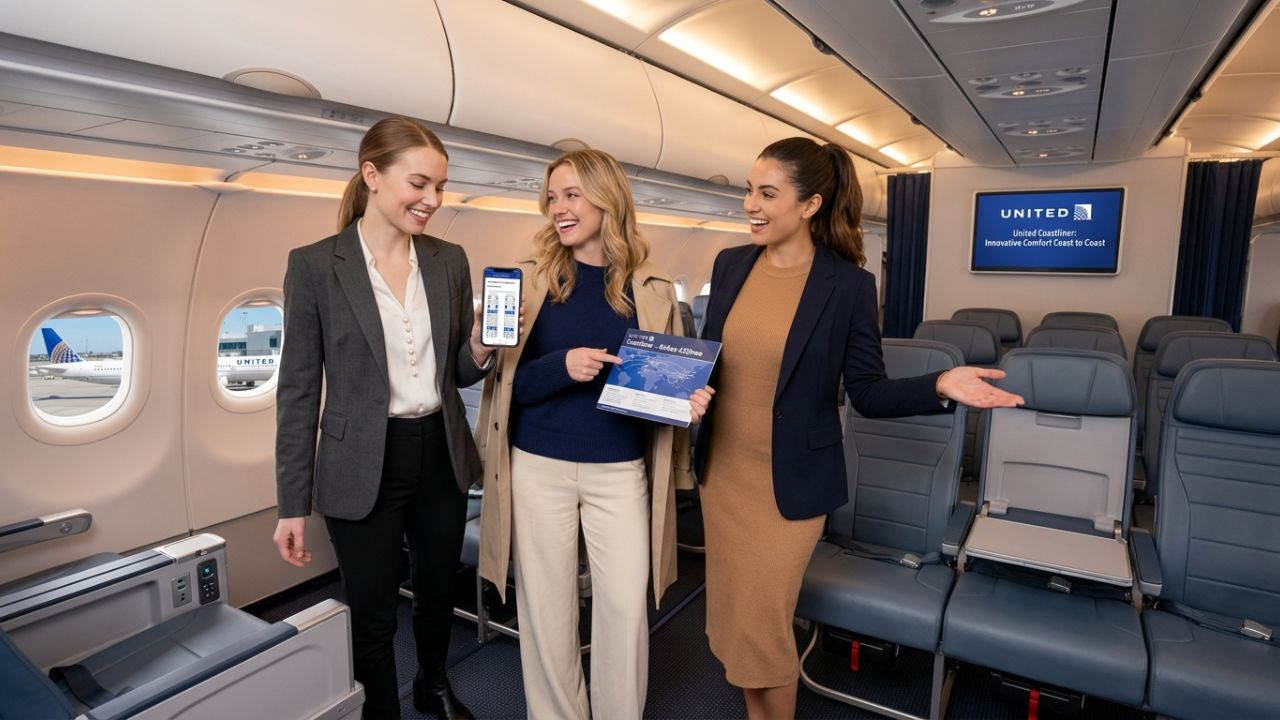
Image representing United Airlines' radical Airbus A321neo Coastliner strategy, evaluating blocked middle seats to provide transcontinental passengers with an unprecedented buffer against severe commercial travel chaos.
United Airlines Deploys Airbus A321neo Coastliner with Blocked Middle Seats to Shield Transcontinental Travelers from Severe Travel Chaos
Engineering Unprecedented Personal Space to Combat the Friction of Domestic Aviation
The grueling reality of domestic air travel is increasingly defined by severe overcrowding and systemic travel chaos. As legacy carriers cram more seats into narrowbody aircraft to offset razor-thin margins, passengers frequently endure agonizing coast-to-coast flights heavily compounded by ground-level airport disruptions. However, in a potentially massive disruption of the North American economy-class market, United Airlines is aggressively evaluating a transformative cabin concept for its upcoming Airbus A321neo Coastliner fleet. According to the latest breaking airline news, the Chicago-based carrier is studying a radical seating configuration that would permanently block selected middle seats. By deploying a specially secured tray-table mechanism over the seat cushion, United aims to drastically increase personal space for travelers on its most lucrative transcontinental routes linking San Francisco, Los Angeles, and Newark. This innovation serves as an essential psychological and physical buffer against the paralyzing stress of modern commercial aviation.
This development arrives as the industry grapples with an epidemic of rolling flight cancellations and unprecedented terminal congestion. For business travelers and premium leisure passengers forced into five-plus-hour flights across the country, sheer physical space has become the ultimate luxury. As United prepares to replace its aging Boeing 757 jets with the premium-heavy Coastliner, this seating strategy brutally exposes the flaws in high-density aircraft configurations. By prioritizing shoulder room and operational flexibility over raw passenger volume, United Airlines is effectively weaponizing passenger comfort. This blocked-seat architecture offers travelers an evasion tactic: a guaranteed zone of personal sanity completely insulated from the severe travel chaos that normally defines the economy cabin.
Section-Wise Breakdown: The Transcontinental Defense Strategy
The operational deployment of the Airbus A321neo Coastliner is meticulously engineered to absorb high-yield transcontinental demand while fundamentally altering the passenger experience:
The Transcontinental Coastliner Defense According to recent aviation updates, United Airlines is strategically positioning the Coastliner to dominate the premium domestic corridor. Unlike the standard, high-density Airbus A321neo aircraft operating on generic domestic routes, this highly specialized sub-fleet is configured with a significantly lower density of just 161 passengers. The cabin is rigidly segmented into Polaris Business Class, Premium Plus, and Economy Class. This reduction in raw capacity proves that United is directly targeting travelers who are deeply fatigued by relentless airport disruptions and are willing to prioritize comfort. By deploying this lower-density aircraft on the heavily contested San Francisco, Los Angeles, and Newark sectors, the airline guarantees that high-value coastal commuters experience a product that seamlessly bridges the gap between domestic utility and international luxury.
Engineering the Blocked Middle Seat At the operational core of this proposal is the permanent neutralization of the dreaded middle seat. Borrowing a highly successful tactic heavily utilized by European carriers for short-haul business class, United is evaluating a specialized, secured tray-table mechanism that spans the middle seat cushion. This effectively removes the seat from passenger use while preserving the structural ability to reactivate it if operational dynamics drastically shift. For travelers, the psychological and physical impact is massive. During severe weather events when massive flight cancellations force passengers to spend hours idling on the tarmac, the extra shoulder room and dedicated personal space transform a potentially excruciating delay into a manageable, highly comfortable wait.
FAA Regulations and Operational Economics This seating innovation is not merely a customer service gesture; it is a highly calculated exploitation of Federal Aviation Administration (FAA) staffing regulations. Current FAA mandates strictly require two flight attendants for the first 100 passenger seats, and an additional flight attendant for every subsequent block of 50 seats. Because the A321neo Coastliner possesses 161 seats, it breaches the 150-seat threshold, legally mandating a fourth flight attendant. Industry analysts point out that by formally blocking usability of specific seats, airlines could theoretically manipulate the certified seating capacity, potentially aligning the aircraft with lower staffing requirements. This complex fusion of passenger comfort, regulatory compliance, and operating economics proves that United is aggressively re-engineering the fundamental financial model of transcontinental flight to ensure maximum resilience against industry-wide travel chaos.
Operational Infrastructure Details: The Coastliner Deployment Matrix
To provide exact, factual clarity on the immense strategic value of this fleet deployment, industry analysts have mapped the physical aircraft specifications and the proposed seating mechanics. The following factual matrix details the precise breakdown of the United Coastliner strategy:
Factual United Airlines Coastliner Deployment Matrix
| Strategic Fleet Element | Operational & Configuration Specification |
|---|---|
| Operating Airline | United Airlines |
| Aircraft Type | Airbus A321neo "Coastliner" (Replacing Boeing 757s) |
| Targeted Routes | Transcontinental services: San Francisco, Los Angeles, Newark |
| Total Passenger Capacity | 161 passengers (Lower density configuration) |
| Cabin Class Distribution | Polaris Business Class, Premium Plus, Economy Class |
| Proposed Seating Innovation | Permanently blocked middle seats utilizing a secured tray mechanism |
| FAA Regulatory Consideration | 161-seat capacity currently mandates four flight attendants |
Passenger Impact: Surviving Terminal Anxiety
For the transcontinental traveler, the deployment of blocked middle seats on the Coastliner offers an unparalleled tactical advantage against the friction of the US domestic network. When severe storms in Newark trigger thousands of flight cancellations, passengers are frequently trapped on board aircraft awaiting gate clearances. In a standard high-density configuration, this translates to agonizing claustrophobia. The Coastliner passenger experiences an entirely different reality. The guaranteed removal of middle-seat occupancy ensures substantial shoulder room and dedicated workspace. This total insulation from the crushing density of standard economy travel heavily reinforces the absolute necessity of spatial comfort when navigating the highly volatile operational landscape of North American aviation.
Industry Analysis: Space as a Disruption Buffer
The domestic aviation sector is currently locked in a brutal battle for high-yield loyalty. Legacy airlines are increasingly struggling to differentiate their economy products, bogged down by identical seating charts and identical delays. In this highly pressurized context, United’s blocked middle-seat evaluation is a massive competitive power play. By actively reducing usable inventory to provide superior comfort, the airline is redefining the value proposition of the economy cabin. This innovation proves that airlines recognize that true defense against travel chaos isn't just about on-time performance—it is about providing travelers with the physical space required to endure inevitable operational friction without compromising their sanity or productivity.
Conclusion: Redefining Coast-to-Coast Mobility
The highly strategic evaluation of a blocked middle-seat configuration for the new Airbus A321neo Coastliner marks a monumental victory for United Airlines passengers seeking to evade the compounding threat of commercial travel chaos. By prioritizing dedicated personal space and leveraging lower-density cabin architecture across its critical San Francisco, Los Angeles, and Newark routes, the airline has successfully engineered a powerful defense against domestic travel fatigue. Leveraging specialized tray-table mechanisms and strategic regulatory alignment, passengers are completely insulated from the devastating claustrophobia associated with mass flight cancellations and tarmac delays. As the Coastliner fleet enters service, this massive cabin innovation establishes a powerful new benchmark for seamless, highly comfortable transcontinental mobility.
Key Takeaways
- Coastliner Fleet Replacement: United Airlines is deploying the lower-density Airbus A321neo Coastliner (161 seats) to replace aging Boeing 757s.
- Transcontinental Dominance: The premium-heavy aircraft targets high-profile routes linking San Francisco, Los Angeles, and Newark.
- Blocked Middle Seats: United is evaluating a configuration that permanently blocks selected middle seats using a secured tray-table mechanism.
- Disruption Defense: The extra personal space acts as a critical psychological buffer against severe terminal congestion and travel chaos.
- Regulatory Engineering: The blocked-seat strategy may allow the airline to optimize FAA flight attendant staffing thresholds tied to seat counts.
✈️ Frequently Asked Questions (Factual Aviation Data)
What is United Airlines reportedly planning for its new Airbus A321neo Coastliner aircraft? United is reportedly evaluating a seating design that would permanently block selected middle seats in Economy Class to provide more personal space and potentially support operational flexibility.
Which routes could feature the new seating concept? The concept is expected to be considered for premium transcontinental routes connecting San Francisco, Los Angeles, and Newark.
What is the Airbus A321neo Coastliner? The Airbus A321neo Coastliner is a premium-focused aircraft that United plans to use as a replacement for portions of its Boeing 757 fleet on key domestic routes.
How would passengers benefit from blocked middle seats? Passengers could enjoy increased shoulder room, greater personal space, and a less crowded cabin environment without purchasing a premium cabin ticket.
Has United Airlines officially confirmed the seating proposal? No. The airline has not publicly confirmed plans to introduce permanently blocked middle seats, and discussions remain based on industry reports.
Why are FAA staffing regulations part of the discussion? FAA regulations determine minimum flight attendant staffing levels based on passenger seat counts, making aircraft seating configurations an important operational consideration.
Could the concept influence other airlines? If successful, the strategy could encourage other airlines to explore similar comfort-focused seating arrangements on premium domestic routes.
🌍 Related Travel Guides & Flight Resources
- Navigate Airport Disruptions Like a Pro Master the art of surviving unexpected travel chaos with our expert strategies.
- Breaking Airline News & Evasion Routes Stay ahead of the delays with our real-time aviation updates and route intelligence.
- Global Flight Cancellation Defense Grid Essential legal rights and compensation tactics when your flight goes down.
⚖️ Disclaimer
The Airbus A321neo seating configuration metrics, operational deployment strategies, and FAA regulatory staffing analyses provided in this report are for informational purposes only. Aircraft cabin designs, the implementation of blocked middle-seat tray mechanisms, and specific route deployments across San Francisco, Los Angeles, and Newark are highly volatile and subject to immediate change based on corporate United Airlines strategy, supply chain constraints, and Federal Aviation Administration certification. All data regarding the Coastliner fleet has been officially sourced from industry reports and aviation analysis as of June 2026, and remains completely fluid as the airline has not officially confirmed the project. NomadLawyer does not guarantee the absolute accuracy or current validity of the information provided and assumes no liability for travel disruptions, sudden flight cancellations, altered itineraries, or any financial consequences resulting from the use of this content. Passengers are strongly advised to independently verify all aircraft configurations and seat map availability directly with United Airlines prior to booking.
Disclaimer
This article is for informational and educational purposes only. It does not constitute legal, financial, or professional advice. While we strive to provide accurate and up-to-date information, travel policies, regulations, and conditions change rapidly. Always verify information with official sources before making travel decisions. Nomad Lawyer makes no representations about the accuracy, reliability, completeness, or suitability of the information provided. Readers should consult qualified professionals for advice specific to their circumstances. The views expressed in this article are those of the author and do not necessarily reflect the views of Nomad Lawyer.
Kunal K Choudhary
Co-Founder & Contributor
A passionate traveller and tech enthusiast. Kunal contributes to the vision and growth of Nomad Lawyer, bringing fresh perspectives and driving the community forward.
Learn more about our team →