
Southwest Airlines Boeing 737 Flight AAL967 Diverts to Norfolk International Airport During Chicago to Denver Transit
Southwest Airlines Flight AAL967, a Boeing 737-8H4 from Chicago to Denver, diverted to Norfolk International Airport instead of Denver.

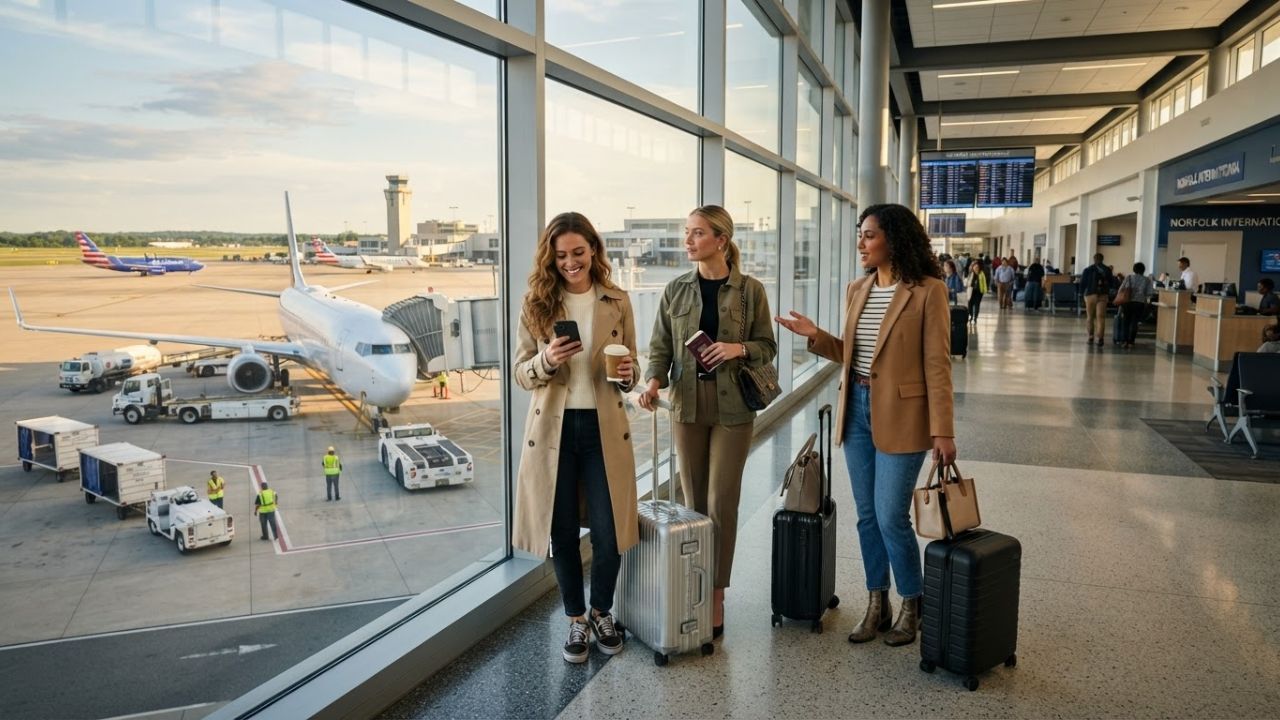
Image generated by AI
[Norfolk, July 9, 2026] — A scheduled passenger flight operating as a Southwest Airlines Flight AAL967 diversion completed a safe landing after changing course on Thursday, July 9, 2026. The flight, utilizing a Boeing 737-8H4 regional trunk jet, was transiting from Chicago to Denver when the crew altered the flight path. The aircraft was redirected to Virginia, landing safely at Norfolk International Airport.
Our analysis of the flight data indicates that the aircraft executed a controlled landing without declaring an emergency. While flight tracking telemetry confirms the route change, the carrier did not issue an immediate statement regarding the operational reason behind the diversion. No injuries or aircraft damage were reported during the event.
Mid-Continent Flight Redirected to the Atlantic Coast
Managing domestic flights across the United States requires close monitoring of weather systems and aircraft telemetry. On July 9, 2026, Flight AAL967 was scheduled to connect Chicago with the Denver metropolitan area. The airline assigned a Boeing 737-8H4 twin-engine jet to operate the route.
Instead of continuing along its scheduled path toward the Rocky Mountains, the crew initiated a significant course correction. The pilots guided the aircraft toward the East Coast, completing a safe landing at Norfolk International Airport (ORF). Representatives from Southwest Airlines have not confirmed whether the route change resulted from weather, air traffic control slots, or a precautionary technical issue.
In commercial aviation, passenger safety and aircraft integrity remain the primary considerations when making operational adjustments. Crew members continuously monitor systems during pre-flight checks and the departure sequence. Any minor deviation from safety thresholds prompts a return to the gate or a delay to allow ground maintenance crews to complete full checks.
Operational Recovery and Safety Protocols at Norfolk International Airport
When a flight diverts to an unplanned destination, airline operations teams must coordinate passenger and aircraft recovery. For travelers on flight AAL967, the landing in Norfolk meant their journey to Denver was significantly interrupted.
The standard operating procedures for carriers during domestic diversions include:
- Passenger Rebooking: Rebooking travelers on subsequent flights or arranging alternative routing.
- Ground Handling Coordination: Directing gate agents to manage passenger transfers and baggage claims.
- Technical Maintenance Inspections: Technicians evaluate the Boeing 737-8H4 to diagnose and resolve any system anomalies.
- Crew Duty Limit Management: Ensuring that the crew's flight hours remain within regulatory limits before they resume flight duties.
These safety-first protocols ensure that passenger well-being and aircraft integrity remain prioritized over scheduling requirements.
Fleet Reliability and Precautionary Diversion Management
A return or diversion to a nearby airport does not automatically indicate a major mechanical failure. Modern commercial aircraft use highly sensitive monitoring systems that alert pilots to minor deviations in engine performance, cabin pressure, or electrical systems.
Airlines prefer to resolve these indications at airports with available maintenance facilities rather than continuing a long-haul flight. By routing the Boeing 737-8H4 to Norfolk, the crew utilized an airport capable of supporting commercial jet operations, minimizing further schedule disruptions across the airline's domestic network.
Key Takeaways
- Route Disruption: Southwest Airlines Flight AAL967 from Chicago to Denver diverted to Norfolk International Airport in Virginia.
- Assigned Aircraft: The flight was operated using a Boeing 737-8H4 narrow-body jet.
- Safe Landing: The aircraft landed safely at Norfolk without declaring an emergency, and no injuries were reported.
- Operational Status: The airline did not release an official statement regarding the cause of the route change.
The table below outlines the flight metrics and telemetry parameters recorded during the operational event:
| Flight Parameter | Scheduled Target | Actual Telemetry | Operational Status |
|---|---|---|---|
| Departure Gateway | Chicago | Chicago | Takeoff Completed |
| Target Destination | Denver | — | Cancelled due to Diversion |
| Actual Arrival Gateway | — | Norfolk International (ORF) | Safe Landing Completed |
| Assigned Aircraft Model | Boeing 737-8H4 | Boeing 737-8H4 | Twin-engine narrowbody |
| Operating Carrier | Southwest Airlines | Southwest Airlines | Domestic Carrier |
| Operational Outcome | Completed Route | Diverted En Route | Precautionary Landing |
Why This Matters
Our analysis indicates that this diversion illustrates the operational challenges airlines face when managing aircraft rotations. A flight scheduled from Chicago to Denver that ends up in Norfolk represents a significant geographic deviation. This indicates that the operational decision was likely influenced by air traffic control routing constraints or specific weather patterns that made the East Coast a safer or more practical option than continuing west.
Additionally, this incident highlights the effectiveness of the US air traffic control network in accommodating sudden route changes. Norfolk International Airport frequently serves as a strategic relief valve for East Coast and mid-continent flights, offering ample runway space and passenger facilities. By utilizing Norfolk, the airline minimized systemic delays at Denver, which is a major connecting hub, thus preventing a ripple effect of delays across the airline's nationwide schedule.
FAQ
What happened to Southwest Airlines Flight AAL967 on July 9, 2026? The Boeing 737-8H4 flight scheduled from Chicago to Denver diverted to Norfolk International Airport in Virginia.
Why did the flight divert to Norfolk instead of continuing to Denver? The airline did not confirm the exact reason, but flights are diverted due to weather patterns, air traffic control constraints, or precautionary safety checks.
Was the landing safe, and were passengers injured? The aircraft completed a safe landing at Norfolk International Airport, and there were no reports of passenger injuries or cabin emergencies.
Related Travel Guides
- American Airlines Airbus A319 Flight AA3025 Diverts to Denver International Airport During Transit from Dallas Fort Worth to Eagle
- Endeavor Airlines Operated Delta Connection Flight EDV5104 Diverts to Harrisburg International Airport During Grand Rapids to New York Flight
- US Airlines Expand Premium Cabin Offerings as Budget Passengers Encounter Widening Fare Segmentations and Baggage Fee Increases
Disclaimer
This article is for informational and educational purposes only. It does not constitute legal, financial, or professional advice. While we strive to provide accurate and up-to-date information, travel policies, regulations, and conditions change rapidly. Always verify information with official sources before making travel decisions. Nomad Lawyer makes no representations about the accuracy, reliability, completeness, or suitability of the information provided. Readers should consult qualified professionals for advice specific to their circumstances. The views expressed in this article are those of the author and do not necessarily reflect the views of Nomad Lawyer.
Kunal K Choudhary
Co-Founder & Contributor
A passionate traveller and tech enthusiast. Kunal contributes to the vision and growth of Nomad Lawyer, bringing fresh perspectives and driving the community forward.
Learn more about our team →