
Aviation Updates: SkyWest American Airlines SKW6427 Diverts to Grand Junction Amid Severe Aspen Travel Chaos
Blinding mountain fog and violent wind shear force a Chicago-to-Aspen regional jet into a rapid emergency diversion, leaving hundreds stranded in the high desert.

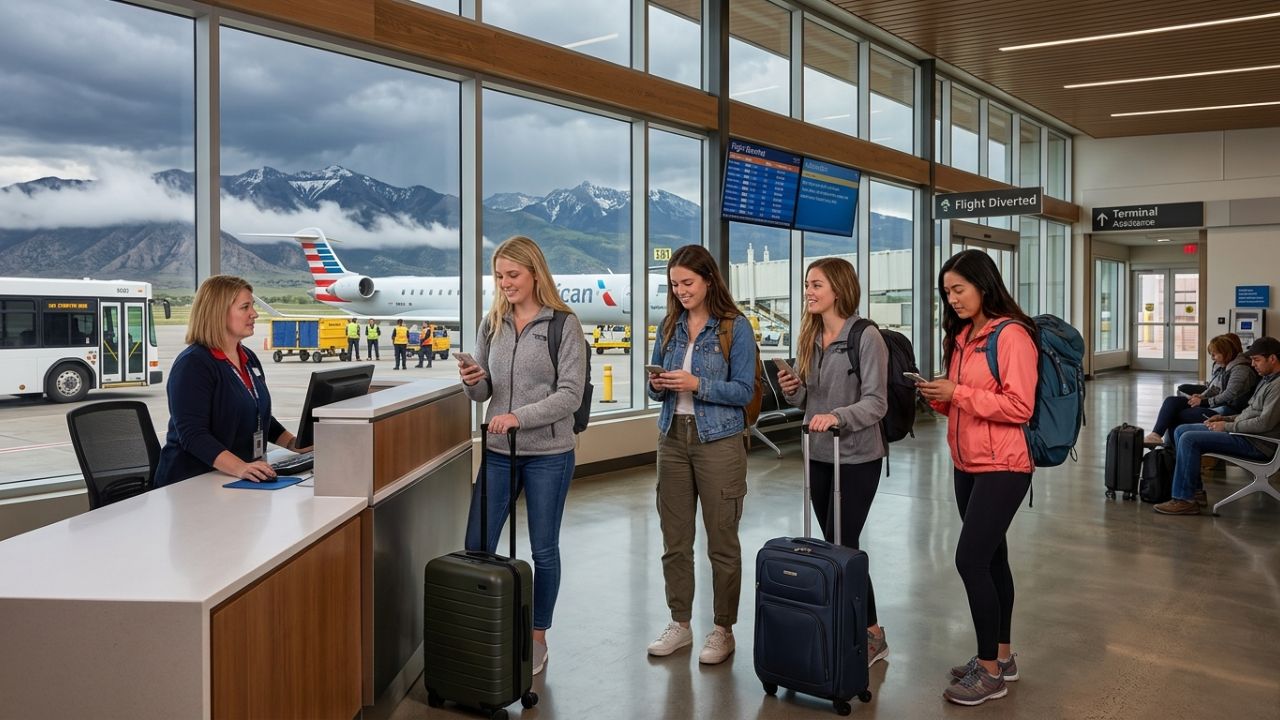
Image generated by AI
Aviation Updates: SkyWest American Airlines SKW6427 Diverts to Grand Junction Amid Severe Aspen Travel Chaos
As violent alpine weather systems rapidly collapse the visibility over the Colorado Rockies, a fully loaded regional jet was forced into a dramatic, high-altitude diversion, leaving hundreds of holiday travelers stranded in the high desert and triggering severe regional travel chaos.
Image generated by AI
As urgent airline news platforms and highly critical aviation updates continuously track the immense volatility of mountain aviation, a terrifying atmospheric shift has just forced a massive operational detour. SkyWest operated American Airlines flight SKW6427, completely loaded with holiday travelers originating from Chicago, was aggressively executing its steep descent into the Rocky Mountains when it was violently intercepted by extreme winds and sudden, blinding mountain fog. The twin-engine Mitsubishi CRJ-701ER was instantly trapped above the jagged peaks surrounding Aspen. Recognizing the catastrophic danger of descending blind, the highly seasoned flight crew executed a rapid safety detour, permanently aborting the landing and diverting the aircraft. While the tactical maneuver absolutely guaranteed passenger safety, the diversion has triggered localized travel chaos, severely compounding ongoing airport disruptions and leaving hundreds of passengers physically stranded in the high desert, frantically bracing for downstream flight cancellations.
Expanded Overview: The High-Altitude Operational Threat
When analyzing the massive aerodynamic forces driving mountain aviation, the structural fragility of alpine flight paths is glaringly obvious.
Unlike massive international mega-hubs built on flat coastal plains, high-altitude regional airports are completely at the mercy of micro-climates. The unique, deeply fractured geography surrounding the Colorado Rockies means that severe wind shear and dense, low-cloud cover can physically manifest in minutes with zero advanced warning. When the flight crew on SKW6427 encountered this sudden visibility hazard, they were immediately bound by strict aviation safety regulations that demand ultra-conservative decision-making. Attempting to penetrate a blinding fog bank while surrounded by towering granite peaks is a lethal gamble; thus, the crew forcefully prioritized survival over schedule, instantly abandoning the original destination.
Section-Wise Breakdown: The Aspen-Pitkin Approach
The absolute core of this massive operational disruption stems from the terrifyingly narrow geography of the intended destination.
Aspen-Pitkin County Airport sits deep within the restrictive Roaring Fork Valley, entirely surrounded by towering, high-altitude peaks. Because the local runway approach is so aggressively steep and narrow, aviation safety laws strictly forbid commercial pilots from executing low-visibility landings. The approach legally requires exceptional visual clarity. Even though the modern Mitsubishi CRJ-701ER features highly advanced avionics, the dense cloud cover completely destroyed the pilots' visual contact with the runway environment. Continuing the descent under those volatile conditions was aerodynamically and legally impossible, forcing the immediate tactical diversion.
Section-Wise Breakdown: The Grand Junction Lifeline
To save the aircraft from the collapsing weather system, the flight crew aggressively re-routed the jet toward the absolute safest regional alternative.
Grand Junction Regional Airport immediately served as the primary emergency airfield. Located safely out in the high desert, this specific tarmac offers significantly wider approaches, vast clearance from towering peaks, and vastly longer runways designed precisely to handle diverted commercial flights. The displaced passengers on SKW6427 landed safely on the desert tarmac while airline dispatchers frantically assessed the shifting weather patterns over the Rockies. Fortunately, Grand Junction is highly experienced in handling these specific, high-stress aircraft diversions, providing a critical operational lifeline during severe mountain storms.
Flight Details: American Airlines SKW6427 Flight Diversion Matrix
The exact operational telemetry outlining this highly dramatic flight diversion, detailing the specific aircraft deployment, the original route architecture, and the primary catalyst for the disruption, has been consolidated into the mandatory matrix below.
American Airlines SKW6427 Flight Diversion Matrix (2026)
| Operational Metric | Verified Flight Data |
|---|---|
| Airline Operator | SkyWest (Operating as American Airlines) |
| Flight Number | SKW6427 |
| Aircraft Type | Mitsubishi CRJ-701ER (Twin-Engine Regional Jet) |
| Original Route | Chicago to Aspen-Pitkin County Airport |
| Diversion Location | Grand Junction Regional Airport |
| Disruption Catalyst | Severe wind shear and low-visibility mountain fog |
Passenger Impact: The Frustrating Ground Recovery
For the stranded holidaymakers forcefully displaced by this massive diversion, the physical journey is far from over.
When mountain weather forces an aircraft to land at an alternate airfield, airlines generally provide immediate ground transport. Travelers from SKW6427 now face a grueling two-hour scenic drive by charter coach bus to reach the Aspen valley, heavily relying on Interstate 70 and Highway 82. Alternatively, desperate travelers are aggressively arranging private rental cars or local mountain shuttle services directly from the main terminal building. If the severe weather patterns improve rapidly, the regional jet might perform a short ferry flight to deliver passengers by air. However, if delays extend late into the evening hours, stranded passengers must aggressively consult the customer service desk to secure physical hotel vouchers before local accommodations completely sell out.
Industry Analysis: Digital Tracking and Disruption Management
Aviation economists explicitly highlight that surviving these massive diversions requires passengers to aggressively utilize digital communication channels.
Affected travelers must immediately monitor their carrier’s mobile application for automated text alerts regarding gate reassignments, critical flight rebooking options, and complex baggage claim details. Connecting passengers can instantly review their updated digital itineraries to see exactly how this mountain diversion impacts their subsequent domestic or international travel segments. By heavily utilizing online travel portals, passengers can entirely bypass the massive, chaotic queues at the physical service desks inside the terminal, instantly verifying if their seats on connecting flights have been automatically protected by the airline's back-end IT systems.
Conclusion: Surviving the Rocky Mountain Gridlock
Ultimately, the sudden and dramatic diversion of SkyWest operated American Airlines flight SKW6427 is a terrifying reminder of the absolute volatility of mountain aviation. Severe alpine fog and turbulent wind gusts created a highly dangerous landing environment at Aspen, forcing the captain into a critical tactical decision that absolutely saved lives but guaranteed massive travel chaos. As SkyWest ground teams aggressively coordinate charter coach buses and luggage transfers to rescue the displaced holidaymakers in Grand Junction, passengers must remain fiercely proactive. In an era completely defined by unpredictable weather and severe airport disruptions, constantly monitoring digital flight status boards and maintaining extreme flexibility is the only way to survive the grueling reality of regional air travel.
Key Takeaways
- Dramatic High-Altitude Diversion: SkyWest operated American Airlines flight SKW6427 from Chicago was forced to abandon its landing in Aspen due to severe mountain weather.
- The Aircraft Involved: The flight was operated using a twin-engine Mitsubishi CRJ-701ER regional jet, which safely diverted to the high desert.
- The Danger of the Roaring Fork Valley: Dense low cloud cover and violent wind shear compromised the steep, narrow approach into Aspen-Pitkin County Airport, legally preventing a safe landing.
- The Grand Junction Lifeline: The aircraft safely landed at Grand Junction Regional Airport, which features vastly wider approaches and longer runways suitable for emergency commercial diversions.
- Ground Transit Recovery: Stranded passengers face a two-hour charter coach bus journey along Interstate 70 and Highway 82, or must secure hotel vouchers if the delays stretch into the night.
FAQ: American Airlines SKW6427 Aspen Diversion 2026
Why did American Airlines flight SKW6427 divert from Aspen? The twin-engine Mitsubishi CRJ-701ER encountered sudden, blinding mountain fog and extreme wind shear. Because Aspen-Pitkin County Airport is surrounded by high peaks and legally requires exceptional visual clarity for landing, the crew was forced to divert for safety.
Where did the diverted flight SKW6427 land? The aircraft safely diverted to Grand Junction Regional Airport, a high-desert airfield that offers vastly wider approaches and longer runways, making it the primary alternate for disrupted Aspen flights.
How will passengers reach Aspen from Grand Junction? SkyWest ground teams typically provide charter coach buses for a two-hour drive via Interstate 70 and Highway 82. Passengers can also secure private rental cars, mountain shuttles, or await a potential ferry flight if the severe weather clears rapidly.
Related Travel Guides
- Oman Air Muscat Abu Dhabi Flights Resumption
- Delta Unleashes Historic Nonstop Boston to Nice Flights to Shield Luxury Travelers From Mega-Hub Travel Chaos
- Preventing Security-Driven Travel Chaos: India DGCA Issues Urgent Clarification on Airport Photography to Eradicate Terminal Gridlock
Disclaimer: This article is strictly for informational and aviation safety purposes. The operational flight data, specific aircraft assignment (Mitsubishi CRJ-701ER on flight SKW6427), and designated alternate airfields (Grand Junction Regional Airport) are based on live flight tracking telemetry and official airline diversion protocols available at the time of publication. Mountain weather systems, specific wind shear parameters, and airline ground recovery operations (including the deployment of charter coach buses on Interstate 70/Highway 82 and hotel voucher availability) are highly dynamic and subject to immediate, unannounced modification. Passengers involved in high-altitude flight diversions must explicitly verify exact baggage transfer protocols, specific rebooking options, and live ground transit schedules directly with SkyWest or American Airlines customer service agents prior to leaving the secure terminal area.
Disclaimer
This article is for informational and educational purposes only. It does not constitute legal, financial, or professional advice. While we strive to provide accurate and up-to-date information, travel policies, regulations, and conditions change rapidly. Always verify information with official sources before making travel decisions. Nomad Lawyer makes no representations about the accuracy, reliability, completeness, or suitability of the information provided. Readers should consult qualified professionals for advice specific to their circumstances. The views expressed in this article are those of the author and do not necessarily reflect the views of Nomad Lawyer.
Raushan Kumar
Founder & Lead Developer
Full-stack developer with 11+ years of experience and a passionate traveller. Raushan built Nomad Lawyer from the ground up with a vision to create the best travel and law experience on the web.
Learn more about our team →