
Southwest Airlines Triggers 75 Flight Delays at Dallas Love Field; Denver, LA, San Francisco Hit Hardest in June 2026
Southwest Airlines dominated disruptions at Dallas Love Field on June 10, 2026, with 75 delayed flights and 1 cancellation cascading across 30+ US airports including Denver, Los Angeles, and San Francisco.

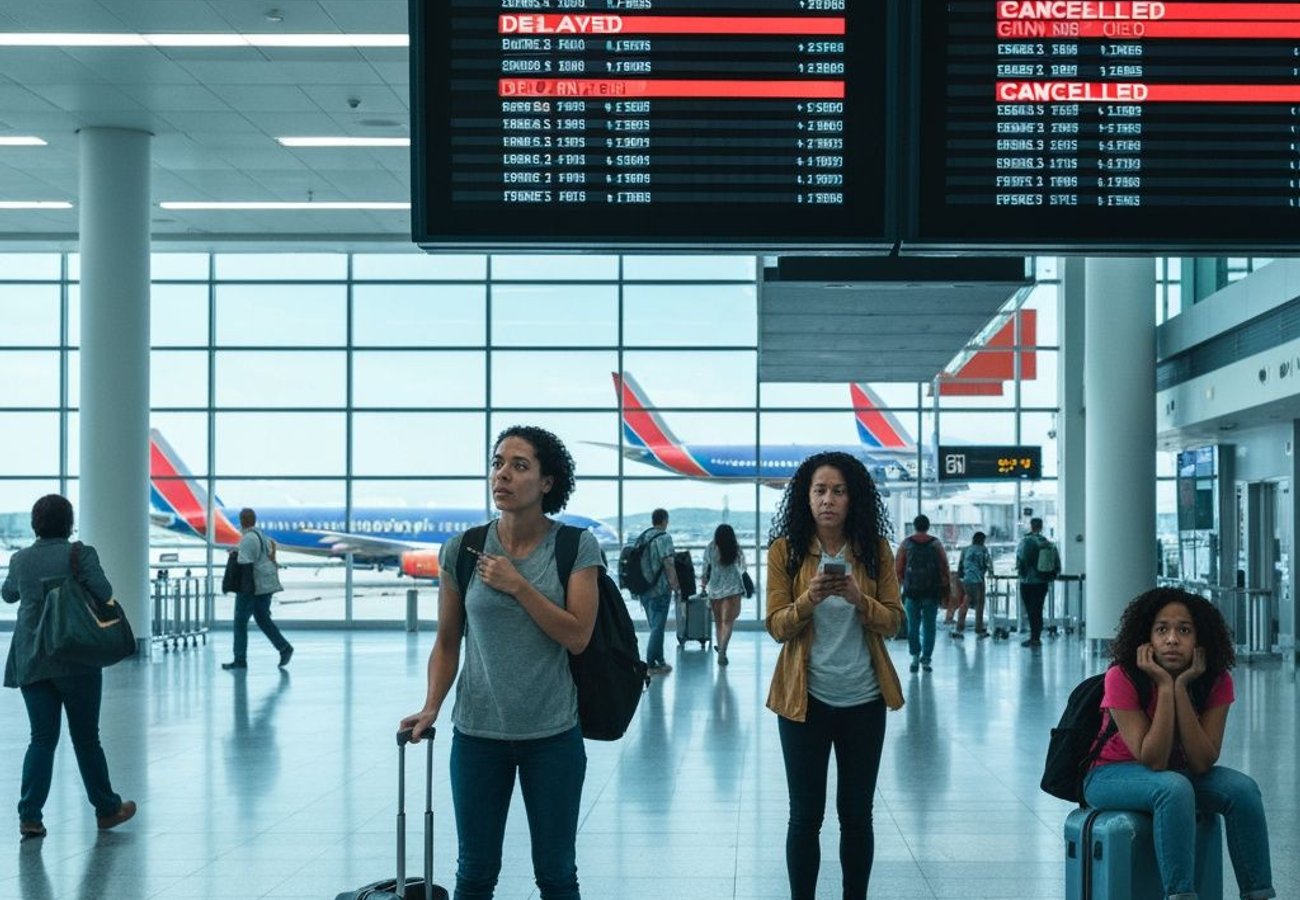
Image generated by AI
When One Airport Breaks, America Travels Slower
On June 10, 2026, travelers at Dallas Love Field Airport encountered a cascading nightmare. What started as operational chaos at a single Texas hub rippled across the continental United States, stranding hundreds of passengers and throwing domestic travel schedules into disarray.
The numbers were brutal: 75 delayed flights and 1 cancellation. But the real story wasn't in the statistics—it was in the knock-on effects that paralyzed airports from the Pacific to the Atlantic.
The Southwest Dominance Problem
Southwest Airlines accounted for the lion's share of disruption: 71 delayed flights and 1 cancellation. As the dominant carrier at Dallas Love Field, Southwest's operational hiccup didn't stay contained. Other carriers felt the pressure too—Delta Air Lines reported 1 delay, and JSX recorded 3 delays.
This concentration of disruption among a single airline at a major hub exposes a vulnerability in US domestic aviation. When one carrier's operations falter, the entire network feels the tremor.
Reddit: "Southwest delays always cascade. It's like dominoes at DFW. By the time they fix one issue, three more have cropped up at connecting cities." — r/travel
The Nationwide Ripple Effect: 30+ Airports in Crisis
The impact extended far beyond Dallas. According to real-time flight tracking data, disruptions originated from and affected airports spanning the entire continental US:
Origin airports hit: Albuquerque, Austin, Birmingham, Nashville, Charleston, Charlotte, Denver, Houston, Jacksonville, Las Vegas, Los Angeles, Lubbock, Burbank, Chicago Midway, Omaha, Ontario, Phoenix, San Diego, San Jose, St. Louis, and Tulsa.
Destination airports affected: Houston, Atlanta, Boston, Burbank, Baltimore/Washington, Denver, Las Vegas, LaGuardia, Los Angeles, Memphis, Miami, Milwaukee, New Orleans, Oakland, Reno, Seattle, San Francisco, San Antonio, St. Louis, and Vancouver.
What made this disruption particularly severe: Eight destination airports—including Burbank, Charleston, Milwaukee, Oakland, Reno, Seattle, San Francisco, and Vancouver—experienced 100% flight delays, meaning every single scheduled flight from Dallas Love Field to these cities was delayed.
The Major Cities Taking the Hit
Los Angeles, San Francisco, Denver, Seattle, and Chicago were among the most heavily impacted metro areas. Business travelers with tight connections faced cascading delays that could destroy entire days of meetings. Leisure travelers watched vacation schedules crumble in real time.
The percentage breakdown was grim across major hubs:
- LaGuardia (LGA): 66% of flights delayed
- Nashville (BNA): 50%+ delayed
- Denver (DEN): 44% delayed
- Baltimore/Washington (BWI): Multiple delays
- San Diego (SAN): Significant disruptions
Smaller regional airports like St. Louis, Tulsa, and Omaha saw lower percentages, but when you're one of the affected passengers, percentage becomes irrelevant.
Why This Matters: The Concentration Risk
This incident underscores a structural vulnerability in US aviation. According to the Department of Transportation, when a single airline dominates a hub—as Southwest does at Dallas Love Field—operational failures create disproportionate passenger impact.
Dallas Love Field has become increasingly important to Southwest's network in recent years. The airline's operational dependency on this hub means any disruption there doesn't just affect Dallas passengers; it reverberates through connecting traffic nationwide.
What Weather and Operational Factors May Have Triggered This
While the exact cause wasn't immediately disclosed, industry sources point to potential culprits:
- High traffic volumes overwhelming ground handling operations
- Weather-related ground delays preventing efficient turnarounds
- Staffing constraints during peak travel periods
- Aircraft availability issues cascading from earlier delays
FlightAware's real-time tracking systems captured the exact progression of delays, showing how early morning disruptions at Dallas Love Field compounded throughout the day as connecting flights missed their scheduled departures.
Immediate Action: What Stranded Passengers Did
Passengers faced hours of uncertainty. Dallas Love Field's airport operations team worked to manage the crisis, but the sheer volume of disrupted flights created bottlenecks.
What affected travelers could (and should) do:
Contact Your Airline Immediately: Southwest, Delta, and JSX passengers needed to access airline apps and websites for real-time rebooking. Phone lines became overwhelmed within minutes.
Demand Rebooking on Next Available Flights: All three airlines offered rebooking without additional fees—a requirement under DOT regulations for airline-caused delays.
Leverage Airport Resources: Dallas Love Field staff distributed meal vouchers and hotel accommodation information for passengers facing overnight delays.
Monitor Live Alerts: Using airport-specific travel alert systems, passengers could track cascading impacts to their connections.
Explore Alternative Transport: Savvy travelers immediately pivoted to rental cars for ground transportation or booked alternative flights from Dallas/Fort Worth International Airport (DFW), located just 20 miles away.
The Domino Effect: Why One Cancellation Matters
Here's what most travelers don't realize: a single cancelled flight doesn't just affect those 150 passengers. It creates a ripple effect.
Crew members from that flight get reassigned. Aircraft scheduled for subsequent flights are now positioned incorrectly. Passengers from cancelled flights are reboooked onto already-full flights, creating standbys and cascading delays. By day's end, what started as 1 cancellation had indirectly caused dozens of secondary delays.
Southwest's 1 cancellation, combined with 71 delays, likely triggered the entire 75-delay event through this cascading mechanism.
Looking Forward: System Resilience Questions
This disruption raises critical questions for US aviation infrastructure:
- Should regulators require greater operational redundancy at single-carrier-dominated hubs?
- Are current airline scheduling practices too aggressive, leaving no buffer for disruptions?
- Will consolidation in the US airline industry make such incidents more frequent?
These aren't academic questions. They affect millions of business and leisure travelers annually.
The Passenger Perspective: Frustration Met Reality
What made June 10, 2026 particularly frustrating was that it wasn't a weather disaster or security event—the typical disruptors passengers accept as unavoidable. This was operational dysfunction at a single airline spreading across a network.
Passengers expressed frustration on social media. Business travelers missed critical meetings. Families missed connecting flights to vacation destinations. The financial and emotional cost extends far beyond the airlines' compensation obligations.
Lessons for Future Travelers
This incident offers brutal clarity:
Book with operational resilience in mind. Consider airlines with stronger operational metrics and avoid overconnecting through single-carrier-dominant hubs when possible.
Purchase trip insurance. When delays cascade, insurance becomes invaluable for hotel and meal costs.
Build buffer time into tight connections. If you're connecting through Dallas Love Field, plan for 3+ hours between flights, not the standard 1.5 hours.
Have a backup airport in mind. For Dallas area travel, knowing that DFW is 20 minutes away can be a game-changer during Love Field disruptions.
The fragility of modern aviation networks was on full display at Dallas Love Field—and every passenger on June 10 felt the tremor.
Related Travel Guides
Disclaimer
This article is for informational and educational purposes only. It does not constitute legal, financial, or professional advice. While we strive to provide accurate and up-to-date information, travel policies, regulations, and conditions change rapidly. Always verify information with official sources before making travel decisions. Nomad Lawyer makes no representations about the accuracy, reliability, completeness, or suitability of the information provided. Readers should consult qualified professionals for advice specific to their circumstances. The views expressed in this article are those of the author and do not necessarily reflect the views of Nomad Lawyer.
Raushan Kumar
Founder & Lead Developer
Full-stack developer with 11+ years of experience and a passionate traveller. Raushan built Nomad Lawyer from the ground up with a vision to create the best travel and law experience on the web.
Learn more about our team →