
Delta, Southwest, American Cancel 9 Flights at Boston Logan: Major US and International Airport Disruptions June 2026
Nine flight cancellations at Boston Logan International Airport ripple across 45+ destinations globally as Delta, Southwest, and American Airlines report widespread delays affecting North America, Europe, and beyond.

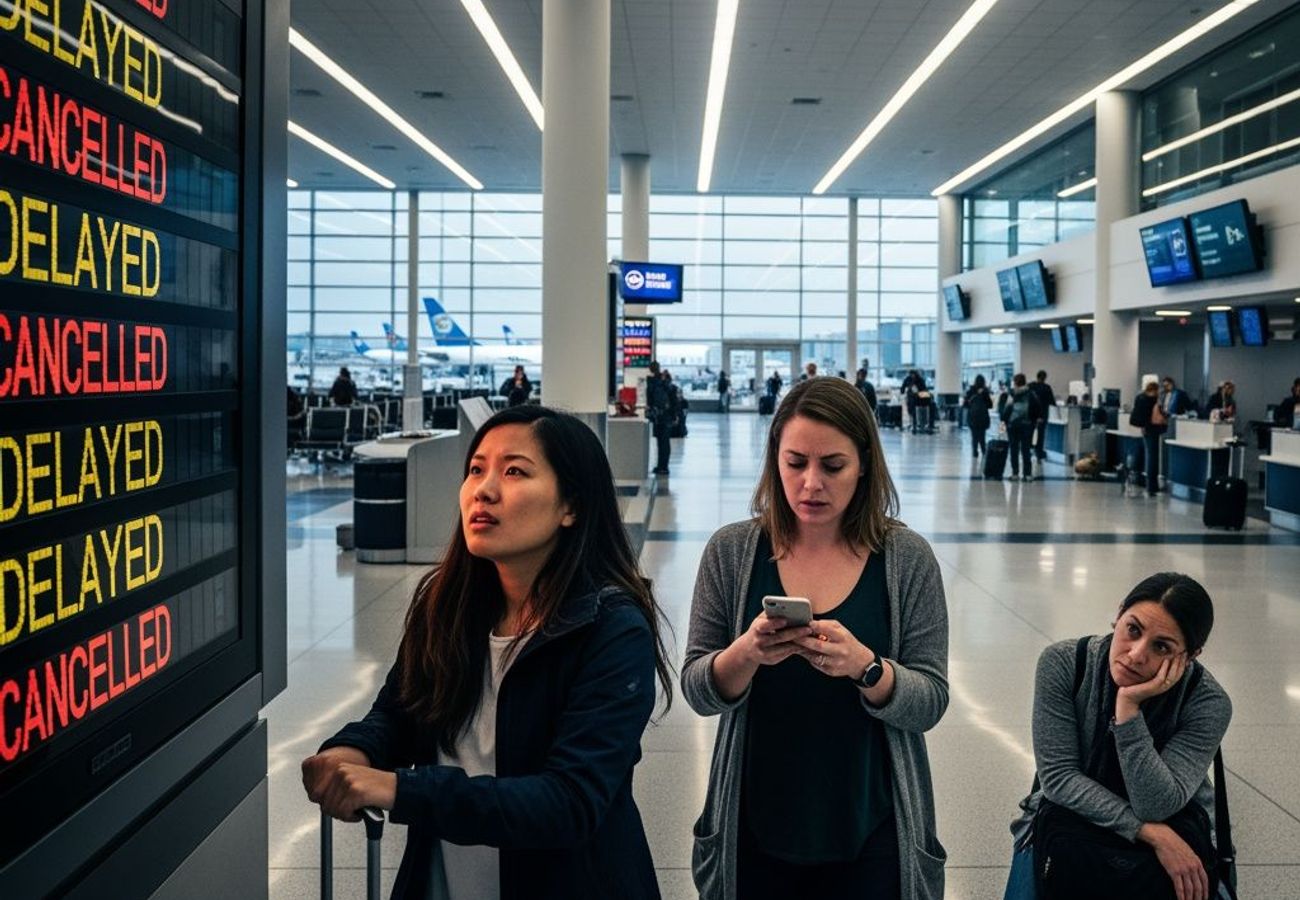
Image generated by AI
Network Meltdown: Nine Cancellations Cascade Across Global Aviation Routes
Boston Logan International Airport experienced significant operational turmoil on June 18, 2026, as three major U.S. carriers ground aircraft and strand passengers across 45+ cities spanning North America, Europe, and beyond. Delta Air Lines, Southwest Airlines, and American Airlines collectively cancelled 9 flights while reporting cascading delays that reverberated through the interconnected global aviation system. What began as a localized Boston scheduling crisis quickly transformed into a widespread travel nightmare affecting hundreds of passengers with missed connections, rebookings, and altered itineraries.
The disruptions extended far beyond the tarmac at Boston. Travelers heading to and from Chicago, Los Angeles, Denver, Atlanta, Philadelphia, New York, Montreal, Vancouver, Munich, Frankfurt, Athens, Lisbon, Rome, Tel Aviv, Toronto, Phoenix, and dozens of other international gateways experienced knock-on effects. Airport authorities and airline staff scrambled to coordinate recovery efforts while passengers faced extended waits and uncertainty.
Reddit: "Just got notified my Boston-Chicago flight is cancelled. Already reboked me three times. This is getting ridiculous." — r/travel
The Breakdown: Which Airline Cancelled What
The operational strain fell unevenly across the three carriers, though the cumulative impact proved substantial.
Delta Air Lines recorded the highest cancellation count with 4 flights cancelled (representing 2% of their scheduled operations) and 19 delayed flights (10% of their network). The Atlanta-based carrier bore the largest operational burden, suggesting potential cascading effects from equipment positioning or crew scheduling issues.
Southwest Airlines followed with 3 cancellations (6% of their schedule) and 17 delayed flights (34% impact), indicating proportionally higher disruption relative to their Boston operations. The Dallas-based low-cost carrier's point-to-point network model meant fewer connecting opportunities for stranded passengers.
American Airlines reported 2 cancellations (1% of operations) and 22 delayed flights (19% impact), suggesting delays rather than outright cancellations defined their June 18 challenges. The Fort Worth-based carrier's hub-and-spoke system meant delays cascaded across multiple subsequent flights.
Together, these nine cancellations disrupted a sprawling international network: domestic hubs like Chicago O'Hare, Los Angeles International, Philadelphia International, Denver International, Atlanta Hartsfield-Jackson, and Miami International felt immediate pressure. International gateways across Canada (Montreal, Toronto, Vancouver, Ottawa), Germany (Munich, Frankfurt), Greece (Athens, Keflavik Iceland), Portugal (Lisbon, Porto), Italy (Rome), France, United Kingdom, Dominican Republic (Santo Domingo, San Juan), UAE (Dubai), Israel (Tel Aviv), and China (Hong Kong) all recorded service interruptions.
Understanding Your Rights: What Happens When Your Flight Gets Cancelled
When operational disruptions strike, passenger options vary significantly based on airline policy and regulatory jurisdiction. Here's what you need to know immediately.
Stay Connected to Real-Time Updates
Monitor your email, text messages, and the airline's mobile app obsessively during disruptions. Most carriers push rebooking confirmations and schedule changes through digital channels first. Visit the airline's website simultaneously for live operational dashboards that often provide clearer information than phone lines.
Contact Customer Service Strategically
If you're already at the airport, head directly to the airline's service desk—phone lines typically bottleneck during systemwide disruptions. If you're pre-arrival, use the airline's online chat system to avoid 60+ minute hold times. Document every interaction with reference numbers for potential compensation claims.
Know Your Legal Protections
In the European Union, passengers are entitled to compensation of €250-€600 depending on flight distance when cancellations occur within the airline's control. The U.S. Department of Transportation provides less robust protections but mandates carriers rebook you on the next available flight at no additional cost. Check DOT's official guidance on passenger rights for carrier-specific policies.
Explore Alternative Transportation
Don't assume the next available flight with your original carrier is your only option. Ask explicitly about rebooking on competing airlines, trains, or bus services. Many carriers will pay for ground transportation alternatives when operational recovery timelines stretch beyond reasonable limits.
The Wider Story: Why Boston Matters to Global Aviation
Boston Logan International Airport ranks among North America's most strategically important aviation hubs, connecting the Northeast Corridor directly to Europe, the Caribbean, and beyond. Any operational disruption there creates immediate ripple effects across the entire transatlantic network.
The nine cancellations at Boston represent relatively modest numbers in absolute terms—less than 5% of the airport's daily operations. However, modern aviation's interconnected reality means a cancelled morning flight to Chicago creates staffing shortages in Denver, which triggers afternoon delays in Los Angeles, ultimately stranding passengers in Hong Kong waiting for crews that never arrive.
Airlines build intricate recovery protocols for exactly these scenarios, yet even well-coordinated responses require hours to stabilize. FlightAware's live tracking data became the de facto source of truth for affected passengers scrambling to understand cascading changes.
What Passengers Can Do Right Now
Don't panic. Airlines actively manage disruptions to prioritize safety while processing rebookings. Flexibility with travel dates, destinations, and routing options dramatically increases your odds of reaching your destination within hours rather than days.
Document everything. Screenshot confirmation emails, note cancellation reasons, and record customer service interaction times. This documentation proves essential for compensation claims, particularly if operational issues fall within the airline's control rather than weather or security-related factors.
Activate contingency plans early. The moment you receive cancellation notification, begin researching alternative flights, rental cars, trains, and rideshare options simultaneously. Early action typically yields better availability and lower rebooking fees.
Reach out to your airline's loyalty program if you hold elite status. Premium members often receive dedicated rebooking agents and priority positioning on alternative flights, potentially saving 4-6 hours versus standard customer service queues.
The Operational Reality
The June 18 disruptions at Boston Logan illustrate why the aviation industry maintains such intricate regulatory oversight. While nine cancellations might sound manageable, the global ripple effects affected thousands of passengers across dozens of countries within hours. Airlines like Delta, Southwest, and American employ sophisticated scheduling algorithms and contingency protocols, yet real-world disruptions still overwhelm recovery systems.
As air traffic volumes remain elevated heading into summer 2026, even minor scheduling disruptions carry outsized consequences. Passengers are strongly encouraged to monitor flight status continuously, maintain flexible itineraries when possible, and understand their carrier-specific and jurisdiction-based passenger rights before disruptions occur.
Stay flexible, stay informed, and never assume your flight will depart as scheduled during peak travel season.
Related Travel Guides
Disclaimer
This article is for informational and educational purposes only. It does not constitute legal, financial, or professional advice. While we strive to provide accurate and up-to-date information, travel policies, regulations, and conditions change rapidly. Always verify information with official sources before making travel decisions. Nomad Lawyer makes no representations about the accuracy, reliability, completeness, or suitability of the information provided. Readers should consult qualified professionals for advice specific to their circumstances. The views expressed in this article are those of the author and do not necessarily reflect the views of Nomad Lawyer.
Raushan Kumar
Founder & Lead Developer
Full-stack developer with 11+ years of experience and a passionate traveller. Raushan built Nomad Lawyer from the ground up with a vision to create the best travel and law experience on the web.
Learn more about our team →