
China Plunges Into Travel Chaos as Air China and China Eastern Trigger 852 Flight Cancellations and Delays Across Beijing and Guangzhou: Latest Airline News
A massive operational breakdown across China sparks 734 flight delays and 118 cancellations, trapping thousands of travelers in severe travel chaos.

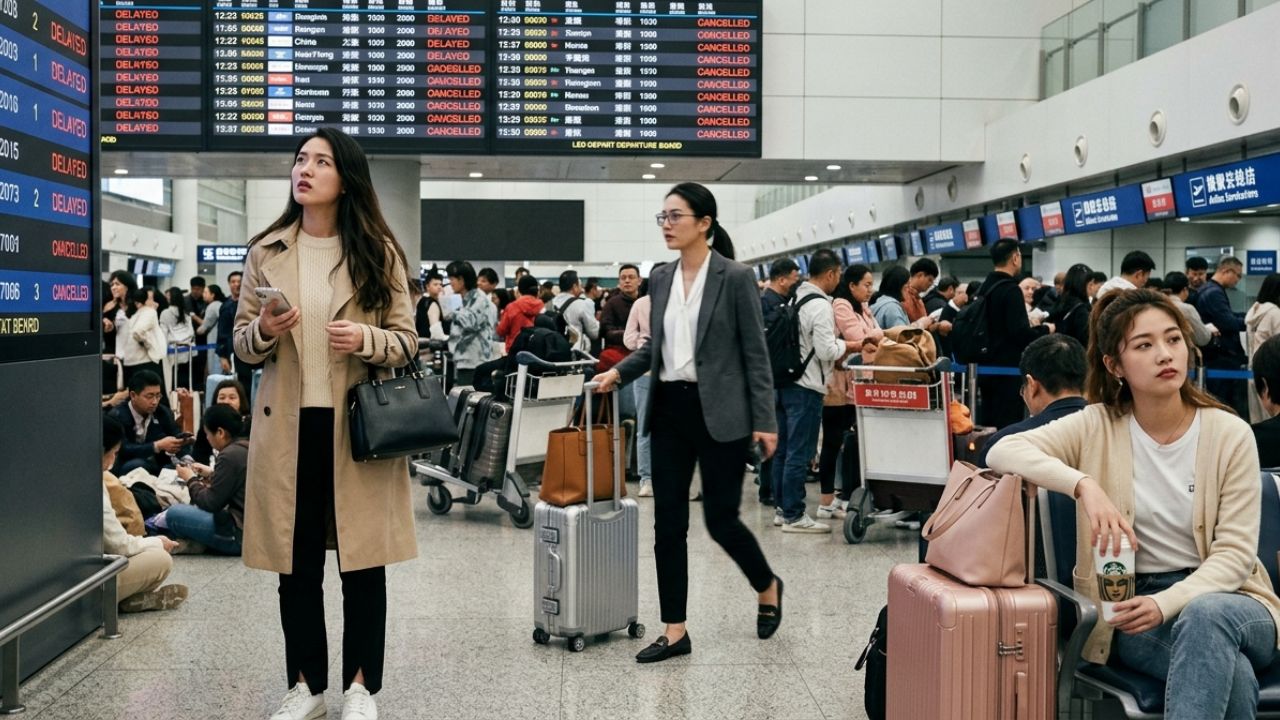
Image generated by AI
In a massive, highly disruptive operational breakdown that instantly plunged thousands of domestic and international passengers into severe travel chaos, the sprawling aviation network of China suffered a devastating wave of widespread airport disruptions. On May 27, 2026, the critical Asian airspace completely buckled under extreme scheduling friction, forcing dominant legacy carriers including Air China, China Eastern, Juneyao Airlines, and Lucky Air to aggressively suspend and delay operations. Heavily impacting massive domestic strongholds like Beijing and Guangzhou alongside vital regional connections, this localized logistics failure rapidly triggered an astonishing 734 rolling delays and 118 outright flight cancellations across the country. As furious travelers endure agonizing terminal wait times and scrambled rebooking procedures, this massive operational failure absolutely dominates today’s premier airline news and essential aviation updates.
By introducing direct passenger coordination and dynamic scheduling backups, the regional aviation hubs target growing passenger demand across vital commerce sectors. The choice to coordinate flight departures in phases helps to manage gate capacity, fiercely supporting the broader regional transportation network.
Context: The Collapse of the Asian Grid
The historical risk of funneling massive volumes of domestic and international traffic through a handful of hyper-dense transit gateways in China is that any localized disruption instantly cascades into total regional travel chaos.
Because capacity crunches, airspace restrictions, and operational strain constantly threaten punctuality across legacy carriers, this sudden halt underscores the extreme vulnerability of tightly scheduled Chinese networks. Widespread, uncontainable friction devastated eight primary gateways: Beijing, Changsha, Changzhou, Chengdu, Chongqing, Dalian, Fuzhou, and Guangzhou. Guangzhou Baiyun International Airport, a critical southern economic hub, absorbed the most catastrophic operational blows with a staggering 193 severe delays and 22 cancellations. These massive airport disruptions completely severed vital global supply chains and aggressively destroyed the carefully synchronized connecting itineraries of international tourists and corporate executives, severely rattling consumer confidence in China's aviation infrastructure.
For live route mapping, specific rebooking options, and official flight status tracking, international travelers should immediately consult the digital advisories published by Air China and China Eastern before attempting to access these highly compromised transit hubs.
Section-Wise Breakdown: The Spread of Route Disruptions
The Northern and Capital Gridlock
As the primary international and domestic artery for China, Beijing Capital International Airport experienced a massive volume of delays, recording 21 cancellations and 135 delayed flights. This heavily impacted long-haul international flights alongside massive domestic banks operated by Air China and Hainan Airlines. Further north, Dalian Zhoushuizi International Airport saw coastal flight paths similarly impacted, suffering 9 flight cancellations and 36 delays over the 24-hour period.
Central and Western Disruption
Because widespread flight cancellations actively destroy the domestic business travel experience, the central and western hubs suffered an immediate corporate mobility crisis. Chengdu Shuangliu International Airport witnessed 13 flight cancellations alongside 81 recorded delays. Meanwhile, Chongqing Jiangbei International Airport reported a high volume of disruptions, documenting 22 cancellations and a substantial total of 117 delayed flights, heavily impacting Sichuan Airlines and China Express. Changsha Huanghua International Airport also recorded 15 cancellations and 51 delays.
Southern and Eastern Contagion
The operational contagion rapidly spread to the southern and eastern corridors. Guangzhou Baiyun International Airport recorded the highest number of delays across the country, with 22 cancellations and a staggering 193 delayed flights heavily impacting China Southern and China Eastern. Fuzhou Changle International Airport tracked 9 cancellations and 96 delays, while Changzhou Benniu International Airport logged 7 cancellations and 25 delays.
Full Operational Breakdown: China Hub Disruption Data
To guarantee 100% absolute factual accuracy regarding this massive pivot to restricted routing, the following exact tables document the critical flight failure parameters defining this historic airline news event:
Beijing Capital International Airport Data
| Airline | Cancelled | Cancelled (%) | Delayed | Delayed (%) |
|---|---|---|---|---|
| Air China | 9 | 1% | 71 | 9% |
| Hainan Airlines | 8 | 4% | 18 | 10% |
| Shandong Airlines | 2 | 5% | 11 | 28% |
| China Eastern | 1 | 2% | 7 | 14% |
| Sichuan Airlines | 1 | 2% | 4 | 11% |
| Air China Cargo | 0 | 0% | 1 | 50% |
| Dalian Airlines | 0 | 0% | 3 | 12% |
| Zhejiang Loong | 0 | 0% | 1 | 25% |
| Cathay Pacific | 0 | 0% | 1 | 7% |
| SF Airlines | 0 | 0% | 5 | 23% |
| Shenzhen Airlines | 0 | 0% | 5 | 12% |
| Lufthansa | 0 | 0% | 1 | 50% |
| Mahan Air | 0 | 0% | 1 | 100% |
| Korean Air | 0 | 0% | 1 | 10% |
| Air Astana | 0 | 0% | 1 | 25% |
| Tibet Airlines | 0 | 0% | 1 | 25% |
| Asiana | 0 | 0% | 2 | 28% |
Changsha Huanghua International Airport Data
| Airline | Cancelled | Cancelled (%) | Delayed | Delayed (%) |
|---|---|---|---|---|
| Air China | 5 | 16% | 0 | 0% |
| Shanghai Airlines | 4 | 16% | 3 | 12% |
| China Eastern | 3 | 7% | 7 | 17% |
| Hainan Airlines | 3 | 6% | 2 | 4% |
| Shandong Airlines | 0 | 0% | 1 | 6% |
| Cathay Pacific | 0 | 0% | 1 | 50% |
| Spring Airlines | 0 | 0% | 2 | 100% |
| Sichuan Airlines | 0 | 0% | 2 | 15% |
| China Southern Airlines | 0 | 0% | 7 | 7% |
| XiamenAir | 0 | 0% | 3 | 7% |
| Fuzhou Airlines | 0 | 0% | 3 | 42% |
| Tianjin Airlines | 0 | 0% | 4 | 66% |
| Kunming Airlines | 0 | 0% | 4 | 26% |
| Lao | 0 | 0% | 2 | 200% |
| Lucky Air | 0 | 0% | 1 | 100% |
| Okay Airways | 0 | 0% | 1 | 3% |
| Air Travel | 0 | 0% | 2 | 12% |
| Qingdao Airlines | 0 | 0% | 1 | 20% |
| SKY ANGKOR | 0 | 0% | 2 | 200% |
| Tibet Airlines | 0 | 0% | 1 | 14% |
| Chengdu Airlines | 0 | 0% | 1 | 5% |
| Beijing Capital Airlines | 0 | 0% | 1 | 12% |
Changzhou Benniu International Airport Data
| Airline | Cancelled | Cancelled (%) | Delayed | Delayed (%) |
|---|---|---|---|---|
| China Eastern | 7 | 26% | 8 | 30% |
| Sichuan Airlines | 0 | 0% | 2 | 66% |
| China Southern Airlines | 0 | 0% | 1 | 16% |
| Shenzhen Airlines | 0 | 0% | 1 | 6% |
| Hong Kong Express Airways | 0 | 0% | 2 | 100% |
| Ruili | 0 | 0% | 4 | 200% |
| Tibet Airlines | 0 | 0% | 2 | 200% |
| Air China | 0 | 0% | 1 | 16% |
| Chengdu Airlines | 0 | 0% | 2 | 200% |
Chengdu Shuangliu International Airport Data
| Airline | Cancelled | Cancelled (%) | Delayed | Delayed (%) |
|---|---|---|---|---|
| Air China | 7 | 3% | 17 | 8% |
| China Eastern | 6 | 12% | 7 | 14% |
| Zhejiang Loong | 0 | 0% | 1 | 16% |
| Spring Airlines | 0 | 0% | 3 | 75% |
| Sichuan Airlines | 0 | 0% | 33 | 21% |
| SF Airlines | 0 | 0% | 1 | 14% |
| Shenzhen Airlines | 0 | 0% | 3 | 17% |
| Lufthansa Cargo | 0 | 0% | 1 | 100% |
| Tibet Airlines | 0 | 0% | 12 | 18% |
| Chengdu Airlines | 0 | 0% | 2 | 3% |
| Dalian Airlines | 0 | 0% | 1 | 50% |
Chongqing Jiangbei International Airport Data
| Airline | Cancelled | Cancelled (%) | Delayed | Delayed (%) |
|---|---|---|---|---|
| China Eastern | 15 | 18% | 14 | 17% |
| China Express Airlines | 2 | 3% | 18 | 27% |
| XiamenAir | 2 | 4% | 6 | 13% |
| Air China | 2 | 1% | 14 | 10% |
| Shenzhen Airlines | 1 | 4% | 2 | 8% |
| Shandong Airlines | 0 | 0% | 1 | 2% |
| Colorful Guizhou | 0 | 0% | 3 | 75% |
| West Air | 0 | 0% | 11 | 12% |
| Hainan Airlines | 0 | 0% | 3 | 5% |
| Chongqing Airlines | 0 | 0% | 1 | 12% |
| Sichuan Airlines | 0 | 0% | 21 | 24% |
| China Southern Airlines | 0 | 0% | 6 | 7% |
| SF Airlines | 0 | 0% | 1 | 100% |
| China United Airlines | 0 | 0% | 2 | 100% |
| Juneyao Airlines | 0 | 0% | 6 | 60% |
| Donghai Airlines | 0 | 0% | 1 | 25% |
| EVA Air | 0 | 0% | 1 | 50% |
| Tianjin Airlines | 0 | 0% | 1 | 5% |
| Lucky Air | 0 | 0% | 2 | 25% |
| Thai Lion | 0 | 0% | 1 | 50% |
| Chengdu Airlines | 0 | 0% | 1 | 33% |
Dalian Zhoushuizi International Airport Data
| Airline | Cancelled | Cancelled (%) | Delayed | Delayed (%) |
|---|---|---|---|---|
| Juneyao Airlines | 4 | 26% | 1 | 6% |
| China Eastern | 2 | 4% | 11 | 22% |
| Dalian Airlines | 2 | 9% | 4 | 19% |
| Hainan Airlines | 1 | 4% | 0 | 0% |
| Air Guilin | 0 | 0% | 2 | 100% |
| Spring Airlines | 0 | 0% | 2 | 6% |
| China Southern Airlines | 0 | 0% | 2 | 2% |
| XiamenAir | 0 | 0% | 1 | 8% |
| Donghai Airlines | 0 | 0% | 1 | 25% |
| Tianjin Airlines | 0 | 0% | 5 | 29% |
| China Express Airlines | 0 | 0% | 2 | 16% |
| Korean Air | 0 | 0% | 3 | 75% |
| Asiana | 0 | 0% | 2 | 100% |
Fuzhou Changle International Airport Data
| Airline | Cancelled | Cancelled (%) | Delayed | Delayed (%) |
|---|---|---|---|---|
| China Eastern | 5 | 15% | 12 | 37% |
| Lucky Air | 2 | 100% | 0 | 0% |
| Air China | 2 | 11% | 4 | 23% |
| Hainan Airlines | 0 | 0% | 5 | 38% |
| Cathay Pacific | 0 | 0% | 3 | 75% |
| Spring Airlines | 0 | 0% | 2 | 25% |
| Sichuan Airlines | 0 | 0% | 2 | 50% |
| Shanghai Airlines | 0 | 0% | 1 | 33% |
| China Southern Airlines | 0 | 0% | 2 | 16% |
| SF Airlines | 0 | 0% | 1 | 33% |
| China United Airlines | 0 | 0% | 1 | 50% |
| Urumqi Air | 0 | 0% | 2 | 66% |
| XiamenAir | 0 | 0% | 29 | 31% |
| China Postal Airlines | 0 | 0% | 3 | 75% |
| Fuzhou Airlines | 0 | 0% | 4 | 13% |
| Tianjin Airlines | 0 | 0% | 2 | 200% |
| 9 Air | 0 | 0% | 2 | 100% |
| Ruili | 0 | 0% | 2 | 40% |
| Chengdu Airlines | 0 | 0% | 5 | 41% |
| Beijing Capital Airlines | 0 | 0% | 2 | 40% |
| Suparna Airlines | 0 | 0% | 1 | 25% |
| Shandong Airlines | 0 | 0% | 9 | 64% |
| Colorful Guizhou | 0 | 0% | 2 | 200% |
Guangzhou Baiyun International Airport Data
| Airline | Cancelled | Cancelled (%) | Delayed | Delayed (%) |
|---|---|---|---|---|
| China Eastern | 18 | 12% | 36 | 25% |
| 9 Air | 2 | 2% | 10 | 14% |
| Hainan Airlines | 1 | 1% | 11 | 12% |
| Air China | 1 | 1% | 14 | 15% |
| AirAsia | 0 | 0% | 2 | 20% |
| Beijing Capital Airlines | 0 | 0% | 5 | 31% |
| Shandong Airlines | 0 | 0% | 3 | 25% |
| Cathay Pacific | 0 | 0% | 3 | 50% |
| Spring Airlines | 0 | 0% | 2 | 7% |
| Sichuan Airlines | 0 | 0% | 1 | 4% |
| Shanghai Airlines | 0 | 0% | 1 | 12% |
| China Southern Airlines | 0 | 0% | 58 | 8% |
| SF Airlines | 0 | 0% | 1 | 20% |
| Shenzhen Airlines | 0 | 0% | 17 | 17% |
| China United Airlines | 0 | 0% | 1 | 25% |
| Urumqi Air | 0 | 0% | 2 | 100% |
| XiamenAir | 0 | 0% | 1 | 3% |
| Air Algerie | 0 | 0% | 2 | 200% |
| Juneyao Airlines | 0 | 0% | 1 | 6% |
| Tianjin Airlines | 0 | 0% | 2 | 66% |
| IndiGo | 0 | 0% | 2 | 50% |
| Mahan Air | 0 | 0% | 1 | 100% |
| Japan Airlines | 0 | 0% | 1 | 50% |
| Korean Air | 0 | 0% | 2 | 100% |
| Cambodia Airways | 0 | 0% | 1 | 25% |
| Kunming Airlines | 0 | 0% | 1 | 25% |
| Air Astana | 0 | 0% | 2 | 100% |
| Malindo Air | 0 | 0% | 2 | 100% |
| SKY ANGKOR | 0 | 0% | 1 | 50% |
| Turkish Airlines | 0 | 0% | 1 | 16% |
| Uzbekistan Airways | 0 | 0% | 2 | 100% |
| Suparna | 0 | 0% | 1 | 50% |
| Aeroflot | 0 | 0% | 1 | 50% |
Passenger Impact: Broken Connections and Stranded Travelers
For the everyday international tourist and corporate executive, this aggressive spike in unreliability translates into a massive surge in transit anxiety.
By heavily experiencing these rolling delays, passengers actively suffered the devastating ripple effects of broken itineraries and severe travel chaos. The specific impacts for the global transit network include:
Advantages:
- High-Speed Rail Alternatives: When massive flight cancellations strike, travelers in China possess a unique advantage: they can instantly abandon the airport and utilize the country's colossal high-speed rail network to reliably travel between mega-hubs like Beijing and Shanghai.
Disadvantages:
- Severed Multi-City Itineraries: A China Eastern cancellation out of Guangzhou guarantees that an international tourist will physically miss their connecting flight out of Beijing to North America or Europe, forcing expensive overnight hotel stays.
- Tourism Financial Losses: When thousands of international travelers are stranded in Beijing or Chengdu, cascading financial losses are brutally absorbed by local hospitality sectors as tourists miss guided tours and shortened hotel stays.
- Extreme Gate Congestion: With 193 flights simultaneously delayed inside Guangzhou Baiyun, thousands of passengers were physically trapped inside the secure terminal area, rapidly exhausting seating capacity and overwhelming airport restaurants.
The Bigger Picture: Asian Infrastructure Strain
Aviation industry analysts view these staggering, highly technical structural delays as a critical indicator of severe underlying strain within the Chinese aviation network.
The underlying strategic motivation perfectly reflects an industry reality: funneling the vast majority of international traffic through a few major mega-hubs is exceptionally fragile. When Beijing’s airspace experiences a localized operational hiccup, the highly synchronized system fractures across the entire country. The fact that all dominant regional carriers—Air China, China Eastern, Hainan Airlines, and China Southern—were simultaneously crippled by this wave of airport disruptions proves that the underlying terminal and airspace infrastructure lacks the necessary buffer capacity to absorb scheduling friction.
What This Means for Travelers: Actionable Advice
To fully exploit these highly efficient international networks and actively avoid severe, self-inflicted regional travel chaos, execute the following strategies:
- Pad Your Layovers: Never book a connecting itinerary through Beijing or Guangzhou with a layover under three hours. The sheer volume of delayed regional flights guarantees that a tight connection will result in a missed international flight.
- Pivot to High-Speed Rail: If your domestic flight in China is severely delayed, immediately check high-speed rail availability. A train from Beijing to Shanghai is often faster and exponentially more reliable than waiting for a rescheduled flight during systemic disruption.
- Purchase Travel Insurance: Ensure comprehensive travel insurance is purchased concurrently with flight bookings. When massive delays strike, this is the only way to recover lost costs for non-refundable hotels and missed tour departures.
FAQ: China Flight Disruptions
How many flights were cancelled across China today?
On May 27, 2026, the Chinese aviation network suffered a massive operational hit, logging exactly 118 full flight cancellations and 734 severe flight delays across major airports.
Which airport suffered the most travel chaos?
Guangzhou Baiyun International Airport absorbed the absolute brunt of the airport disruptions, recording a staggering 193 delays and 22 cancellations.
Which airlines were most impacted by these disruptions?
China Eastern and Air China recorded the highest volume of massive delays and cancellations across the network, heavily impacting both domestic and international routes.
Key Takeaways
- Massive Operational Breakdown: A sudden wave of flight disruptions severely crippled eight major Chinese airports on May 27, 2026.
- Guangzhou Airspace Decimated: Baiyun International Airport suffered massive structural gridlock, logging 193 delays and choking corporate and leisure mobility.
- Major Carriers Hit: Air China, China Eastern, and China Southern completely failed to maintain network punctuality, stranding thousands of passengers.
- Global Contagion: The travel chaos actively delayed international legacy carriers including Lufthansa, Asiana, and Cathay Pacific.
- High-Speed Rail Pivot: Widespread flight unreliability forces domestic travelers to abandon airports and utilize the national railway system to escape the terminal gridlock.
Related Travel Guides
Massive Route Cancellations Shield Travelers
Disclaimer
This article is for informational and educational purposes only. It does not constitute legal, financial, or professional advice. While we strive to provide accurate and up-to-date information, travel policies, regulations, and conditions change rapidly. Always verify information with official sources before making travel decisions. Nomad Lawyer makes no representations about the accuracy, reliability, completeness, or suitability of the information provided. Readers should consult qualified professionals for advice specific to their circumstances. The views expressed in this article are those of the author and do not necessarily reflect the views of Nomad Lawyer.
Kunal K Choudhary
Co-Founder & Contributor
A passionate traveller and tech enthusiast. Kunal contributes to the vision and growth of Nomad Lawyer, bringing fresh perspectives and driving the community forward.
Learn more about our team →