
Southeast Asia Tourism Crisis: Wildfires and Transboundary Haze Threaten Regional Travel Resilience
Wildfires in Indonesia and Malaysia are triggering hazardous haze, disrupting Borneo travel and threatening Southeast Asia's nature-based tourism sector.
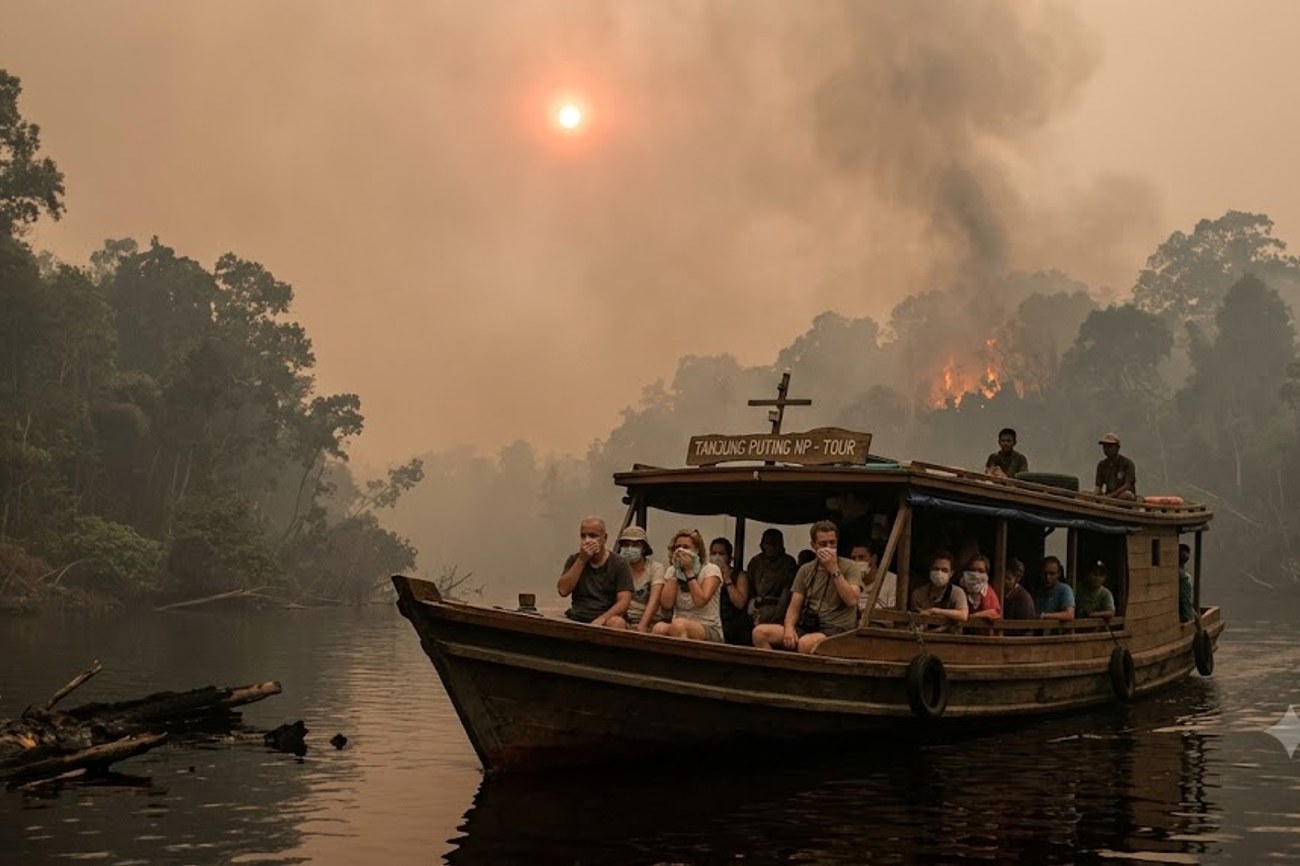
Image generated by AI
[JAKARTA/KUALA LUMPUR, September 7, 2026] — The tourism sectors of Malaysia and Indonesia are currently facing a systemic threat as an escalating wildfire emergency triggers widespread haze, challenging the resilience of travel infrastructure across Southeast Asia. What began as an environmental disaster has evolved into a significant economic hurdle, with heavy smog and ecological degradation deterring international visitors from exploring the region's primary natural attractions.
The 2026 crisis is being fueled by a combination of extreme dry conditions, the combustion of carbon-rich peatlands, and seasonal weather patterns that push smoke across international borders. The most acute impacts are concentrated in Borneo and Sumatra, where Indonesian forest fires have generated massive plumes of haze that penetrate deep into neighboring territories, affecting both local communities and the tourism-dependent economy.
In Malaysia, the crisis is being fought on two fronts. While the country manages transboundary haze from Indonesia, domestic incidents are adding to the pressure. On September 6, 2026, a wildfire was reported at Bukit Pelali in Pengerang, Johor, signaling an increase in local vulnerability during the dry season. Simultaneously, the state of Sarawak has endured some of the most severe pollution levels in the region, with hazardous air quality directly impacting daily operations and visitor arrivals.
This environmental volatility is forcing a paradigm shift for Southeast Asian destinations. Regions that have traditionally marketed their rainforests, endemic wildlife, and adventure tourism are now required to integrate climate resilience into their core strategic planning to survive increasingly frequent atmospheric disruptions.
Indonesian Forest Destinations Under Severe Pressure
Indonesia serves as the epicenter of the 2026 wildfire emergency, with devastating blazes sweeping through Kalimantan and Sumatra. The nation's biodiversity-rich landscapes and tropical peatlands have become highly combustible due to prolonged drought, turning these ecological assets into liabilities.
Because Indonesia's tourism brand is inextricably linked to its natural identity—specifically its volcanic landscapes, national parks, and rainforests—the smoke has a direct impact on visitor behavior. When visibility drops and health warnings are issued, international travelers are increasingly canceling or postponing trips involving jungle trekking and wildlife observation.
West Kalimantan has been particularly hard hit, with fires encroaching upon critical biodiversity zones. This includes vital orangutan habitats, where smoke and flames threaten not only the wildlife but the eco-tourism operators who depend on these species for their livelihood.
The crisis has also intersected with Indonesia's ambitious infrastructure goals. Wildfires have been reported near Nusantara, the planned new capital city in eastern Borneo. To protect this high-priority development zone, authorities have deployed aggressive firefighting measures, including cloud-seeding and water-bombing operations. The proximity of these fires to a major national project underscores the difficulty of maintaining urban development within a landscape prone to seasonal combustion.
Haze Disrupts Malaysian Borneo and Sarawak Tourism
Malaysia is experiencing the secondary effects of the regional crisis, as smoke from Indonesian Borneo drifts across the border, severely impacting the air quality of East Malaysia.
Sarawak has emerged as the primary casualty of this transboundary haze. The state’s economy relies heavily on its rainforests and cultural outdoor experiences, both of which are rendered inaccessible or unattractive when the Air Pollution Index (API) spikes. The Serian district in Sarawak recently saw pollution levels reach "extremely hazardous" thresholds, prompting the Malaysian government to declare a state of emergency.
While the emergency status was eventually lifted as air quality fluctuated, the psychological and economic damage to the tourism sector persists. The specific disruptions include:
- Declining Outdoor Appeal: A sharp drop in the attractiveness of sightseeing and nature walks.
- Visitor Hesitancy: Reduced confidence among tourists booking nature-based holidays.
- Event Cancellations: Disruption of cultural festivals and open-air public events.
- Health Risks: Increased medical concerns for international travelers, particularly those with respiratory vulnerabilities.
- Revenue Loss: Significant financial pressure on small-scale tourism businesses that rely on spontaneous, walk-in visitors.
This situation highlights a critical vulnerability: tourism infrastructure—such as hotels and airports—may remain physically intact, but the "experience product" is destroyed by poor visibility and unhealthy air.
Southern Malaysia's Vulnerability in Johor
The fire reported at Bukit Pelali in Pengerang, Johor, introduces a new layer of risk to the southern tourism corridor. Johor is a strategic hub for coastal resorts and cross-border travel between Malaysia and Singapore.
While the exact acreage burned at Bukit Pelali is still being assessed, the incident serves as a warning that southern Malaysia is no longer immune to the fire risks typically associated with the islands of Borneo and Sumatra. Localized wildfires in this region threaten to reduce the quality of outdoor visitor experiences and erode confidence in the safety of nature-based attractions in the south.
Singapore’s Exposure to Transboundary Haze
Although Singapore does not face domestic wildfires, its tourism industry remains highly susceptible to the smoke originating from Indonesia. As a city-state that promotes its gardens, waterfront promenades, and urban walking tours, Singapore's "outdoor" value proposition is directly tied to air quality. When the haze settles over the city, the appeal of its world-renowned green spaces diminishes, impacting the overall visitor experience.
Why This Matters: The Shift Toward Climate-Resilient Travel
For the modern traveler, these events mean that "peak season" in Southeast Asia can no longer be determined solely by rainfall. The emergence of "haze season" as a predictable threat means travelers must now check Air Pollution Indices (API) with the same frequency they check weather forecasts.
From a logistical and legal standpoint, this creates a complex environment for travel insurance and tour operators. As wildfires become a recurring seasonal event, the industry must move away from reactive crisis management and toward proactive resilience. This could include diversifying tourism offerings to include more indoor, climate-controlled cultural experiences or investing in advanced early-warning systems for air quality.
The 2026 crisis proves that environmental health is the primary driver of tourism viability in the region. If the "green" image of Borneo and Sumatra is replaced by images of grey skies and scorched earth, the long-term brand equity of Southeast Asian tourism will suffer a blow that takes decades to repair.
Related Travel Guides
Disclaimer
This article is for informational and educational purposes only. It does not constitute legal, financial, or professional advice. While we strive to provide accurate and up-to-date information, travel policies, regulations, and conditions change rapidly. Always verify information with official sources before making travel decisions. Nomad Lawyer makes no representations about the accuracy, reliability, completeness, or suitability of the information provided. Readers should consult qualified professionals for advice specific to their circumstances. The views expressed in this article are those of the author and do not necessarily reflect the views of Nomad Lawyer.