
South Dakota Tourism Surge Offsets 1.6% GDP Decline with Massive Visitor Spending in 2026
Tourism has emerged as a critical economic shock absorber for South Dakota, neutralizing a 1.6% Q1 GDP contraction through billions in visitor spending across the Black Hills and Badlands.

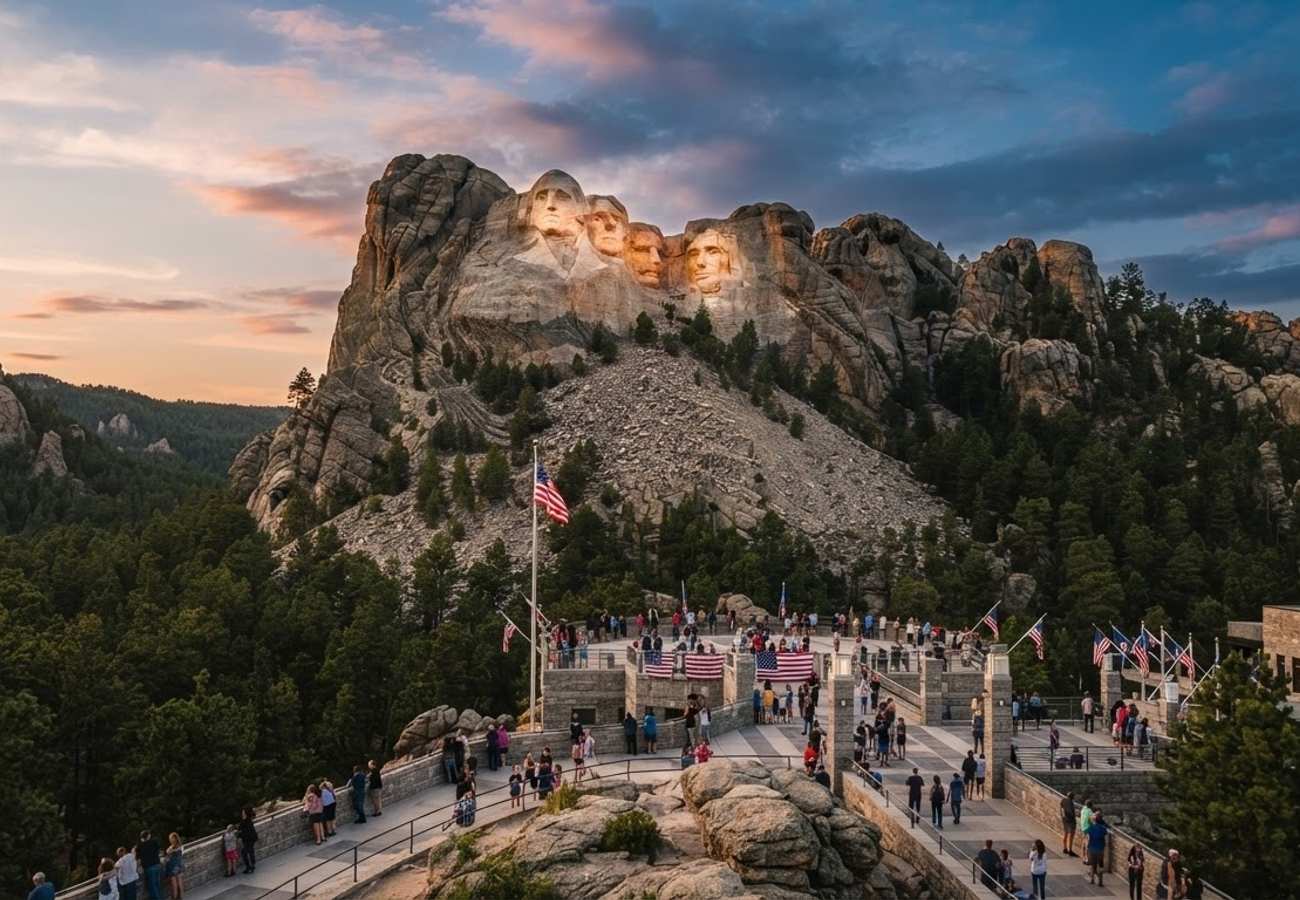
Image generated by AI
South Dakota has successfully leveraged a massive surge in tourism to neutralize a precarious economic start to 2026, transforming visitor expenditures into a vital fiscal safety net for rural communities. Following a contraction in the agricultural sector, the influx of travelers to the Black Hills and Badlands has stabilized the state's GDP and provided significant tax relief to local residents.
The state's economic trajectory in 2026 serves as a case study in sectoral resilience. While traditional industries faced headwinds, the service and hospitality sectors capitalized on a high-demand summer season to rebalance the regional economy. This shift underscores the growing importance of the "travel economy" as a hedge against commodity price volatility in the American Midwest.
Tourism Reverses Agricultural GDP Contraction
The year 2026 began with significant financial strain for the Mount Rushmore State. Data from the U.S. Bureau of Economic Analysis (BEA) revealed a 1.6% annualized contraction in real Gross Domestic Product (GDP) during the first quarter. This downturn was primarily driven by severe economic pressures within the forestry, hunting, and agricultural sectors, which created a prolonged drag on rural hubs ranging from Mitchell to Aberdeen.
However, the economic narrative shifted as the state entered the second quarter. As travel corridors to Custer State Park and Badlands National Park reopened for the season, consumer spending saw a nationwide acceleration of 4.2% (SAAR) in Q2 2026. The arrival of out-of-state visitors provided an immediate cash injection into local gas stations, hotels, and dining establishments, effectively offsetting the losses incurred by the agricultural slump.
Early Momentum in Minnehaha and Pennington Counties
The recovery began in earnest during April 2026, which serves as the critical "shoulder season" for South Dakota. This period allows local businesses to build liquidity before the peak summer rush. In April alone, taxable sales receipts across the state reached $3.08 billion.
This early surge was particularly evident in commercial centers such as Rapid City (Pennington County) and Sioux Falls (Minnehaha County). Under the state's 4.2% base sales tax, these hubs captured significant revenue from early road-trippers utilizing Interstate 90 and visitors to the Great Plains Zoo. By securing these funds early, municipal budgets were better shielded from the broader inflationary pressures affecting the national economy.
Peak Summer Output Across the West River Region
By June 2026, travel activity reached a fever pitch, pushing gross sales activity beyond historical benchmarks to exceed $2.73 billion. The draw of Spearfish Canyon and Mount Rushmore National Memorial attracted hundreds of thousands of vacationers, triggering a spike in Municipal Gross Receipts Tax (MGRT) collections.
This activity was most pronounced in Lawrence County, where gaming revenues in historic Deadwood combined with general tourism to boost state GDP. The synergy between private domestic consumer spending—which rose 4.2% in the second quarter—and the state's service-producing industries created a rapid expansion of economic output across both the east and west river regions.
July 2026 Records Highest Annual GDP Contribution
July 2026 stands as the most economically significant month of the year for South Dakota. Sales and use tax collections surged by $17.7 million, marking a 12.8% year-over-year increase. This figure exceeded official legislative revenue estimates by $11.4 million.
Several factors converged to create this peak:
- The July 4th Holiday: A massive surge in short-term rentals and dining.
- Sturgis Motorcycle Rally: Early arrivals in Meade County pushed lodging occupancy to record levels.
- Iconic Landmarks: Heavy traffic at the Crazy Horse Memorial, Wall Drug, and the Deadwood Historic District.
Strategic Tax Framework Funding Infrastructure
South Dakota employs a sophisticated, multi-tiered tax system to ensure that temporary tourism spikes result in permanent infrastructure improvements in cities like Sioux Falls and Rapid City.
| Tax Type | Rate | Purpose |
|---|---|---|
| State Base Sales Tax | 4.2% | General state funding and public services |
| Municipal Gross Receipts Tax (MGRT) | Up to 1.0% | Local municipal improvements |
| Dedicated Tourism Tax | 1.5% | Travel South Dakota marketing and promotion |
These mechanisms generate approximately $406.1 million in annual state and local tax revenues, representing 16.5% of all state sales tax collections. The dedicated 1.5% Tourism Tax is particularly vital, as it funds the marketing required to attract high-spending international and domestic travelers without increasing the tax burden on local residents.
Distribution of Visitor Capital Across Hospitality Sectors
The economic impact of tourism is distributed evenly across various business types, ensuring that wealth reaches independent operators and large corporations alike.
- Dining and Beverage: This sector leads with $1.14 billion in revenue (22% of total spend), concentrated in hubs like Spearfish and Deadwood.
- Transportation: Ground and air travel routes generated $1.09 billion (21% of total spend).
- Retail Shopping: Roadside destinations, most notably Wall, drove $1.07 billion in activity (21% of total spend).
- Lodging: Hotels and short-term rentals in Hill City and Keystone accumulated $1.02 billion (20% of total spend), showing a 5.4% year-over-year growth rate.
- Recreation: Guided tours and outdoor activities contributed $776 million (15% of total spend).
Workforce Stabilization and Household Tax Relief
The travel economy does more than boost GDP; it acts as a primary employment engine. Visitor spending supports 59,145 total jobs, which is roughly 8.7% of the state's entire workforce. Of these, 40,951 are direct hospitality roles. This network injects $2.3 billion in direct annual household income into families across Minnehaha, Lawrence, and Pennington counties.
From a fiscal perspective, the "export" of tourism services allows out-of-state visitors to subsidize public infrastructure. By paying sales and lodging taxes, tourists reduce the financial burden on permanent residents. Industry data indicates that tourism tax collections save the average South Dakota household approximately $1,121 per year in local taxes.
Why This Matters For the resident of South Dakota, the tourism surge is not merely about crowded roads in July; it is a direct financial subsidy. When agricultural yields dip or commodity prices crash, the "visitor dollar" prevents drastic cuts to local schools and roads. From a logistical standpoint, the state's ability to convert 1.5% of every transaction into a marketing fund creates a self-sustaining loop of growth. For the traveler, this investment manifests as better-maintained parks and more diverse hospitality options, ensuring the rugged charm of the Badlands remains accessible without sacrificing the quality of life for the locals who call it home.
The Mount Rushmore State has proven that a diversified economy, anchored by strategic tourism, can weather almost any agricultural storm.
Related Travel Guides
Disclaimer
This article is for informational and educational purposes only. It does not constitute legal, financial, or professional advice. While we strive to provide accurate and up-to-date information, travel policies, regulations, and conditions change rapidly. Always verify information with official sources before making travel decisions. Nomad Lawyer makes no representations about the accuracy, reliability, completeness, or suitability of the information provided. Readers should consult qualified professionals for advice specific to their circumstances. The views expressed in this article are those of the author and do not necessarily reflect the views of Nomad Lawyer.
Preeti Gunjan
Contributor & Community Manager
A passionate traveller and community builder. Preeti helps grow the Nomad Lawyer community, fostering engagement and bringing the reader experience to life.
Learn more about our team →