South America Tourist Attraction Restrictions: Machu Picchu, Torres del Paine, and Christ the Redeemer Tighten Access for 2026-2027

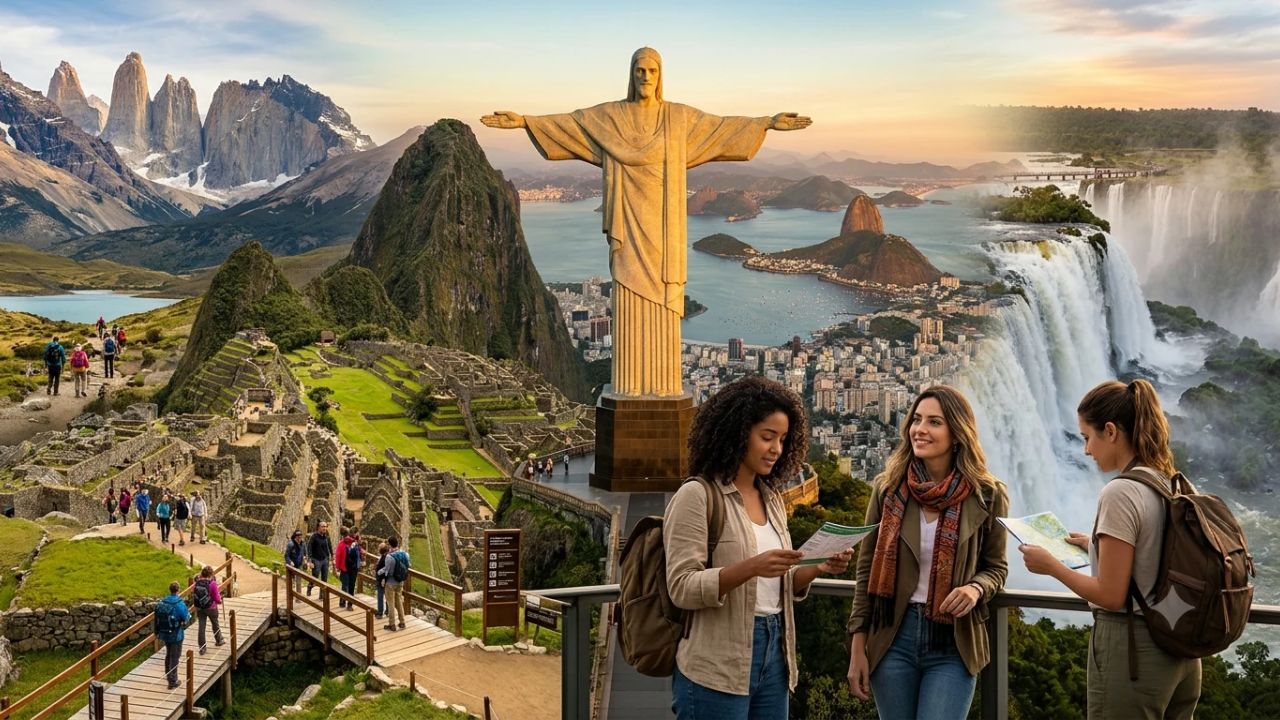
South American travel itineraries face sweeping logistical recalibrations heading into 2027, as landmark destinations across Peru, Chile, Brazil, and Argentina enforce strict daily visitor quotas, extensive infrastructure overhauls, and seasonal transport suspensions to safeguard fragile heritage ecosystems.
International holidaymakers organizing journeys across the continent must navigate an increasingly complex regulatory landscape. In Peru, the Ministry of Culture and park authorities enforce tiered daily visitor limits at Machu Picchu alongside rigid circuit pathways, while the historic Inca Trail prepares for its mandatory annual maintenance closure in February. In Chilean Patagonia, conservation authorities at Torres del Paine National Park strictly cap hikers on the demanding O Circuit at 100 individuals per day, compounded by a major airfield runway maintenance program at Puerto Natales that will suspend weekday commercial flights during the peak 2027 southern summer. Simultaneously, Rio de Janeiro’s iconic Christ the Redeemer monument faces a reported 50% capacity reduction during infrastructure upgrades extending through May 2027, while cross-border visitors at Iguazú Falls encounter facility renovations and tight binational transit regulations.
These interlocking measures underscore an operational reality for international tourists: holding confirmed long-haul flights and hotel reservations no longer guarantees entrance to South America’s premier attractions. Travelers embarking on multi-country itineraries must sequence their bookings with precision, securing individual heritage tickets, trekking permits, and park accommodations months in advance to avoid costly itinerary disruptions.
The New Realities of South American Travel: Conservation, Capacity Caps, and Infrastructure Resets
For decades, South America’s marquee attractions operated largely on open-access tourism models. However, severe environmental erosion, over-tourism bottlenecks, and changing UNESCO World Heritage preservation mandates have prompted authorities to institute carrying-capacity thresholds.
The primary operational restrictions affecting South American travel between late 2026 and mid-2027 reflect a coordinated effort to balance visitor revenue with ecological and structural preservation:
SOUTH AMERICA TOURIST RESTRICTIONS MASTER SUMMARY (2026-2027)
| Entity / Route | Metrics | Operational Status |
|---|---|---|
| Destination & Country | Nature of Restriction | Operating Window & Quota |
| Machu Picchu, Peru | Seasonal daily visitor limits | 5,600 peak season / 4,500 low season |
| Inca Trail, Peru | Annual environmental closure | Entire month of February |
| Inca Trail Permits | Strict payment & registration | 15-minute payment window for 2027 |
| Torres del Paine, CL | O Circuit daily trekker cap | Strictly 100 hikers/day (counter-CW) |
| Puerto Natales, CL | Airfield runway maintenance | Jan-Mar 2027 (Weekend flights only) |
| Christ the Redeemer | Infrastructure renovation | ~50% capacity cut through May 2027 |
| Iguazú Falls, BR | Porto Canoas restaurant upgrade | Dining closure through February 2027 |
| Chilean Borders | SAG agricultural declarations | Mandatory inspection; zero tolerance |
These management frameworks mean that visitors cannot treat major archaeological parks or wilderness circuits as flexible day trips. Every component—from admission time slots to designated campsite reservations—must be integrated into a verified booking chain before international travel commences.
Peru's Heritage Fortress: Machu Picchu's Strict Circuit System and Seasonal Quotas
Machu Picchu stands as South America’s most recognizable archaeological monument, but gaining entry requires adhering to an intricate system of capacity limits and regulated sightseeing circuits administered by Peru's Ministry of Culture.
MACHU PICCHU DAILY VISITOR CAPACITY THRESHOLDS
Peak Season (High Demand) : [========================================] 5,600 Visitors / Day
Low Season (Standard)     : [================================] 4,500 Visitors / Day (-19.6%)
Daily Capacity Difference : 1,100 Fewer Daily Admissions During Low-Demand Periods
The Seasonal Visitor Quota Differential
To mitigate structural wear on ancient Incan stone terraces, authorities enforce a two-tier admission system:
- Peak Season Ceiling (Up to 5,600 Visitors/Day): Implemented during high-demand holiday windows, European and North American summer breaks, and major national festive weeks.
- Regular Season Ceiling (4,500 Visitors/Day): Applied across lower-demand calendar blocks. This 19.6% reduction eliminates 1,100 admission slots daily, causing popular morning departure times to sell out weeks or months ahead of schedule.
Deconstructing the Designated Circuit System
Entrance tickets to Machu Picchu are no longer general admission passes that permit unrestricted roaming across the citadel. Instead, tickets are strictly tied to specific, numbered circuit routes designed for unidirectional crowd flow:
- Circuit 1 (Panoramic Routes): Concentrates on the upper terraces, offering the iconic postcard panoramic view of the citadel and access to the upper agricultural sector. This circuit is favored by photography enthusiasts and travelers undertaking shorter walking routes, but it restricts access to the intimate interior residential sectors.
- Circuit 2 (Classic Citadel Circuit): The most comprehensive and sought-after route. It encompasses the classic panoramic viewpoint from the Guardian’s House, followed by an in-depth walking tour through the Main Plaza, Temple of the Sun, Sacred Rock, and urban sectors. Due to heavy demand, Circuit 2 tickets consistently sell out fastest.
- Circuit 3 (Royalty & Lower Agricultural Sector): Tailored for visitors with mobility considerations or those arriving via certain trekking packages. It bypasses the steep climb to the upper terraces, leading directly through the lower agricultural terraces, the Temple of the Condor, and the House of the Inka.
Travelers who book without consulting route maps frequently arrive expecting the classic panoramic view, only to discover their purchased ticket restricts them entirely to the lower archaeological sectors. Selecting the appropriate circuit during the initial booking phase is essential.
The Inca Trail Bottleneck: February Maintenance Closures and the 15-Minute Booking Window
The classic four-day Inca Trail to Machu Picchu remains one of the world's premier historical treks. However, its operation is governed by strict conservation regulations enforced by the National Service of Protected Natural Areas (SERNANP).
INCA TRAIL REGULATORY PROTOCOLS
+-------------------------------------------------------------------------+
|  1. ANNUAL FEBRUARY CLOSURE                                             |
|     - Complete suspension of all commercial trekking during February    |
|     - Trail maintenance, drainage clearance, and campsite restoration   |
|     - Coincides with peak Andean rainy season                           |
+-------------------------------------------------------------------------+
|  2. INDEPENDENT TICKET DECOUPLING                                       |
|     - Trekking permits do not automatically include all citadel routes  |
|     - Licensed operators must secure coordinated Machu Picchu tickets   |
+-------------------------------------------------------------------------+
|  3. THE 15-MINUTE PAYMENT WINDOW (2027 PERMIT SALES)                    |
|     - Commercial operators face rapid payment cutoffs upon reservation  |
|     - Non-transferable permits; zero tolerance for name/passport typos  |
+-------------------------------------------------------------------------+
The Mandatory February Maintenance Suspension
Every year throughout the entire month of February, the Inca Trail is completely closed to all commercial trekking groups and porters. This closure allows park rangers and conservation teams to repair stone stairways, clear drainage culverts, and rehabilitate heavily used campsites. The suspension coincides with the height of the Andean wet season, when heavy rainfall creates elevated mudslide risks along mountain passes. Travelers planning trips during February must pivot to alternative routes—such as the Salkantay Trek or the Lares Route—or travel directly to Aguas Calientes via the PeruRail or Inca Rail train networks.
Strict 2027 Booking Deadlines
For the 2027 permit release cycle, licensed tour operators face rigorous booking constraints:
- 15-Minute Payment Window: Upon reserving trail permit quotas on the government portal, operators have an exceptionally narrow 15-minute window to finalize digital payment. Any failure to process within this window results in the immediate cancellation and release of reserved slots.
- Zero Modification Flexibility: Trekking permits are non-refundable, non-changeable, and non-transferable. A minor typographical error in a traveler’s passport number or full legal name can result in park authorities denying entry at the Km 82 trailhead checkpoint.
Chilean Patagonia Under Pressure: Torres del Paine's O Circuit and Puerto Natales Airfield Closure
In southern Chile, the dramatic granite massifs and glacial valleys of Torres del Paine National Park attract global adventurers. However, conservation authorities have implemented rigid carrying-capacity controls to protect sub-polar steppe and fragile alpine ecosystems.
TORRES DEL PAINE: O CIRCUIT (CIRCUITO MACIZO PAINE) CONTROLS
Daily Hiker Limit    : [====================] Exactly 100 Hikers / Day
Trail Direction      : Strict Counter-Clockwise Mandatory Flow
Checkpoint Control   : Mandatory Validation at Guardería Coirón
Accommodation Rule   : 100% Pre-Booked Campsite/Refugio Mandate Prior to Entry
The 100-Hiker Daily Limit on the O Circuit
While the popular W Trek accommodates higher visitor volumes along the southern edge of the park, the full 130-kilometer O Circuit (Circuito Macizo Paine) circumnavigates the entire Paine massif through remote northern wilderness:
- Daily Quota of 100 Trekkers: National forestry corporation CONAF caps departures onto the O Circuit at exactly 100 hikers per day.
- Strict Directional Flow: To prevent trail erosion and campsite congestion, all hikers must travel in a strict counter-clockwise direction. Backtracking is prohibited.
- Ranger Checkpoints: Hikers must register at mandatory checkpoints such as Guardería Coirón, where rangers verify hiker permits and confirm advance reservations for upcoming overnight stops.
- Mandatory Accommodation Booking: Hikers are legally barred from entering the O Circuit without confirmed, pre-paid reservations for every single designated campsite or refugio along their planned timeline. Dispersed wild camping is illegal and punishable by immediate park expulsion and heavy fines.
The 2027 Puerto Natales Airfield Runway Maintenance Crisis
For travelers targeting Chilean Patagonia in early 2027, transportation logistics face an unexpected disruption at Teniente Julio Gallardo Airport (PNT) in Puerto Natales—the primary aviation gateway to Torres del Paine:
PUERTO NATALES AIRFIELD (PNT) RUNWAY CLOSURE SCHEDULE (2027)
January 2027       : Flights Operate FRI, SAT, SUN Only (Airfield Closed 4 Days/Week)
February-March 2027: Flights Operate SAT & SUN Only (Airfield Closed 5 Days/Week)
Alternative Hub    : Punta Arenas (PUQ) + 3 to 4 Hour Overland Transit
According to official directives from Chile’s civil aeronautics authority:
- January 2027 Restrictions: Runway maintenance will limit commercial airline flights (operated by LATAM and Sky Airline) exclusively to Fridays, Saturdays, and Sundays. The airport will be closed to commercial traffic Monday through Thursday.
- February and March 2027 Restrictions: Airfield operations will contract further, permitting commercial flights only on Saturdays and Sundays. The airport will remain completely closed to passenger flights five days per week.
- The Overland Alternative via Punta Arenas: Travelers holding weekday trekking permits must reroute flights to Presidente Carlos Ibáñez del Campo Airport (PUQ) in Punta Arenas. From Punta Arenas, travelers must arrange a three- to four-hour bus or private vehicle transfer along Route 9 to reach Puerto Natales, followed by another two-hour transfer into the national park.
- Local Roadworks: Regional transit delays are further compounded by ongoing road maintenance near the Laguna Amarga entrance, requiring additional travel buffers.
Brazil's Monumental Modernization: Christ the Redeemer's 50% Capacity Reduction
Overlooking Rio de Janeiro from the summit of Mount Corcovado, the Christ the Redeemer statue is preparing for an extensive infrastructure and accessibility renovation that will significantly constrain daily tourist footfall.
CHRIST THE REDEEMER ACCESS & CAPACITY PROFILE (THROUGH MAY 2027)
Operating Status        : Open via Designated Safety Corridors
Reported Capacity Cut   : Up to 50% Reduction in Daily Visitor Volume
Scheduled Window        : Active Through May 21, 2027
Primary Bottleneck      : Trem do Corcovado Cogwheel Train & Official Vans
Navigating the Infrastructure Upgrade
To modernize visitor pathways, upgrade escalator and elevator systems, and reinforce structural observation decks, park management has enacted phased operational controls:
- 50% Reduction in Daily Admissions: Through May 21, 2027, daily visitor capacity is expected to contract by approximately 50% to accommodate construction scaffolding and maintain safety buffers.
- Preserved Access Routes: The monument remains accessible, but hourly entry allocations are strictly limited.
- Transport Bottlenecks: Official transport modes—including the historic Trem do Corcovado cogwheel railway departing from Cosme Velho and authorized Paineiras Corcovado shuttle vans—are operating with reduced hourly ticket allocations.
- Early Sellouts: Peak morning and sunset time slots sell out weeks in advance. Independent travelers without pre-booked tickets face long wait times or complete denial of entry at transport departure stations.
Iguazú Falls Facility Upgrades: Navigating Cross-Border Binational Operations
The thundering cataracts of Iguazú Falls, spanning the border between Argentina and Brazil, represent one of the world's most spectacular natural spectacles. While both national parks remain open to international visitors, specific facility upgrades and dynamic river conditions require operational foresight.
IGUAZÚ FALLS BINATIONAL OPERATIONAL OVERVIEW
| National Park | Key Attraction & Status | Practical Traveler Implication |
|---|---|---|
| Brazil: Parque | Panoramic walkways open; | Limited full-service dining inside |
| Nacional do Iguaçu | Porto Canoas restaurant closed | park through February 2027 |
| Argentina: Parque | Lower & Upper circuits open; | Access subject to real-time river |
| Nacional Iguazú | Devil's Throat walkway monitored | water level safety protocols |
| Binational Border | Tancredo Neves Bridge | Mandatory passport control; |
| Crossing Corridor | customs checkpoint | separate entry fees on both sides |
Brazilian Side: Porto Canoas Renovation
In Brazil’s Parque Nacional do Iguaçu, the iconic Porto Canoas restaurant—situated on the upper river terrace overlooking the canyon—is undergoing a comprehensive architectural overhaul extending through February 2027. While the panoramic walking trails, helicopter tours, and Macuco Safari boat excursions operate normally, dining options inside the park are restricted to grab-and-go kiosks, encouraging visitors to plan meals in nearby Foz do Iguaçu.
Argentine Side: Devil's Throat Walkway Integrity
Across the border in Argentina’s Parque Nacional Iguazú, park authorities maintain strict safety protocols along the 1,100-meter elevated steel walkway leading to the Devil’s Throat (Garganta del Diablo):
- Hydrological Monitoring: Following historic flood surges in past seasons that damaged walkway segments, the National Parks Administration (APN) conducts structural assessments during seasonal river crests.
- Real-Time Operational Shifts: While the catwalk system is reinforced with retractable spans, park authorities temporarily close sections when river levels rise dangerously, redirecting visitor traffic toward the Upper and Lower walking circuits.
Cross-Border Logistics and Documentation
Visiting both sides of the falls within a two-day itinerary requires formal international border crossings across the Tancredo Neves Bridge linking Puerto Iguazú (Argentina) and Foz do Iguaçu (Brazil). Travelers must ensure they carry valid passports with appropriate entry stamps, verify reciprocal visa requirements, and budget adequate time for border control queues during peak morning and late-afternoon transfer windows.
Cross-Border Borderland Regulations: Ley Seca, Agricultural Scrutiny, and Travel Health
Beyond physical park restrictions, travelers moving through South America encounter statutory borderland regulations that can unexpectedly impact travel plans.
CROSS-BORDER COMPLIANCE DIRECTIVES
+-------------------------------------------------------------------------+
|  1. LEY SECA (DRY LAW) ALCOHOL PROHIBITIONS                            |
|     - Mandatory nationwide alcohol sales bans during election cycles    |
|     - Enforced across Colombia, Peru, and parts of the Andes           |
|     - Applies to hotel restaurants, commercial bars, and supermarkets  |
+-------------------------------------------------------------------------+
|  2. CHILEAN AGRICULTURAL SCRUTINY (SAG INSPECTIONS)                     |
|     - Zero-tolerance declaration of plant, animal, and food items       |
|     - Heavy spot fines for undeclared fruits, seeds, or organic goods   |
|     - Biosecurity X-ray scans at all airports and land borders          |
+-------------------------------------------------------------------------+
|  3. COMPREHENSIVE TRAVEL MEDICAL INSURANCE                             |
|     - Essential for remote Patagonian trekking and Andean highlands     |
|     - Evacuation coverage required due to isolated medical facilities   |
+-------------------------------------------------------------------------+
Election-Related "Ley Seca" Restrictions
Throughout Latin America, national, regional, and municipal election cycles trigger statutory alcohol sales bans known as Ley Seca (Dry Law):
- Operating Scope: During designated voting weekends (typically spanning 24 to 48 hours before polls open until voting concludes), the sale and public consumption of alcohol is strictly prohibited.
- Hospitality Impact: The prohibition applies universally to hotel dining rooms, resort bars, tourist restaurants, and grocery stores. While personal activities inside private hotel rooms remain unpoliced, venues cannot serve alcoholic beverages. Travelers should consult local electoral calendars when planning evening entertainment or special celebrations.
Chile's Strict Agricultural Border Scrutiny (SAG)
Chile enforces one of the world's most stringent biosecurity screening protocols, administered by the Servicio Agrícola y Ganadero (SAG) at all international airports, seaports, and Andean land border crossings:
- Mandatory Declarations: Every arriving passenger must complete a legal customs affidavit declaring all organic, agricultural, plant, and animal-derived products.
- Zero-Tolerance Enforcement: Common travel snacks—including whole fresh apples, raw seeds, honey, artisanal cheeses, and dried meat products—are strictly banned from entry unless accompanied by certified phytosanitary documentation.
- Financial Penalties: Failing to declare restricted organic items results in immediate confiscation and spot fines ranging from US$200 to over US$1,000, alongside potential immigration delays. Travelers crossing between Argentine and Chilean Patagonia by bus must inspect their luggage thoroughly before reaching border control.
Medical Evacuation and Travel Health Standards
Navigating remote South American destinations—such as the high-altitude trails of Cusco (3,400m) or the exposed passes of Patagonia—demands verified travel health insurance:
- High-Altitude Preparedness: Altitude sickness (soroche) affects many travelers arriving directly in Cusco or Lake Titicaca. Comprehensive insurance policies should cover professional medical consultation, oxygen therapy, and emergency hospital stays.
- Remote Evacuation Coverage: In Torres del Paine, medical emergencies requiring helicopter evacuation to Punta Arenas or Santiago can incur expenses exceeding US$20,000. Hikers must verify that their insurance policies specifically include wilderness search-and-rescue and high-altitude trekking coverage.
Strategic Traveler Playbook: Step-by-Step Logistics for Multi-Country Itineraries
To coordinate a well-organized multi-country South American holiday under tightening visitor restrictions, travelers should adhere to a structured, chronological planning sequence:
OPTIMAL SOUTH AMERICAN ITINERARY BOOKING SEQUENCE
Step 1: Secure Protected Permits (Inca Trail & Torres del Paine O Circuit)
                               |
                               v
Step 2: Reserve Core Monument Tickets (Machu Picchu Circuits & Corcovado)
                               |
                               v
Step 3: Book Transcontinental & Regional Flights (Account for PNT Closures)
                               |
                               v
Step 4: Finalize Gateway Lodging & Overland Transfers (Punta Arenas to Natales)
                               |
                               v
Step 5: Verify Biosecurity Declarations & International Medical Insurance
1. Reverse-Engineered Itinerary Planning
Never purchase international airfares before securing regulated attraction permits. For high-demand destinations like the Inca Trail or the Torres del Paine O Circuit, permit availability dictates your travel dates. Build flight schedules around confirmed permit authorizations rather than attempting to fit sold-out attractions into fixed airline reservations.
2. Building Patagonian Transit Buffers
If traveling to southern Chile in January, February, or March 2027, assume flights into Puerto Natales (PNT) may be unavailable during weekdays. Schedule arrival via Punta Arenas (PUQ) and include an entire buffer day between regional flights and the start of a multi-day trek to absorb potential road or weather delays.
3. Document and Passport Precision
Ensure passports possess at least six months of remaining validity from your scheduled date of departure from South America, alongside at least three completely blank visa pages. Double-check that names and passport numbers on attraction bookings match your physical travel document exactly to avoid entry refusal at checkpoints.
Frequently Asked Questions
What are the daily visitor limits for Machu Picchu in 2026 and 2027?
Machu Picchu operates with seasonal capacity limits: up to 5,600 visitors per day during high peak season and 4,500 visitors per day during standard lower-demand periods. This represents an 1,100-visitor (19.6%) reduction during off-peak times, making early ticket reservations essential.
When does the Inca Trail close for maintenance?
The classic Inca Trail closes annually for the entire month of February for conservation, maintenance, and campsite rehabilitation. Commercial trekking resumes on March 1. The suspension coincides with peak Andean rains, requiring travelers to choose alternative routes like Salkantay or Lares during February.
What restrictions apply to the O Circuit in Torres del Paine National Park?
The O Circuit (Circuito Macizo Paine) enforces a strict daily limit of 100 hikers, mandatory counter-clockwise trekking, and checkpoint verification at Guardería Coirón. Hikers must present confirmed advance bookings for every designated campsite or refugio before entering the route; wild camping is strictly forbidden.
How will runway maintenance at Puerto Natales Airport affect Patagonia travel in 2027?
Between January 1 and March 31, 2027, Puerto Natales Airport (PNT) will undergo runway work. Commercial flights will operate only on Fridays, Saturdays, and Sundays in January (closed 4 days/week), and only on Saturdays and Sundays in February and March (closed 5 days/week). Weekday travelers must fly into Punta Arenas (PUQ) and take a 3- to 4-hour overland transfer.
Is Christ the Redeemer in Rio de Janeiro closed for construction?
No, the monument remains open, but infrastructure upgrades are expected to reduce daily visitor capacity by approximately 50% through May 21, 2027. Time slots for the Corcovado cogwheel train and official vans sell out rapidly, requiring advance online ticket booking.
What are Chile's agricultural inspection rules for entering tourists?
Chile's SAG enforces zero tolerance for undeclared plant, animal, and agricultural products. Arriving travelers must declare all organic items, including fresh fruits, vegetables, seeds, and animal products. Failing to declare restricted items can result in immediate confiscation and spot fines ranging from US$200 to over US$1,000.
Related Travel Guides
- Singapore CTC Travel Warns of Fake Senior Holiday Packages Circulating on Facebook: Scam Prevention Guide
- Germany Achieves Record Tourism Momentum as International Overnight Stays Jump 4.8% in September 2026
- Cyprus and Mediterranean Tourism Real Estate Face Debt Restructuring and Green Investment Reset
- Kenya Targets 60% MICE Tourism Growth by 2027: Convention Infrastructure, JKIA Expansion, and Global Source Markets
This article is for informational purposes. Flight routes, passenger regulations, visa rules, and transit advisories are subject to change by airlines and aviation authorities. Readers are advised to verify schedules and travel documentation with relevant carriers and border agencies before departure.
Related Stories

US Strengthens Airline Passenger Rights Amid Ebola Travel Restrictions: DOT Refund and Voucher Mandates Explained
Europe Transport Strikes Trigger Travel Chaos: Italy, Spain, Germany, and UK Face Rail and Flight Disruptions