
South Africa Launches High-Speed Digital ETA for Indian Visitors to Boost Tourism in 2026
South Africa introduces a new Electronic Travel Authorisation (ETA) system for eligible Indian passport holders, slashing processing times to 24-48 hours for short-term visits.

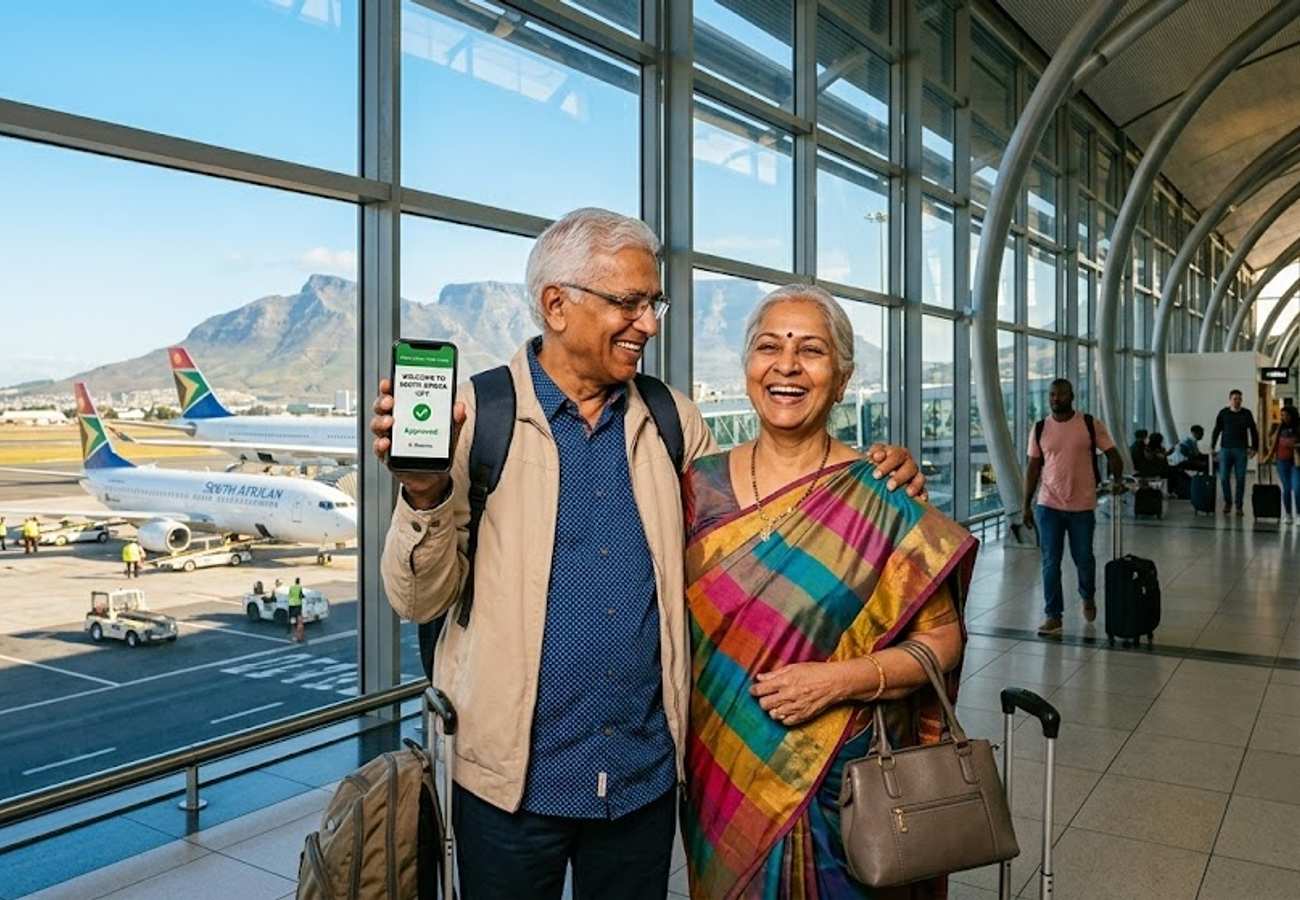
Image generated by AI
Indian citizens can now bypass traditional visa sticker paperwork through a new digital approval system, reducing wait times to as little as 24 hours.
South Africa has officially modernized its entry requirements by launching the Electronic Travel Authorisation (ETA) system for eligible Indian passport holders. This digital shift replaces cumbersome manual applications with a streamlined online platform, facilitating tourism and approved short-term professional visits for durations of up to 90 days.
By integrating digital identity verification and automated processing, the South African government aims to capture a larger share of the growing Indian outbound travel market. The transition to an ETA reflects a global trend toward "frictionless" borders, where security is tightened through data and biometrics while the passenger experience is simplified.
Digital Application Workflow and Processing Timelines
The ETA functions as a digital clearance linked directly to the traveler's passport. Unlike traditional visas, which require physical stickers and often lengthy consulate visits, the ETA is managed entirely online via the South African Department of Home Affairs platform.
The application process requires users to:
- Register on the official government portal and submit passport data.
- Upload necessary supporting documentation and travel itineraries.
- Complete identity verification using smartphone-based biometric technology.
- Pay the required application fee digitally.
Once submitted, the system provides real-time tracking of the application status. Processing times are significantly accelerated, with approvals typically granted within 24 to 48 hours. However, it is important to note that an ETA is a travel authorization, not a guaranteed entry; final admission is still determined by immigration officers upon arrival.
Strategic Rollout: Primary Entry Gateways
To ensure operational stability and monitor system performance, South Africa is implementing the ETA through a phased rollout. Currently, the digital authorization is only valid for entry through three primary international hubs.
| Airport | Destination City |
|---|---|
| O.R. Tambo International Airport | Johannesburg |
| Cape Town International Airport | Cape Town |
| Lanseria International Airport | Gauteng |
This targeted deployment allows authorities to refine biometric checkpoints and data synchronization before expanding the system to smaller regional airports and land borders.
Economic Implications for the Tourism and Aviation Sectors
The removal of administrative barriers is expected to trigger a surge in arrivals from India, a market increasingly focused on experiential and luxury travel. By simplifying the "pre-trip" phase, South Africa becomes a more competitive option against other global destinations.
The shift is projected to provide a direct economic boost to several key sectors:
- Hospitality: Increased occupancy for luxury hotels and boutique stays.
- Wildlife Tourism: Higher demand for safari operators and national park guides.
- Aviation: Potential for increased flight frequencies between Indian hubs and South African gateways.
- Local Economy: Growth for destination management companies and cultural experience providers.
Indian travelers have shown a strong preference for South Africa's diverse offerings, ranging from the urban energy of Johannesburg and the coastal beauty of Cape Town to the world-renowned wildlife reserves of the interior.
Security Integration and Immigration Reform
Beyond tourism growth, the ETA is a critical component of South Africa's broader immigration reform. The system leverages automated processing and biometric verification to identify high-risk travelers before they board their aircraft.
This "pre-clearance" model enhances national security by allowing immigration authorities to analyze traveler data in advance. For the passenger, this means fewer manual queries at the border and a more efficient transition from the aircraft to the arrivals hall.
Essential Checklist for Indian Travelers
To avoid delays or boarding denials, travelers must ensure their digital application is fully approved before departing. The following requirements must be met:
- Passport: A valid ordinary Indian passport.
- Data Accuracy: All submitted digital information must exactly match the passport.
- Biometrics: Access to a smartphone capable of biometric identity verification.
- Payment: Valid payment method for the application charge.
- Route Verification: Confirmation that the flight lands at one of the three approved ETA airports.
The transition to a digital-first immigration model positions South Africa as a modern, accessible destination for one of the world's fastest-growing travel demographics.
Related Travel Guides
Disclaimer
This article is for informational and educational purposes only. It does not constitute legal, financial, or professional advice. While we strive to provide accurate and up-to-date information, travel policies, regulations, and conditions change rapidly. Always verify information with official sources before making travel decisions. Nomad Lawyer makes no representations about the accuracy, reliability, completeness, or suitability of the information provided. Readers should consult qualified professionals for advice specific to their circumstances. The views expressed in this article are those of the author and do not necessarily reflect the views of Nomad Lawyer.
Preeti Gunjan
Contributor & Community Manager
A passionate traveller and community builder. Preeti helps grow the Nomad Lawyer community, fostering engagement and bringing the reader experience to life.
Learn more about our team →