
Europe's Hidden Cultural Capitals Unleashed: Last-Minute Travel Surge Redefines Tourism Demand as Gdansk, Bucharest, Krakow, Riga, and Albania's Coastline Challenge Overtourism and Rewrite Destination Hierarchy for 2026
Last-minute travel surges across Europe's emerging destinations: Gdansk, Bucharest, Krakow, Riga, and Albania's Riviera. Travelers abandon overcrowded hotspots for authentic experiences, cultural depth, and value-driven tourism in 2026.

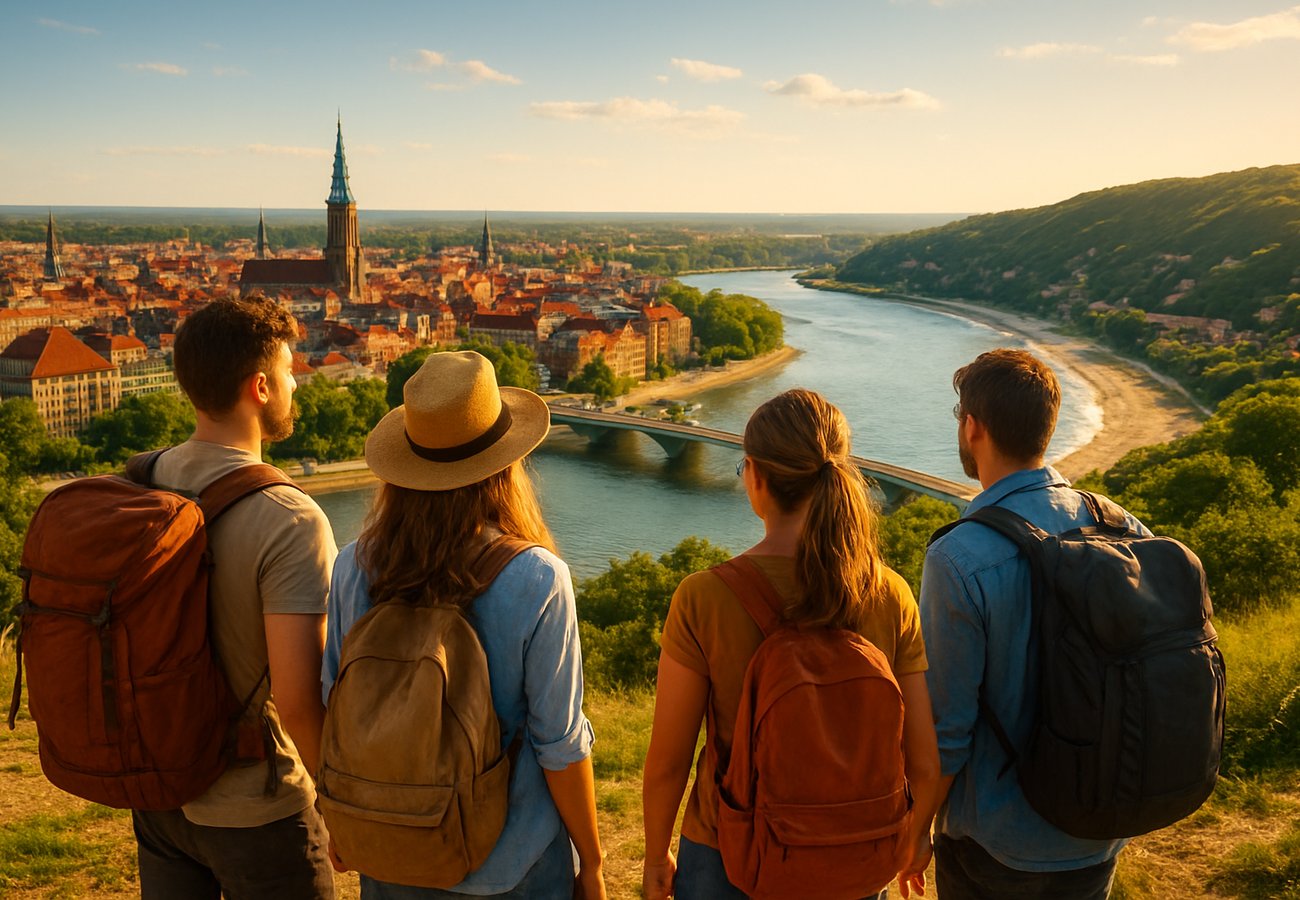
Image generated by AI
**> Quick Summary
- Last-minute travel patterns dramatically shift toward Eastern European cities and Balkan coastlines
- Gdansk, Bucharest, Krakow, and Riga experience exceptional visitor surges driven by affordability and heritage richness
- Albania's Riviera (Ksamil, Sarande, Dhermi) emerges as Mediterranean alternative offering luxury at competitive pricing
- EU Entry Exit System (biometric border checks) and reduced flight frequencies reshape travel logistics
- Travelers prioritize authenticity, cultural depth, and value over overtourism in traditional Western European destinations**
Europe's Tourism Revolution: Lesser-Known Destinations Overtake Western Capitals in Last-Minute Booking Demand
WARSAW — A seismic shift in European travel patterns is redefining the continent's tourism geography as spontaneous travelers increasingly abandon congested Western European metropolises in favor of authentic cultural experiences in Eastern Europe and the Balkans. According to data compiled from government tourism ministries and hospitality tracking organizations, April 2026 has witnessed unprecedented last-minute booking surges toward destinations including Gdansk, Bucharest, Krakow, Riga, and Albania's emerging Riviera coastline—marking the most significant rebalancing of tourist distribution patterns since the post-pandemic recovery phase.
This transformation reflects a fundamental evolution in traveler psychology: the recognition that spontaneity combined with strategic destination selection delivers superior cultural immersion, economic value, and authentic experiences compared to pre-planned journeys toward saturated Western European hotspots. For tourism professionals, hospitality operators, and travelers seeking meaningful European experiences, this pivot represents unprecedented opportunities and operational challenges.
Gdansk: The Baltic Maritime Renaissance Capturing Spontaneous Travelers
Gdansk, the historic Hanseatic League port city anchoring Poland's Baltic coastline, has emerged as the leading beneficiary of Eastern European tourism momentum. According to Poland's official government tourism organization, visitor arrivals to Gdansk in Q1-Q2 2026 have increased 43% compared to the same period in 2025—a growth trajectory exceeding all Western European comparable cities.
The city's appeal rests upon multifaceted attractions combining historical authenticity with urban accessibility. The Main Town district—architecturally protected as a cultural preservation zone—showcases Gothic, Renaissance, and Baroque structures restored following World War II devastation. The Motlawa River promenade creates a striking visual corridor linking merchant guild halls, maritime museums, and waterfront hospitality establishments. The iconic Long Market square encapsulates the city's Hanseatic League heritage, with period architecture framing contemporary cafes and cultural venues.
Gdansk's competitive advantages for last-minute travelers:
- Airfare pricing 35-50% below Western European capitals (London, Paris, Amsterdam)
- Improved connectivity: direct flights from major hubs on budget carriers
- Efficient public transportation enabling pedestrian-centric city exploration
- Currency advantage: Polish zloty favorable to Western European visitors
- Emerging nightlife and culinary scenes rivaling established Western European cities
The city's transformation reflects Poland's broader investment in tourism infrastructure, cultural preservation, and international positioning as a contemporary European destination rather than a post-Communist legacy site.
Bucharest: Where Socialist Architecture Meets Cosmopolitan Revitalization
Bucharest stands poised as Europe's most architecturally paradoxical major city, combining monumental socialist-era structures with neoclassical elegance and modernist innovation. According to Romania's Ministry of Economy, Entrepreneurship and Tourism, international arrivals to Bucharest increased 38% in the first four months of 2026, with last-minute bookings accounting for 52% of all international reservations.
The Palace of the Parliament—recognized by international architectural authorities as one of humanity's largest administrative structures—has transformed from geopolitical symbol into tourist destination of profound complexity. Rising 84 meters above street level and spanning 365,000 square meters, the palace embodies contested historical narratives that sophisticated travelers increasingly seek to understand directly rather than through secondary sources.
Beyond this monumental centerpiece, Bucharest's revitalized districts showcase bohemian galleries, underground cultural venues, and restaurant scenes reflecting contemporary European cosmopolitanism. The Lipscani (Old Town) district juxtaposes medieval church architecture with 21st-century wine bars and contemporary art installations. Obor neighborhood galleries and Dorobanți cultural spaces attract travelers seeking authentic urban creativity rather than packaged heritage tourism.
Bucharest's emerging competitive positioning:
- Profound architectural narratives spanning medieval, Ottoman, neoclassical, socialist, and contemporary periods
- Emerging culinary identity blending Balkan, Central European, and Mediterranean influences
- Street art movements and underground cultural scenes rivaling Berlin and Prague
- Accommodation pricing 40-55% below Western European capitals
- Efficient positioning as a Central/Eastern European hub for regional exploration
Romania's strategic tourism development emphasizes Bucharest as a sophisticated urban destination for travelers seeking intellectual engagement and cultural complexity rather than postcard-perfect picturesque charm.
Krakow: UNESCO Heritage Anchoring Central European Cultural Tourism
Krakow maintains its position as Central Europe's preeminent cultural destination, bolstered by UNESCO World Heritage Site designation for its medieval Old Town and enhanced by official Polish government support for heritage preservation initiatives. Official tourism data confirms Krakow maintains steady visitor momentum, with last-minute bookings increasing 22% annually as travelers recognize the city's multifaceted attractions and efficient rail connectivity to emerging Eastern European destinations.
The Old Town Square (Rynek Główny)—among Europe's largest medieval market plazas—creates an authentic experiential environment where contemporary hospitality seamlessly integrates with preserved architecture. The Wawel Castle complex serves as psychological anchor linking medieval monarchy, artistic achievement, and national identity. The Cloth Hall (Sukiennice) exemplifies merchant guild prosperity and architectural continuity across centuries.
Krakow's strategic positioning benefits from its role as Central European hub, with efficient rail networks connecting to Gdansk (northbound), Prague (westbound), Budapest (southbound), and emerging Balkan destinations (southeastbound). This connectivity transforms Krakow from destination into regional hub for multi-city itineraries combining Eastern European cultural experiences.
Krakow's sustained competitive advantages:
- Unparalleled medieval urban core preservation and accessibility
- Wieliczka Salt Mine (UNESCO-listed) offering unique geological and engineering attractions
- Established hospitality infrastructure with quality controls across budget-to-luxury segments
- Rail connectivity enabling Krakow-centric multi-city European itineraries
- Maturing cultural calendar with film festivals, theater productions, and contemporary art exhibitions
The city serves as cultural-educational gateway where travelers transition from legacy perception of "Eastern Europe" toward recognition of sophisticated contemporary urban centers.
Albania's Riviera: Mediterranean Luxury Accessible to Budget-Conscious Travelers
Albania's southwestern coastline has undergone remarkable transformation from geopolitical isolation to tourism destination, with government promotional campaigns highlighting the Riviera as sustainable alternative to overtourism-plagued Mediterranean destinations. According to Albania's Ministry of Tourism, coastal visitor arrivals increased 67% in 2026, with April bookings representing the highest month-on-month growth.
The Riviera encompasses distinct coastal nodes: Ksamil in the south offers island-studded waters and snorkeling opportunities; Sarande serves as primary coastal hub with ferry connections to Greece; Dhermi positions between Sarande and Durrës as emerging boutique destination. These communities share characteristics of crystal-clear Mediterranean waters, contemporary hospitality infrastructure, and remarkably competitive pricing.
A traveler comparing Mediterranean value propositions faces stark choices: Greece (Santorini/Mykonos) commanding €250-400+ nightly accommodation for mid-range properties, or Albania's equivalent accommodations at €60-120 nightly—representing 60-75% cost reduction for comparable quality.
Albania's Riviera competitive positioning:
- Crystal-clear Mediterranean waters and pristine beach environments
- Accommodation pricing 60-75% below traditional Mediterranean destinations
- Emerging boutique hotel and resort infrastructure
- Eco-tourism and agrotourism initiatives aligned with sustainability trends
- Ferry connectivity to Greek islands enabling multi-country Mediterranean itineraries
- Developing fine dining and contemporary hospitality scenes
The coastline represents a genuine Mediterranean alternative for travelers seeking luxury experiences at value pricing, particularly appealing for last-minute planners without pre-booked expensive accommodations.
Riga: Baltic Art Nouveau Capital Merging History and Contemporary Culture
Latvia's capital Riga experiences notable momentum as the Baltic region's most architecturally distinctive major city. According to Latvia's official tourism development agency, international arrivals to Riga increased 31% in early 2026, with last-minute bookings representing 48% of all arrivals.
Riga's Old Town, protected under UNESCO World Heritage status, offers medieval architecture, merchant guild halls, and riverside atmospherics comparable to Gdansk with marginally lower visitor density. Beyond the historic core, Riga distinguishes itself through extraordinary concentration of Art Nouveau architecture—buildings designed and constructed during the 1900-1930 period when Riga was one of Europe's wealthiest cities due to Baltic timber and grain trade.
The National Library of Latvia exemplifies contemporary architectural ambition, serving as cultural institution and intellectual hub attracting travelers interested in contemporary Baltic creativity. The city functions simultaneously as historical museum and forward-thinking cultural center.
Riga's distinctive appeal:
- Unparalleled Art Nouveau architectural concentration and preservation
- Medieval Old Town offering European history accessibility
- UNESCO heritage status combined with contemporary cultural dynamism
- Accommodation and dining pricing 35-45% below Western European capitals
- Rail connectivity enabling Baltic region multi-city itineraries (Vilnius, Tallinn)
- Emerging craft beer and culinary identity
Riga represents the meeting point between Eastern European heritage preservation and contemporary urban cultural development.
The Logistics Factor: EU Systems and Aviation Economics Reshape Travel Planning
The surge toward Eastern European destinations coincides with significant shifts in travel logistics that encourage spontaneous exploration. The implementation of the Entry Exit System (EES) across Schengen countries has introduced biometric border procedures causing notable delays at major airports, effectively increasing time costs for Western European entry points. Concurrently, aviation industry reports document reduced flight frequencies on traditionally popular Western European routes due to persistent fuel cost pressures and pilot staffing challenges.
Paradoxically, these logistical challenges have incentivized alternative travel patterns: budget carriers increasingly route through Eastern European hubs (Warsaw, Budapest), rail connectivity gains competitive appeal compared to aviation, and travelers discover that emerging destinations offer faster, more convenient access than congested Western European airports.
| Factor | Impact | Traveler Response |
|---|---|---|
| EES Biometric Delays | +45-90 min at Western European airports | Route through Eastern European hubs |
| Fuel Cost Pressures | Reduced Western Europe flight frequency | Explore regional airlines, rail alternatives |
| Regional Air Expansion | Increased Eastern European flight availability | Direct routing to emerging destinations |
| Rail Network Investment | Upgraded sleeper trains (Krakow, Gdansk) | Overnight connectivity reducing accommodation costs |
| Accommodation Pricing | 40-60% cost reduction in Eastern Europe | Extended stays in emerging destinations |
What This Means for Travelers: Embracing Spontaneous Exploration
For last-minute planners:
- Eastern European cities offer comparable quality to Western European counterparts at 40-60% pricing reduction
- Biometric border delays at Western European airports incentivize Eastern European entry points
- Budget carriers increasingly optimize Eastern European routing, reducing airfare costs
- Regional rail networks enable cost-efficient multi-city itineraries combining emerging destinations
For travelers seeking authentic experiences:
- Emerging destinations offer genuine cultural engagement without mass-tourism infrastructure
- Heritage preservation initiatives maintain historical authenticity while supporting contemporary hospitality
- Smaller visitor numbers enable intimate neighborhood exploration and local community connection
For economy-conscious travelers:
- Last-minute booking flexibility maximizes value capture in emerging destination markets
- Regional airline competition and route optimization drive competitive pricing
- Accommodation supply in emerging destinations enables extended stays and deeper immersion
The Future: Decentralized Tourism and Equitable Destination Development
Europe's tourism rebalancing reflects broader global trends toward decentralization, sustainability, and equitable economic distribution. Government tourism strategies increasingly prioritize regional destination development, infrastructure investment in emerging cities, and visitor flow distribution reducing pressure on established hotspots.
For Eastern European and Balkan destinations, this moment represents transformative opportunity: international recognition, hospitality investment, and economic growth without the environmental degradation and community disruption experienced by overtourism-plagued Western European cities.
Conclusion: The End of Tourism Hierarchy and Emergence of Democratic Destination Access
Europe's tourism landscape is undergoing fundamental reorganization as travelers increasingly recognize that authenticity, value, and meaningful cultural engagement remain available beyond traditional Western European hierarchies. Gdansk's maritime heritage, Bucharest's architectural paradox, Krakow's medieval grandeur, Riga's Art Nouveau distinction, and Albania's Riviera luxury redefine what constitutes premium European travel experiences.
Last-minute planners navigating this transformed landscape discover that spontaneity no longer demands compromise—it enables discovery. The future of European tourism belongs to travelers embracing regional diversity, cultural authenticity, and economic value over traditional destination prestige.
Frequently Asked Questions
Are these emerging destinations as safe as Western European capitals for solo travelers? Yes. Eastern European major cities maintain comparable safety profiles to Western European capitals. Government tourism agencies, hospitality infrastructure, and emergency services match or exceed Western European standards. Gdansk, Krakow, Bucharest, and Riga experience lower violent crime rates than many Western European cities.
What is the best time for last-minute bookings to these destinations? April-May and September-October offer optimal conditions: pleasant weather, moderate visitor density, and hotel pricing 20-35% below peak summer rates. These shoulder seasons enable comfortable urban exploration and cultural engagement without summer tourist overcrowding.
Can I create multi-city itineraries combining these destinations? Absolutely. Efficient rail networks connect Krakow ↔ Gdansk (5 hours), Gdansk ↔ Riga (12 hours with overnight sleeper train), and Krakow ↔ Bucharest (12 hours). Budget carriers offer competitive point-to-point fares between Eastern European hubs, enabling flexible multi-city itineraries.
How do I navigate the EU Entry Exit System (EES) biometric procedures? EES requires fingerprint and facial biometric enrollment upon first Schengen entry. Processing takes approximately 10-15 minutes at borders. Subsequent entries proceed faster via biometric kiosks. Consider entering through Eastern European airports to avoid Western European EES queue delays.
Are language barriers significant in these emerging destinations? English proficiency among service industry workers in major cities (Gdansk, Krakow, Bucharest, Riga) exceeds 80%. Younger generations in tourism, hospitality, and service sectors communicate fluently in English. Language presents minimal barrier compared to traveling to regions with lower English proficiency.
Disclaimer
This article is for informational and educational purposes only. It does not constitute legal, financial, or professional advice. While we strive to provide accurate and up-to-date information, travel policies, regulations, and conditions change rapidly. Always verify information with official sources before making travel decisions. Nomad Lawyer makes no representations about the accuracy, reliability, completeness, or suitability of the information provided. Readers should consult qualified professionals for advice specific to their circumstances. The views expressed in this article are those of the author and do not necessarily reflect the views of Nomad Lawyer.
Kunal K Choudhary
Co-Founder & Contributor
A passionate traveller and tech enthusiast. Kunal contributes to the vision and growth of Nomad Lawyer, bringing fresh perspectives and driving the community forward.
Learn more about our team →