
Autonomous De-Icing Drones and AI Turnarounds: Smart Airport Automation in Riyadh, Dubai, and Beyond 2026

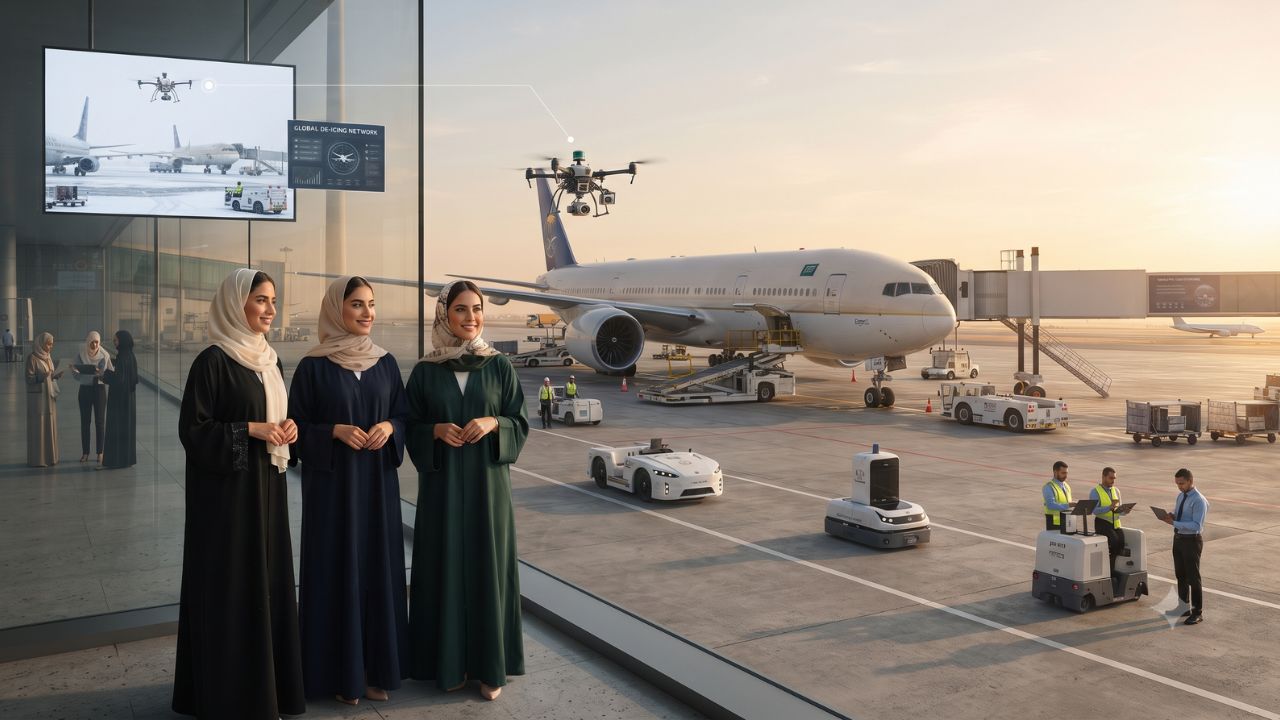
Deploying artificial intelligence computer vision models and autonomous robotics on airport aprons has shortened wide-body aircraft turnaround times by up to 18 minutes while reducing chemical de-icing fluid waste by 30% across major hubs from the Arabian Peninsula to Scandinavia. As international passenger volumes surge, civil aviation authorities and airport operators are replacing manual ground handling procedures with synchronized drone swarms and predictive neural networks to eliminate tarmac delays.
Robotic Tarmacs and AI Dispatch: Aviation's Ground Automation Shift
Coordinated through the General Authority of Civil Aviation (GACA) and Matarat Holding—which oversees 27 commercial airports across Saudi Arabia—the deployment of automated ground logistics is establishing new benchmarks for operational reliability.
Recent operational deployments across global flight hubs highlight several distinct technological breakthroughs:
- Baseer Turnaround System at Riyadh (RUH): At King Khalid International Airport, AI-driven computer vision monitors real-time apron milestones, including passenger boarding bridge connections, fuel line attachments, and baggage unloading. Early 2026 data shows a 6% decrease in ground delays and a 25% increase in gate capacity.
- Autonomous Runway Debris Sweeps: In Riyadh and Al Khobar (King Fahd International Airport), industrial drones equipped with LiDAR and thermal sensors conduct runway inspections between flight movements. Research from King Abdullah University of Science and Technology (KAUST) enables UAVs to detect foreign object debris (FOD) during desert dust storms without relying on satellite GPS.
- Dubai's AGV Fleet & Smart Queuing: Managed by Dubai Airports, Dubai International Airport (DXB) and Al Maktoum International Airport (DWC) utilize autonomous ground vehicles (AGVs) for high-speed baggage routing and AI predictive analytics to dynamically staff security checkpoints.
- Autonomous De-Icing Drones in Cold Climates: In Canada, Germany, and Scandinavia, tethered heavy-lift UAVs equipped with thermal mapping cameras spray glycol fluids directly onto aircraft wings with millimeter precision, capturing a 16.5% revenue share of the autonomous snow and ice removal market.
- King Salman International Mega-Hub: Riyadh’s upcoming mega-airport is natively engineered with sensor-dense infrastructure to accommodate up to 120 million annual passengers by 2030.
What Makes Smart Airport Hubs Different
Traditional airport operations relied heavily on labor-intensive ground crews battling extreme weather conditions, from desert heatwaves exceeding 45°C to sub-zero blizzards. These manual handoffs created cascading flight delays when luggage tugs were delayed or de-icing trucks experienced mechanical faults.
Modern smart airports integrate physical robotics with centralized software analytics, growing at a Compound Annual Growth Rate (CAGR) of 12.5%. By adhering to global flight safety standards established by the International Civil Aviation Organization (ICAO), automated systems predict maintenance issues before aircraft touch down, routing ground equipment to designated gates before jet engines are switched off.
Visitor Insider Tips: Traveling Through Smart Automated Hubs
- Enroll in Smart Biometric Corridors: At Dubai (DXB) and Riyadh (RUH), register your facial biometrics at immigration kiosks to use contactless e-Gates, clearing passport control and boarding gates in under 10 seconds.
- Track Luggage via Real-Time Mobile Maps: Because automated baggage systems scan RFID tags at every belt milestone, use your airline’s smartphone application to view live updates as your suitcases move from the cargo hold to the carousel.
- Plan Tighter Connection Windows with Confidence: Turnaround automation has stabilized short 45-to-60-minute flight connections across primary Gulf hubs, drastically reducing the incidence of missed international flight transfers.
- Use Automated Rail Links Between Terminals: In Riyadh and Dubai, transfer between satellite terminals using automated people movers (APMs) and rapid underground metro links instead of curbside shuttle buses.
- Monitor In-App Delay Predictions During Winter Storms: When flying through northern European or Canadian hubs in winter, consult airline app live feeds, which display precise robotic de-icing queues and expected pushback times.
Cultural and Environmental Context
The transition toward automated tarmac operations brings substantial ecological and workplace benefits. Precision spraying by autonomous de-icing drones reduces glycol chemical runoff by nearly a third, safeguarding local groundwater reserves near northern aerodromes. In arid climates, electric autonomous ground vehicles eliminate diesel emissions across vast airport aprons.
Simultaneously, workforce structures are evolving. Ground handling personnel are transitioning from strenuous manual labor in hazardous tarmac environments into certified technology technicians overseeing automated dashboards, drone fleets, and robotic baggage sorting facilities.
FAQ: Smart Airport Automation and Traveling in 2026
How do autonomous drones de-ice aircraft?
Tethered heavy-lift drones use thermal imaging and AI contour mapping to autonomously detect ice accumulation and spray heated glycol fluid with targeted precision.
Which airports currently deploy AI turnaround management?
King Khalid International Airport in Riyadh, Dubai International Airport, and major international hubs across Europe and North America utilize AI-driven turnaround and queue management systems.
Does ground automation reduce passenger ticket prices?
By cutting turnaround times by 12 to 18 minutes and increasing gate utilization by 25%, airlines save millions in operational penalties, helping keep long-haul airfares competitive.
Are passenger drones being used for airport transfers?
While industrial drones handle security and runway inspections today, certified passenger air taxis are undergoing structured commercial trials for urban airport transfers.
As intelligent algorithms and precision robotics take command of the tarmac, air travel enters a faster, cleaner, and more dependable era.
Related Travel Guides
Disclaimer
This article is for informational and educational purposes only. It does not constitute legal, financial, or professional advice. While we strive to provide accurate and up-to-date information, travel policies, regulations, and conditions change rapidly. Always verify information with official sources before making travel decisions. Nomad Lawyer makes no representations about the accuracy, reliability, completeness, or suitability of the information provided. Readers should consult qualified professionals for advice specific to their circumstances. The views expressed in this article are those of the author and do not necessarily reflect the views of Nomad Lawyer.
Naina Thakur
Contributor & Travel Specialist
Travel enthusiast and legal writer covering visa regulations, responsible tourism, and cultural journeys across global destinations.
Learn more about our team →